
Open Hours: Mon - Fri 6.00 am - 10.00 pm (Nepal Standard Time)
Kanchenjunga Circuit Trek - 24 Days Around the World's Third Highest Mountain
24 Days Very Strenuous (remote, multi-day high altitude, limited infrastructure) North BC Pangpema - 5,143m (16,873 ft) Autumn (Oct - Nov) & Spring (Apr - May)
Country Taplejung → Kathmandu (flight)
Difficulty Very Strenuous (remote, multi-day high altitude, limited infrastructure)
Max Elevation North BC Pangpema - 5,143m (16,873 ft)
Duration 24
Best Time Autumn (Oct - Nov) & Spring (Apr - May)
Meals Breakfast, lunch and dinner included throughout
Accommodation Teahouses (lower valleys) + camping tents (upper valleys)
Group Size 2–10 people (minimum 2 — restricted area regulation)
Trek the Kanchenjunga Circuit in 24 days - North BC Pangpema 5,143m, South BC Oktang 4,730m, world's third highest mountain & pristine wilderness. Restricted area permit included.
Trip Highlights
  • North Base Camp Pangpema (5,143m) - directly below Kanchenjunga's 2,400m north face
  • South Base Camp Oktang (4,730m) - the full southern facade of the Kanchenjunga massif
  • Complete circuit of the world's third highest mountain
  • One of Nepal's least-visited and most pristine wilderness corridors
  • Extraordinary wildlife: snow leopard habitat, red panda, clouded leopard, Himalayan black bear
  • Intact primary Himalayan forest - orchids, tree ferns, giant rhododendrons
  • Ghunsa Gompa - ancient Tibetan Buddhist monastery in a remote high-altitude valley
  • Limbu cultural villages in the lower Taplejung Valley
  • Views of Jannu (7,710m), Kabru (7,412m), Yalung Kang (8,505m), and the entire Kanchenjunga massif
  • High-pass crossings through terrain no road will ever reach
  • True expedition-grade wilderness trekking - camping where teahouses don't exist

Kanchenjunga Circuit Trek - 24 Days Around the World's Third Highest Mountain

The Kanchenjunga Circuit Trek is a 24-day trip in Taplejung → Kathmandu (flight), rated very strenuous (remote, multi-day high altitude, limited infrastructure) difficulty, reaching a maximum elevation of North BC Pangpema - 5,143m (16,873 ft). The best time to do this trip is Autumn (Oct - Nov) & Spring (Apr - May). The package includes group sizes of 2–10 people (minimum 2 — restricted area regulation), teahouses (lower valleys) + camping tents (upper valleys) accommodation, breakfast, lunch and dinner included throughout.

Kanchenjunga Circuit Trek - Key Facts
Country Taplejung → Kathmandu (flight)
Difficulty Very Strenuous (remote, multi-day high altitude, limited infrastructure)
Max Elevation North BC Pangpema - 5,143m (16,873 ft)
Duration 24
Best Time Autumn (Oct - Nov) & Spring (Apr - May)
Meals Breakfast, lunch and dinner included throughout
Accommodation Teahouses (lower valleys) + camping tents (upper valleys)
Group Size 2–10 people (minimum 2 — restricted area regulation)

How long is the Kanchenjunga Circuit trek?

The View Himalaya Kanchenjunga Circuit trek is 24 days, one of Nepal's longest and most remote trekking routes, circling the world's third-highest mountain via both its north and south base camps.

Trek Overview

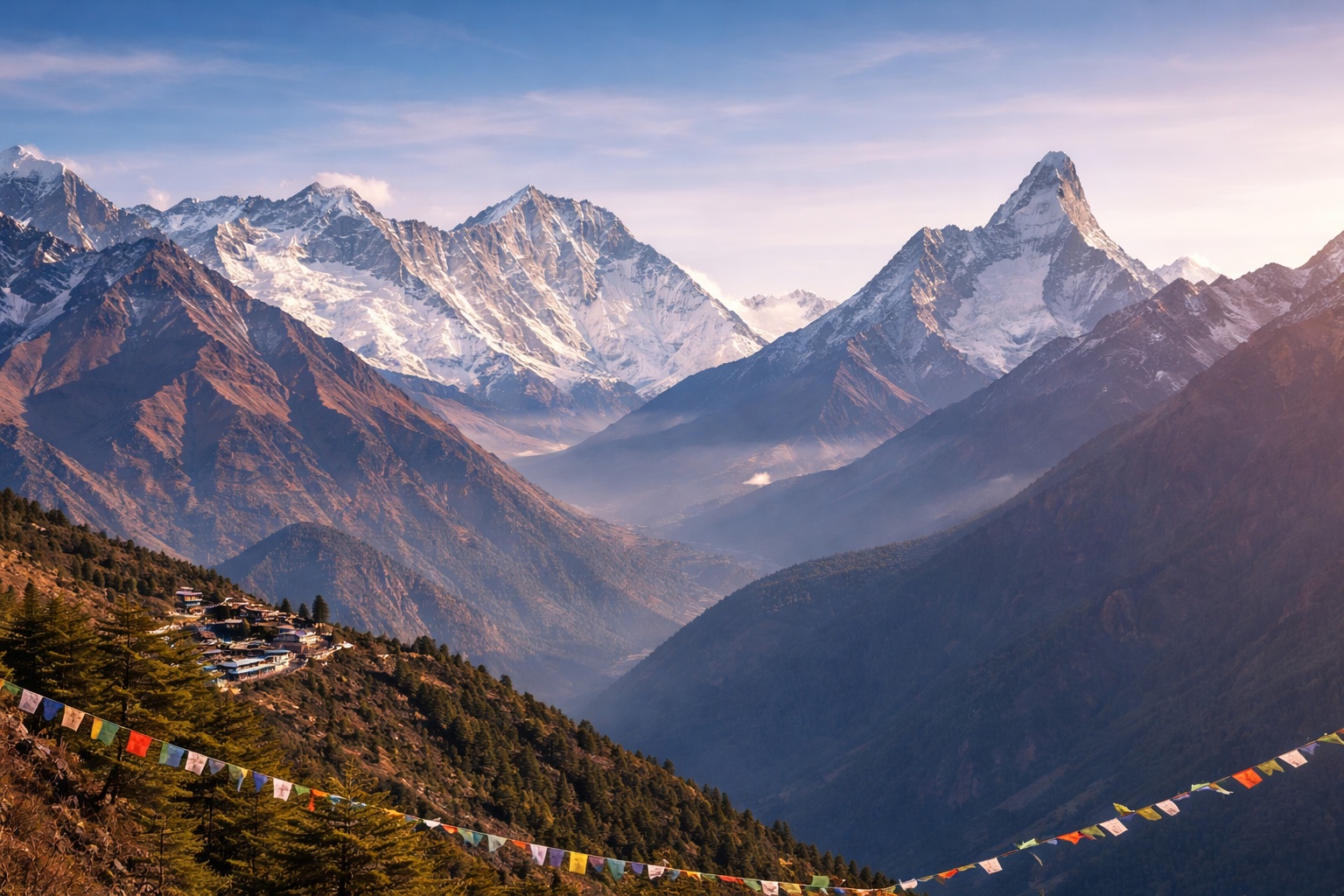
The Kanchenjunga Circuit Trek is Nepal's most remote, most demanding, and most rewarding long-distance circuit - a 24-day wilderness journey around Kanchenjunga (8,586m), the world's third highest mountain, through terrain so pristine and so infrequently visited that entire days pass without meeting another trekking party. This is the trek for those who have done everything else and want to understand what the Himalayas looked like before the teahouse infrastructure arrived.

The circuit visits both the North Base Camp at Pangpema (5,143m) - directly below Kanchenjunga's north face with views of the Kanchenjunga Glacier and the Yalung Glacier to the west - and the South Base Camp at Oktang (4,730m) in the Yalung Valley, where the entire southern facade of the Kanchenjunga massif forms an unbroken wall above the glacier. Connecting these two base camps requires crossing the high Mirgin La Pass (4,663m) and the challenging Sinelapche Pass route - remote, demanding, and utterly spectacular.

The Kanchenjunga Conservation Area (2,035 km²) is one of Nepal's most ecologically diverse protected zones - home to snow leopard, red panda, clouded leopard, Himalayan black bear, and over 253 bird species, with populations of these species that are more visible here than anywhere else in Nepal due to the low tourist pressure. The lower valleys support one of the finest intact primary forests in the Himalayan region: orchid-rich temperate forest giving way to rhododendron stands, bamboo zones, and eventually alpine tundra.

The cultural experience is equally extraordinary. The Limbu people of the lower Taplejung Valley maintain one of Nepal's oldest distinct cultures - with their own script, musical tradition, sacred sites, and indigenous religious system (Kirat Mundhum). Higher in the valleys, Sherpa and Tibetan influenced communities around Ghunsa and Ghunsa Gompa preserve high-altitude Buddhist traditions largely unaffected by outside influence.

At View Himalaya, the Kanchenjunga Circuit is handled exclusively by our most experienced remote-area guides. All Restricted Area Permits, camping equipment for high sections, and emergency protocols are managed completely from Kathmandu to final departure.

Trip Facts

  • Duration: 24 Days
  • Start Point: Taplejung (flight Kathmandu→Biratnagar→Taplejung or drive)
  • End Point: Taplejung → Kathmandu (flight)
  • Maximum Altitude: North BC Pangpema - 5,143m (16,873 ft)
  • South BC Oktang Altitude: 4,730m (15,518 ft)
  • Total Distance: ~190 - 210 km
  • Difficulty: Very Strenuous (remote, multi-day high altitude, limited infrastructure)
  • Daily Walking: 5 - 8 hours average
  • Group Size: 2 - 10 people (minimum 2 - restricted area regulation)
  • Accommodation: Teahouses (lower valleys) + camping tents (upper valleys)
  • Meals: Breakfast, lunch and dinner included throughout
  • Best Seasons: Autumn (Oct - Nov) & Spring (Apr - May)
  • Trek Status: Restricted Area - special permit required
  • Permits Required: Kanchenjunga Restricted Area Permit + Kanchenjunga Conservation Area Permit (KCA) + TIMS Card
  • Conservation Area: Kanchenjunga Conservation Area - 2,035 km²

Trek Pricing 2025 / 2026

Group Size Price Per Person
2 people (minimum group) USD 2,499
Small Group (3 - 5 people) USD 2,199
Group (6 - 10 people) USD 1,999
10+ people Contact us for group rates

All prices include all restricted area permits, domestic flights Kathmandu - Biratnagar - Taplejung (return), licensed guide, high-altitude cook, 1 porter per trekker, all teahouse and camping accommodation, full camping equipment (tents, sleeping mats, dining tent, cooking equipment), all meals throughout, sleeping bag, first-aid kit with emergency oxygen, and full on-ground support. 20% deposit confirms booking.

Trek Highlights

  • North Base Camp Pangpema (5,143m) - directly below Kanchenjunga's 2,400m north face
  • South Base Camp Oktang (4,730m) - the full southern facade of the Kanchenjunga massif
  • Complete circuit of the world's third highest mountain
  • One of Nepal's least-visited and most pristine wilderness corridors
  • Extraordinary wildlife: snow leopard habitat, red panda, clouded leopard, Himalayan black bear
  • Intact primary Himalayan forest - orchids, tree ferns, giant rhododendrons
  • Ghunsa Gompa - ancient Tibetan Buddhist monastery in a remote high-altitude valley
  • Limbu cultural villages in the lower Taplejung Valley
  • Views of Jannu (7,710m), Kabru (7,412m), Yalung Kang (8,505m), and the entire Kanchenjunga massif
  • High-pass crossings through terrain no road will ever reach
  • True expedition-grade wilderness trekking - camping where teahouses don't exist

What to Expect on the Kanchenjunga Circuit

The Kanchenjunga Circuit is a full expedition - not a teahouse trek. From the North Base Camp valley (Ghunsa to Pangpema), accommodation is camping. The route requires a cook and full camping setup for the high sections. This is the fundamental difference from Nepal's other major circuits: you are self-sufficient at altitude, sleeping in tents at 4,000 - 5,000m, cooking by gas stove in a dining tent, and moving through terrain where the nearest medical facility is multiple days of walking away.

The lower valleys approach the mountain from the northeast (via Taplejung, Chirwa, Sekathum, and Gyabla) through extraordinary primary forest with waterfalls, hanging bridges, and the first views of Jannu (7,710m) - one of Nepal's most beautiful and technically demanding mountains - appearing above the Ghunsa Khola valley. The village of Ghunsa (3,595m) is the last settlement before the high wilderness: a traditional Sherpa community with a functioning gompa, cheese factory, and the warmest hospitality of any remote Nepal village.

The North Base Camp approach through Kambachen (4,050m) and Lhonak (4,790m) builds through progressively more dramatic terrain - glacier lakes, moraines, and views of Kanchenjunga's northeast buttress growing larger with every camp. Pangpema (5,143m) delivers a view that stops trekkers cold: the full 2,400m north face of Kanchenjunga, Jannu to the west, Wedge Peak, and the Kanchenjunga Glacier stretching below in complete silence.

The crossing to the South Base Camp route involves a challenging high-pass traverse before descending into the entirely different Yalung Valley. The South Base Camp at Oktang frames the Kanchenjunga massif from the south - a different mountain in a different light, no less overwhelming.

Trek Suitability

The Kanchenjunga Circuit is rated Very Strenuous and is suited only to highly experienced, expedition-ready trekkers. Prior experience trekking above 5,000m in Nepal is essential. The camping sections above Ghunsa require comfort with high-altitude tent sleeping, camp cooking environments, and multi-day self-sufficiency. The high passes connecting North and South Base Camp are remote - evacuation in an emergency takes significantly longer than from the Everest or Annapurna circuits.

  • Recommended for: Experienced trekkers who have completed Manaslu, EBC Three Passes, or equivalent remote high-altitude routes
  • Minimum fitness: 7 - 8 hour days on remote terrain at altitude for 20+ consecutive days
  • Prior experience: At least one previous Nepal trek above 5,000m with camping experience
  • Group minimum: 2 trekkers (Nepal restricted area regulation)
  • Age range: 20 - 55; exceptional fitness and medical clearance required
  • Not suitable for: Trekkers without previous high-altitude multi-day experience; those with any significant cardiovascular or respiratory condition

Distance & Elevation Profile

Day Route Altitude Walking Time
1Kathmandu → Taplejung (flights)2,415mFlights
2Taplejung → Chirwa1,270m5 - 6 hrs
3Chirwa → Sekathum1,660m4 - 5 hrs
4Sekathum → Amjilosa2,490m5 - 6 hrs
5Amjilosa → Gyabla2,730m4 - 5 hrs
6Gyabla → Ghunsa3,595m5 - 6 hrs
7Ghunsa Acclimatisation3,595mRest + day hike
8Ghunsa → Kambachen4,050m4 - 5 hrs
9Kambachen → Lhonak4,790m4 - 5 hrs
10Lhonak → Pangpema (North BC) → Lhonak5,143m6 - 7 hrs
11Lhonak → Ghunsa3,595m5 - 6 hrs
12Ghunsa → Sele La Base Camp4,480m5 - 6 hrs
13Sele La/Mirgin La → Tseram4,663m → 3,870m7 - 8 hrs
14Tseram Acclimatisation3,870mRest + day hike
15Tseram → Ramche4,580m4 - 5 hrs
16Ramche → Oktang (South BC) → Ramche4,730m5 - 6 hrs
17Descent to Yamphudin2,050m7 - 8 hrs
18Yamphudin → Mamankhe1,740m5 - 6 hrs
19Mamankhe → Taplejung2,415m5 - 6 hrs
20Taplejung → Kathmandu (flights)1,350mFlights
21 - 24Kathmandu buffer / departure1,350m -

Optional Add-Ons

Add-On Details Cost
North BC Only (15-day version) North Kanchenjunga to Pangpema only - skip South BC circuit USD 1,799 per person (2 - 5 pax)
South BC Only (13-day version) Approach from Taplejung via Yamphudin to Oktang only USD 1,699 per person (2 - 5 pax)
Extra Buffer Day (recommended) Additional Taplejung or Kathmandu buffer for flight delays USD 60 per person per day
Helicopter Evacuation Standby Pre-arranged helicopter on standby for medical emergency (covered by insurance) Covered by insurance
Extra Night Kathmandu 3-star hotel, breakfast, transfer USD 40 per night

Difficulty & Fitness Requirements

The Kanchenjunga Circuit is rated Very Strenuous - the highest difficulty level of any View Himalaya trek. The combination of extreme remoteness (no medical facilities for multiple days of walking), camping at 4,000 - 5,000m, multiple high-pass crossings in wilderness terrain, and 24 consecutive days of demanding physical effort makes this Nepal's most serious standard trekking objective.

Trekkers who successfully complete the Kanchenjunga Circuit are typically those with: a track record of completing multiple Nepal treks above 5,000m; experience with tent camping at altitude; strong cold-weather clothing and equipment; and the mental resilience for 24 days in genuine wilderness without the support network of established teahouse routes.

Physical training recommendation: 6 months of serious preparation including long-distance loaded hiking (15 - 20 km+ days with 12+ kg pack), regular cardiovascular training (running, cycling), and two overnight camping hikes in cold weather before departure. Medical check within 3 months of departure is strongly advised.

Best Seasons for the Kanchenjunga Circuit

Autumn - October to November (Best)

The definitive season. October provides stable weather, clear skies, and consolidated snow on the circuit-crossing passes. Views at both Pangpema and Oktang are at their finest. November is colder (below - 20°C at Lhonak camp) but equally stable. October is preferred for the balance of conditions.

Spring - April to May (Excellent)

The rhododendron forests of the lower Ghunsa and Yalung valleys are spectacular in April - one of Nepal's finest botanical displays. The circuit-crossing passes retain winter snow in April and require crampons; May is cleaner. Both months offer excellent views and generally stable weather.

Winter - December to February (Expedition Only)

The circuit-crossing passes are blocked by deep snow from December onwards. Lhonak and Ramche camps reach - 30°C at night. Full mountaineering expedition equipment required. Not offered as a standard trek.

Monsoon - June to August (Not Recommended)

The lower Ghunsa Khola and Tamor valleys receive significant monsoon rainfall with landslide risk on approach trails. Upper valleys above Ghunsa remain somewhat drier but pass conditions are unstable. Not recommended.

Accommodation & Meals

The Kanchenjunga Circuit uses a hybrid accommodation model. Teahouses are available from Taplejung to Ghunsa on the North approach and from Tseram to Yamphudin on the South approach - small, basic family lodges with dal bhat, noodle soup, and simple Nepali fare. Above Ghunsa (Kambachen, Lhonak, Pangpema area) and above Tseram (Ramche, Oktang area), accommodation is full tent camping with our cook and camp staff.

Camp meals are substantial and calorie-dense: porridge and eggs for breakfast, soup and crackers for lunch, rice/pasta and stew for dinner. The cook also prepares hot drinks (tea, instant coffee, hot chocolate) which are included at camp. The cold temperatures at high-altitude camps (Lhonak reaches - 25°C on clear autumn nights) make a warm camp meal one of the day's most important events. Bring a personal insulated mug - hot drinks at 5,000m are therapeutic.

Departure Dates & Booking

Kanchenjunga Circuit expeditions depart in October - November and April - May. Private departures for groups of 2 - 10. Book at least 6 weeks in advance - permit processing, flight reservations (Taplejung STOL flights are limited capacity), and camp equipment preparation require significant lead time.

  • Minimum group size: 2 trekkers (restricted area regulation)
  • Booking deposit: 20% of total cost
  • Permit lead time: 4 weeks minimum; 6 weeks recommended
  • Taplejung STOL flights: Must be booked well in advance - seats are limited

Altitude Safety

The Kanchenjunga Circuit's remoteness demands the highest standards of altitude management. The nearest proper medical facility is in Taplejung - multiple days from the North Base Camp area. Emergency helicopter evacuation can reach most points on the route but response times are longer than Everest or Annapurna regions. The mandatory acclimatisation day in Ghunsa and the gradual approach through Kambachen and Lhonak before the Pangpema day are non-negotiable elements of the itinerary.

Your guide carries a pulse oximeter, emergency oxygen, Diamox, and satellite communication equipment. View Himalaya maintains direct emergency contacts with helicopter operators and CIWEC Hospital Kathmandu. Any AMS symptoms at Lhonak (4,790m) result in immediate descent - no exceptions. The extreme remoteness makes prevention the only viable strategy; treatment options above Ghunsa are limited.

Travel Insurance

Mandatory and critically important for this expedition. Your policy must cover:

  • Trekking to 5,200m minimum
  • Emergency helicopter evacuation from remote restricted area terrain (USD 4,000 - 8,000 from Kanchenjunga region - the most expensive evacuation zone in Nepal)
  • Medical expenses and hospitalisation
  • Trip cancellation including STOL flight delays and circuit-crossing pass closures
  • 24-hour emergency assistance with Nepal-based helicopter coordination

Helicopter evacuation costs from the North Base Camp area are among the highest in Nepal due to distance and altitude. Do not underinsure for this expedition. We verify insurance in detail before confirming your booking. Policies from World Nomads, True Traveller, Battleface, or specialist expedition insurers (Campbell Irvine, Dogtag) are appropriate.

Guide & Safety Standards

  • NTB-licensed guide with specific Kanchenjunga region experience (minimum 3 full circuits)
  • High-altitude cook with remote expedition camping experience
  • Wilderness First Responder / Remote First Aid certified
  • Satellite communication device carried throughout (two-way messaging)
  • Pulse oximeter monitoring from Gyabla onwards (Day 5)
  • Emergency oxygen and Diamox in expedition first-aid kit
  • Direct contact with helicopter operators, CIWEC Hospital, and Taplejung district authorities
  • 24/7 View Himalaya Kathmandu operations desk throughout expedition
  • Porter welfare: maximum loads enforced, full cold-weather equipment provided, fair wage contract

Packing List

Clothing

  • Lightweight moisture-wicking base layers - 3 sets (longer trek duration)
  • Mid-weight thermal base layers for camp use
  • Heavyweight fleece mid-layer
  • Expedition-grade down jacket (rated - 15°C or colder)
  • Gore-Tex or equivalent hardshell jacket and trousers
  • Insulated trekking trousers (for Lhonak and Ramche camp nights)
  • Balaclava, 2× warm hats, sun hat, buff
  • Heavy insulated gloves / mittens (Lhonak reaches - 25°C at night)
  • 6+ pairs wool trekking socks + camp socks (down booties optional but recommended)

Footwear

  • Insulated, waterproof trekking/mountaineering boots (crampon-compatible - recommended)
  • Camp shoes / insulated booties
  • Trekking poles - 2 (essential)
  • Gaiters (waterproof - essential for snow sections)
  • Microspikes or crampons (for circuit-crossing passes)

Camping Gear (Provided by View Himalaya)

  • Four-season mountaineering tents (2-person)
  • Foam sleeping mat
  • Dining and kitchen tent
  • Camp cooking and food equipment

Personal Gear

  • 40 - 50L expedition daypack
  • Duffel bag for porter (max 20 kg - note: 1 porter per trekker on this route)
  • Sleeping bag - 20°C minimum (camping nights reach - 25°C at Lhonak)
  • Sleeping bag liner (extra warmth and hygiene)
  • Headlamp + 3 sets spare batteries + backup headlamp
  • Water bottles (2 × 1L) + water purification (tablets + filter straw)
  • Category 4 glacier sunglasses and sunscreen SPF 50+
  • Power bank (2× 20,000 mAh) - electricity unavailable above Ghunsa
  • Satellite communicator (provided by guide) + personal SPOT/Garmin inReach optional

Medical

  • Diamox (acetazolamide) - strongly recommended, 2 full prescriptions
  • Comprehensive personal first aid kit (ibuprofen, paracetamol, anti-diarrhea, antihistamine, antibiotics on prescription)
  • Rehydration salts - 20+ sachets
  • Blister kit (extensive - 24 days)
  • Knee support bandage
  • All personal prescription medications in double supply

Documents & Money

  • Original passport (required at all restricted area checkpoints)
  • Insurance certificate confirming evacuation coverage from 5,200m
  • USD cash approx USD 350 - 500 for 24 days (tips, Taplejung purchases, extras)
  • Emergency contact card with View Himalaya 24/7 number and satellite phone details
  • Copies of all documents stored separately

Booking Procedure

  1. Submit expedition enquiry with start date preference, group size, prior trekking/camping experience summary, and any medical history relevant to high altitude.
  2. Receive expedition briefing document and full quotation within 24 hours.
  3. Pay 20% deposit - initiates restricted area permit application, flight booking (limited Taplejung STOL seats), and camping equipment preparation.
  4. Submit full documentation: Passport copies + 2 passport photos per person, insurance certificate (helicopter evacuation coverage verified), and completed health declaration form.
  5. Pay balance on arrival in Kathmandu. Full expedition equipment check, guide and cook introduction, and final briefing 2 days before Taplejung departure.

This expedition requires the most lead time of any View Himalaya product. Minimum booking lead time is 6 weeks; 8 - 10 weeks is strongly preferred for autumn season. Taplejung STOL flights are limited capacity and sell out quickly in October.

Related Treks

Trek Duration Max Altitude Highlights
Manaslu Circuit Trek 14 Days 5,160m Restricted area, Larkya La, Tibetan plateau, remote wilderness
Everest Three Passes Trek 18 Days 5,644m Renjo La, Cho La, Kongma La, Gokyo Lakes, EBC
Upper Mustang Trek 12 Days 3,840m Lo Manthang, Tibetan culture, rain-shadow plateau, restricted area
Island Peak Climbing 18 Days 6,189m First technical Himalayan summit, EBC approach, glacier travel

Places You'll Visit

Day-by-Day Itinerary

Kathmandu - Biratnagar flight (1 hr) then Biratnagar - Taplejung (35 min STOL flight). Arrive Taplejung by mid-afternoon. Equipment check, permit verification, and guide briefing. Overnight Taplejung guesthouse.
Taplejung Flight 2,415m
Descend from Taplejung into the Tamor River valley, passing through Limbu villages. The trail drops into subtropical vegetation. Overnight Chirwa teahouse.
Chirwa 5–6 hrs 2,415m
Trek up the Ghunsa Khola valley through primary forest. First views of the Kangchenjunga massif peaks above the valley head. Overnight Sekathum.
Sekathum 4–5 hrs 1,660m
Continue up the valley through dense temperate forest - habitat for red pandas. Multiple suspension bridge crossings. Overnight Amjilosa.
Amjilosa 5–6 hrs 2,490m
Gradual ascent through increasingly magnificent forest. Red panda sightings most likely in this section. Overnight Gyabla teahouse.
Gyabla 4–5 hrs 2,730m
Arrive at Ghunsa - the last village of the North Kanchenjunga approach. Tibetan Buddhist community with an ancient gompa, cheese factory, and warm welcome. First views of Jannu (7,710m) from the village. Overnight Ghunsa teahouse.
Ghunsa 5–6 hrs 3,595m
Rest and acclimatisation. Morning hike to high viewpoint above the village. Visit Ghunsa Gompa. Acclimatisation day hike to 4,200 - 4,400m. Overnight Ghunsa.
Ghunsa 3,595m
Trek deeper into the upper valley. The trail enters genuine wilderness - no permanent settlements ahead. Camp at Kambachen with views of Kanchenjunga's east face beginning to appear. Overnight Kambachen (teahouse or camp).
Kambachen 4–5 hrs 4,050m
Ascend through glacial moraine terrain to Lhonak - a high-altitude camp below the north Kanchenjunga valley. Views of Wedge Peak (6,802m) and the expanding glacier complex. Overnight Lhonak camp.
Lhonak 4–5 hrs 4,790m
Day trek to Pangpema (5,143m) - Kanchenjunga North Base Camp. The full north face of Kanchenjunga (8,586m) rises directly above. Jannu (7,710m) to the west. The Kanchenjunga Glacier spreads below. One of Nepal's supreme wilderness viewpoints. Return to Lhonak. Overnight Lhonak camp.
Pangpema / North BC 3–4 hrs 5,143m
Descend back through Kambachen to Ghunsa for rest and supply resupply before the circuit crossing. Overnight Ghunsa teahouse.
Ghunsa 5–6 hrs 4,790m
Leave the North Kanchenjunga valley and head toward the high pass connecting the circuits. Camp at the base of Sele La. Overnight camp.
Sele La Base Camp 5–6 hrs 4,480m
Cross the high pass connecting the North and South Kanchenjunga circuits. The descent into the Yalung Valley offers completely different views - the south and west aspects of the Kanchenjunga massif including Yalung Kang (8,505m) and Kabru (7,412m). Overnight Tseram camp/lodge.
Tseram 7–8 hrs 4,663m
Rest day for altitude recovery after the circuit crossing. Day hike to upper valley viewpoint. Overnight Tseram.
Tseram 3,870m
Ascend to Ramche - the high camp before Oktang South Base Camp. Views of Rathong (6,679m) and the Yalung Glacier. Overnight Ramche camp.
Ramche 4–5 hrs 4,580m
Trek to Oktang (4,730m) - Kanchenjunga South Base Camp. The entire southern facade of the Kanchenjunga massif - a 10 km wall of ice and rock - fills the horizon. Kanchenjunga (8,586m), Yalung Kang (8,505m), Kabru Dome (6,600m), and the Talung Glacier directly below. Return to Ramche or descend to Tseram. Overnight Ramche or Tseram camp.
Oktang / South BC - Day Hike return 4,730m
Long descent from the Yalung Valley through the upper forest zone to Yamphudin - the first village of the South Kanchenjunga approach. Warm temperatures, great food. Overnight Yamphudin teahouse.
Yamphudin 7–8 hrs 2,050m
Continue descending through Limbu villages and farmland toward the Tamor valley. Overnight Mamankhe.
Mamankhe 5–6 hrs 2,050m
Final trekking day ascending from the Tamor valley back to Taplejung. Overnight Taplejung guesthouse.
Taplejung 5–6 hrs 2,415m
Morning flight Taplejung - Biratnagar - Kathmandu. Arrive Kathmandu afternoon. Transfer to hotel. Trek officially concludes.
Kathmandu Flight 2,415m

What’s Included

Included

  • All domestic flights: Kathmandu - Biratnagar - Taplejung (return both ways)
  • Kanchenjunga Restricted Area Permit
  • Kanchenjunga Conservation Area Permit (KCA)
  • TIMS Card
  • 1 NTB-licensed, Kanchenjunga-specialist guide (English-speaking)
  • 1 high-altitude cook for camping sections
  • 1 porter per trekker (dedicated - remote areas require more support staff)
  • Full camping equipment: mountaineering tents, sleeping mats, dining tent, kitchen tent, cooking equipment
  • All teahouse accommodation where available (twin-sharing)
  • 3-star hotel in Kathmandu (2 nights)
  • All meals throughout: breakfast, lunch, dinner (teahouse and camping)
  • Sleeping bag rated to - 15°C
  • First-aid kit with pulse oximeter, Diamox, and emergency oxygen
  • Government taxes and service charges
  • All guide, cook, and porter wages, equipment, food, accommodation, and insurance
  • 24/7 View Himalaya emergency support throughout
  • Pre-trek expedition briefing pack and gear guidance

Excluded

  • All domestic flights: Kathmandu - Biratnagar - Taplejung (return both ways)
  • Kanchenjunga Restricted Area Permit
  • Kanchenjunga Conservation Area Permit (KCA)
  • TIMS Card
  • 1 NTB-licensed, Kanchenjunga-specialist guide (English-speaking)
  • 1 high-altitude cook for camping sections
  • 1 porter per trekker (dedicated - remote areas require more support staff)
  • Full camping equipment: mountaineering tents, sleeping mats, dining tent, kitchen tent, cooking equipment
  • All teahouse accommodation where available (twin-sharing)
  • 3-star hotel in Kathmandu (2 nights)
  • All meals throughout: breakfast, lunch, dinner (teahouse and camping)
  • Sleeping bag rated to - 15°C
  • First-aid kit with pulse oximeter, Diamox, and emergency oxygen
  • Government taxes and service charges
  • All guide, cook, and porter wages, equipment, food, accommodation, and insurance
  • 24/7 View Himalaya emergency support throughout
  • Pre-trek expedition briefing pack and gear guidance

Useful Info

Kanchenjunga Circuit trek in one sentence: A 24-day remote restricted-area trek circling Kanchenjunga, the world's third-highest mountain (8,586m), via both its north and south base camps.

Kanchenjunga Circuit altitude: Pangpema (North Base Camp) at 5,143 metres (16,873 feet) is the highest point.

Kanchenjunga Circuit difficulty: Very Strenuous - one of Nepal's most demanding treks due to remoteness, limited infrastructure, and long duration.

Kanchenjunga Circuit permit: A restricted area permit is required with a minimum group size of two trekkers.

Best time for the Kanchenjunga Circuit: Autumn (October - November) and Spring (April - May).

Kanchenjunga Circuit trek cost: View Himalaya packages start from USD 1,999 per person, including permits, camping/teahouse logistics, meals, guide, and porter.

Lightweight moisture-wicking base layers — 3 sets (longer trek duration), Mid-weight thermal base layers for camp use, Heavyweight fleece mid-layer, Expedition-grade down jacket (rated −15°C or colder), Gore-Tex or equivalent hardshell jacket and trousers, Insulated trekking trousers (for Lhonak and Ramche camp nights), Balaclava, 2× warm hats, sun hat, buff, Heavy insulated gloves / mittens (Lhonak reaches −25°C at night), 6+ pairs wool trekking socks + camp socks (down booties optional but recommended), Insulated, waterproof trekking/mountaineering boots (crampon-compatible — recommended), Camp shoes / insulated booties, Trekking poles — 2 (essential), Gaiters (waterproof — essential for snow sections), Microspikes or crampons (for circuit-crossing passes), Four-season mountaineering tents (2-person), Foam sleeping mat, Dining and kitchen tent, Camp cooking and food equipment, 40–50L expedition daypack, Duffel bag for porter (max 20 kg — note: 1 porter per trekker on this route), Sleeping bag −20°C minimum (camping nights reach −25°C at Lhonak), Sleeping bag liner (extra warmth and hygiene), Headlamp + 3 sets spare batteries + backup headlamp, Water bottles (2 × 1L) + water purification (tablets + filter straw), Category 4 glacier sunglasses and sunscreen SPF 50+, Power bank (2× 20,000 mAh) — electricity unavailable above Ghunsa, Satellite communicator (provided by guide) + personal SPOT/Garmin inReach optional, Diamox (acetazolamide) — strongly recommended, 2 full prescriptions, Comprehensive personal first aid kit (ibuprofen, paracetamol, anti-diarrhea, antihistamine, antibiotics on prescription), Rehydration salts — 20+ sachets, Blister kit (extensive — 24 days), Knee support bandage, All personal prescription medications in double supply, Original passport (required at all restricted area checkpoints), Insurance certificate confirming evacuation coverage from 5,200m, USD cash approx USD 350–500 for 24 days (tips, Taplejung purchases, extras), Emergency contact card with View Himalaya 24/7 number and satellite phone details, Copies of all documents stored separately

Frequently Asked Questions

A
The View Himalaya Kanchenjunga Circuit trek is 24 days, one of Nepal's longest and most remote trekking routes, circling the world's third-highest mountain via both its north and south base camps.
A
Kanchenjunga stands at 8,586 metres (28,169 ft), the third-highest mountain in the world, straddling the border between Nepal and India in the far eastern Himalaya.
A
Pangpema, the North Base Camp, at 5,143 metres (16,873 ft), offers the closest views of Kanchenjunga's dramatic north face.
A
Yes - Kanchenjunga is a restricted area requiring a special permit and a minimum group size of two trekkers, reflecting its remote location near the sensitive Nepal-India-Tibet border region.
A
Very Strenuous - this is one of Nepal's most demanding treks, combining extreme remoteness, limited infrastructure, multiple high-altitude days, and a long overall duration.
A
A mix of basic teahouses in the lower valleys and camping tents in the upper, more remote sections, reflecting the route's limited tourist infrastructure compared to Everest or Annapurna.
A
A domestic flight from Kathmandu to Taplejung (or a long road journey) reaches the trailhead in Nepal's far eastern hills, before the trek itself begins toward the Kanchenjunga Conservation Area.
A
Autumn (October - November) and Spring (April - May) offer the most stable weather for this long, high-altitude circuit.
A
View Himalaya Kanchenjunga Circuit packages start from USD 1,999 per person, including the restricted area permit, camping and teahouse logistics, all meals, licensed guide, and porter support.
A
A protected region covering the Nepali side of the Kanchenjunga massif, home to rare wildlife including snow leopards and red pandas, and one of the least-visited conservation areas in Nepal.
A
Yes - the full Kanchenjunga Circuit includes both Pangpema (North Base Camp) and Oktang (South Base Camp, near the Yalung Glacier), a complete circumnavigation of the massif.
A
No - given its extreme remoteness, long duration, camping requirements in the upper sections, and limited rescue infrastructure, this trek is recommended only for experienced trekkers with prior high-altitude expedition experience.
A
The route passes through Limbu and Rai villages in the lower hills and Tibetan-influenced communities in the higher valleys, reflecting the region's position at Nepal's eastern cultural and geographic frontier.
A
Yes - a licensed guide is mandatory by restricted area regulation, and essential given the trek's remoteness and the logistical complexity of camping support in the upper valleys.
A
A minimum of two trekkers is required under Nepal's restricted area regulations for the Kanchenjunga region.
A
Significantly more remote - Kanchenjunga receives a small fraction of the trekkers seen on Everest or Annapurna routes, with far less developed infrastructure and longer distances between resupply points.
A
The Kanchenjunga Conservation Area is home to snow leopards, red pandas, and Himalayan black bears, though sightings of these elusive species are rare given the difficulty of the terrain.
A
Yes - given the trek's extended time above 4,000-5,000m and its remote location far from rescue infrastructure, careful acclimatization and a conservative pace are essential throughout.
A
Basic teahouse fare in the lower villages, transitioning to camp-cooked meals prepared by the trekking crew in the more remote upper sections where teahouses do not exist.
A
Yes - trekkers with less time can opt for a North or South Base Camp-only itinerary rather than the full circuit, reducing the trip to around 15-18 days while still reaching one of the two base camps.

You Might Also Like

Reviews

Kanchenjunga Circuit Trek - 24 Days Around the World's Third Highest Mountain

Kanchenjunga Circuit Trek - 24 Days Around the World's Third Highest Mountain

From USD 1999 1999 per person
Book Now
  • Secure Booking
  • No Hidden Costs
  • Instant Confirmation