
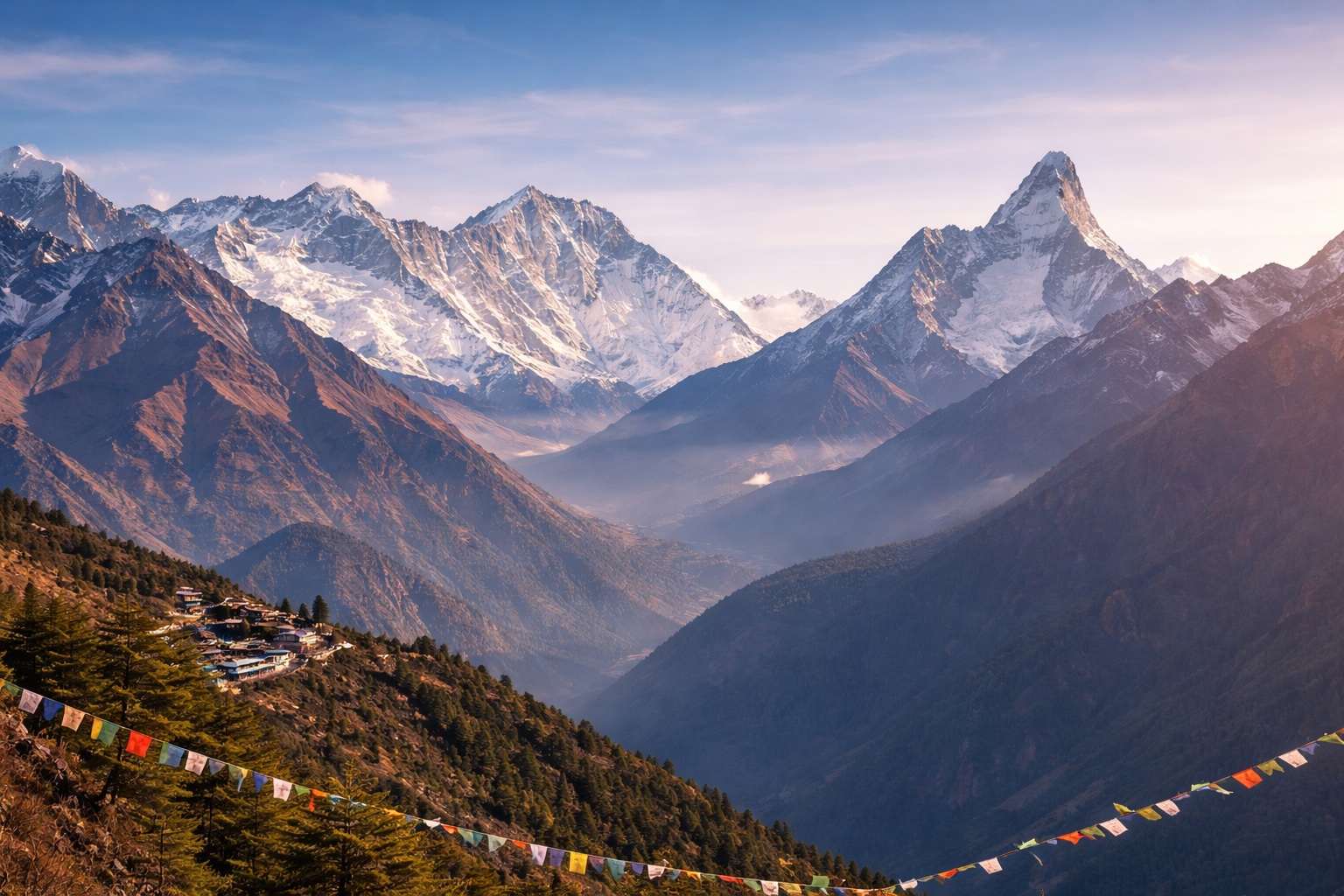
Lhonak is a high settlement on the Kanchenjunga Circuit's northern route, the last proper stop before Pangpema, the mountain's North Base Camp, sitting in stark, glaciated high-altitude terrain near the base of Kanchenjunga itself. This remote corner of the trek, well beyond the forested lower valleys and Tibetan-influenced villages passed through earlier, exposes trekkers to a genuinely barren, high-mountain environment shaped by glaciers and moraine rather than cultivated hillsides.
Basic accommodation at Lhonak reflects the extreme remoteness of this section of the Kanchenjunga Circuit, one of Nepal's least developed major trekking routes given its restricted area status and the sheer distance required to reach it. Views from the area surrounding Lhonak already hint at the scale of Kanchenjunga and its neighbouring peaks, a preview of the full panorama awaiting trekkers at Pangpema itself.
Because of the altitude and the demanding logistics of this entire region, Lhonak serves as an essential final acclimatisation and preparation point before the push to North Base Camp, and trekkers reaching this stage have typically already spent well over a week adjusting to increasing altitude throughout the trek. The genuine wilderness character of this route, among the most remote in the entire Nepal Himalaya, is precisely what continues to draw experienced trekkers willing to commit the time and effort required to reach it.
Mobile signal in the area is patchy at best, and travellers should not rely on constant connectivity once they are this far into the trail network.
Weather at this elevation can change quickly, and a flexible itinerary with a buffer day or two is generally recommended for anyone travelling through this part of the route.
Local guides with specific knowledge of this stretch of trail add real value, both for navigation and for the cultural context they can offer along the way.
A gradual, well-paced ascent through this section remains the best defence against altitude-related discomfort further along the route.
Basic but adequate teahouse facilities are typically available, offering a hot meal and a simple bed for trekkers passing through.