
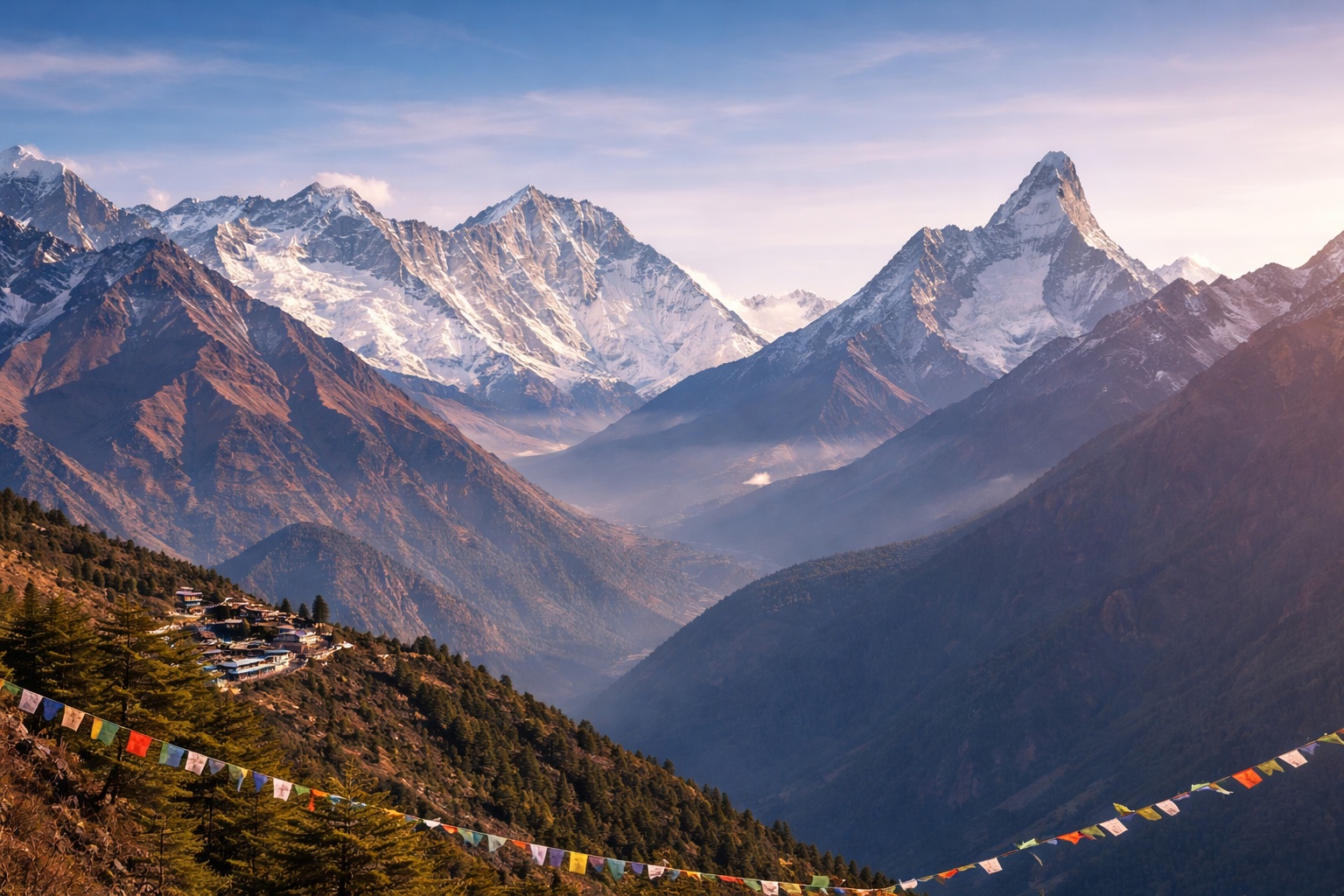
Amjilosa is a small Limbu village perched on a forested ridge above the Tamor River in Nepal's remote far eastern hills, one of the first proper overnight stops on the long trek toward Kanchenjunga, the world's third-highest mountain. Reached after a full day's walk from the roadhead at Taplejung via Mitlung and Sinwa, Amjilosa marks the point where the trail begins climbing in earnest away from the lower cultivated terraces and into denser, more remote forest.
The village itself is modest: a handful of houses and teahouses built from stone and timber, home to a small Limbu community whose culture and language are distinct from the Sherpa and Tamang groups more commonly associated with Nepal's better-known trekking regions. This is part of what makes the Kanchenjunga trek so rewarding for travellers who have already experienced Everest or Annapurna: the ethnic and cultural landscape changes as dramatically as the geography, and Amjilosa is one of the first places where that shift becomes obvious.
Surrounded by dense subtropical and temperate forest, Amjilosa sits in a transition zone between the cultivated lower hills and the wilder, higher terrain that characterises the approach to Kanchenjunga's base camps. Birdlife is abundant in the surrounding forest, and the settlement's position on a steep ridge above the Tamor gives it a cooler, breezier climate than the valley floor below. Facilities remain basic, a handful of simple teahouses offering dal bhat and a bed, reflecting the fact that this route sees only a small fraction of the trekkers who walk the Everest or Annapurna trails each season. For trekkers heading deeper into the Kanchenjunga Conservation Area, Amjilosa is the last point of real comfort before the trail becomes progressively more remote over the following days.
Overnight temperatures at Amjilosa can drop noticeably even in the main autumn trekking season, and trekkers should expect the teahouses here to be considerably simpler than the more polished lodges found on Nepal's busier routes. The lack of road access means all supplies are carried in on foot or by mule train, a fact reflected in the higher cost and narrower choice of food available compared to lower villages closer to Taplejung.