
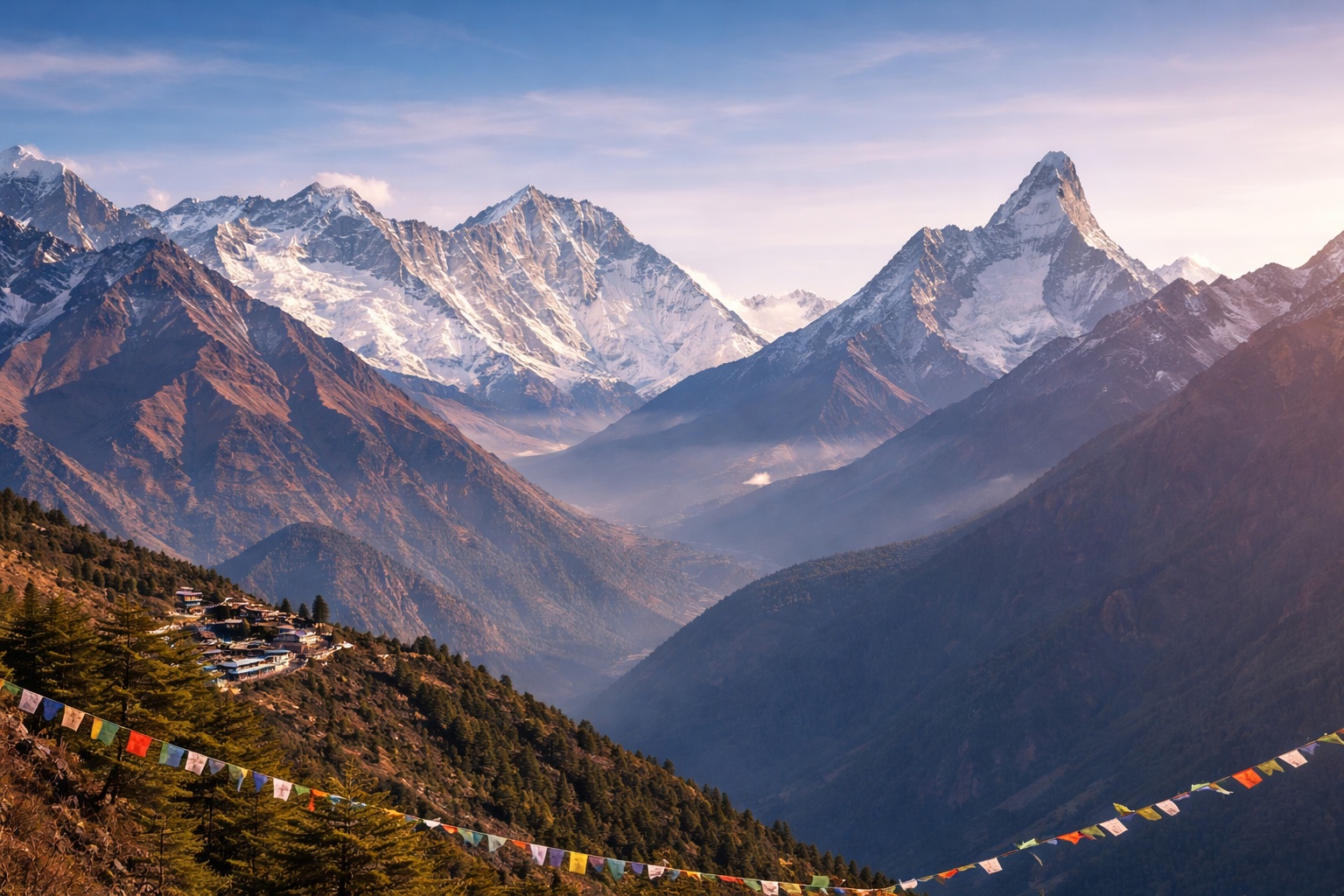
Chirwa is a village on the approach to the Kanchenjunga region, set along the Tamor river valley in Nepal's far eastern hills, marking one of the earlier stages of the long trail that eventually leads to the base camps of the world's third-highest mountain. Reached within the first days of walking from the roadhead at Taplejung, Chirwa sits in a landscape of terraced farmland and subtropical forest, considerably warmer and greener than the high alpine terrain the same trek will reach well over a week later.
The village is home to a mix of ethnic communities typical of this part of eastern Nepal, including Limbu and Rai populations whose customs and Kirat religious traditions differ significantly from the Buddhist Sherpa and Tamang cultures more commonly associated with Nepal's central and western trekking regions. This cultural diversity is one of the understated rewards of the Kanchenjunga trek, offering trekkers a markedly different experience from the more familiar cultural landscape of Everest or Annapurna.
As with most villages along this early section of the Kanchenjunga approach, facilities in Chirwa remain simple, a handful of teahouses serving the modest number of trekkers who make the journey into this remote conservation area each season. The Tamor river, which the trail follows for much of this stretch, provides both a scenic companion to the walk and a practical water source for the settlements built along its banks, and the gradual climb through villages like Chirwa allows trekkers a sensible acclimatisation pace before the terrain becomes significantly more demanding further into the trek.
Onward travel from Chirwa continues to follow the Tamor valley upstream, with the trail gradually steepening as it approaches the more forested and eventually alpine terrain that characterises the middle stages of the Kanchenjunga Circuit.
Suspension bridges crossing the Tamor and its tributaries are a recurring feature of this stretch, adding a mild sense of adventure to what is otherwise a gentle valley walk.