
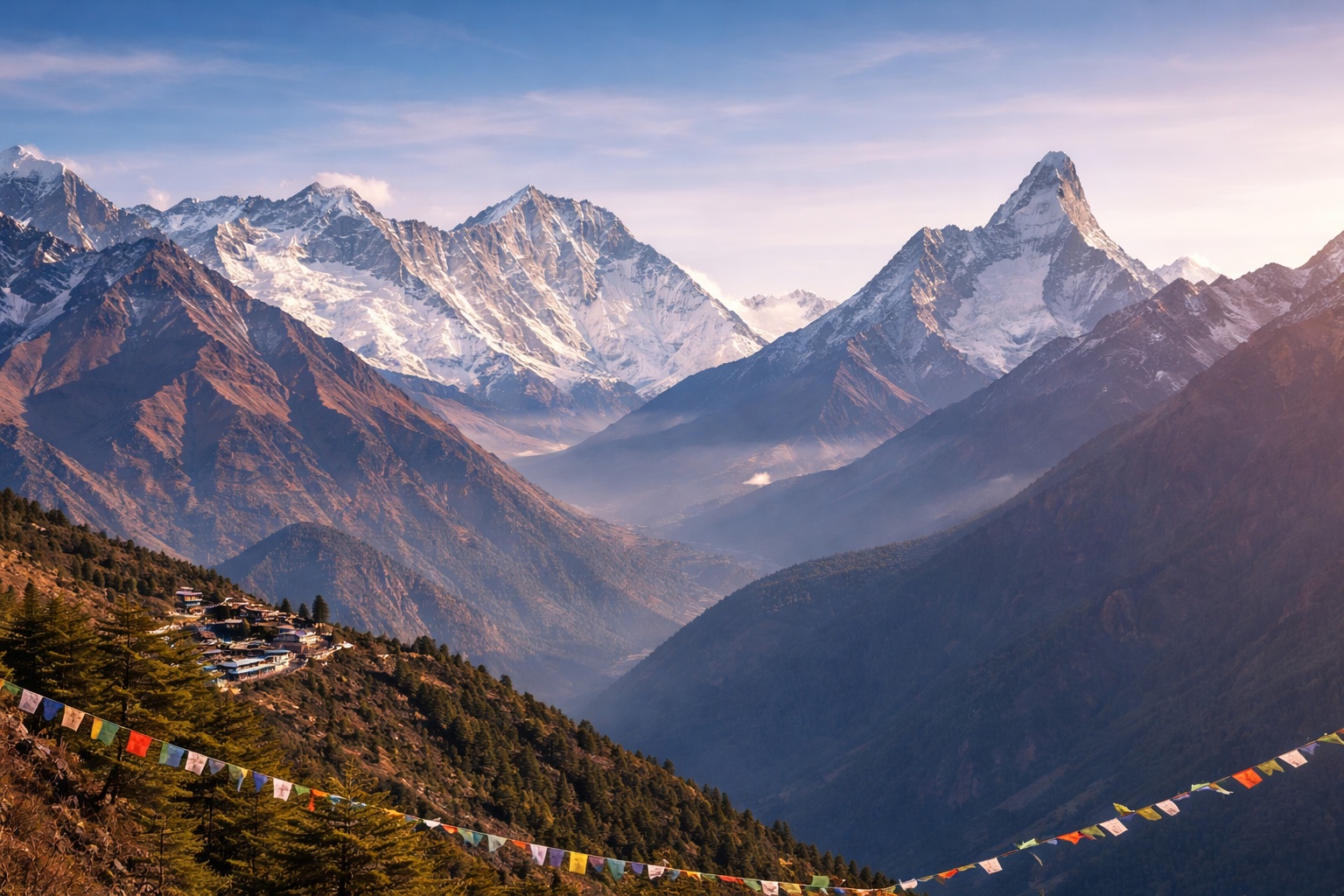
Kambachen is a high village on the Kanchenjunga Circuit's northern approach, set beneath dramatic peaks including Jannu, one of the most visually striking mountains in this part of the Himalaya, and one of the key acclimatisation stops before continuing toward Lhonak and Pangpema, the North Base Camp of Kanchenjunga itself. Sitting at a significant altitude in increasingly stark, high-alpine terrain, Kambachen marks the point where the trail leaves the last substantial forest behind and enters the more barren landscape typical of the upper Kanchenjunga region.
The village is home to a small population whose Tibetan Buddhist traditions reflect the cultural character found throughout the upper reaches of this remote trekking corridor, and basic teahouses here provide simple but essential accommodation for the modest number of trekkers making the journey toward Kanchenjunga's northern base camp. Views of Jannu, sometimes called Kumbhakarna, dominate the skyline from Kambachen, its sheer, dramatic rock and ice faces considered by many climbers and trekkers to rival the beauty of far more famous peaks elsewhere in Nepal.
Given the altitude and remoteness of this stage of the Kanchenjunga Circuit, Kambachen serves as an essential rest and acclimatisation point, and most well-planned itineraries build in additional time here before the final push toward Lhonak and Pangpema at even higher altitude. The genuine isolation of this route, one of Nepal's least visited major trekking corridors, is precisely what draws experienced trekkers here, seeking a wilderness experience increasingly difficult to find on the country's busier trails.
Local guides with specific knowledge of this stretch of trail add real value, both for navigation and for the cultural context they can offer along the way.
A gradual, well-paced ascent through this section remains the best defence against altitude-related discomfort further along the route.
Basic but adequate teahouse facilities are typically available, offering a hot meal and a simple bed for trekkers passing through.
Facilities along this stretch of trail remain simple, and trekkers should carry sufficient cash, since cards are not accepted and ATMs do not exist beyond the larger towns.