
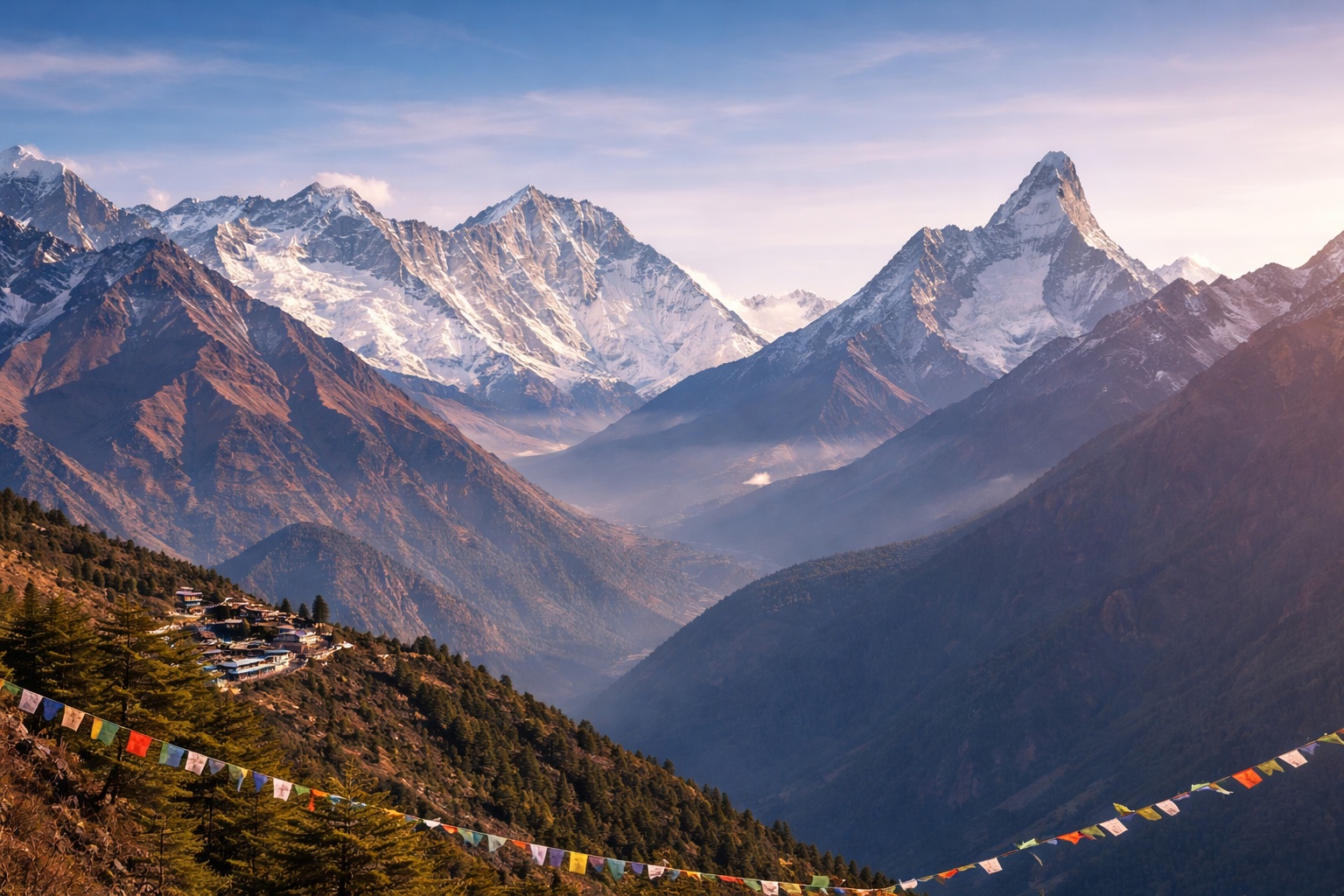
Yamphudin is a village marking the southern gateway to the Kanchenjunga trekking region, one of the last settlements before the trail climbs into the more remote, high-altitude terrain surrounding the world's third-highest mountain. Home to a mix of Limbu, Rai, and other ethnic communities reflecting the cultural diversity of far eastern Nepal, Yamphudin serves as an important staging point for trekkers undertaking either the southern approach toward Oktang or the wider Kanchenjunga Circuit.
The village's position at the edge of the more developed, road-accessible lowlands and the beginning of Kanchenjunga's restricted, largely roadless trekking region marks a clear transition point in any itinerary heading into this remote area. Basic teahouse and homestay accommodation in Yamphudin reflects the modest but essential infrastructure supporting the comparatively small number of trekkers who make the journey into this far corner of Nepal each season.
For trekkers, Yamphudin represents both a practical final resupply point and a genuine marker of entry into one of Nepal's most remote and least developed major trekking regions, a place where the country's ethnic and religious diversity remains vividly present alongside dramatic high-altitude scenery further ahead. The relative obscurity of Yamphudin and the wider Kanchenjunga region, compared to Nepal's more famous Everest and Annapurna trekking areas, continues to make this corner of the country one of its most rewarding destinations for travellers seeking genuine wilderness and cultural discovery.
A gradual, well-paced ascent through this section remains the best defence against altitude-related discomfort further along the route.
Basic but adequate teahouse facilities are typically available, offering a hot meal and a simple bed for trekkers passing through.
Facilities along this stretch of trail remain simple, and trekkers should carry sufficient cash, since cards are not accepted and ATMs do not exist beyond the larger towns.
Mobile signal in the area is patchy at best, and travellers should not rely on constant connectivity once they are this far into the trail network.