
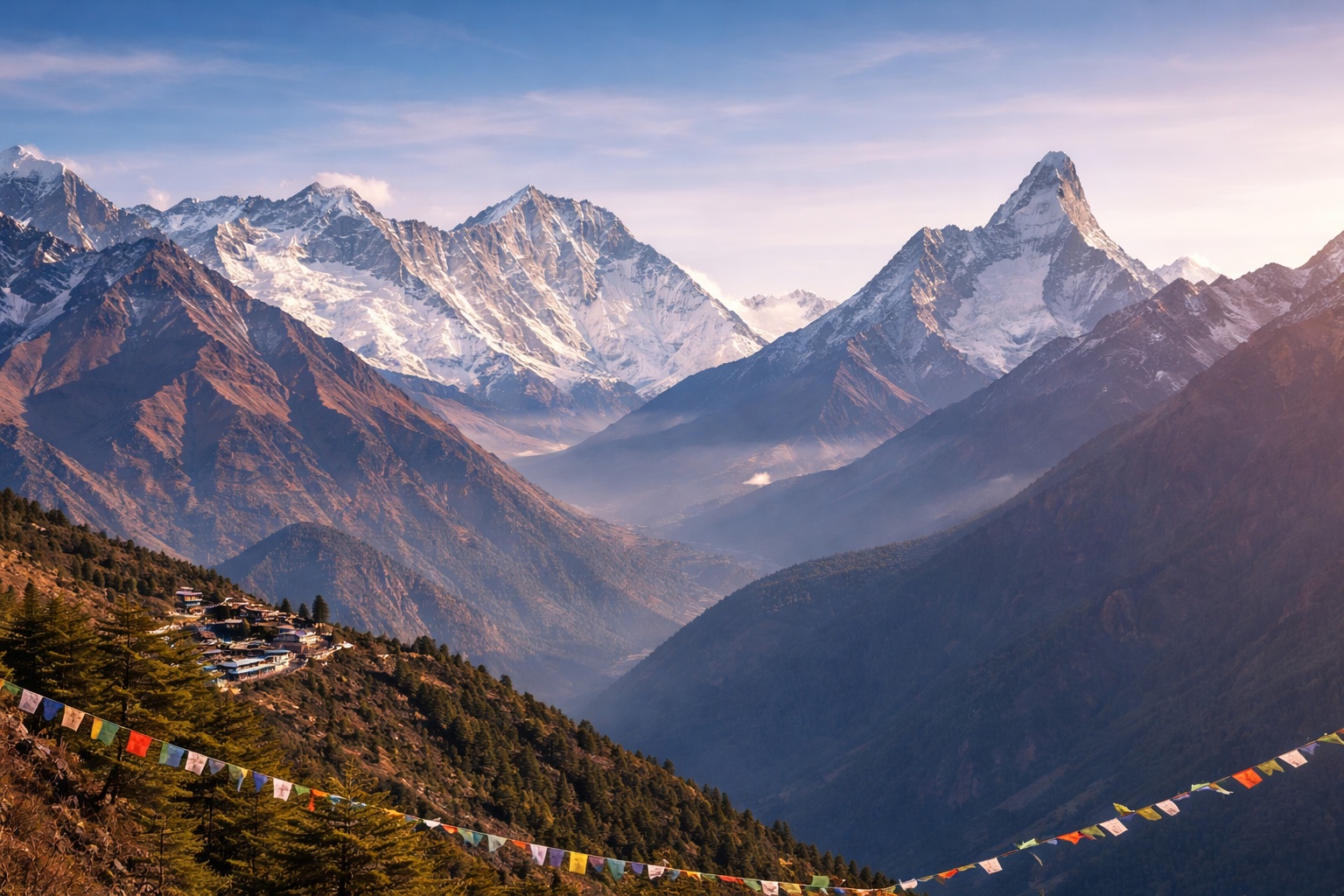
Gyabla is a small forest village on the Kanchenjunga trekking route, one of the overnight stops along the Ghunsa valley approach to the region's remote high base camps beneath the world's third-highest mountain. Set within dense forest at a moderate altitude, Gyabla retains a quiet, little-visited character typical of this entire trekking corridor, which sees only a small fraction of the trekkers found on Nepal's more famous Everest and Annapurna routes.
The settlement serves the modest but steady flow of trekkers making their way toward Ghunsa and eventually Kanchenjunga's North Base Camp at Pangpema, with basic teahouses offering simple accommodation and meals consistent with the limited tourist infrastructure found throughout this far eastern region. The surrounding forest supports a good variety of birdlife, and the relatively gentle gradient of the trail through this stretch offers a welcome contrast to the steeper climbs found both before and after this section of the route.
Gyabla's position within the Kanchenjunga Conservation Area places it within one of Nepal's most ecologically significant protected areas, home to snow leopards, red pandas, and a wide range of Himalayan flora and fauna, though sightings of the more elusive species remain rare given the dense forest cover and the animals' naturally cautious behaviour. For trekkers on the long journey toward Kanchenjunga's base camps, Gyabla represents another step deeper into one of the most genuinely remote trekking regions remaining in Nepal.
A gradual, well-paced ascent through this section remains the best defence against altitude-related discomfort further along the route.
Basic but adequate teahouse facilities are typically available, offering a hot meal and a simple bed for trekkers passing through.
Facilities along this stretch of trail remain simple, and trekkers should carry sufficient cash, since cards are not accepted and ATMs do not exist beyond the larger towns.
Mobile signal in the area is patchy at best, and travellers should not rely on constant connectivity once they are this far into the trail network.