
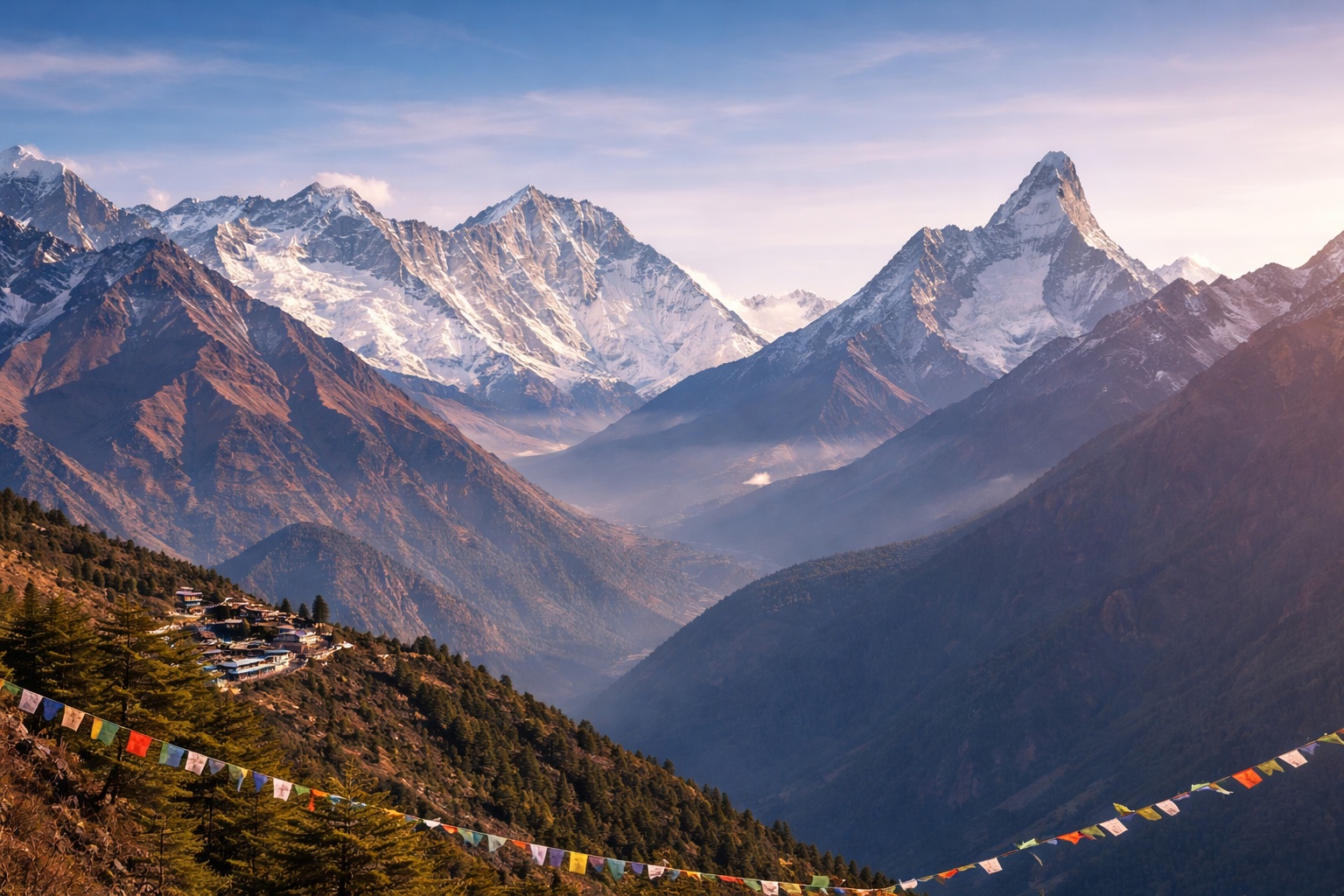
Kathmandu is Nepal's capital and the starting and ending point for almost every trek, tour, and expedition undertaken in the country. Home to Tribhuvan International Airport, the primary international gateway, and the hub for domestic flights to Lukla, Jomsom, and other mountain airstrips, Kathmandu is where nearly every Himalayan journey in Nepal begins, regardless of the specific trekking region a traveller ultimately heads toward.
The Kathmandu Valley holds seven UNESCO World Heritage monument zones, including the Durbar Squares of Kathmandu, Patan, and Bhaktapur, alongside the temple complexes of Pashupatinath, Swayambhunath, Boudhanath, and Changu Narayan, a concentration of preserved medieval architecture and living religious practice rarely matched anywhere else in Asia. The old city itself, centred on Kathmandu Durbar Square, retains a dense, atmospheric character of narrow lanes, temple courtyards, and centuries-old Newari craftsmanship, even amid the noise and traffic of the modern capital.
Thamel, the traveller's district at the heart of Kathmandu, serves as the practical base for most visitors, packed with trekking gear shops, budget and mid-range hotels, restaurants, and the general infrastructure needed to prepare for a journey into the mountains. Most itineraries include at least one or two days in Kathmandu, both for practical trip preparation and for the genuine cultural reward of exploring one of the most historically rich capital cities anywhere in the Himalayan world, before and after the trekking portion of any Nepal journey.
Mobile signal in the area is patchy at best, and travellers should not rely on constant connectivity once they are this far into the trail network.
Weather at this elevation can change quickly, and a flexible itinerary with a buffer day or two is generally recommended for anyone travelling through this part of the route.
Local guides with specific knowledge of this stretch of trail add real value, both for navigation and for the cultural context they can offer along the way.
A gradual, well-paced ascent through this section remains the best defence against altitude-related discomfort further along the route.