
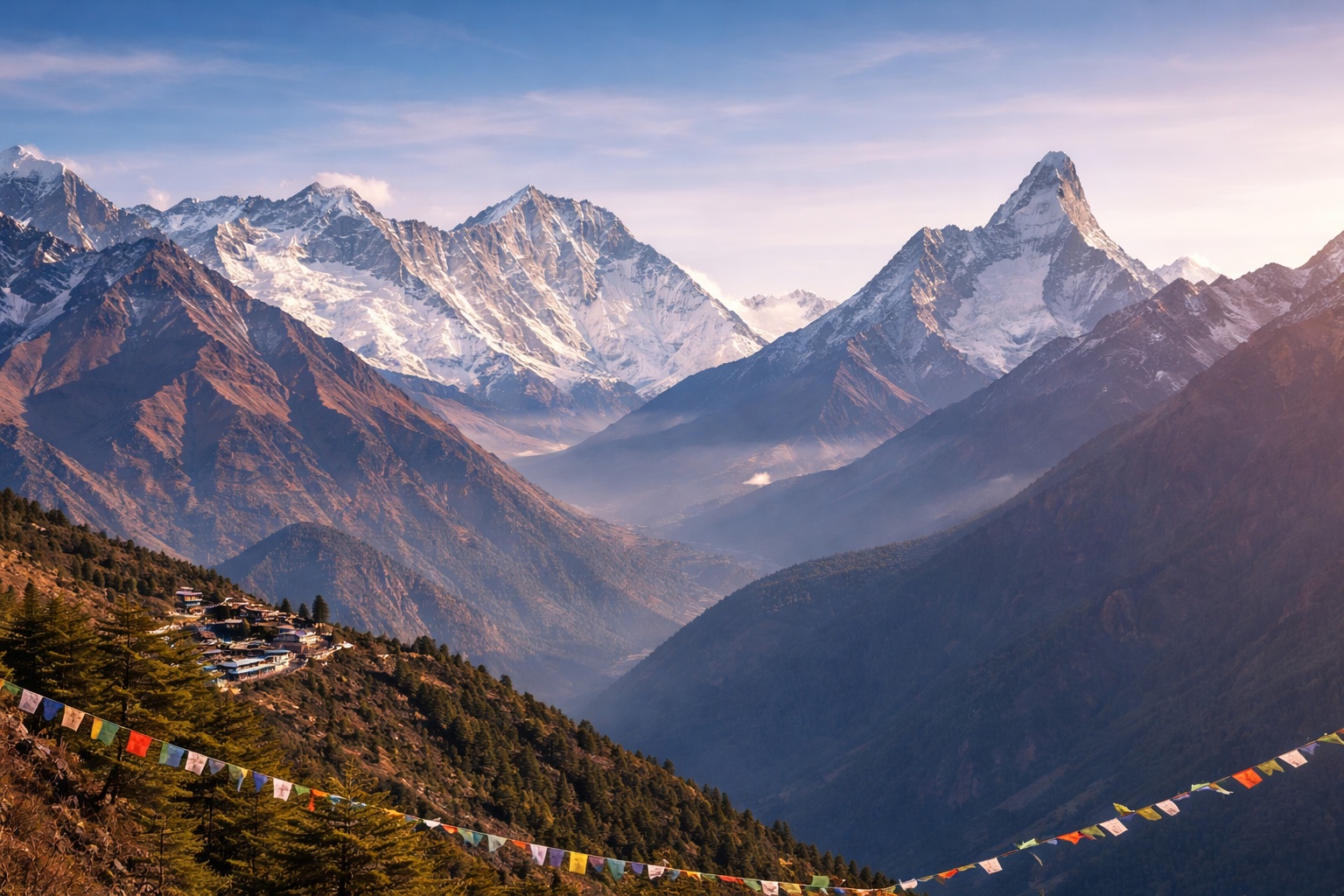
The Annapurna Circuit Trek is a 15-day trip in Pokhara (flight or drive from Jomsom/Nayapul), rated challenging (thorong la crossing is strenuous) difficulty, reaching a maximum elevation of Thorong La Pass - 5,416m (17,769 ft). The best time to do this trip is Autumn (Sep - Nov) & Spring (Mar - May). The package includes group sizes of 1–12 people, teahouses on trail / 3-star hotel kathmandu & pokhara accommodation, breakfast, lunch and dinner included daily on trail.
| Country | Pokhara (flight or drive from Jomsom/Nayapul) |
|---|---|
| Difficulty | Challenging (Thorong La crossing is strenuous) |
| Max Elevation | Thorong La Pass - 5,416m (17,769 ft) |
| Duration | 15 |
| Best Time | Autumn (Sep - Nov) & Spring (Mar - May) |
| Meals | Breakfast, lunch and dinner included daily on trail |
| Accommodation | Teahouses on trail / 3-star hotel Kathmandu & Pokhara |
| Group Size | 1–12 people |
How long is the Annapurna Circuit trek?
The Annapurna Circuit Trek is widely regarded as one of the greatest mountain treks on earth - and for good reason. In 15 days, you circumnavigate the entire Annapurna Massif, crossing from subtropical river valleys through alpine meadows and glacial moraines to the raw, wind-scoured plateau of the Mustang rain shadow, and back again. No other single trek in Nepal - or possibly the world - packs this much landscape, cultural, and ecological variety into one continuous journey.
The route begins in Besisahar (760m) in the lush Marsyangdi River valley and climbs steadily through Chame, Pisang, and Manang, gaining altitude through dense rhododendron forests and across rockfall-scattered moraines beneath the north faces of Annapurna II (7,937m), Annapurna III (7,555m), Gangapurna (7,455m), and Annapurna IV (7,525m). The trek's defining moment arrives at Thorong La Pass - 5,416 meters - the highest point of any classic trekking route in the Annapurna Conservation Area. Crossing at dawn under a clear sky with views stretching from the Tibetan plateau to the Dhaulagiri ranges is an experience trekkers carry for a lifetime.
Beyond the pass, the route descends to Muktinath (3,800m), one of Nepal's most sacred Hindu and Buddhist pilgrimage sites, then drops through the world's deepest gorge - the Kali Gandaki Gorge - past the medieval apple orchards of Marpha and the wind-lashed plateau of Jomsom. The final stages traverse the famous Annapurna foothills through Tatopani hot springs, Ghorepani, and Poon Hill before concluding in Pokhara. An optional detour to Tilicho Lake (4,919m) - the world's highest lake - adds two days of spectacular high-altitude scenery.
At View Himalaya, every Annapurna Circuit departure is managed by a locally experienced, NTB-licensed guide who knows every teahouse, every weather window, and every elevation gain on this route. All permits, logistical arrangements, and emergency protocols are managed from your Kathmandu arrival to your final departure.
| Group Size | Price Per Person |
|---|---|
| Solo (1 person) | USD 1,099 |
| Small Group (2 - 4 people) | USD 1,049 |
| Group (5 - 12 people) | USD 999 |
| 12+ people | Contact us for group rates |
All prices include ground transportation Kathmandu - Besisahar, all ACAP and TIMS permits, licensed guide, porter, teahouse accommodation, all meals on trail, sleeping bag, first-aid kit with emergency oxygen, and full on-ground support. A 20% deposit confirms your booking. Balance is payable before departure or on arrival in Kathmandu.
The Annapurna Circuit is a point-to-point traverse - you never repeat terrain, which gives every day a sense of genuine forward movement through a changing world. The eastern approach through the Marsyangdi Valley is wet, forested, and dramatic: waterfalls, suspension bridges, terraced rice fields, and the first enormous ice-capped peaks sliding into view around every river bend. As you climb through Chame and into the Manang Valley, the air thins and the landscape opens into wide glacial plains where yaks graze against the backdrop of Gangapurna's hanging glacier.
The Thorong La crossing is the physical and emotional centrepiece of the trek. You'll leave Thorong Phedi or High Camp at 3:00 - 4:00 AM to reach the pass (5,416m) before the afternoon winds begin. The 4 - 5 hour ascent through frozen scree and snow fields is arduous but non-technical. The descent to Muktinath (1,200m drop in 4 km) is steep and unrelenting on tired legs - but arriving at the sacred temple with the worst behind you is one of trekking's finest feelings.
The western half of the circuit through the Kali Gandaki is a different world: arid, windswept, ancient. The daily afternoon gale that accelerates through the gorge has shaped the landscape and every settlement along it. Lodges here are more spread out, teahouses simpler, the light different - flatter, clearer, Tibetan in character. Nights in Kagbeni, Marpha, and Tatopani have a quieter, more contemplative quality than the busy Khumbu corridor.
The Annapurna Circuit is suitable for fit, experienced trekkers who have previous multi-day high-altitude hiking experience. The Thorong La crossing at 5,416m requires good cardiovascular fitness and acclimatisation - two full rest days in Manang are mandatory. You do not need technical climbing skills, but you must be comfortable on steep, loose terrain for 6 - 8 hour days. If you have successfully completed a trek above 4,000m without significant altitude issues, the Annapurna Circuit is within reach with proper preparation.
| Day | Route | Distance | Altitude | Walking Time |
|---|---|---|---|---|
| 1 | Kathmandu → Besisahar | 185 km drive | 760m | 5 - 6 hrs drive |
| 2 | Besisahar → Bulbule | 12 km | 840m | 3 - 4 hrs |
| 3 | Bulbule → Chame | 22 km | 2,710m | 6 - 7 hrs |
| 4 | Chame → Pisang | 14 km | 3,200m | 5 - 6 hrs |
| 5 | Pisang → Manang | 16 km | 3,500m | 5 - 6 hrs |
| 6 | Manang Acclimatisation Day | - | 3,500m | Rest day |
| 7 | Manang → Yak Kharka | 8 km | 4,050m | 3 - 4 hrs |
| 8 | Yak Kharka → Thorong Phedi/High Camp | 7 km | 4,450 - 4,850m | 3 - 4 hrs |
| 9 | High Camp → Thorong La → Muktinath | 16 km | 5,416m → 3,800m | 7 - 8 hrs |
| 10 | Muktinath → Jomsom | 18 km | 2,720m | 5 - 6 hrs |
| 11 | Jomsom → Marpha → Tatopani | 20 km | 1,190m | 6 - 7 hrs |
| 12 | Tatopani → Ghorepani | 16 km | 2,874m | 6 - 7 hrs |
| 13 | Poon Hill + Ghorepani → Tadapani | 12 km | 3,210m → 2,590m | 5 - 6 hrs |
| 14 | Tadapani → Ghandruk → Nayapul → Pokhara | 14 km trek + drive | 1,940m → 820m | 5 - 6 hrs |
| 15 | Pokhara → Kathmandu | - | 820m | Flight 25 min |
| Add-On | Details | Cost |
|---|---|---|
| Tilicho Lake Extension (2 days) | Side trip from Manang to Tilicho Lake (4,919m) | USD 180 per person |
| Jomsom - Pokhara Flight | Skip Tatopani/Ghorepani and fly Jomsom to Pokhara | USD 120 per person |
| Extra Porter | Dedicated personal porter for your luggage | USD 220 for full trek |
| Helicopter Emergency Evacuation | Upgrade to a pre-arranged standby emergency heli (insurance claim) | Covered by insurance |
| Upgraded Rooms on Trail | En-suite rooms where available (Manang, Jomsom, Tatopani) | USD 130 supplement |
| Extra Night Kathmandu | 3-star hotel, breakfast, airport transfer | USD 40 per night |
The Annapurna Circuit is rated Challenging. The daily walking distances (12 - 22 km) are moderate, but the cumulative altitude gain - particularly the 1,000m+ climb to Thorong La Pass from High Camp in sub-zero pre-dawn conditions - requires genuine physical preparation. The western descent from the pass to Muktinath (1,600m of steep downhill) is hard on knees and legs.
Recommended training before departure: 3 months of regular uphill hiking with a loaded pack (10 - 12 kg). Day hikes of 5 - 7 hours on consecutive days will give you a realistic sense of trail readiness. Practice walking on loose, uneven terrain. If you live at low altitude, consider arriving in Kathmandu 2 days early to begin mild acclimatisation.
The mandatory acclimatisation day in Manang (Day 6) is non-negotiable - do not attempt the Thorong La without it. The Himalayan Rescue Association clinic in Manang offers free altitude consultations and is strongly recommended. Symptoms of altitude sickness at any point are treated as a medical emergency: descent is the only cure.
The premier trekking season. Post-monsoon skies are consistently clear, the landscape is freshly washed green, rhododendrons and wildflowers are in bloom, and mountain views are at their sharpest. Temperatures at Manang (3,500m) range from 5°C to 15°C by day, dropping below 0°C at night. Thorong La at night reaches - 10°C to - 15°C in November. October is peak season - expect company on trail but well-stocked teahouses. September still has residual monsoon cloud but fewer crowds.
The second prime season, when rhododendron forests from Tatopani to Ghorepani blaze red, pink, and white. Days are longer, air is warming, and Thorong La conditions are generally stable. March offers the best rhododendron displays; April sees maximum trail traffic; May can be warm below 2,000m but snow lingers on the pass. A strong spring window.
The Annapurna Circuit in winter is for experienced cold-weather trekkers only. Thorong La can be blocked by heavy snowfall - some years the pass is unpassable for weeks at a time. Below Manang, the lower and western valleys remain accessible. If you're committed to a winter attempt, carry crampons, build flexibility into your schedule for weather delays, and confirm conditions with your guide before committing to the crossing attempt.
The eastern (Marsyangdi) side of the circuit receives heavy monsoon rain from June to August, turning trails slick, increasing landslide risk, and obscuring mountains entirely. However, the western Kali Gandaki valley and Mustang lie in the Himalayan rain shadow and remain largely dry. Trekkers who only wish to do the Jomsom - Muktinath - Kagbeni section find monsoon perfectly viable, but the full circuit crossing is not advisable without experience and careful planning.
The Annapurna Circuit has the most developed teahouse network of any major Nepal trek. Teahouses range from basic family-run lodges in villages like Ghyaru and Ngawal to well-appointed facilities in Manang and Jomsom with electricity, Wi-Fi (varying quality), hot showers, and en-suite rooms in some cases. Standard teahouse rooms are twin-share with basic blankets (sleeping bag essential above 3,500m).
Meals on trail are served at each teahouse - dal bhat (the Nepali staple of lentil soup, rice, vegetables, and pickles) is available everywhere and often comes with free refills. Teahouse menus in main villages include pasta, noodles, momos (dumplings), soups, pancakes, eggs, and seasonal local produce. In Manang and Jomsom, expect better variety. Above 4,000m, menus become simpler but portions remain hearty. Included meals are as specified in the itinerary: breakfast and dinner at each lodge plus packed or trail lunch. Beverages are not included and are purchased separately.
The Annapurna Circuit runs on private departures every day of the year, subject to trail and permit conditions. You choose your start date; we confirm your guide, porter, and accommodation immediately on receipt of your deposit.
The Annapurna Circuit involves sustained time above 3,500m and a single-day crossing to 5,416m - altitude management is central to the trek's success and safety. The itinerary is designed with the internationally recognised climb high, sleep low principle and includes two mandatory slow-ascent days and one full acclimatisation rest day in Manang.
Key altitude thresholds on this trek:
Acute Mountain Sickness (AMS) symptoms to watch for: persistent headache, nausea, loss of appetite, extreme fatigue, dizziness, or confusion. Mild AMS is common above 3,500m and usually resolves with rest and hydration. Moderate-to-severe AMS - or any symptom of HACE (High Altitude Cerebral Edema) or HAPE (High Altitude Pulmonary Edema) - requires immediate descent. Your guide carries Diamox (acetazolamide) and emergency oxygen. The Himalayan Rescue Association clinic in Manang is staffed by international medical volunteers during peak season and provides free consultations.
Do not take sleeping pills, heavy sedatives, or alcohol above 3,500m. Stay well-hydrated (3 - 4 litres of water per day on ascent days). Listen to your body - no summit view is worth a medical emergency.
Comprehensive travel and medical insurance is mandatory for the Annapurna Circuit trek. Your policy must explicitly cover:
We verify your insurance details before confirming your booking. Helicopter evacuation from high-altitude terrain in the Annapurna region costs USD 2,500 - 5,500 - this is not a cost you can absorb personally. Policies from World Nomads, SafetyWing, True Traveller, Battleface, and Columbus Direct generally meet the required coverage. Always read the policy exclusions - some policies exclude Nepal, or cap helicopter evacuation at amounts insufficient for the actual cost.
Every View Himalaya Annapurna Circuit trek is led by a Nepal Tourism Board (NTB) licensed trekking guide with a minimum of five seasons on the Annapurna Circuit specifically. Our guides hold Wilderness First Aid certification, carry pulse oximeters and emergency oxygen, and are trained in altitude recognition, emergency response, and evacuation coordination.
Our team meets you at Tribhuvan International Airport on arrival and takes care of everything from that point - hotel, briefing, permits, equipment checks, and guide introduction - so your first morning in Nepal is calm and organised.
| Trek | Duration | Max Altitude | Highlights |
|---|---|---|---|
| Annapurna Base Camp Trek | 11 Days | 4,130m | ABC amphitheatre, Machhapuchhre, Poon Hill, Modi Khola |
| Poon Hill Trek | 5 Days | 3,210m | Best beginner Annapurna experience, sunrise panorama |
| Upper Mustang Trek | 12 - 14 Days | 3,840m | Lo Manthang, Tibetan plateau, restricted area permit |
| Manaslu Circuit Trek | 14 - 18 Days | 5,160m | Remote circuit, Larkya La Pass, restricted area, wilderness |
Annapurna Circuit trek in one sentence: A 15-day teahouse trek circling the Annapurna massif via the 5,416m Thorong La pass, from the Marshyangdi valley to the sacred temple town of Muktinath.
Annapurna Circuit highest point: Thorong La Pass at 5,416 metres (17,769 feet), the physical and psychological centrepiece of the route.
Annapurna Circuit trek difficulty: Challenging, chiefly due to the long, high Thorong La crossing day rather than technical terrain.
Best time for the Annapurna Circuit: Autumn (October - November) for the most stable pass-crossing conditions, or Spring (March - May) for rhododendron season in the lower valleys.
Annapurna Circuit trek cost: View Himalaya packages start from USD 999 per person, including teahouse accommodation, all trail meals, licensed guide, porter, and both required permits (ACAP and TIMS).
Annapurna Circuit vs Everest Base Camp: The Circuit is longer (15 vs 14 days) and covers more total distance, while EBC reaches a marginally higher peak altitude - the two are comparably challenging in different ways.
One of the best trips we've ever taken. Our guide's English was excellent and he explained the local culture in real depth. A particular highlight for us was optional side trip to Tilicho Lake (4,919m) - the world's highest lake. If you're considering this trip, just book it - you won't regret it.
One of the best trips we've ever taken. Our guide's English was excellent and he explained the local culture in real depth. A particular highlight for us was sunrise views of Dhaulagiri (8,167m) from Poon Hill (3,210m). We'd book with View Himalaya again without hesitation.
Exceeded all our expectations in every way. Our guide's English was excellent and he explained the local culture in real depth. A particular highlight for us was walk through medieval Marpha village and taste local apple brandy. Thank you to the whole View Himalaya team for making this happen.
An unforgettable experience from start to finish. Our guide was incredibly knowledgeable and made sure we were safe every step of the way. A particular highlight for us was witness the fusion of Hindu and Tibetan Buddhist cultures along the route. Thank you to the whole View Himalaya team for making this happen.
Exceeded all our expectations in every way. Having such an experienced guide made a huge difference, especially at altitude. A particular highlight for us was visit Muktinath Temple (3,800m) - sacred to both Hindus and Buddhists. Booking through View Himalaya made all the logistics completely stress-free.

