
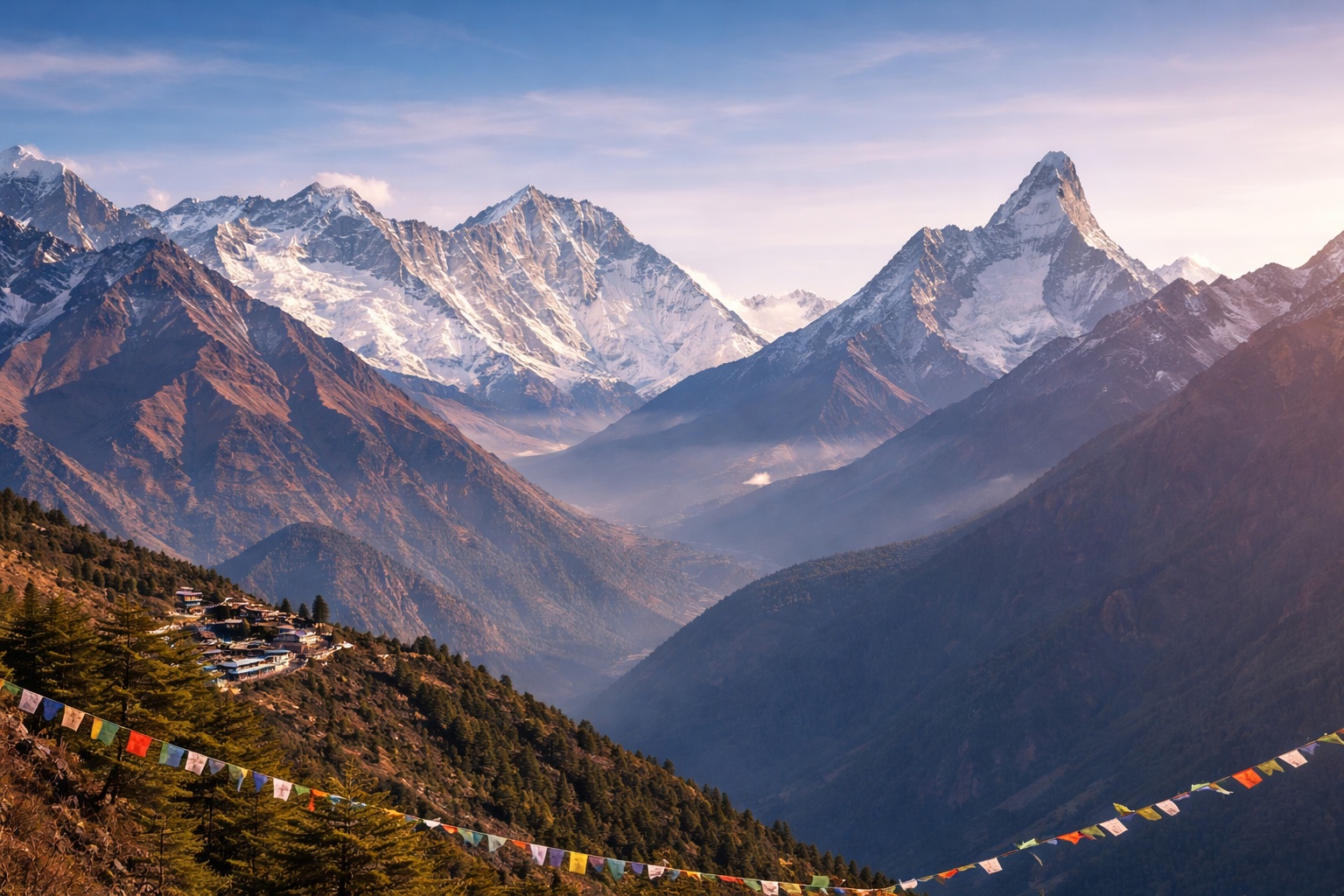
Pisang is a village on the Annapurna Circuit split between a lower and upper settlement, marking the point where trekkers can choose between two alternate trails toward Manang, one following the valley floor and the other climbing higher through quieter, more traditional villages. Sitting beneath dramatic cliffs and with early views toward the Annapurna range beginning to open up, Pisang represents an important transition point on the circuit, where the trek's scenery and cultural character both shift noticeably.
Lower Pisang, along the main valley trail, offers more straightforward walking and slightly better infrastructure, while Upper Pisang, reached via a steeper climb, rewards trekkers with a more traditional Tibetan Buddhist village atmosphere and superior mountain views, including a striking large monastery perched above the settlement. Many trekkers choose the upper route specifically for this cultural and scenic payoff, rejoining the lower trail before or at Manang further ahead.
The choice between the two Pisang routes reflects a broader theme found throughout the upper Annapurna Circuit, where trekkers can often choose between a faster, more developed valley floor path and a quieter, more scenic and culturally rich alternative at moderate additional effort. For trekkers with the time and inclination, the upper route through Pisang offers one of the more rewarding variations available on this stretch of the circuit, without adding significant extra distance to the overall itinerary.
Mobile signal in the area is patchy at best, and travellers should not rely on constant connectivity once they are this far into the trail network.
Weather at this elevation can change quickly, and a flexible itinerary with a buffer day or two is generally recommended for anyone travelling through this part of the route.
Local guides with specific knowledge of this stretch of trail add real value, both for navigation and for the cultural context they can offer along the way.
A gradual, well-paced ascent through this section remains the best defence against altitude-related discomfort further along the route.