
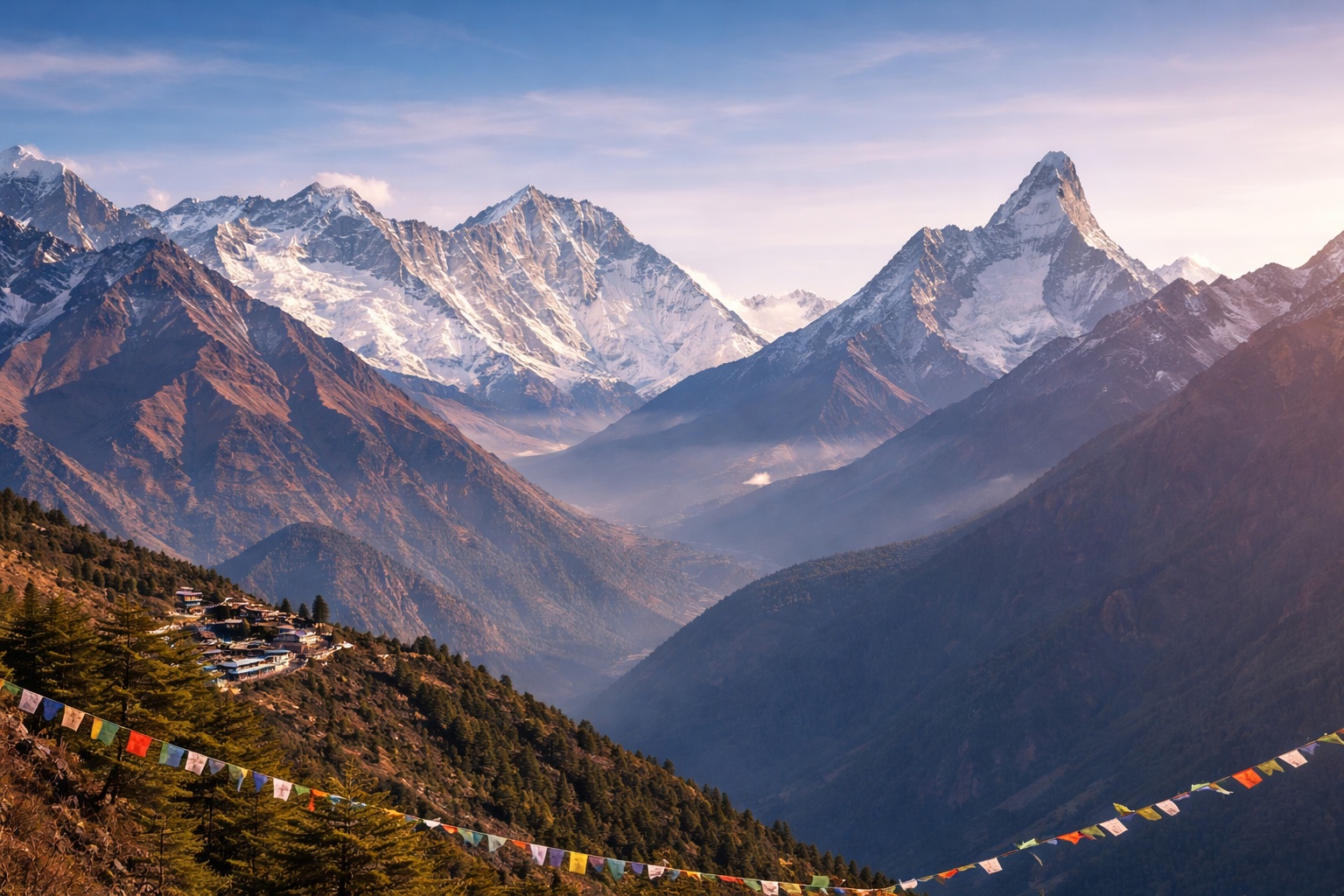
Chame, at 2,710 metres, is the district headquarters of Manang and one of the pivotal overnight stops on the Annapurna Circuit, marking the point where the valley narrows dramatically and the first proper views of the high peaks of the Annapurna and Lamjung Himal ranges come into full sight. Built along both banks of the Marshyangdi river and connected by a footbridge, Chame has a genuine small-town feel, with government offices, a hospital, and a wider range of shops and services than the smaller villages trekkers will have passed through on the days before.
The village is known among trekkers for its natural hot springs, a welcome facility after several days of walking, located a short distance from the main trail and popular for soothing tired legs before the trek continues into higher, colder terrain. Chame also marks a noticeable shift in the surrounding forest, dense pine and fir stands give the area a different character from the warmer, more subtropical vegetation of the lower valley, a visible sign of the altitude gained since Besisahar.
Beyond Chame, the Annapurna Circuit trail continues through increasingly dramatic scenery, including the famous curved rock formation near Dukur Pokhari and the approach to Upper Pisang, where the first close views of Annapurna II begin to dominate the skyline. Because of its size and services, Chame is often used as a rest or resupply stop even by trekkers who are otherwise moving quickly through the lower valley, and its position roughly at the midpoint between Besisahar and Manang makes it a natural psychological milestone on the long road toward Thorong La.
The hot springs in particular are worth timing an overnight stop around, since a soak here is one of the few genuine creature comforts available on this stretch of the circuit before the trail climbs into colder, more spartan terrain further ahead.