
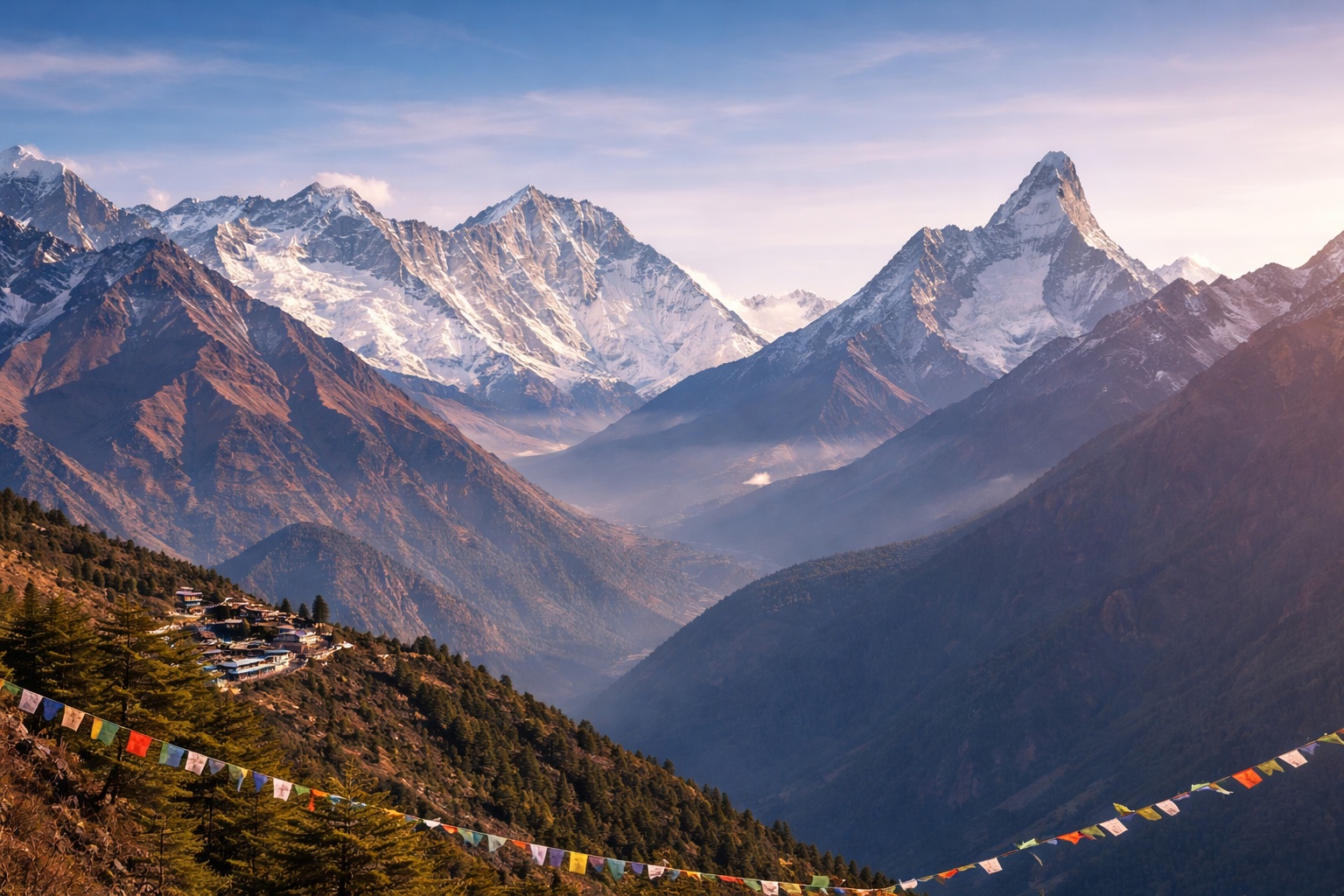
Manang is the principal acclimatisation hub on the Annapurna Circuit, a large, historic village set in a high, dry valley below the Annapurna massif, where nearly every trekker on the circuit spends at least two nights before attempting the crossing of Thorong La. Sitting well above the treeline in a landscape that has more in common with the Tibetan plateau than the lush lower valleys further south, Manang's stone houses, flat roofs, and prayer flags reflect centuries of trans-Himalayan trade and Tibetan Buddhist cultural influence.
The village supports a genuinely substantial range of facilities for a settlement at this altitude, including bakeries, cinemas showing mountaineering films for trekkers on their rest day, and a small hospital run by the Himalayan Rescue Association that provides altitude sickness talks each afternoon during trekking season. This level of infrastructure, unusual for a village at over 3,500 metres, exists specifically because of Manang's central role in supporting the thousands of trekkers who pass through each year on their way toward Thorong La.
Acclimatisation hikes from Manang toward the Ice Lake or the Gangapurna viewpoint are a standard part of most itineraries, helping trekkers adjust to the altitude before the considerably higher demands of the pass crossing itself. Manang's combination of dramatic scenery, genuine Tibetan-influenced culture, and essential practical infrastructure make it one of the most memorable and important single stops on the entire Annapurna Circuit.
Mobile signal in the area is patchy at best, and travellers should not rely on constant connectivity once they are this far into the trail network.
Weather at this elevation can change quickly, and a flexible itinerary with a buffer day or two is generally recommended for anyone travelling through this part of the route.
Local guides with specific knowledge of this stretch of trail add real value, both for navigation and for the cultural context they can offer along the way.
A gradual, well-paced ascent through this section remains the best defence against altitude-related discomfort further along the route.