
Open Hours: Mon - Fri 6.00 am - 10.00 pm (Nepal Standard Time)
Nar Phu Valley Trek - 14 Days | Hidden Himalayan Villages & Kangla Pass 5,320 m
14 Days Strenuous Kangla Pass - 5,320 m (17,454 ft) April - May and September - October
Country Kathmandu / Kathmandu
Difficulty Strenuous
Max Elevation Kangla Pass - 5,320 m (17,454 ft)
Duration 14
Best Time April - May and September - October
Accommodation Teahouses and basic guesthouses
Group Size Minimum 2 trekkers (restricted area regulation)
Trip Highlights
  • Cross Kangla Pass (5,320 m) - the dramatic gateway between the Nar Phu valleys and the Annapurna Circuit
  • Visit Phu Village (4,080 m) and Tashi Lhakhang Gompa - one of Nepal's most ancient active Buddhist monasteries
  • Explore Nar Village (4,110 m) - a labyrinthine settlement of stone alleys, prayer wheels, and centuries-old chortens
  • Watch yak caravans and bharal herds on open moraine slopes below Himlung Himal (7,126 m)
  • Trek with almost no other visitors - Nar Phu receives fewer than 1,500 trekkers per year
  • Traverse the narrow Phu Khola gorge - sheer 300 m canyon walls carved by glacial meltwater
  • Optional hike toward Himlung Himal base (approx. 4,500 m) for close-up glacier views
  • Combine seamlessly with the Annapurna Circuit's Thorong La (5,416 m) as an optional extension

Nar Phu Valley Trek - 14 Days | Hidden Himalayan Villages & Kangla Pass 5,320 m

The Nar Phu Valley Trek is a 14-day trip in Kathmandu / Kathmandu, rated strenuous difficulty, reaching a maximum elevation of Kangla Pass - 5,320 m (17,454 ft). The best time to do this trip is April - May and September - October. The package includes group sizes of Minimum 2 trekkers (restricted area regulation), teahouses and basic guesthouses accommodation.

Nar Phu Valley Trek - Key Facts
Country Kathmandu / Kathmandu
Difficulty Strenuous
Max Elevation Kangla Pass - 5,320 m (17,454 ft)
Duration 14
Best Time April - May and September - October
Accommodation Teahouses and basic guesthouses
Group Size Minimum 2 trekkers (restricted area regulation)

How long is the Nar Phu Valley trek?

The View Himalaya Nar Phu Valley trek is 14 days, exploring hidden Himalayan villages in a restricted valley off the main Annapurna Circuit route, crossing the 5,320m Kangla Pass.

Trek Overview

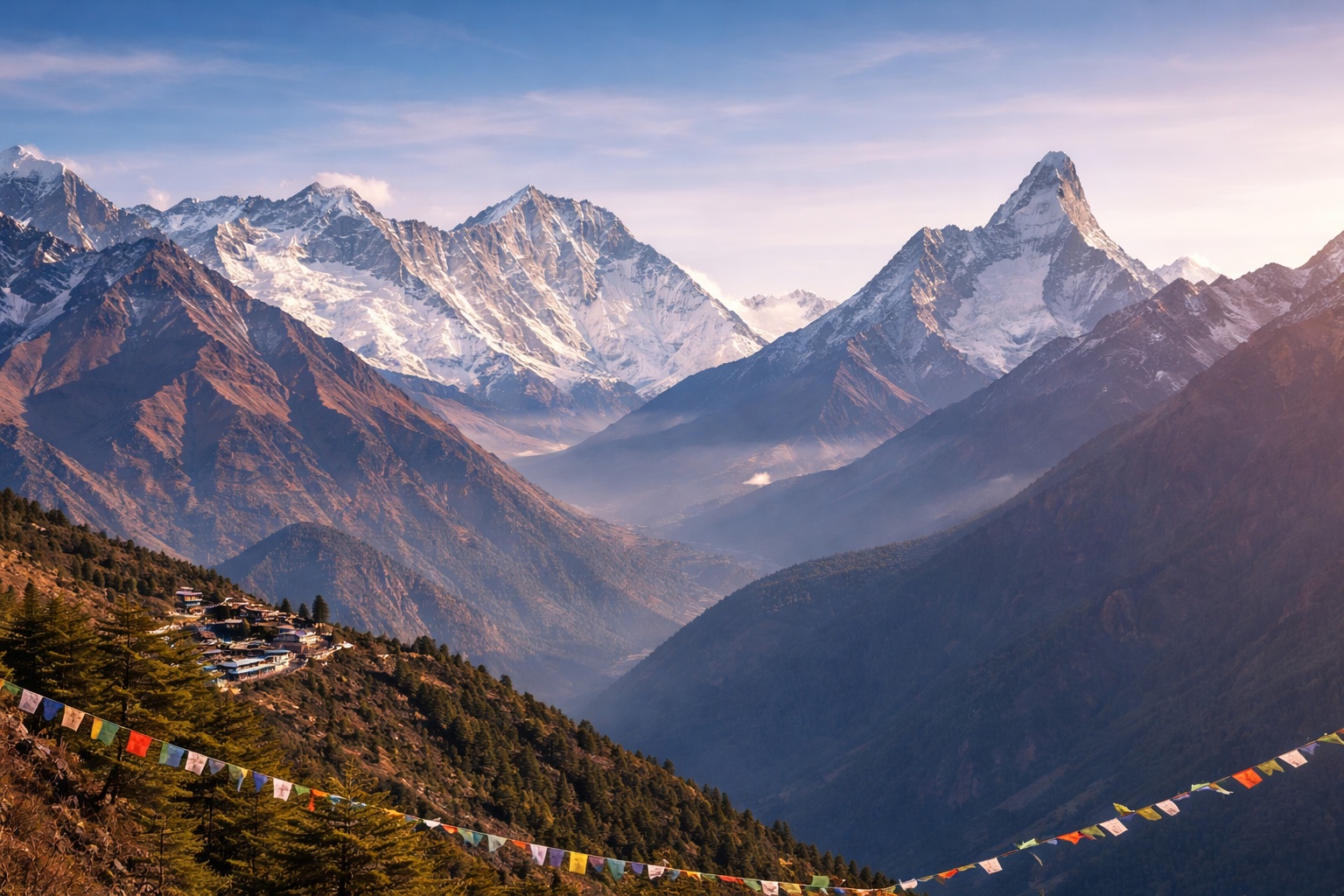
The Nar Phu Valley Trek leads you into one of Nepal's last truly isolated corners - a pair of high-altitude side valleys branching north from the Annapurna Circuit near Koto village (2,600 m). Guarded by a restricted-area permit system since trekking began in the region, the twin communities of Phu (4,080 m) and Nar (4,110 m) sit inside a rain-shadow plateau that looks and feels more like the Tibetan Plateau than the green hills of mid-Nepal. Stone chortens, hand-carved mani walls, and flat-roofed whitewashed houses cluster below ice-capped peaks - Himlung Himal (7,126 m), Kang Guru (6,981 m), and the massive north wall of Annapurna II (7,937 m) fill the skyline from every teahouse window.

This 14-day itinerary departs Kathmandu by jeep, follows the Annapurna Circuit road as far as Koto, then veers north into the Nar Phu corridor along a rocky trail above the Phu Khola gorge. Two nights in each village allow proper acclimatisation and time to explore Tashi Lhakhang Gompa in Phu and the ancient hilltop monastery in Nar. The climax is Kangla Pass (5,320 m), a high snowy col that deposits you on the Annapurna Circuit at Ngawal (3,660 m) before a final jeep journey back to Kathmandu. Because the Nar Phu Restricted Area Permit requires a minimum of two trekkers and a licensed guide, the valley receives a fraction of the traffic that crowds Manang - making this one of Nepal's most rewarding high-altitude journeys for those seeking genuine solitude and unfiltered Himalayan culture.

Wildlife in Nar Phu is exceptional. Snow leopard pugmarks appear on upper moraine trails above Phu, and Himalayan blue sheep (bharal) move in herds across open slopes. The local Nyeshangté people still follow century-old trade routes across Kangla Pass to exchange salt and wool. Yak caravans are a common sight, and dzopkyo - yak - cattle hybrids - serve as the chief beasts of burden on the narrowest canyon sections.

Trip Facts

  • Duration: 14 days (10 trek days + 2 drive days + 2 acclimatisation days)
  • Maximum Altitude: Kangla Pass - 5,320 m (17,454 ft)
  • Trek Distance: Approximately 95 km
  • Daily Walking: 4 - 7 hours
  • Difficulty: Strenuous
  • Start / End: Kathmandu / Kathmandu
  • Accommodation: Teahouses and basic guesthouses
  • Group Size: Minimum 2 trekkers (restricted area regulation)
  • Best Seasons: April - May and September - October
  • Permits Required: Nar Phu Restricted Area Permit (RAP) + Annapurna Conservation Area Permit (ACAP) + TIMS

Pricing

Group SizePrice per Person (USD)
Solo trekkerN/A - 2 trekkers minimum (restricted area)
2 peopleUSD 1,349
3 - 5 peopleUSD 1,249
6 - 10 peopleUSD 1,099
11 or moreContact us for a group quote

A deposit of 20 % confirms your booking; the balance is due 30 days before departure. Nar Phu Restricted Area Permits must be arranged a minimum of three weeks in advance. All prices include permits, guide, porter, teahouse accommodation, and three meals per day on trek.

Trek Highlights

  • Cross Kangla Pass (5,320 m) - the dramatic gateway between the Nar Phu valleys and the Annapurna Circuit
  • Visit Phu Village (4,080 m) and Tashi Lhakhang Gompa - one of Nepal's most ancient active Buddhist monasteries
  • Explore Nar Village (4,110 m) - a labyrinthine settlement of stone alleys, prayer wheels, and centuries-old chortens
  • Watch yak caravans and bharal herds on open moraine slopes below Himlung Himal (7,126 m)
  • Trek with almost no other visitors - Nar Phu receives fewer than 1,500 trekkers per year
  • Traverse the narrow Phu Khola gorge - sheer 300 m canyon walls carved by glacial meltwater
  • Optional hike toward Himlung Himal base (approx. 4,500 m) for close-up glacier views
  • Combine seamlessly with the Annapurna Circuit's Thorong La (5,416 m) as an optional extension

What to Expect

The Nar Phu Valley Trek demands solid trekking fitness and genuine comfort at altitude. The first three walking days from Koto ascend through a deep canyon - the trail clings to cliff ledges above the Phu Khola and is narrow in the early section before Meta (3,560 m). Weather in April - May brings afternoon cloud but generally clear mornings; in October - November the air is stable, cold at night ( - 5 °C to - 15 °C above Nar), and brilliantly clear. Snow is possible on Kangla Pass from late October; crampons or microspikes may be necessary on the upper snowfield.

Teahouse infrastructure in Nar Phu is more basic than on the main Annapurna Circuit. Rooms are simple - two wooden beds, a blanket, and a small stove in common dining areas. Meals are hearty Nepali staples: dal bhat, tsampa porridge, roti, and sometimes yak cheese. Solar and micro-hydro power supply limited electricity; slow phone charging is possible. Mobile signal disappears above Meta and is absent in Phu and Nar entirely - inform family before entering the valley. Your guide carries a first-aid kit and satellite messenger, and emergency helicopter evacuation from both Phu and Nar meadow airstrips is feasible in good weather.

Suitability

The Nar Phu Valley Trek suits experienced trekkers who have completed at least one high-altitude Himalayan journey above 4,000 m and want to move beyond the well-worn tourist corridors. Canyon trails and long approach days require sure-footedness and a steady pace.

  • Minimum recommended age: 16 years
  • Prior high-altitude trekking experience strongly recommended (4,000 m+)
  • Daily hiking: 4 - 7 hours on rocky canyon paths, moraine, and snow
  • Not suitable for trekkers with heart or respiratory conditions
  • Minimum 2 trekkers required by Nepal government regulation
  • Guide is mandatory - independent trekking is not permitted in the RAP zone

Distance and Elevation by Day

DayRouteDistanceMax AltitudeGain / Loss
1Kathmandu → Koto (jeep) - 2,600 mDrive
2Koto → Meta12 km3,560 m+960 m
3Meta → Kyang10 km3,840 m+280 m
4Kyang → Phu Village13 km4,080 m+240 m
5Phu - acclimatisation (Himlung base option 4,500 m)8 km4,500 m±420 m
6Phu → Kyang (retrace)13 km4,080 m - 240 m
7Kyang → Nar Village15 km4,110 m+270 m net
8Nar - acclimatisation (Kangla Phedi hike 4,400 m)10 km4,400 m±290 m
9Nar → Kangla High Camp8 km5,100 m+990 m
10High Camp → Kangla Pass → Ngawal14 km5,320 m+220 / - 1,660 m
11Ngawal → Manang9 km3,660 m - 160 m
12 - 13Manang → Besisahar → Kathmandu (jeep) - 3,500 mDrive
14Kathmandu departure - 1,400 m -

Optional Add-Ons

Add-OnDurationApprox. Cost
Thorong La (5,416 m) + Muktinath - continue Annapurna Circuit to Jomsom+3 daysUSD 280 pp
Tilicho Lake (4,919 m) side trip from Manang+2 daysUSD 190 pp
Kathmandu heritage sightseeing (Pashupatinath, Boudhanath, Patan)1 dayUSD 55 pp
Chitwan National Park safari extension2 nightsUSD 220 pp

Difficulty and Fitness Requirements

The Nar Phu Valley Trek is rated strenuous. The canyon approach from Koto to Phu involves narrow, exposed ledge trails - not roped climbing, but enough to challenge those uncomfortable with exposed heights. Cumulative daily gains of 960 m on Day 2 and 990 m on Day 9 (Kangla High Camp) require a solid aerobic base. Two built-in acclimatisation days mitigate altitude risk substantially, but trekkers should have no history of acute mountain sickness above 4,000 m.

To prepare, aim for 3 - 4 hours of sustained uphill hiking per week for 8 weeks before departure. A prior trek to Annapurna Base Camp, Langtang Valley, or similar destination above 4,000 m is strongly recommended. Kangla Pass day (Day 10) is the most demanding - 220 m gain to the pass followed by 1,660 m descent on loose scree. Trekking poles are essential.

Best Seasons

Spring (April - May) - Peak Season

April and May bring rhododendron bloom on the lower approach and consolidated snow on Kangla Pass. Temperatures at Phu and Nar range from - 5 °C at night to 12 °C at midday. Afternoon cloud can build from 2:00 pm, so summit views are best before noon.

Monsoon (June - August) - Not Recommended

The Phu Khola canyon becomes dangerously flood-prone in July and August. Although upper Nar Phu lies in the rain shadow and receives less precipitation than the southern hills, the approach section from Koto remains wet and prone to landslides.

Autumn (September - October) - Optimal Season

Post-monsoon skies are crystalline and snowpack on Kangla is minimal in September and early October. By early November, nighttime temperatures drop to - 15 °C above 4,500 m and snow accumulates; a mid-October departure offers the best balance of cold, clarity, and stability.

Winter (December - March) - Closed

Kangla Pass is buried under several metres of snow from December to late March. Teahouses in Nar and Phu close entirely and the Nyeshangté people descend to lower winter settlements. Permits are technically available but logistical support is impossible.

Accommodation and Meals

Teahouses in Nar Phu are smaller and simpler than on the main Annapurna Circuit. In Koto, Meta, and Kyang, expect wooden-floored rooms with two single beds and wool blankets. Phu and Nar each have a handful of proper teahouses with attached dining rooms; hot-water buckets are available for a small fee. A sleeping bag rated to - 15 °C is essential - hire available if needed.

The trek menu runs to dal bhat (bottomless refills), vegetable curry, Tibetan bread, tsampa porridge, noodle soup, and yak-milk tea. Teahouses in Phu sometimes offer yak cheese, dried yak meat, and fermented barley (chang) - local specialities worth trying. Bring your own trail snacks from Kathmandu; options on the trail are limited.

Departure Dates

Fixed departures run April through May and September through October. Private departures can be arranged for groups of two or more with three weeks' advance notice. The restricted-area permit requires a minimum of two confirmed trekkers before issuance.

  • April 5, 12, 19, 26
  • May 3, 10, 17
  • September 13, 20, 27
  • October 4, 11, 18
  • November 1 (check pass conditions before booking)

Altitude Safety

Nar Phu keeps trekkers above 4,000 m for five consecutive nights (Days 4 - 9), making a conservative acclimatisation schedule non-negotiable. The two designated rest days in Phu and Nar must not be skipped. The itinerary respects the "climb high, sleep low" principle throughout, with no single day's sleeping altitude exceeding the previous night's sleeping altitude by more than 500 m.

  • Drink a minimum of 4 litres of water per day above 3,500 m
  • Avoid alcohol and sleeping aids at altitude
  • Stop ascending at the first sign of persistent headache, nausea, or loss of balance
  • Descend immediately and call for helicopter evacuation if HACE or HAPE symptoms appear
  • Diamox (acetazolamide) 125 - 250 mg twice daily may be prescribed prophylactically - consult your doctor
  • Your guide carries a pulse oximeter; oxygen saturation is checked morning and evening above 4,000 m
  • Emergency helicopter landing zones are pre-registered at Phu meadow and Nar lower pasture

Travel Insurance

Travel and emergency rescue insurance is mandatory. Your policy must explicitly cover helicopter evacuation at altitudes up to 5,500 m and emergency medical treatment in Nepal. Policies covering only "trekking" but excluding altitudes above 4,500 m are invalid for this trek - read the fine print carefully before purchasing.

  • Required minimum altitude coverage: 5,500 m (Kangla Pass sits at 5,320 m)
  • Helicopter rescue cost in Nepal: USD 3,000 - 8,000 per evacuation
  • Pre-existing conditions should be declared; high-altitude trekking may trigger exclusions
  • Recommended providers: World Nomads, True Traveller, BUPA International, Battleface
  • Provide your guide with a copy of your policy number and emergency contact before departure

Guide and Safety

  • Your senior guide holds a valid NTB trekking guide licence and has completed Nar Phu at least five previous seasons
  • All View Himalaya guides are trained in Wilderness First Aid and altitude illness management (HRA-certified)
  • A guide is mandatory in the Nar Phu Restricted Area - independent trekking is illegal
  • Satellite messenger (Garmin inReach) carried by guide for all sections above Kyang where mobile signal is absent
  • Your guide files a trek plan with the Koto checkpoint and updates village checkpoints at Phu and Nar
  • Porter welfare: porters are issued mountain boots, insulated jackets, and health insurance per IPPG standards

Recommended Packing List

Clothing

  • Moisture-wicking base layers (2 - 3 tops, 2 bottoms)
  • Insulated mid-layer (700-fill down jacket or equivalent)
  • Waterproof hardshell jacket and trousers (Gore-Tex or equivalent)
  • Warm hat, balaclava, and sun hat
  • Insulated gloves and thin liner gloves
  • Trekking trousers (2 pairs) and thermal leggings
  • Wool or synthetic trekking socks (5 - 6 pairs)

Footwear

  • Waterproof ankle-support trekking boots (broken in before the trek)
  • Camp sandals or lightweight shoes for teahouse evenings
  • Gaiters for snow on Kangla Pass
  • Microspikes (guide advises based on conditions - recommended for Kangla La)

Trekking Gear

  • Trekking poles (collapsible, essential for the Kangla Pass descent)
  • Daypack 25 - 30 L (porter carries the main bag)
  • Sleeping bag rated to - 15 °C (available for hire)
  • Headlamp and spare batteries
  • UV400 sunglasses (glacier-quality for pass crossing)
  • Water bottles 2 × 1 L plus purification tablets or SteriPen
  • Trekking map of Annapurna and Nar Phu

Medical and Wellness

  • Personal first-aid kit (blister care, ibuprofen, antihistamine, antidiarrheal)
  • Diamox (acetazolamide) - consult your doctor before the trek
  • Lip balm with SPF 50+ and high-factor sunscreen
  • Hand sanitiser and antibacterial wipes
  • Oral rehydration salts (ORS)

Documents

  • Passport valid at least 6 months beyond your Nepal visa
  • Two passport-size photos for permit applications
  • Travel insurance certificate with 24-hour emergency number
  • Trip confirmation and permit copies
  • Emergency contact list - laminated copy held by your guide

How to Book

  1. Complete the enquiry form or email us your preferred dates and group size.
  2. Receive a personalised itinerary and cost breakdown within 24 hours.
  3. Confirm your booking with a 20 % deposit via bank transfer or secure online payment.
  4. Submit passport scans and two passport photos for permit applications (minimum 3 weeks before departure).
  5. Pay the balance 30 days before trek start.
  6. Receive your final briefing pack, emergency contacts, and hotel confirmation by email.
  7. Arrive in Kathmandu - your guide meets you at Tribhuvan International Airport.

Related Treks

TrekDurationMax AltitudeFrom (USD)
Manaslu Circuit Trek14 days5,160 m (Larkya La)1,149
Annapurna Circuit Trek15 days5,416 m (Thorong La)999
Upper Mustang Trek12 days3,840 m (Lo Manthang)1,449
Tsum Valley Trek18 days3,700 m (Mu Gompa)1,399

Places You'll Visit

Day-by-Day Itinerary

Depart Kathmandu at 6:00 am via the Prithvi Highway west to Besisahar (820 m), then north along the Marsyangdi Valley on the Annapurna Circuit road. Tarmac gives way to gravel beyond Dharapani; dramatic gorge scenery accompanies the final stretch into Koto village by early evening. Meet your guide for a trek briefing and permit check.
Koto by Jeep 2,600m
After the RAP checkpoint at Koto, you leave the Annapurna Circuit and turn north into the Phu Khola gorge. The trail is immediately wild - a narrow ledge above a raging river, bridging and re-bridging as the canyon tightens. Juniper, birch, and rhododendron cling to cliff faces. Meta is a handful of teahouses at a wide bend in the river, sheltered by a moraine spur.
Meta 3,560m
The trail climbs out of the deep gorge and opens onto high-altitude scrub. The first views of Kang Guru (6,981 m) emerge to the north. Kyang is a small settlement serving as the crossroads between the Phu trail (north) and the Nar trail (east). Rest the afternoon and watch the peaks light up at sunset.
Kyang 3,840m
The route north follows the upper Phu Khola across boulder fields and glacial outwash plains. The valley widens near Phu, revealing the ancient hilltop gompa and flat-roofed stone houses long before you arrive. Cross the wooden bridge into the village and meet the resident monks of Tashi Lhakhang Gompa.
Phu Village 4,080m
Rest at Phu and explore at leisure. Hike the ridge east of the village for views toward Himlung Himal (7,126 m) and Peri Himal (6,017 m). Visit the monastery, spin copper prayer wheels in the courtyard, and study intricate frescoes inside the main prayer hall. Optional: continue north on yak tracks toward Himlung Himal base area (approx. 4,500 m, 3 - 4 hrs round trip).
Phu Village 4,080m
Retrace south to Kyang - now with good acclimatisation to enjoy the gorge scenery without breathlessness. Arrive mid-afternoon; your guide briefs you on the cross-valley route to Nar that begins tomorrow on a trail rarely walked by outsiders.
Kyang 4,080m
The cross-valley trail to Nar climbs east across the ridge separating the Phu and Nar drainages - a demanding day on a narrower, less-maintained path passing open yak pastures, ancient stone-walled fields, and a seasonal monastery. Nar village appears suddenly at a bend in the ridge, its clustered houses seemingly painted onto the cliff face.
Nar Village 4,110m
Explore Nar at your own pace. The village has several chortens, a gompa, and a flat rooftop viewpoint offering a 360° panorama of surrounding peaks. The Nyeshangté people are hospitable and accustomed to small numbers of trekkers - your guide can arrange introductions to local families. Afternoon acclimatisation hike toward Kangla Phedi (4,400 m, 2 - 3 hrs return).
Nar Village 4,110m
A demanding climb to Kangla High Camp on a moraine ridge below the pass. The elevation gain is substantial - pace carefully, drink four litres of water, and stop if a headache develops. From the high camp, the view back down to Nar and forward to the snowy Kangla La is extraordinary. This night at altitude is critical for the morning summit push.
Kangla High Camp 5,100m
Early start at 5:00 am. The final 220 m to Kangla La (5,320 m) crosses a moderate snowfield - your guide may rope the group together if conditions warrant. From the pass, the full Annapurna massif from Annapurna IV to Gangapurna unfolds before you - one of Nepal's finest high-altitude panoramas. The long descent to Ngawal (3,660 m) via rocky switchbacks takes 4 - 5 hours; the altitude drop brings immediate relief.
Ngawal 5,320m
A gentle walk along the Annapurna Circuit to Manang - a relative metropolis of bakeries and Wi-Fi after days in Nar Phu. Optional side trip: Braga Monastery (3,519 m), perched above the valley on a cliff face, contains a 500-year-old Buddha statue. Trekkers extending to Thorong La continue the circuit; those returning to Kathmandu prepare for the jeep departure.
Manang 3,660m
Early morning jeep departure from Manang descending the Marsyangdi Valley on rough gravel road to Besisahar. Allow 5 - 7 hours; overnight in Besisahar if arrival is late.
Besisahar by Jeep 3,500m
Continue east on the Prithvi Highway back to Kathmandu. Afternoon arrival - check into your hotel and celebrate a successful Nar Phu traverse.
Kathmandu
International flight assistance. This buffer day accommodates any weather delays at Kangla Pass or road delays from Manang.
Departure Day

What’s Included

Included

  • Airport and hotel transfers in Kathmandu
  • 2 nights' hotel accommodation in Kathmandu (3-star, BB basis)
  • Nar Phu Restricted Area Permit (RAP)
  • Annapurna Conservation Area Permit (ACAP)
  • TIMS card
  • Private jeep transport Kathmandu - Koto - Manang - Kathmandu
  • NTB-licensed, English-speaking senior trekking guide
  • 1 porter per 2 trekkers (max 25 kg per porter)
  • Teahouse accommodation (twin-sharing) throughout the trek
  • Three meals per day (breakfast, lunch, dinner) during the trek
  • Emergency first-aid kit and supplemental oxygen cylinder
  • Guide and porter insurance, wages, meals, and equipment
  • View Himalaya duffel bag and printed trek map

Excluded

  • Airport and hotel transfers in Kathmandu
  • 2 nights' hotel accommodation in Kathmandu (3-star, BB basis)
  • Nar Phu Restricted Area Permit (RAP)
  • Annapurna Conservation Area Permit (ACAP)
  • TIMS card
  • Private jeep transport Kathmandu - Koto - Manang - Kathmandu
  • NTB-licensed, English-speaking senior trekking guide
  • 1 porter per 2 trekkers (max 25 kg per porter)
  • Teahouse accommodation (twin-sharing) throughout the trek
  • Three meals per day (breakfast, lunch, dinner) during the trek
  • Emergency first-aid kit and supplemental oxygen cylinder
  • Guide and porter insurance, wages, meals, and equipment
  • View Himalaya duffel bag and printed trek map

Useful Info

Nar Phu Valley trek in one sentence: A 14-day restricted-area trek into hidden Tibetan-influenced villages off the Annapurna Circuit, crossing the 5,320m Kangla Pass.

Nar Phu Valley trek altitude: Kangla Pass at 5,320 metres (17,454 feet), the highest point of the route.

Nar Phu Valley trek difficulty: Strenuous, given the technical pass crossing and overall remoteness.

Nar Phu Valley permit: A restricted area permit is required with a minimum group size of two trekkers.

Best time for the Nar Phu Valley trek: April - May and September - October.

Nar Phu Valley trek cost: View Himalaya packages start from USD 1,099 per person, including permit, accommodation, guide, and porter.

Frequently Asked Questions

A
The View Himalaya Nar Phu Valley trek is 14 days, exploring hidden Himalayan villages in a restricted valley off the main Annapurna Circuit route, crossing the 5,320m Kangla Pass.
A
Kangla Pass at 5,320 metres (17,454 ft) is the highest point, connecting the Nar Phu valley back to the main Annapurna Circuit trail.
A
Yes - Nar Phu is a restricted area requiring a special permit and a minimum of two trekkers, reflecting its status as one of Nepal's more recently opened trekking regions.
A
Nar Phu is one of the least-visited valleys in the Annapurna region, with Tibetan-influenced villages, ancient monasteries, and a landscape that feels genuinely hidden compared to the busier main Annapurna Circuit trail.
A
Rated Strenuous, given the Kangla Pass crossing and the trek's overall remoteness, requiring solid trekking fitness and some prior high-altitude experience.
A
Teahouses and basic guesthouses throughout, simpler than the main Annapurna Circuit route given the valley's lower visitor numbers and more limited infrastructure.
A
April - May and September - October offer the most stable conditions for the Kangla Pass crossing.
A
View Himalaya packages start from USD 1,099 per person, including the restricted area permit, teahouse accommodation, meals, guide, and porter.
A
Yes - this is the most common way to trek Nar Phu, branching off the main Annapurna Circuit route near Koto before rejoining it near Manang after crossing Kangla Pass.
A
The villages of Nar and Phu, both Tibetan-influenced settlements with ancient monasteries, give the valley its name and are the cultural highlights of the trek.
A
No - the combination of restricted-area remoteness, the technical Kangla Pass crossing, and overall trek length make this better suited to experienced trekkers.
A
A minimum of two trekkers is required under Nepal's restricted area regulations for the Nar Phu region.
A
Nar Phu's culture is strongly Tibetan Buddhist, with communities more closely resembling those of Upper Mustang or Tibet than the Gurung and Manangi villages found on the main Annapurna Circuit.
A
Yes, mandatory by restricted area regulation, and essential given the valley's remoteness and the technical Kangla Pass crossing.
A
Dramatic high-desert canyon scenery within the valley itself, combined with Annapurna II and Himlung Himal views from higher points on the route.
A
Both are Tibetan-influenced restricted areas, but Nar Phu is reached via a technical pass crossing linked to the Annapurna Circuit, while Upper Mustang is a more accessible high-plateau trek with its own dedicated permit and route.
A
Basic teahouse fare, similar to the upper Annapurna Circuit, though with less variety given the valley's lower visitor numbers.
A
Yes, given the 5,320m Kangla Pass crossing - proper acclimatization through the Nar Phu valley approach is essential before attempting the pass.
A
Yes - View Himalaya can adjust the combination with the Annapurna Circuit or extend the stay in Nar and Phu villages depending on your interests.
A
Standard Annapurna Circuit trekking gear applies, with sturdier trekking poles recommended for the Kangla Pass descent, which is steep and can be loose underfoot.

You Might Also Like

Reviews

Nar Phu Valley Trek - 14 Days | Hidden Himalayan Villages & Kangla Pass 5,320 m

Nar Phu Valley Trek - 14 Days | Hidden Himalayan Villages & Kangla Pass 5,320 m

From USD 1099 1099 per person
Book Now
  • Secure Booking
  • No Hidden Costs
  • Instant Confirmation