
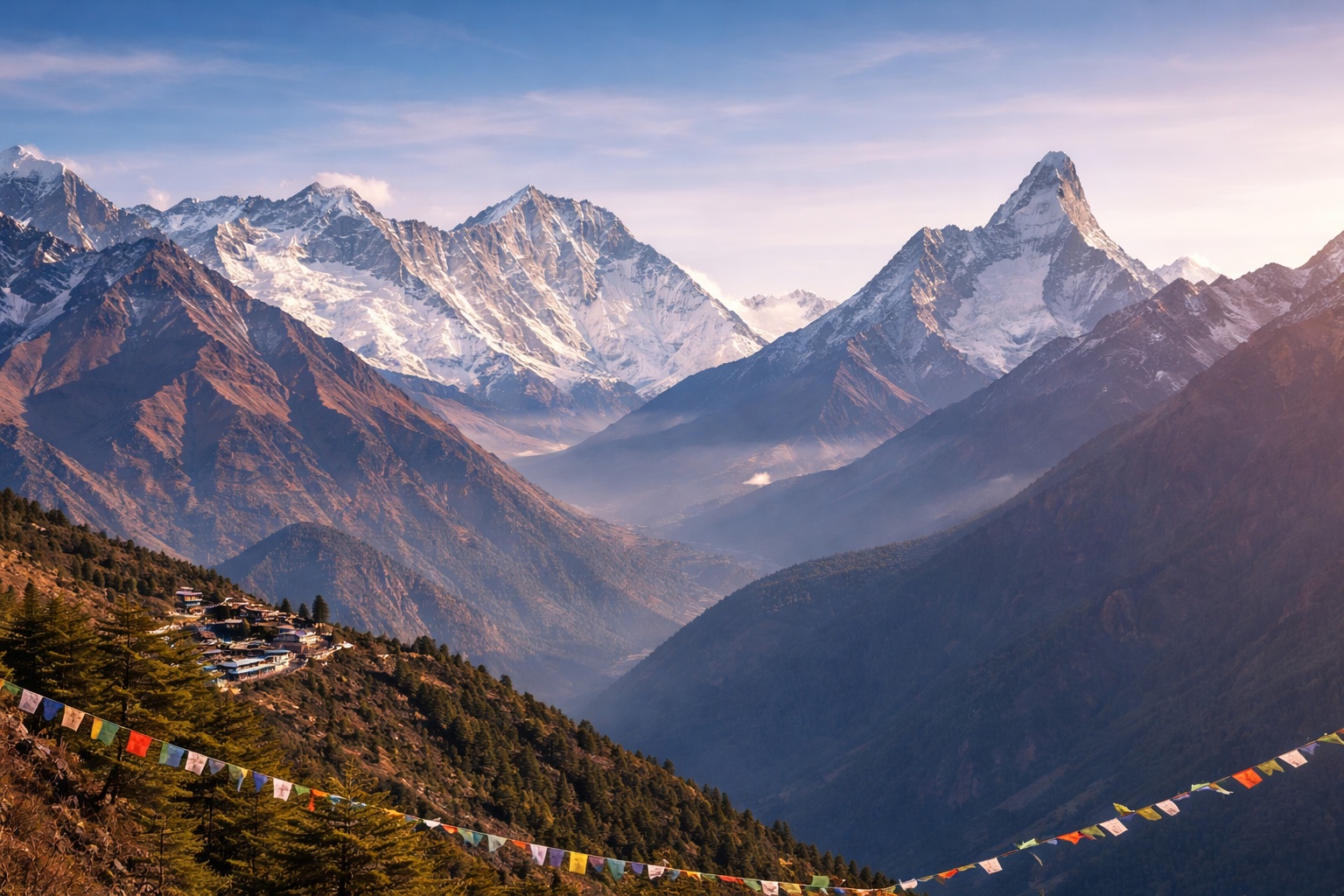
Phu Village is the more remote of the two settlements in the restricted Nar Phu valley on the Annapurna Circuit extension, set at the very head of the valley in a dramatic, fortress-like position beneath towering canyon walls. Considerably more isolated even than its sister village of Nar, Phu retains an atmosphere of genuine antiquity, its ancient chorten gateway and crumbling fort ruins hinting at a history stretching back centuries as a trading outpost along old trans-Himalayan routes.
The village's Tibetan Buddhist community maintains traditions and a way of life that have changed remarkably little given the valley's historic isolation, reinforced by its restricted area status requiring special permits to visit at all. Phu's dramatic physical setting, tucked into a narrow gorge with towering rock walls rising on either side, adds to its atmosphere of remoteness and antiquity, a landscape that feels genuinely cut off from the modern world in a way increasingly rare even within Nepal's more remote trekking regions.
For trekkers who make the demanding journey to reach Phu, typically requiring several additional days beyond the standard Annapurna Circuit itinerary, the village represents one of the most rewarding and authentic cultural destinations available anywhere in Nepal, a place where the daily rhythms of Tibetan Buddhist village life continue largely undisturbed by the trekking industry that has transformed so much of the country's more accessible mountain regions.
Facilities along this stretch of trail remain simple, and trekkers should carry sufficient cash, since cards are not accepted and ATMs do not exist beyond the larger towns.
Mobile signal in the area is patchy at best, and travellers should not rely on constant connectivity once they are this far into the trail network.
Weather at this elevation can change quickly, and a flexible itinerary with a buffer day or two is generally recommended for anyone travelling through this part of the route.
Local guides with specific knowledge of this stretch of trail add real value, both for navigation and for the cultural context they can offer along the way.