
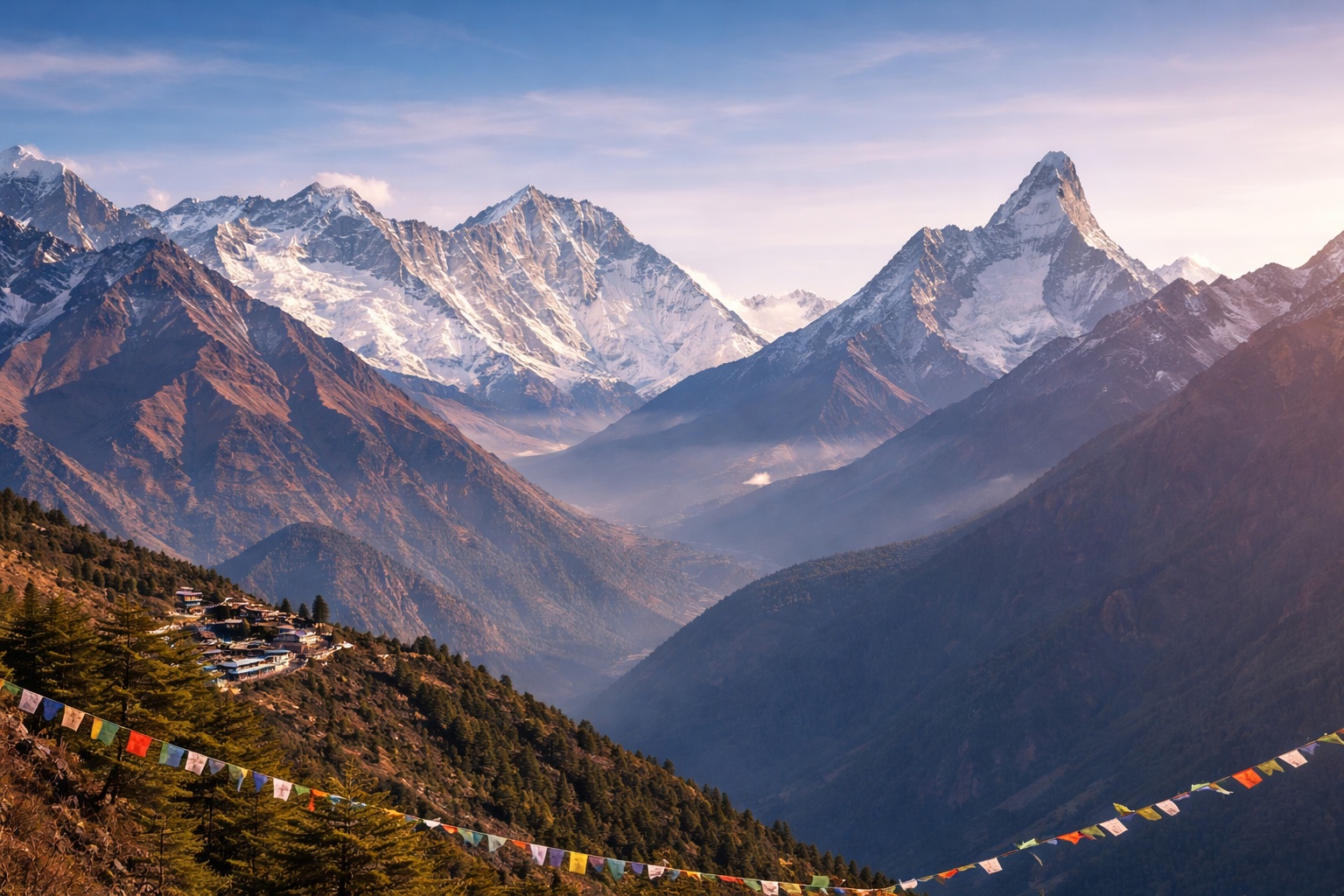
Nar Village is one of two settlements in the restricted Nar Phu valley on the Annapurna Circuit extension, a remote, culturally distinct Tibetan Buddhist community set in a dramatic high-altitude landscape reached only after days of walking through a narrow canyon from the main circuit trail. Sitting higher and more isolated than its sister village of Phu, Nar retains a strongly traditional way of life, its stone houses, chortens, and monastery reflecting centuries of largely unbroken Tibetan Buddhist heritage.
The village's relative isolation, a product of both its physical remoteness and its restricted area status requiring special permits, has helped preserve customs, dress, and religious practice that have changed comparatively little over generations. Local festivals and monastic ceremonies at Nar offer visitors a rare window into a genuinely living cultural tradition, rather than one adapted primarily for tourism as can sometimes be found in more visited parts of Nepal.
For trekkers who commit to the additional time, permits, and physical demands required to reach the Nar Phu valley, Nar Village represents one of the trip's most rewarding cultural destinations, combining dramatic high-altitude scenery with an unusually authentic glimpse of Tibetan-influenced Himalayan life. The onward route from Nar toward the technical Kangla Pass, rejoining the main Annapurna Circuit near Ngawal, completes one of the most adventurous and culturally rich extensions available anywhere in the wider Annapurna region.
Facilities along this stretch of trail remain simple, and trekkers should carry sufficient cash, since cards are not accepted and ATMs do not exist beyond the larger towns.
Mobile signal in the area is patchy at best, and travellers should not rely on constant connectivity once they are this far into the trail network.
Weather at this elevation can change quickly, and a flexible itinerary with a buffer day or two is generally recommended for anyone travelling through this part of the route.
Local guides with specific knowledge of this stretch of trail add real value, both for navigation and for the cultural context they can offer along the way.