
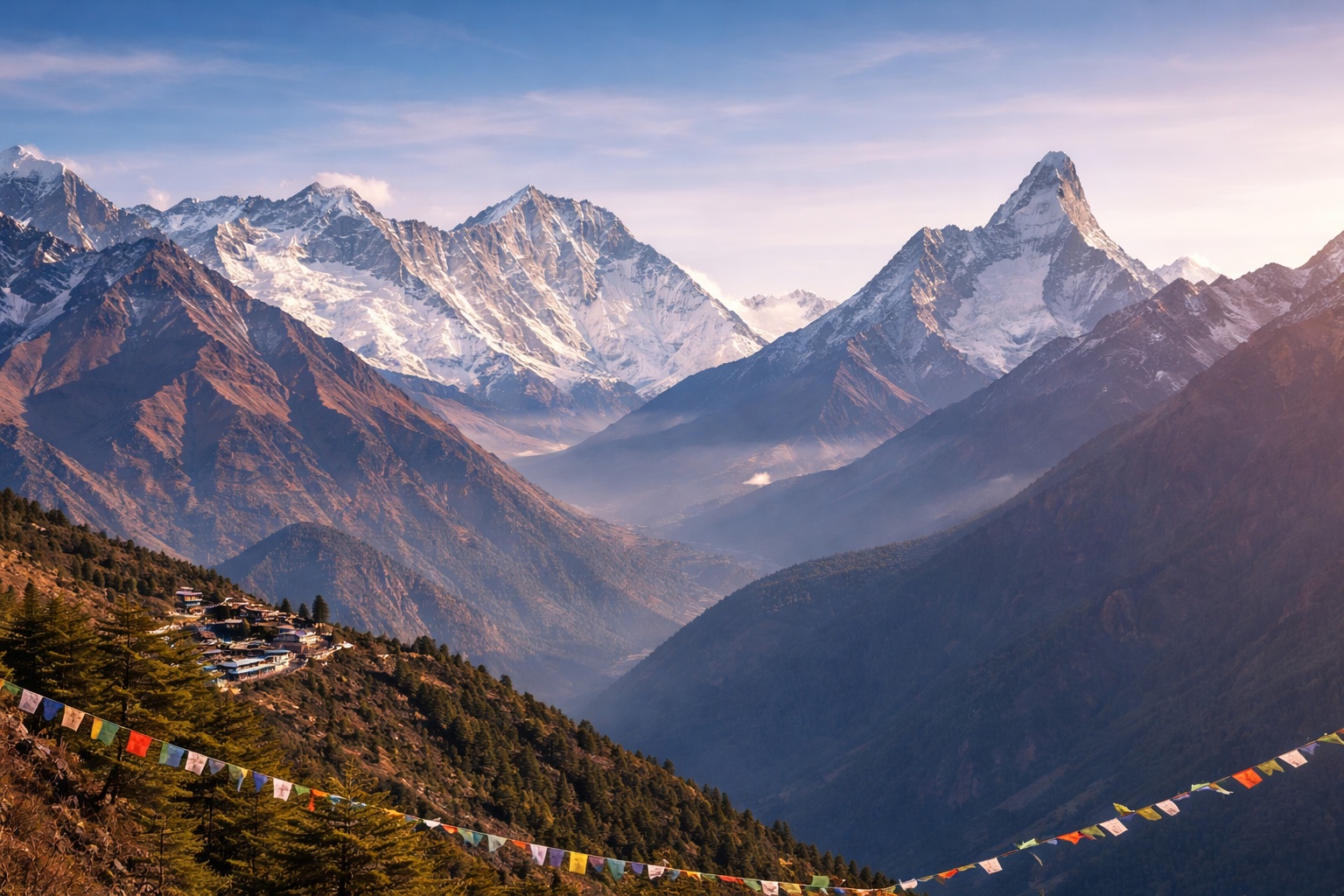
Kyang is a small trail stop referenced on the Manaslu Circuit approach, one of the modest settlements within the Budhi Gandaki valley connecting the lower roadhead villages to the larger, more established stops further up toward Namrung and the upper Manaslu region. Like much of this stretch of the trek, Kyang sits within a steep, forested gorge, the trail following the contours of the valley above the fast-moving river below.
The settlement typically consists of a small number of basic teahouses, reflecting the modest population found along this section of the circuit, and serves the steady but comparatively modest flow of trekkers undertaking Manaslu's restricted area trek, one of Nepal's more demanding and less-crowded major circuits. Terraced fields on the steep hillsides above Kyang grow crops suited to the local climate, sustaining the small communities who call this stretch of the valley home.
For trekkers pacing themselves through the lower Manaslu valley, Kyang offers a quiet stop amid dramatic gorge scenery, part of the gradual transition from the warmer, more populated lower valley toward the higher, more Tibetan-influenced villages found further north. The relative remoteness and lack of development along this stretch of trail is precisely what continues to draw experienced trekkers to the Manaslu region, a corridor that offers Himalayan scenery comparable to Everest or Annapurna with considerably fewer visitors sharing the trail.
Weather at this elevation can change quickly, and a flexible itinerary with a buffer day or two is generally recommended for anyone travelling through this part of the route.
Local guides with specific knowledge of this stretch of trail add real value, both for navigation and for the cultural context they can offer along the way.
A gradual, well-paced ascent through this section remains the best defence against altitude-related discomfort further along the route.
Basic but adequate teahouse facilities are typically available, offering a hot meal and a simple bed for trekkers passing through.
Facilities along this stretch of trail remain simple, and trekkers should carry sufficient cash, since cards are not accepted and ATMs do not exist beyond the larger towns.