
Open Hours: Mon - Fri 6.00 am - 10.00 pm (Nepal Standard Time)
Ama Dablam Base Camp Trek - Under the Most Beautiful Mountain in the Himalaya
12 Days Challenging Ama Dablam Base Camp, 4,600 m (15,092 ft)
Country Kathmandu (via Lukla STOL flight)
Difficulty Challenging
Max Elevation Ama Dablam Base Camp, 4,600 m (15,092 ft)
Duration 12
Meals Breakfast, lunch, and dinner included daily on trail
Accommodation Teahouses throughout (twin rooms, dining room)
Group Size 1–10 people
Trip Highlights
  • Stand at Ama Dablam Base Camp (4,600 m) and look directly up the 2,200-metre south face of Ama Dablam (6,812 m) - the most dramatically close view of this mountain available to non-climbers
  • Tengboche Monastery (3,867 m) - the holiest gompa in the Khumbu Valley, rebuilt after 1989 fire with outstanding wall paintings and the largest prayer hall in the Everest region, surrounded by rhododendron forest with Ama Dablam and Everest directly visible
  • Namche Bazaar (3,440 m) - the Sherpa capital of the Khumbu: the Saturday market, the Sherpa Culture Museum, and the Everest View Hotel hike (3,880 m) on the acclimatisation day
  • Khumjung village (3,780 m) on the acclimatisation hike - the Hillary School (built by Sir Edmund Hillary in 1961), the oldest Sherpa school in Nepal, and the monastery housing the alleged yeti scalp
  • Dingboche (4,410 m) - the quiet upper valley village beneath the walls of Lhotse and Ama Dablam with Imja Lake and Island Peak visible to the east
  • The Mingbo Valley approach to Ama Dablam BC - a less-trodden spur trail off the main EBC route that places you in the shadow of the mountain itself
  • Pangboche Monastery (3,930 m) - the oldest monastery in the Khumbu, with 400-year-old wall paintings and a small collection of alleged yeti bones
  • Views of Lhotse (8,516 m), Island Peak (6,189 m), Makalu (8,485 m), Baruntse (7,129 m), and the full upper Khumbu panorama from the base camp plateau

Ama Dablam Base Camp Trek - Under the Most Beautiful Mountain in the Himalaya

The Ama Dablam Base Camp Trek is a 12-day trip in Kathmandu (via Lukla STOL flight), rated challenging difficulty, reaching a maximum elevation of Ama Dablam Base Camp, 4,600 m (15,092 ft). The package includes group sizes of 1–10 people, teahouses throughout (twin rooms, dining room) accommodation, breakfast, lunch, and dinner included daily on trail.

Ama Dablam Base Camp Trek - Key Facts
Country Kathmandu (via Lukla STOL flight)
Difficulty Challenging
Max Elevation Ama Dablam Base Camp, 4,600 m (15,092 ft)
Duration 12
Meals Breakfast, lunch, and dinner included daily on trail
Accommodation Teahouses throughout (twin rooms, dining room)
Group Size 1–10 people

How long is the Ama Dablam Base Camp trek?

The View Himalaya Ama Dablam Base Camp trek is 12 days from Kathmandu to Kathmandu, including the Lukla flights, reaching the base of one of the most photographed peaks in the Himalaya.

Trek Overview

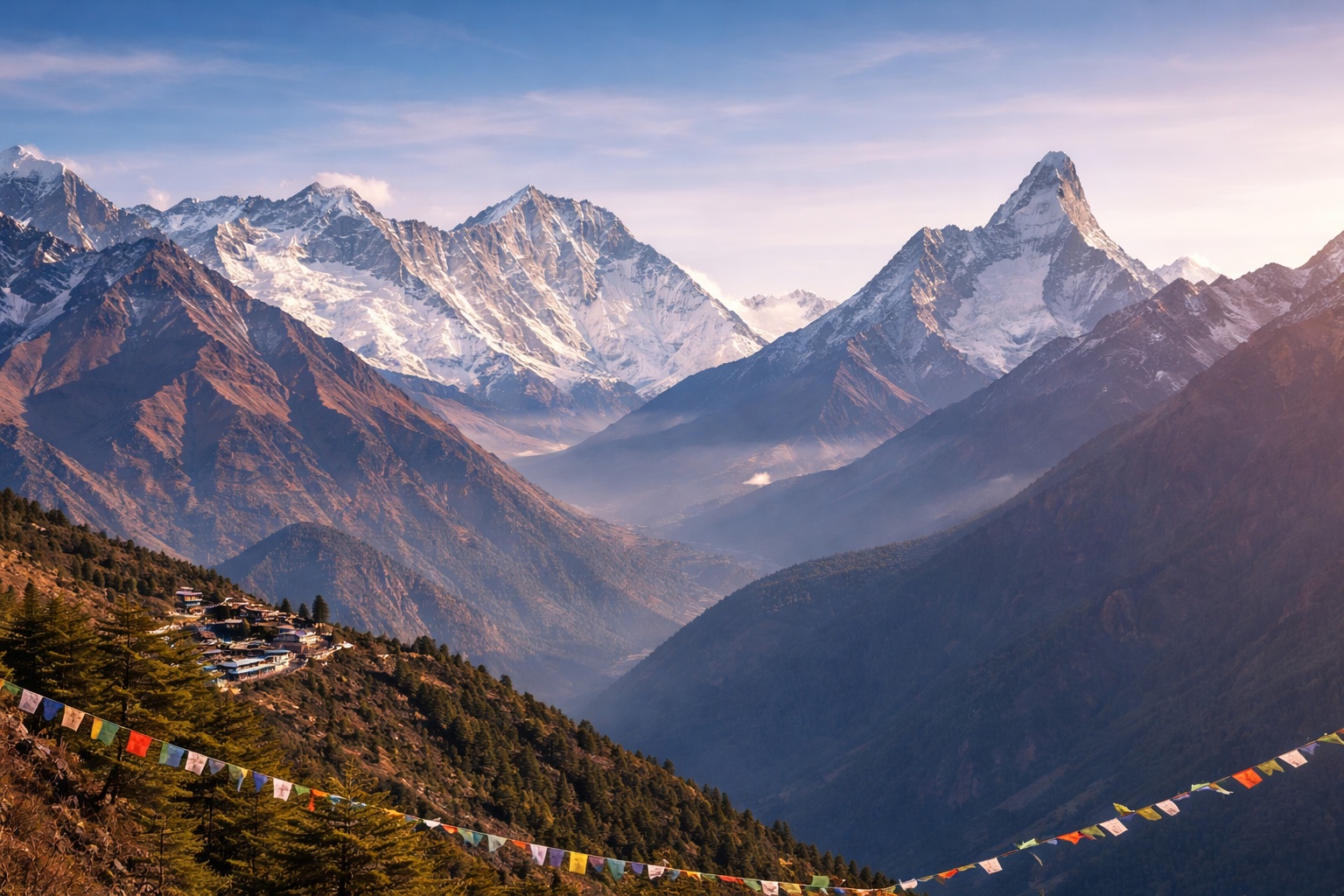
Ama Dablam (6,812 m) is widely regarded as the most beautiful mountain in the Himalaya - a fluted double-summit of ice and granite rising above the Khumbu Valley in a perfect pyramid, its hanging glacier (the dablam, or "mother's necklace") draped between the two summits like a jewel. Edmund Hillary described it as unclimbable; it was first ascended in 1961 and has since become one of the world's most coveted technical peaks. From the Everest Base Camp trail, Ama Dablam dominates the valley above Namche Bazaar - but the EBC route passes it at a distance. The Ama Dablam Base Camp Trek takes you directly beneath the mountain, following the Imja Khola valley east of the main EBC trail to the base camp at 4,600 m in the Mingbo Valley, where the south face rises in one continuous sweep of ice and rock 2,200 metres above your tent.

This 12-day itinerary follows the same Lukla - Namche Bazaar - Tengboche - Pangboche approach as the standard EBC route, then diverges at Pangboche (3,930 m) to take the less-trodden eastern route toward Dingboche and the Ama Dablam BC spur. The result is an itinerary that combines the iconic lower Khumbu sights - Namche Bazaar's Saturday market, the Hillary School in Khumjung, Tengboche Monastery (the holiest site in the Khumbu) - with the quieter upper valley experience of approaching one of the world's most photographed mountains from its own base.

The trek is a genuine alternative to the classic Everest Base Camp route for trekkers who have already done EBC or who want a less-crowded Khumbu experience focused on one extraordinary mountain rather than the goal of reaching a specific altitude number. Dingboche (4,410 m) and the Ama Dablam BC (4,600 m) are both well within comfortable trekking altitude for acclimatised visitors, and the close views of Ama Dablam, Lhotse (8,516 m), Island Peak (6,189 m), Makalu (8,485 m), and Cho Oyu (8,188 m) from the BC plateau are among the finest in the entire Khumbu Valley.

Trip Facts

  • Duration: 12 days (10 trekking days + 2 travel days)
  • Maximum Altitude: Ama Dablam Base Camp, 4,600 m (15,092 ft)
  • Total Trekking Distance: Approximately 95 km
  • Difficulty: Challenging
  • Daily Walking: 5 - 7 hours
  • Start / End: Kathmandu (via Lukla STOL flight)
  • Guide: NTB-licensed Khumbu specialist trekking guide
  • Group Size: 1 - 10 people
  • Accommodation: Teahouses throughout (twin rooms, dining room)
  • Meals: Breakfast, lunch, and dinner included daily on trail
  • Permits: Sagarmatha National Park (UNESCO), Khumbu Pasang Lhamu Municipality fee, TIMS card
  • Flights: Lukla round-trip domestic flight included

Pricing

Group Size Price per Person (USD) Includes
Solo traveller USD 1,099 All inclusive: guide, porter, meals, permits, Lukla flights, accommodation
2 - 4 people USD 999 All inclusive
5 - 12 people USD 899 All inclusive
13+ people Contact us Custom group rate

A 20% deposit confirms your booking. The balance is payable 30 days before departure. The Lukla flight is subject to weather and may occasionally be replaced by a road drive to Phaplu and trekking approach - this is built into the contingency planning. Kathmandu hotel accommodation (2 nights) is not included in the trek price but is bookable through View Himalaya.

Trek Highlights

  • Stand at Ama Dablam Base Camp (4,600 m) and look directly up the 2,200-metre south face of Ama Dablam (6,812 m) - the most dramatically close view of this mountain available to non-climbers
  • Tengboche Monastery (3,867 m) - the holiest gompa in the Khumbu Valley, rebuilt after 1989 fire with outstanding wall paintings and the largest prayer hall in the Everest region, surrounded by rhododendron forest with Ama Dablam and Everest directly visible
  • Namche Bazaar (3,440 m) - the Sherpa capital of the Khumbu: the Saturday market, the Sherpa Culture Museum, and the Everest View Hotel hike (3,880 m) on the acclimatisation day
  • Khumjung village (3,780 m) on the acclimatisation hike - the Hillary School (built by Sir Edmund Hillary in 1961), the oldest Sherpa school in Nepal, and the monastery housing the alleged yeti scalp
  • Dingboche (4,410 m) - the quiet upper valley village beneath the walls of Lhotse and Ama Dablam with Imja Lake and Island Peak visible to the east
  • The Mingbo Valley approach to Ama Dablam BC - a less-trodden spur trail off the main EBC route that places you in the shadow of the mountain itself
  • Pangboche Monastery (3,930 m) - the oldest monastery in the Khumbu, with 400-year-old wall paintings and a small collection of alleged yeti bones
  • Views of Lhotse (8,516 m), Island Peak (6,189 m), Makalu (8,485 m), Baruntse (7,129 m), and the full upper Khumbu panorama from the base camp plateau

What to Expect

The Ama Dablam Base Camp Trek follows the standard EBC approach on the first half - Lukla to Namche to Tengboche - a well-established route with excellent teahouse infrastructure, a warm and welcoming Sherpa community, and the magnificent progressive mountain reveal as the valley narrows and the peaks grow closer. This section is shared with EBC trekkers and can be busy in peak season (October and late March to April). The itinerary's acclimatisation day at Namche is structured to include the Everest View Hotel hike (3,880 m) and the walk through Khumjung village - one of the finest half-days anywhere in the Khumbu for cultural depth alongside mountain views.

From Pangboche, the trail diverges from the main EBC route. The Ama Dablam BC spur (approximately 3 hours from Pangboche, gaining 670 metres) climbs steeply through moraine and alpine grass onto the Mingbo Valley plateau. At the base camp, the atmosphere changes completely: instead of the engineered teahouse circuit of the main trail, you are at a proper mountaineering base with expedition tents, the sounds of rockfall from the upper face above, and the full scale of Ama Dablam's geometry - the Y-shaped ridge, the hanging dablam glacier, and the summit pyramid - fully revealed at a distance of only 2 km. Most Ama Dablam expeditions are resident here in October and November, and conversations with climbing teams preparing for their summit bids add a compelling human dimension to the visit.

Altitude management is well-structured in this itinerary: the two acclimatisation nights (Namche and Dingboche) ensure the body adjusts progressively. The maximum altitude of 4,600 m is significantly lower than the EBC (5,364 m) or Kala Patthar (5,644 m), making this route accessible to trekkers who want the Khumbu experience without the full EBC altitude commitment.

Suitability

The Ama Dablam Base Camp Trek is suitable for fit, active trekkers with no specific prior Himalayan experience, though previous experience above 3,000 m is helpful. The maximum altitude of 4,600 m is lower than EBC but still requires proper acclimatisation. Trekkers should be able to walk 5 - 7 hours per day with a 6 - 8 kg daypack on steep, rocky trail.

  • Trekkers wanting the Khumbu Valley experience with a specific, iconic mountain as the destination
  • Previous EBC trekkers returning for an alternative, less-crowded Khumbu route
  • Mountain photography enthusiasts - Ama Dablam is the most photographed peak in the Himalaya and the BC view is extraordinary
  • Trekkers with limited time wanting the cultural and landscape depth of the Khumbu without the full 18 - 19 day EBC commitment
  • Anyone comfortable with 5 - 7 hours of walking per day on steep mountain terrain

Distance and Elevation by Stage

Day From To Distance (km) Max Altitude
1Lukla (2,840 m)Phakding (2,652 m)~8 km2,840 m
2Phakding (2,652 m)Namche (3,440 m)~11 km3,440 m
3Namche (3,440 m)Acclimatisation hike (3,880 m) + return~12 km3,880 m
4Namche (3,440 m)Tengboche (3,867 m)~10 km3,867 m
5Tengboche (3,867 m)Dingboche (4,410 m)~11 km4,410 m
6Dingboche (4,410 m)Acclimatisation hike (~4,780 m) + return~10 km4,780 m
7Dingboche → Pangboche → Ama Dablam BC (4,600 m) → PangbochePangboche (3,930 m)~14 km4,600 m
8Pangboche (3,930 m)Namche (3,440 m)~13 km3,930 m
9Namche (3,440 m)Phakding (2,652 m)~11 km3,440 m
10Phakding (2,652 m)Lukla (2,840 m)~8 km2,840 m

Optional Add-Ons

Add-On Duration Approx. Cost (USD per person)
Chhukung Ri summit (5,550 m) from Dingboche on acclimatisation day Day hike Included in guide time; no extra permit
Extend to Everest Base Camp and Kala Patthar (add 6 days) 6 days From 450
Island Peak climbing (6,189 m) extension from Dingboche 5 - 6 days From 980
Kathmandu Heritage Tour (4 days, before or after trek) 4 days From 249
Sleeping bag rental (-15°C) from Kathmandu Per trek ~25

Difficulty and Fitness

The Ama Dablam Base Camp Trek is rated challenging - comparable to the Everest Panorama Trek or the lower Annapurna Circuit in daily effort but with greater cumulative altitude. The maximum altitude of 4,600 m is lower than EBC (5,364 m) but two full acclimatisation days (Namche and Dingboche) are still required. Trekkers should be able to walk 5 - 7 hours per day on steep, rocky trail while carrying a 6 - 8 kg daypack, maintaining this effort over 10 consecutive days.

Recommended fitness preparation: 8 - 10 weeks of cardio training before departure, including stair climbing or hill walking with a loaded pack at least twice per week. No prior Himalayan trekking experience is strictly required, but previous multi-day hiking experience (even at lower altitude) significantly improves the experience and reduces the risk of AMS. If you have not trekked before, the Nagarkot - Changu Narayan hike or Poon Hill Trek are excellent primers before attempting the Khumbu routes.

Best Seasons

Autumn (Late September - Early December) - Peak Season

The finest season for Ama Dablam Base Camp. Post-monsoon skies from late September give exceptional visibility - Ama Dablam in the October light is at its most photogenic, particularly in the late afternoon when the south face catches a raking golden light. This is also Ama Dablam climbing season - the base camp is populated with expedition teams from October through November, and the dynamic atmosphere of a live mountaineering base adds an extraordinary dimension to the visit. Book at least 3 months in advance for October departures.

Spring (March - Late May) - Excellent

The spring season (March through late May) brings clear skies, rhododendron blooms throughout the lower valley, and good mountain views. Spring is Ama Dablam's secondary climbing season - expedition teams are again present at BC. Temperatures are warmer than autumn. The monsoon arrives in early to mid-June, ending the spring window.

Winter (December - February) - Possible but Cold

Quiet, cold, and beautiful. Namche and Tengboche see heavy snowfall in January and February; teahouses remain open but many close between December and February. Temperatures at Dingboche drop to -15°C at night. The views are crystalline and the trail almost entirely yours. For experienced cold-weather trekkers, winter in the Khumbu has a wild appeal. Acclimatisation takes longer in the cold and the summit days require extra gear.

Accommodation and Meals

The Khumbu has the finest teahouse infrastructure of any trekking region in Nepal. Teahouses on this route (Phakding, Namche, Tengboche, Pangboche, Dingboche) offer clean twin rooms with mattress and blanket, shared bathrooms (hot shower available at most for a supplement), a warm common room with a central stove, and an extensive dining menu. Meals included in the package cover: a full hot breakfast (porridge, eggs, toast, and tea), a packed or teahouse lunch (dal bhat, noodles, or momos), and a substantial dinner (soup, main course, and dessert). At altitude, eating consistently is important for acclimatisation - the guide monitors food and fluid intake on the high days.

Altitude Safety

The Ama Dablam BC trek reaches 4,600 m maximum - below the altitude threshold for the most severe altitude illness but still requiring proper acclimatisation. The "climb high, sleep low" principle is built into the itinerary: on acclimatisation days at Namche and Dingboche, day hikes go to higher altitude before returning to sleep lower. Pulse oximetry is checked twice daily above 4,000 m.

  • Drink 3 - 4 litres of water per day throughout the trek - dehydration exacerbates altitude symptoms
  • Descend immediately if symptoms of acute mountain sickness (persistent headache, nausea, loss of balance, confusion) do not improve after 24 hours of rest and hydration
  • Acetazolamide (Diamox) is available on prescription as prophylaxis - consult your doctor before the trek
  • Helicopter evacuation from Dingboche is possible within 1 - 3 hours in good weather - your guide has the radio contact details for Khumbu emergency services
  • Travel insurance covering 5,000 m and helicopter evacuation is strongly recommended

Travel Insurance

Travel insurance covering helicopter rescue and medical evacuation from altitudes of at least 5,000 m is strongly recommended (the acclimatisation hike on Day 6 reaches approximately 4,780 m; standard trekking policies covering to 4,000 m are inadequate for this route). Sagarmatha National Park rescues are conducted by helicopter and can cost USD 3,000 - 7,000 without insurance. World Nomads, Campbell Irvine, and Battleface all offer appropriate coverage - verify the altitude coverage explicitly before purchasing.

Guide and Safety Standards

  • Khumbu-specialist guides with a minimum of five years of experience on this specific route, including previous seasons at Ama Dablam Base Camp
  • All guides hold NTB licences and current Wilderness First Responder or equivalent first aid certification
  • Pulse oximeter and portable first aid kit carried throughout
  • Porter insurance, load limits (25 kg maximum), and fair wage standards comply with Nepal's Porter Protection Programme
  • View Himalaya's Kathmandu office is available 24/7 for any emergencies on trail

Packing List

Clothing

  • Down jacket (rated -10°C or warmer) for evenings at altitude
  • Hardshell waterproof jacket and trousers
  • Fleece or synthetic mid-layer
  • Moisture-wicking base layers (3 sets) and thermal bottoms (2 sets)
  • Trekking trousers (2 pairs)
  • Warm hat, sun hat, neck gaiter, liner and warm gloves
  • Wool or synthetic trekking socks (5 - 6 pairs)

Footwear

  • Waterproof ankle-high trekking boots, well broken in before the trek
  • Camp sandals or flip-flops for teahouse evenings
  • Gaiters for early snow in November or late April

Gear

  • Sleeping bag -10°C rated (rental available in Kathmandu)
  • Trekking poles (strongly recommended for steep descents)
  • Daypack 28 - 32 litres with rain cover
  • Headlamp with spare batteries
  • Sunglasses (Category 4 UV, essential above 3,500 m)
  • Sunscreen SPF 50+, lip balm, moisturiser
  • Water bottles (2 litres total), purification tablets or filter

Medical

  • Blister packs, ibuprofen, paracetamol, rehydration salts, Imodium
  • Diamox (acetazolamide) if prescribed
  • Hand sanitiser
  • High-energy snacks (protein bars, chocolate, dried fruit) to supplement teahouse meals

Documents

  • Passport, Nepal visa, travel insurance policy with emergency number
  • Cash in USD and NPR (no ATMs above Namche; bring sufficient cash from Kathmandu or Namche ATM)

How to Book

  1. Submit your booking enquiry to View Himalaya with preferred dates, group size, and fitness background.
  2. Receive itinerary confirmation, cost breakdown, and gear list within 48 hours.
  3. Pay 20% deposit to confirm Lukla flights and guide allocation.
  4. Complete the trekker information form including emergency contacts and insurance details.
  5. Pay the balance 30 days before departure.
  6. Meet your guide at the View Himalaya Kathmandu office for pre-trek briefing and gear check.

Related Treks

Trek Duration Max Altitude Best For
Everest Base Camp Trek 14 days 5,364 m + Kala Patthar 5,644 m The definitive Khumbu trek including Ama Dablam views and EBC
Gokyo Lakes Trek 12 days Gokyo Ri 5,357 m Khumbu alternative via Gokyo Valley and Cho Oyu base area
Island Peak Climbing 18 days Island Peak 6,189 m Peak climbing extension from the same Dingboche base
Everest Panorama Trek 8 days Tengboche 3,867 m Shorter Khumbu option reaching Tengboche with full Ama Dablam views

Places You'll Visit

Day-by-Day Itinerary

Early morning transfer to Tribhuvan International Airport for the domestic flight to Lukla (Tenzing-Hillary Airport, 2,840 m, approximately 30 minutes). The flight over the Himalayan foothills is spectacular on a clear day. Begin the trek with a descent along the Dudh Koshi River gorge to Phakding (2,652 m, 3 - 4 hours walking). Pass through Chheplung and Ghat, crossing the river on suspension bridges. First views of Thamserku (6,618 m) ahead. Teahouse accommodation.
Phakding 2,652m
The classic second day on the Khumbu trail: a series of high suspension bridges over the Dudh Koshi, the entrance gate of Sagarmatha National Park (UNESCO) at Monjo, and the long steep climb from the last bridge to Namche Bazaar (3,440 m, approximately 5 hours). The first view of Everest through the notch above Namche on the final climb is one of Nepal's most celebrated trail moments. Namche Bazaar: the amphitheatre village of the Sherpa heartland. Teahouse accommodation.
Namche Bazaar 3,440m
Rest day with altitude acclimatisation hike. Walk up to the Everest View Hotel (3,880 m, 1.5 hours from Namche) - the world's highest-altitude hotel and a viewpoint for Everest, Ama Dablam, Thamserku, and Kangtega. Continue to Khumjung village (3,780 m): the Hillary School, the Khumjung Monastery, the monastery's famous alleged yeti scalp. Return to Namche for lunch. Afternoon: explore Namche's Saturday market (if Saturday), the Sherpa Culture Museum, and the colourful main bazaar. Overnight Namche.
Namche Bazaar 3,440m
Leave the Namche amphitheatre and traverse south-facing hillside above the Dudh Koshi gorge with increasingly close views of Ama Dablam ahead. Descend to Phunki Tenga (3,250 m) and climb steeply through rhododendron forest to Tengboche Monastery (3,867 m, approximately 4 hours). Arrive in time for the afternoon puja ceremony in the monastery prayer hall (15:30 - 16:00) - monks in saffron robes, long Tibetan horns, drums, and the low resonance of chanted scripture in the hall lined with thangka paintings. The monastery forecourt view - Ama Dablam dominant to the southeast, Everest and Lhotse to the northeast, Thamserku and Kangtega behind you - is one of Nepal's finest. Teahouse at Tengboche.
Tengboche 3,867m
Descend from Tengboche through forest to Deboche and the Imja Khola valley. Pass through Pangboche (3,930 m) - Nepal's highest permanently inhabited village and site of the Pangboche Monastery, the oldest in the Khumbu (founded approximately 1667), with 400-year-old wall paintings and the monastery's infamous "yeti hand." The trail continues east up the Imja Khola valley to Dingboche (4,410 m, approximately 5.5 hours total). Dingboche is the junction village where the main EBC route continues north and the Ama Dablam BC spur heads east. Teahouse accommodation.
Dingboche 4,410m
Rest and acclimatisation at Dingboche. Morning hike to the ridge above the village at approximately 4,700 - 4,800 m for views of Ama Dablam southeast, Lhotse (8,516 m) and Nuptse north, Island Peak (Imja Tse, 6,189 m) and Imja Glacier Lake east. This hike follows the approach route toward Chhukung and provides excellent acclimatisation altitude. Return to Dingboche for lunch and afternoon rest. The policy: sleep at 4,410 m tonight, hike to 4,700+ m for the acclimatisation, return to sleep lower. This is the most critical acclimatisation point of the trek before the BC visit.
Dingboche 4,410m
From Dingboche, return to Pangboche (1 hour) and take the Ama Dablam BC trail east up the Mingbo Valley. The trail gains 670 metres from Pangboche in approximately 3 hours, climbing through moraine and alpine grass onto the base camp plateau at 4,600 m. Ama Dablam Base Camp sits on the lateral moraine above the Mingbo Glacier with the full south face of Ama Dablam directly ahead - the hanging dablam glacier suspended between the twin summits, the yellow limestone ribs of the southwest ridge, and the summit pyramid rising 2,200 metres above. In October and November, expedition tents and the flags of multiple climbing teams mark the camp. Spend 2 - 3 hours at the base camp, then descend to Pangboche (3,930 m) for the overnight. Teahouse, Pangboche.
Ama Dablam Base Camp 4,600m
A long but pleasant descent day retracing the Imja Khola valley and climbing back through rhododendron forest below Tengboche. At Tengboche, optional second monastery visit for the morning puja. Descend steeply to the Phunki Tenga bridge and climb back up the traverse to Namche (approximately 6 hours total). Overnight Namche - the last night at altitude before the descent. Optional: evening yak steak dinner and celebration at one of Namche's bakeries.
Namche Bazaar 3,930m
Descend the classic Namche - Phakding trail in reverse, crossing the suspension bridges above the Dudh Koshi gorge and descending through Jorsalle and Monjo (Sagarmatha NP exit checkpoint). The descent to 2,652 m releases altitude pressure and the warmer temperature feels immediately noticeable after days above 3,500 m. Overnight Phakding or Monjo.
Phakding 3,440m
Short final walking day: 3 - 4 hours to Lukla, retracing the trail above the Dudh Koshi to the STOL airstrip. Afternoon free in Lukla - explore the town, buy last-minute yak wool souvenirs, and confirm tomorrow's flight. Overnight Lukla. The evening at Lukla after a Khumbu trek has its own particular atmosphere - the relief of completion, the conversation of fellow trekkers from a dozen countries, and the knowledge that Ama Dablam's perfect silhouette is still visible above the valley to the north.
Lukla 2,840m
Early morning flight from Lukla to Kathmandu (approximately 30 minutes). Transfer to hotel. Afternoon free for shopping, hot shower, and rest. Recommended: celebration lunch at one of Kathmandu's better restaurants and a visit to Boudhanath Stupa in the evening for the circumambulation atmosphere. Hotel, Kathmandu.
Kathmandu Flight
Transfer to Tribhuvan International Airport for international departure, or extend with additional Kathmandu sightseeing, a Nagarkot overnight, or the start of an additional tour programme.

What’s Included

Included

  • Kathmandu - Lukla - Kathmandu domestic round-trip flights
  • All teahouse accommodation on trail (twin rooms with blankets; extra blanket hire available)
  • All meals on trail: breakfast, lunch, and dinner daily
  • NTB-licensed Khumbu specialist trekking guide
  • One porter per 2 trekkers (carries group gear and personal duffels up to 15 kg total)
  • All permits: Sagarmatha National Park, Khumbu Pasang Lhamu Municipality fee, TIMS card
  • View Himalaya welcome dinner and trek briefing in Kathmandu
  • First aid kit with pulse oximeter
  • View Himalaya duffel bag (loan for trek)

Useful Info

Ama Dablam Base Camp trek in one sentence: A 12-day teahouse trek from Kathmandu (via Lukla) through Namche and Tengboche to the base of Ama Dablam, one of the most photographed peaks in the Himalaya.

Ama Dablam Base Camp altitude: 4,600 metres (15,092 feet).

Ama Dablam Base Camp trek difficulty: Challenging, similar to Everest Base Camp, though reaching a somewhat lower maximum altitude.

Best time for Ama Dablam Base Camp: Autumn (September - November) and Spring (March - May), also Ama Dablam's main climbing seasons.

Ama Dablam Base Camp trek cost: View Himalaya packages start from USD 899 per person, including Lukla flights, teahouse accommodation, meals, guide, and porter.

Why Ama Dablam is famous: Its distinctive sharp pyramid shape and hanging glacier make it one of the most recognisable and photographed mountains in the world.

Down jacket (rated -10°C or warmer) for evenings at altitude, Hardshell waterproof jacket and trousers, Fleece or synthetic mid-layer, Moisture-wicking base layers (3 sets) and thermal bottoms (2 sets), Trekking trousers (2 pairs), Warm hat, sun hat, neck gaiter, liner and warm gloves, Wool or synthetic trekking socks (5–6 pairs), Waterproof ankle-high trekking boots, well broken in before the trek, Camp sandals or flip-flops for teahouse evenings, Gaiters for early snow in November or late April, Sleeping bag -10°C rated (rental available in Kathmandu), Trekking poles (strongly recommended for steep descents), Daypack 28–32 litres with rain cover, Headlamp with spare batteries, Sunglasses (Category 4 UV, essential above 3,500 m), Sunscreen SPF 50+, lip balm, moisturiser, Water bottles (2 litres total), purification tablets or filter, Blister packs, ibuprofen, paracetamol, rehydration salts, Imodium, Diamox (acetazolamide) if prescribed, Hand sanitiser, High-energy snacks (protein bars, chocolate, dried fruit) to supplement teahouse meals, Passport, Nepal visa, travel insurance policy with emergency number, Cash in USD and NPR (no ATMs above Namche; bring sufficient cash from Kathmandu or Namche ATM)

Frequently Asked Questions

A
The View Himalaya Ama Dablam Base Camp trek is 12 days from Kathmandu to Kathmandu, including the Lukla flights, reaching the base of one of the most photographed peaks in the Himalaya.
A
Ama Dablam Base Camp sits at 4,600 metres (15,092 ft), lower than Everest Base Camp but still requiring proper acclimatization.
A
Ama Dablam's distinctive sharp pyramid shape, with a hanging glacier resembling a mother's jewelry box ("Ama Dablam" translates roughly to "mother's necklace"), makes it one of the most recognisable and photographed peaks in the world, despite being far lower than Everest at 6,812m.
A
The Ama Dablam Base Camp trek follows a similar approach through Namche Bazaar and Tengboche but turns toward the Ama Dablam side valley rather than continuing to Everest Base Camp, offering close-up views of the mountain in a shorter, lower-altitude itinerary.
A
The Sagarmatha National Park permit and TIMS card are required, the same permits used for the Everest Base Camp trek since the route passes through the same national park.
A
View Himalaya packages start from USD 899 per person, including Lukla flights, teahouse accommodation, all trail meals, licensed guide, and porter.
A
It is rated Challenging, similar to Everest Base Camp, so a reasonable level of fitness and some trekking preparation is recommended, though no technical climbing skill is required since this is a trekking-only itinerary.
A
Yes, particularly during the main autumn and spring climbing seasons - Ama Dablam is one of Nepal's most popular technical climbing objectives, and trekkers often encounter expedition teams preparing for summit attempts at Base Camp.
A
Autumn (September - November) and Spring (March - May) offer the clearest views of Ama Dablam and the surrounding Khumbu peaks.
A
Yes - the route follows the standard Khumbu approach through Namche Bazaar and Tengboche Monastery before branching toward the Ama Dablam valley, sharing much of its early itinerary with the Everest Base Camp trek.
A
Some risk exists given the trek reaches 4,600m, though the risk is somewhat lower than treks pushing above 5,000m. Proper acclimatization at Namche is still essential.
A
Teahouses throughout, twin-sharing with a shared dining room, the same standard found on the main Everest Base Camp trail through Namche and Tengboche.
A
Yes - View Himalaya can extend this itinerary to include the full Everest Base Camp trek since the routes overlap for the first several days, letting you see both destinations in one extended trip.
A
An NTB-licensed Khumbu specialist guide accompanies every departure, providing cultural and mountaineering context on Ama Dablam's climbing history alongside standard trekking guidance.
A
Daily walking is typically 5 - 7 hours, comparable to the Everest Base Camp trek's pace, with the terrain being well-established Khumbu trail throughout.
A
Close-range views of Ama Dablam's dramatic pyramid face and hanging glacier dominate the base camp area, with Everest, Lhotse, and other Khumbu giants visible from vantage points along the approach.
A
Yes - the standard route begins with a 35-minute domestic flight from Kathmandu to Lukla, the same entry point used for the Everest Base Camp trek.
A
While not as religiously significant as Everest (Sagarmatha) itself, Ama Dablam is deeply respected by the Sherpa community and is one of the most visually iconic peaks in Sherpa cultural imagery and photography.
A
Yes, at teahouses in Namche and Tengboche for a small fee, consistent with connectivity on the main Everest Base Camp trail.
A
Yes - View Himalaya can adjust the pace or combine this trek with Everest Base Camp or a Kala Patthar extension depending on your available time and interests.

You Might Also Like

Reviews

Ama Dablam Base Camp Trek - Under the Most Beautiful Mountain in the Himalaya

Ama Dablam Base Camp Trek - Under the Most Beautiful Mountain in the Himalaya

From USD 899 899 per person
Book Now
  • Secure Booking
  • No Hidden Costs
  • Instant Confirmation