
The Island Peak Climbing is a 18-day trip in Kathmandu (via Lukla flight), rated strenuous / technical (grade: pd, alpine) difficulty. The best time to do this trip is Autumn (Sep - Nov) & Spring (Mar - May). The package includes group sizes of 1–8 people per climbing guide, teahouses on trail, tents at high camp; 3-star hotel kathmandu accommodation.
| Country | Kathmandu (via Lukla flight) |
|---|---|
| Difficulty | Strenuous / Technical (Grade: PD, Alpine) |
| Duration | 18 |
| Best Time | Autumn (Sep - Nov) & Spring (Mar - May) |
| Accommodation | Teahouses on trail, tents at High Camp; 3-star hotel Kathmandu |
| Group Size | 1–8 people per climbing guide |
How high is Island Peak?
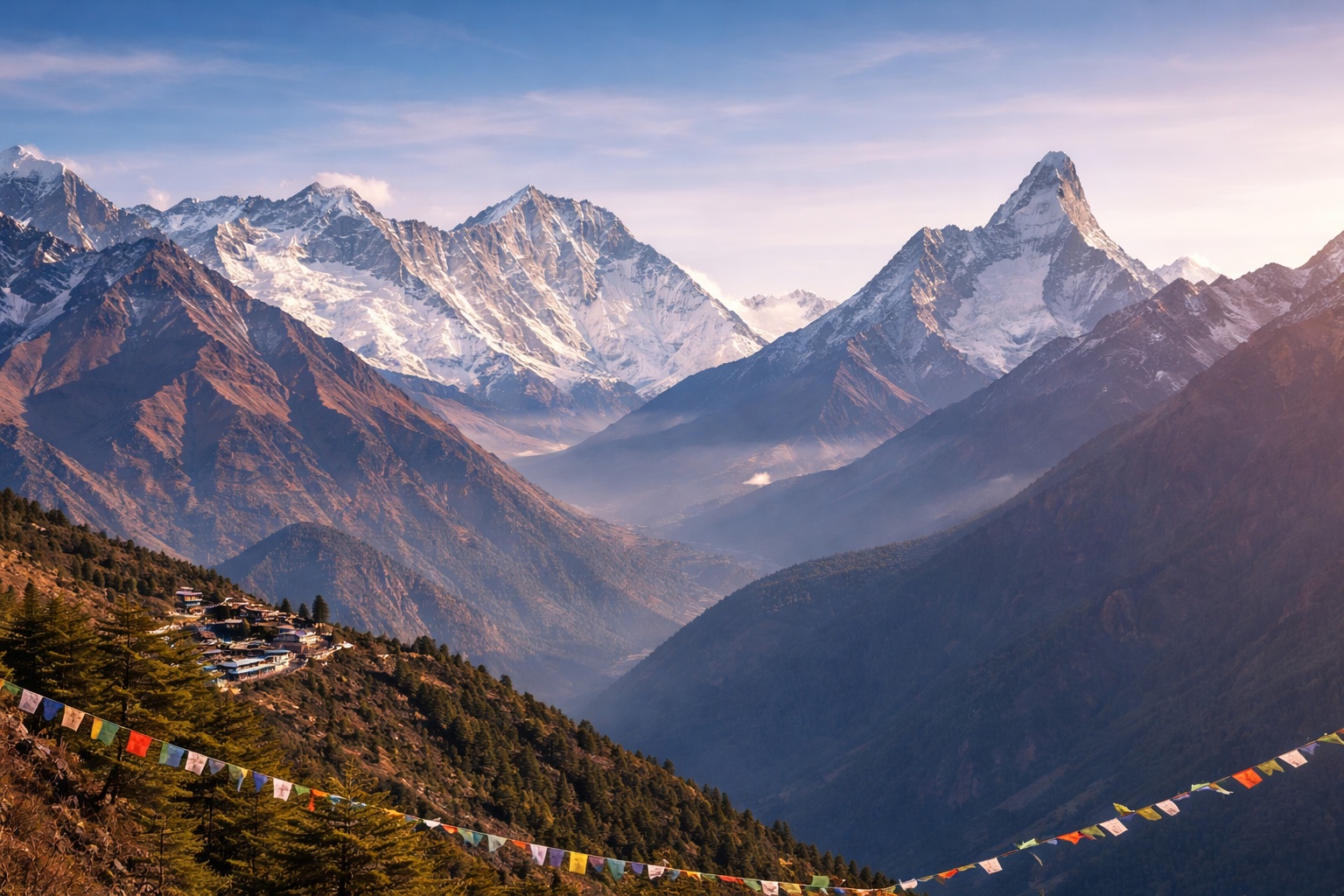
Island Peak (official name: Imja Tse) at 6,189 metres is Nepal's most popular trekking peak - a genuine high-altitude mountaineering objective that serves as the perfect introduction to technical Himalayan climbing. The route combines the world-famous Everest Base Camp trek with a technical summit climb involving glacier travel, crampon use, fixed ropes, and a 45-degree ice face to a narrow summit ridge with a 360° view of the Khumbu's greatest peaks: Everest (8,849m), Lhotse (8,516m), Nuptse (7,861m), Makalu (8,485m), and Ama Dablam (6,812m).
The peak was named Island Peak by the 1952 British Everest Reconnaissance Expedition, who named it for its appearance - rising from the Chhukung glacier as an isolated snowy island surrounded by a sea of ice. In 1983 it was renamed Imja Tse by the Nepali government, though Island Peak remains the name most trekking climbers use. It has been a Nepal Mountaineering Association (NMA) permitted trekking peak since 1953 and sees hundreds of successful ascents per year by teams with no prior technical climbing experience.
The 18-day itinerary follows the EBC trail as far as Dingboche (4,410m), then diverges into the Chhukung Valley and the Imja Tse Base Camp (5,080m) and High Camp (5,600m). Summit day involves a 4:00 AM start, fixed rope ascent on a 45-degree glaciated slope, and a final push to the summit ridge - typically reached in 4 - 6 hours from High Camp. The Khumbu return then continues to EBC and Kala Patthar before flying back to Kathmandu from Lukla.
At View Himalaya, Island Peak expeditions are led by a team of two - an NTB-licensed trekking guide and a certified high-altitude climbing guide (NMA/UIAGM standard) - with full technical equipment provided on summit day including harness, crampons, ice axe, jumar, and helmet.
| Group Size | Price Per Person |
|---|---|
| Solo (1 person) | USD 2,150 |
| Small Group (2 - 4 people) | USD 1,950 |
| Group (5 - 8 people) | USD 1,799 |
| 8+ people | Contact us for group rates |
All prices include NMA Island Peak climbing permit, Kathmandu - Lukla - Kathmandu flights, all NP and municipality permits, TIMS Card, NTB-licensed trekking guide, certified high-altitude climbing guide, porter, all teahouse accommodation on trail, tents and cooking equipment at High Camp, all meals, climbing technical equipment (crampons, ice axe, harness, helmet, jumar - see gear section), sleeping bag, first-aid kit with emergency oxygen, and full on-ground support. 20% deposit confirms booking.
Island Peak is a trekking peak by NMA classification, but it is a real mountain. The summit day involves genuine alpine mountaineering: glacier crossing on crampon, jumar ascent on fixed ropes on a 45-degree ice face, and a narrow knife-edge summit ridge. The physical demands are significant - a 1,589m gain from Base Camp to summit, done in a single day starting at 4:00 AM, at altitudes between 5,080m and 6,189m. Previous high-altitude trekking experience to at least 5,000m is strongly recommended, and physical fitness standards are higher than a standard EBC trek.
The route to Island Peak follows the EBC trail as far as Dingboche, providing the full classic Khumbu experience: the Sherpa capital of Namche Bazaar, the prayer flags of Tengboche Monastery, the high-altitude yak pastures of Dingboche, and the classic EBC approach to Lobuche and Gorak Shep. The expedition also includes a full EBC and Kala Patthar day on the return, so you complete both objectives in a single itinerary.
On the day before summit, a training session covers crampon fitting, ice axe arrest technique, jumar use, and rope management on a practice slope near Base Camp. No experience with these tools is required before arrival - but physical fitness and altitude acclimatisation are non-negotiable prerequisites for a safe summit attempt.
Island Peak is rated Strenuous / Technical. This is a mountaineering objective, not a trek. The technical skills (crampon, ice axe, jumar) are trainable at Base Camp, but the physical demands are significant. Strong prior trekking experience above 4,500m is essential. This is an appropriate objective for:
Not suitable for: First-time Nepal trekkers; those who have experienced significant AMS previously; anyone with heart, lung, or serious circulatory conditions; those not comfortable on exposed terrain with vertical drops.
| Day | Route | Distance | Altitude | Walking Time |
|---|---|---|---|---|
| 1 | Kathmandu briefing | - | 1,350m | - |
| 2 | KTM → Lukla → Phakding | 8 km | 2,610m | 3 - 4 hrs |
| 3 | Phakding → Namche | 11 km | 3,440m | 5 - 6 hrs |
| 4 | Namche acclimatisation | - | 3,440m | Rest day |
| 5 | Namche → Tengboche | 10 km | 3,867m | 5 - 6 hrs |
| 6 | Tengboche → Dingboche | 12 km | 4,410m | 5 - 6 hrs |
| 7 | Dingboche acclimatisation | - | 4,410m | Rest + day hike |
| 8 | Dingboche → Chhukung | 8 km | 4,730m | 3 - 4 hrs |
| 9 | Chhukung Ri day hike | 12 km | 5,550m | 5 - 6 hrs |
| 10 | Chhukung → Island Peak BC | 6 km | 5,080m | 3 - 4 hrs |
| 11 | Summit Day - Island Peak | 14 km | 6,189m | 10 - 12 hrs |
| 12 | Chhukung → Lobuche | 14 km | 4,940m | 5 - 6 hrs |
| 13 | Lobuche → Gorak Shep → EBC | 12 km | 5,364m | 6 - 7 hrs |
| 14 | Kala Patthar → Pheriche | 16 km | 5,644m → 4,280m | 6 - 7 hrs |
| 15 | Pheriche → Namche | 16 km | 3,440m | 6 - 7 hrs |
| 16 | Namche → Lukla | 18 km | 2,840m | 6 - 7 hrs |
| 17 | Lukla → Kathmandu | - | 1,350m | 35 min flight |
| 18 | Kathmandu (buffer/departure) | - | 1,350m | - |
| Add-On | Details | Cost |
|---|---|---|
| Second Summit Attempt Day | Extra acclimatisation/weather buffer day for summit retry | USD 120 per person |
| Gokyo Lakes Extension | Add Gokyo Valley to Cho La Pass combination before Island Peak | USD 350 per person (adds 4 - 5 days) |
| Helicopter Kathmandu - Lukla | Skip fixed-wing delays - direct heli to Lukla | USD 400 per person |
| Personal down climbing suit rental | One-piece insulated suit for High Camp and summit day | USD 60 per suit |
| Extra Night Kathmandu | 3-star hotel, breakfast, airport transfer | USD 40 per night |
Island Peak climbing is rated Strenuous / Alpine Grade PD (Peu Difficile). This is a technical mountaineering objective requiring summit-day effort equivalent to or exceeding the Everest Base Camp trek in a single day - starting at 4:00 AM and climbing 1,100m to the summit (6,189m) and descending, all at extreme altitude. The 45-degree glaciated headwall with fixed ropes is the technical crux - manageable with crampon and jumar technique but requiring nerve and fitness.
Recommended preparation for Island Peak: 4 - 6 months of serious cardiovascular training (distance running, cycling, loaded hiking), 2 - 3 previous Nepal treks above 4,500m, and ideally 1 - 2 days of cramponing practice on snow before departure. Your body must be at peak fitness - altitude is the great equaliser, and what is possible at 2,000m becomes extraordinarily difficult at 6,000m.
The premier season. Stable weather windows allow reliable summit days. Snow on the headwall is consolidated and safe. October has the most stable conditions; November is colder (summit temperatures - 20°C to - 30°C) but excellent. The Khumbu EBC section is at its best: post-monsoon greenery, maximum visibility.
The second best season. Warmer temperatures mean slightly softer snow on the headwall. Mid-May coincides with Everest expedition season - the Khumbu is busiest but summit conditions on Island Peak are generally excellent. April is the preferred spring month for Island Peak - less crowded than May.
Extreme cold (summit temperatures below - 35°C), high winds, and technical snow conditions make Island Peak a serious winter mountaineering objective. Not recommended without full alpine experience and specialist cold-weather equipment.
Heavy snowfall, unstable conditions on the headwall, and cloud obscuring summit day navigation. Not recommended.
Trail accommodation follows standard EBC teahouse quality: excellent in Namche, good through Tengboche and Dingboche, and basic in Chhukung. Island Peak Base Camp is tent camping on glacier moraine - we provide two-person mountaineering tents, foam sleeping mats, and a communal dining and kitchen tent with a cook. High Camp (5,600m) is also tent camping. Bring a sleeping bag rated to - 20°C minimum for High Camp nights. Trail meals follow the standard format: dal bhat, noodle soups, eggs, porridge, and Western options in larger villages. Base Camp and High Camp meals are high-calorie mountaineering rations: rice, soup, pasta, and energy snacks.
Island Peak expeditions run on private departures in spring (March - May) and autumn (September - November). Book at least 4 weeks in advance for permit processing (NMA permit requires advance application). 20% deposit confirms booking. Balance on arrival in Kathmandu.
Island Peak climbing involves extended time above 5,000m and summit effort at 6,189m - altitude management is the single most critical factor in expedition success and safety. The 18-day itinerary includes two mandatory acclimatisation days (Namche and Dingboche) plus the Chhukung Ri day hike to 5,550m before the summit attempt. Your climbing guide assesses readiness daily with pulse oximetry. Any unresolved AMS at Chhukung results in summit postponement or cancellation - no exceptions. Emergency oxygen is carried to the summit. CIWEC Hospital and Himalayan Rescue Association Pheriche post are within helicopter range throughout the expedition.
Mandatory - and must meet mountaineering expedition standards. Your policy must cover:
Standard trekking insurance is NOT sufficient for Island Peak - verify your policy specifically covers technical climbing at 6,000m+. Helicopter evacuation from Island Peak or Chhukung costs USD 3,000 - 6,000. World Nomads, True Traveller, and Battleface offer appropriate mountaineering-grade policies.
| Trek / Climb | Duration | Max Altitude | Highlights |
|---|---|---|---|
| Everest Base Camp Trek | 14 Days | 5,644m | EBC, Kala Patthar, Khumbu Glacier - classic Everest trail |
| Three Passes Trek | 18 - 21 Days | 5,535m | Renjo La + Cho La + Kongma La - full Khumbu high route |
| Gokyo Lakes Trek | 12 Days | 5,357m | Gokyo Ri, Cho Oyu views, Ngozumpa Glacier |
| Mera Peak Climbing | 18 - 20 Days | 6,476m | Higher than Island Peak - walk-up summit, Khumbu extension |
Island Peak in one sentence: Nepal's most popular 6,189m trekking peak, climbed via an 18-day expedition combining the Everest Base Camp approach with a non-technical PD-grade summit push.
Island Peak altitude: 6,189 metres (20,305 feet).
Island Peak difficulty: Strenuous, technical grade PD (alpine) - non-technical for experienced trekkers but genuinely demanding, involving glacier travel and a fixed-rope headwall.
Best time to climb Island Peak: Autumn (September - November) and Spring (April - May) for stable summit-day weather.
Island Peak climbing cost: View Himalaya packages start from USD 1,799 per person, including the EBC-style approach, climbing guide, and technical equipment support.
Island Peak prior experience needed: None required - View Himalaya provides crampon, ice axe, and fixed-rope training at High Camp before the summit attempt.
An unforgettable experience from start to finish. The guide's local knowledge added so much depth to the trip. A particular highlight for us was full EBC trek included: Namche, Tengboche, Dingboche, Kala Patthar, EBC. We'd book with View Himalaya again without hesitation.
A trip we will be talking about for years. The guide's local knowledge added so much depth to the trip. A particular highlight for us was highest camping night at High Camp (5,600m) under the Khumbu stars. Booking through View Himalaya made all the logistics completely stress-free.
One of the best trips we've ever taken. The support crew were fantastic throughout, always checking in on us. A particular highlight for us was complete Khumbu immersion: Sherpa culture, Tengboche monastery, Khumbu Glacier. Highly recommend View Himalaya to anyone considering this trip.
One of the best trips we've ever taken. Our guide was incredibly knowledgeable and made sure we were safe every step of the way. A particular highlight for us was full EBC trek included: Namche, Tengboche, Dingboche, Kala Patthar, EBC. Highly recommend View Himalaya to anyone considering this trip.
Everything about this trip was handled professionally. Our guide was incredibly knowledgeable and made sure we were safe every step of the way. A particular highlight for us was full EBC trek included: Namche, Tengboche, Dingboche, Kala Patthar, EBC. Thank you to the whole View Himalaya team for making this happen.

