The Everest Panorama Trek is a 8-day trip in Kathmandu / Kathmandu (via Lukla), rated easy to moderate difficulty, reaching a maximum elevation of Everest View Hotel / Tengboche - 3,880 m (12,730 ft). The best time to do this trip is March - May and October - November. The package includes group sizes of 1–12 trekkers, teahouses (standard khumbu quality) accommodation.
| Country | Kathmandu / Kathmandu (via Lukla) |
|---|---|
| Difficulty | Easy to Moderate |
| Max Elevation | Everest View Hotel / Tengboche - 3,880 m (12,730 ft) |
| Duration | 8 |
| Best Time | March - May and October - November |
| Accommodation | Teahouses (standard Khumbu quality) |
| Group Size | 1–12 trekkers |
How long is the Everest Panorama trek?
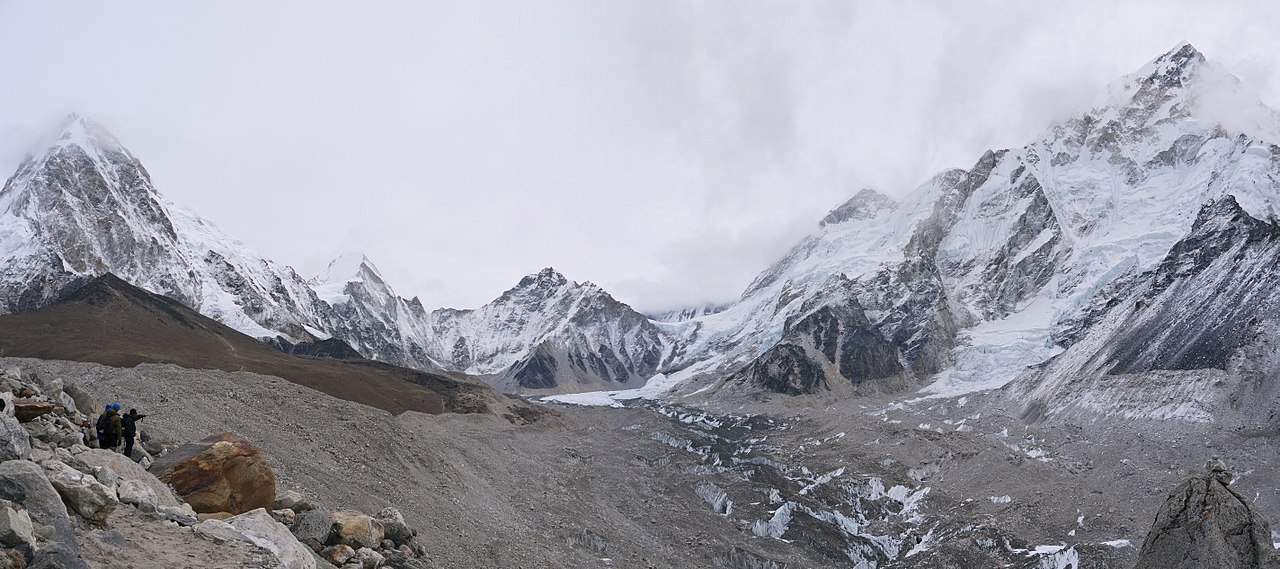
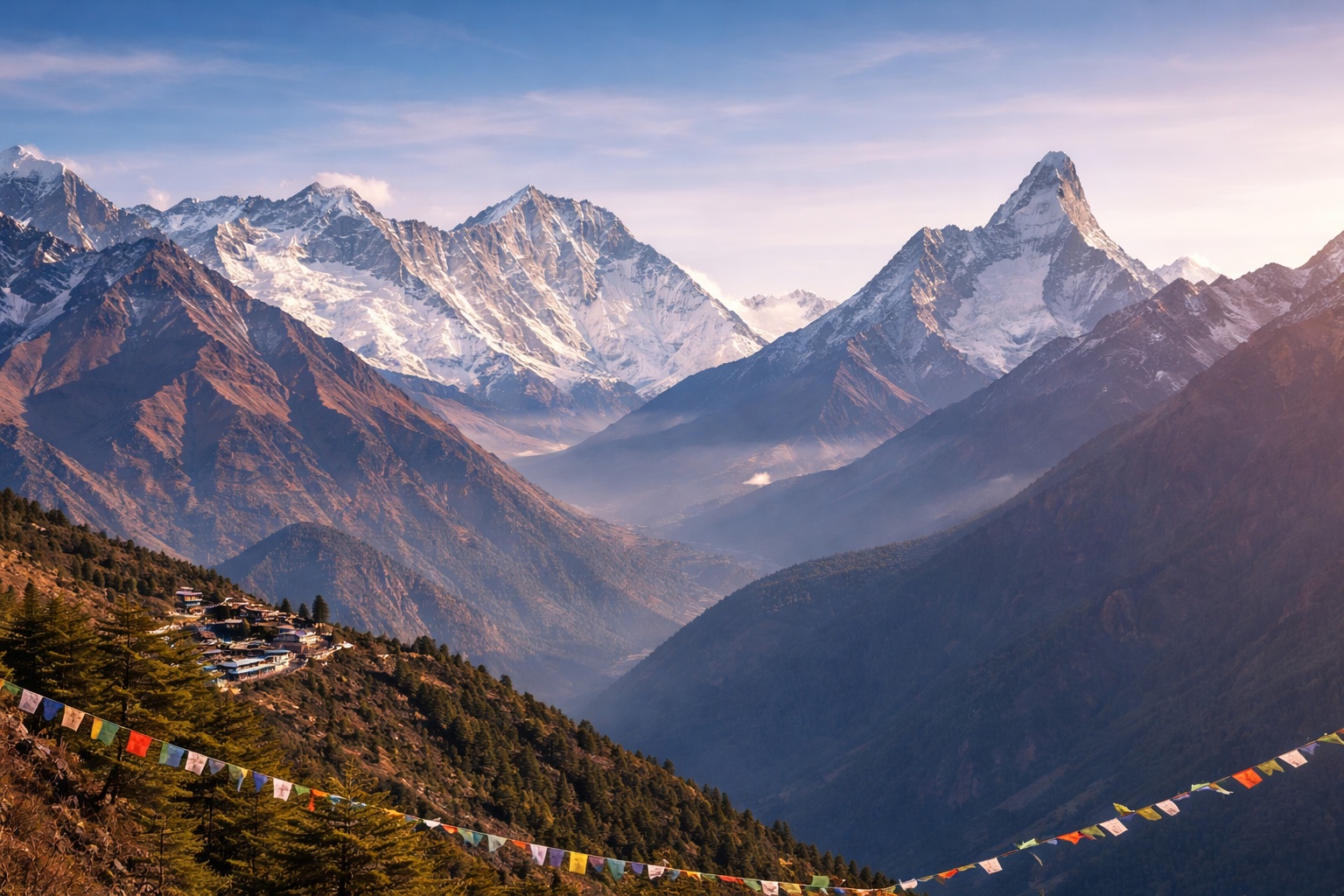
The Everest Panorama Trek is the Khumbu region's best short itinerary - a focused 8-day journey that delivers everything the Everest experience is famous for (Sherpa villages, Buddhist monasteries, mountain giants, Sagarmatha National Park, and genuine high altitude) without the 14 - 17 days required to reach Everest Base Camp. The trek ascends from Lukla (2,860 m) to Tengboche Monastery (3,867 m), with a full acclimatisation day in Namche Bazaar (3,440 m) that includes a day hike to the Everest View Hotel (3,880 m) - a dedicated viewpoint from which Everest (8,849 m), Nuptse (7,861 m), Lhotse (8,516 m), and Ama Dablam (6,814 m) are all visible at once without any further altitude gain.
Tengboche Monastery (3,867 m) is the cultural and spiritual heart of the Khumbu. The gompa sits on a forested saddle above the Imja and Dudh Kosi river confluence, surrounded by ancient rhododendron trees that burst into bloom in April. The monastery's main courtyard - with Ama Dablam's south ridge filling the sky behind it - is one of the most photographed scenes in all of Nepal. Resident monks perform morning and evening puja (prayer ceremony) that visitors are welcome to observe quietly; these ceremonies, accompanied by horns, drums, and the smell of juniper incense, connect the high-altitude trekking world to a living spiritual tradition that predates modern mountaineering by centuries.
The 8-day format is specifically designed for trekkers with limited time, first-time visitors to Nepal who want a genuine mountain experience, and those who have completed Poon Hill or Langtang and are ready to step up to a Khumbu journey without committing to a two-week expedition. The itinerary includes the most scenic sections of the classic EBC route - Phakding gorge, Namche's amphitheatre setting, the Namche to Tengboche ridge walk - while keeping maximum altitude under 4,000 m and total walking days at six.
| Group Size | Price per Person (USD) |
|---|---|
| Solo trekker | USD 749 |
| 2 - 4 people | USD 699 |
| 5 - 12 people | USD 649 |
| 13 or more | Contact us for a group quote |
A deposit of 20 % confirms your booking; the balance is due 14 days before departure. Prices include Lukla flights (Kathmandu - Lukla return), all trekking permits, guide, porter, teahouse accommodation, and three meals per day on trek. Lukla flight timings are subject to weather; the Day 7 buffer absorbs common delays.
The Everest Panorama Trek offers a well-curated introduction to the Khumbu without the physical or logistical demands of the full EBC route. Daily walking hours are moderate (3 - 5 per day), trail surfaces are well-maintained by Khumbu standards, and the teahouse infrastructure between Lukla and Tengboche is among the best in Nepal. The acclimatisation day in Namche (Day 3) is built into the itinerary precisely because altitude gain from Phakding (2,610 m) to Namche (3,440 m) on Day 2 is significant - 830 m in one day - and the body needs time to adjust.
Namche Bazaar is a genuinely surprising mountain town: espresso cafes, well-stocked gear shops, a weekly Saturday market, a pizza restaurant overlooking the valley, and a national park visitor centre with a small museum about Everest history and Sherpa culture. The day hike to Khumjung and the Everest View Hotel on Day 3 reaches 3,880 m and delivers the first direct sighting of Everest for most trekkers - an emotional moment regardless of how many photos you have seen beforehand. Tengboche (Days 4 - 5) is quieter and more meditative; the monastery is surrounded by a UNESCO-protected rhododendron forest that glows orange and red in autumn.
The Everest Panorama Trek is suitable for fit travellers with no prior Himalayan experience. The maximum sleeping altitude of 3,867 m is within safe limits for most healthy adults, provided the acclimatisation day in Namche is respected. The Lukla flight (35 minutes, weather-dependent) is a logistical element that requires flexibility - build extra buffer time around your international connections.
| Day | Route | Distance | Max Altitude | Gain / Loss |
|---|---|---|---|---|
| 1 | Fly KTM → Lukla → Phakding | 8 km | 2,860 m | - 250 m |
| 2 | Phakding → Namche Bazaar | 11 km | 3,440 m | +830 m |
| 3 | Namche → Everest View Hotel → Khumjung (acclimatisation) | 12 km | 3,880 m | +440 / - 440 m |
| 4 | Namche → Tengboche Monastery | 11 km | 3,867 m | +427 / - 0 m net |
| 5 | Tengboche → Namche (via Deboche optional) | 11 km | 3,867 m | - 427 m |
| 6 | Namche → Phakding → Lukla | 16 km | 3,440 m | - 580 m |
| 7 | Fly Lukla → Kathmandu (weather buffer) | - | 2,860 m | Flight |
| 8 | Kathmandu departure | - | 1,400 m | - |
| Add-On | Duration | Approx. Cost |
|---|---|---|
| Extend to Everest Base Camp (5,364 m) and Kala Patthar (5,644 m) | +6 days | USD 580 pp |
| Gokyo Lakes extension via Cho La Pass (5,420 m) | +5 days | USD 490 pp |
| Kathmandu heritage sightseeing (Pashupatinath, Boudhanath, Bhaktapur) | 1 day | USD 55 pp |
| Chitwan National Park jungle safari | 2 nights | USD 220 pp |
The Everest Panorama Trek is rated easy to moderate - the most accessible of all Khumbu treks. Daily walking hours are modest (3 - 5 per day), maximum sleeping altitude is 3,867 m, and the trail from Lukla to Tengboche is one of the best-maintained in Nepal. The principal challenge is the altitude gain on Day 2 (Phakding to Namche, +830 m), which should be paced carefully and followed by a mandatory rest day on Day 3. The Namche acclimatisation day hike to 3,880 m is physically easy but important for altitude adjustment - do not skip it.
No prior high-altitude trekking experience is needed. Regular walkers, occasional hikers, and people who exercise 2 - 3 times per week at moderate intensity will find the trek comfortable. The Khumbu trail is stone-paved in many sections, sometimes steep, and can be icy in the mornings from November. Trekking poles are recommended. To prepare, aim for two 3-hour walks per week for 4 - 6 weeks before departure - include some uphill sections to mimic the Namche climb.
March through May is the second busiest season in the Khumbu. Rhododendron and magnolia bloom below Tengboche in April, and the trails carry a festive atmosphere as expedition teams head for Everest Base Camp. Views are excellent through May; early June brings pre-monsoon cloud. April is typically the best spring month for combining rhododendron bloom with mountain clarity.
Heavy monsoon rainfall makes trail conditions difficult and obscures mountain views for days at a time. Leeches are active on lower trail sections. The Khumbu receives less monsoon rain than the central hills, but the trek is not recommended from June through mid-September.
October is the single best month across all Nepal treks, and the Everest Panorama Trek is no exception. Post-monsoon skies are crystal clear, temperatures are ideal (5 - 12 °C by day at altitude), and the Khumbu is alive with trekkers, climbers, and village festivals. Mani Rimdu festival at Tengboche Monastery usually falls in late October or early November - attending this three-day masked-dance festival during the trek is one of Nepal's finest cultural experiences.
The Khumbu teahouses remain open through winter. December and January bring cold temperatures ( - 10 °C at Tengboche at night) and occasional snow on the trail above 3,000 m. The trails are far less crowded than spring or autumn - a peaceful, meditative experience for cold-tolerant trekkers. February begins to warm and offers clear skies with manageable cold.
Khumbu teahouses are the best standard of teahouse accommodation in Nepal. Between Lukla and Tengboche, expect clean twin-share rooms with foam mattresses, blankets, and an attached or shared bathroom at most lodges. Namche's teahouses offer heated dining rooms, hot showers, and reliable Wi-Fi (USD 3 - 5 per day). Tengboche has a smaller selection with more basic facilities but the same quality basics. A sleeping bag rated to - 10 °C is recommended for Tengboche nights.
The Khumbu menu is the most internationally diverse on any Nepal trek: dal bhat, noodle soup, pasta, pizza, momo, apple pie, cheesecake, espresso, and hot chocolate are all available in Namche. Simple Nepali staples dominate smaller teahouses. Namche's Saturday market (held weekly) sells fresh produce, local cheeses, and dried goods - worth visiting if your schedule aligns. Bring trail snacks from Kathmandu for the hiking days; options are limited and expensive above Namche.
The Everest Panorama Trek runs year-round except during peak monsoon. Fixed departures run from October through November and March through May. Private departures can be arranged on any date with 5 days' notice. Note that Lukla flights are weather-dependent - the itinerary includes a built-in buffer day on Day 7 specifically to absorb common delays.
The Everest Panorama Trek's maximum sleeping altitude of 3,867 m at Tengboche is well within safe limits for healthy trekkers following a gradual ascent schedule. The mandatory acclimatisation day in Namche (Day 3) is the most important safety element in the itinerary - missing it to save time is the leading cause of altitude illness on short Khumbu treks. Rest, hydrate, and do the Everest View Hotel day hike (which keeps you moving at altitude without a net gain in sleeping elevation).
Travel insurance with helicopter rescue cover to a minimum of 4,500 m is required. Standard trekking insurance covering "Nepal trekking up to 4,500 m" is sufficient for the Everest Panorama Trek. Also ensure your policy covers Lukla flight delays, which can result in significant additional accommodation costs during peak October season.
| Trek | Duration | Max Altitude | From (USD) |
|---|---|---|---|
| Everest Base Camp Trek | 14 days | 5,364 m (EBC) | 1,249 |
| Gokyo Lakes Trek | 12 days | 5,357 m (Gokyo Ri) | 1,049 |
| Everest Three Passes Trek | 18 days | 5,535 m (Kongma La) | 1,299 |
| Pikey Peak Trek | 6 days | 4,065 m (Pikey Peak) | 299 |
Everest Panorama trek in one sentence: An 8-day short teahouse trek from Kathmandu (via Lukla) to Tengboche and the Everest View Hotel ridge, reaching 3,880m without continuing to Base Camp.
Everest Panorama trek altitude: 3,880 metres (12,730 feet) at Tengboche and the Everest View Hotel ridge.
Everest Panorama trek difficulty: Easy to Moderate - one of the more accessible ways to see Khumbu scenery on a short timeframe.
Best time for the Everest Panorama trek: March - May and October - November for the clearest mountain visibility.
Everest Panorama trek cost: View Himalaya packages start from USD 649 per person, including Lukla flights, teahouse accommodation, meals, guide, and porter.
Everest Panorama vs Everest Base Camp: Panorama is 8 days and reaches 3,880m; the full EBC trek is 14 days and reaches 5,364m at Base Camp itself.
An unforgettable experience from start to finish. The guide's local knowledge added so much depth to the trip. A particular highlight for us was maximum altitude under 4,000 m - accessible for fit first-timers without prior Himalayan experience. Would recommend this to friends and family without any reservation.
Everything about this trip was handled professionally. Our guide was incredibly knowledgeable and made sure we were safe every step of the way. A particular highlight for us was tengboche puja ceremony - morning and evening Buddhist prayer observed in one of Nepal's most atmospheric monasteries. Booking through View Himalaya made all the logistics completely stress-free.
Everything about this trip was handled professionally. Our guide was incredibly knowledgeable and made sure we were safe every step of the way. A particular highlight for us was maximum altitude under 4,000 m - accessible for fit first-timers without prior Himalayan experience. Thank you to the whole View Himalaya team for making this happen.