The Lobuche Peak Climbing is a 18-day trip in Kathmandu / Kathmandu (via Lukla), rated very strenuous / technical difficulty. The best time to do this trip is April - May and October - November. The package includes group sizes of 1–8 climbers, teahouses (approach); tents at lobuche bc and high camp accommodation.
| Country | Kathmandu / Kathmandu (via Lukla) |
|---|---|
| Difficulty | Very Strenuous / Technical |
| Duration | 18 |
| Best Time | April - May and October - November |
| Accommodation | Teahouses (approach); tents at Lobuche BC and High Camp |
| Group Size | 1–8 climbers |
How high is Lobuche Peak?
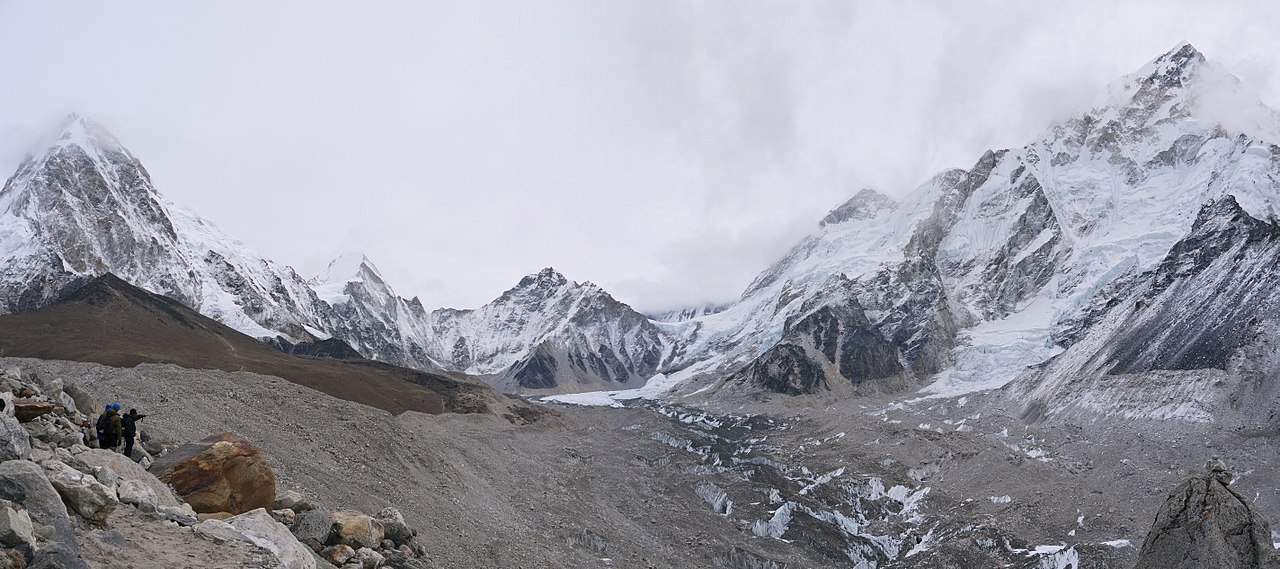
Lobuche East (6,119 m) is one of Nepal's most sought-after trekking peaks - a technical summit that sits directly above Everest Base Camp in the heart of the Khumbu, offering climbers a genuine high-altitude mountaineering experience alongside the full EBC trekking route. The mountain's northeast ridge, approached from a base camp at 5,100 m, involves glacier travel, fixed-rope ascents on a steeper headwall, and a dramatic summit ridge walk that ends with a 360° panorama including Everest (8,849 m), Makalu (8,485 m), Cho Oyu (8,188 m), Nuptse (7,861 m), and the entire Khumbu Icefall spread below.
This 18-day expedition is designed for fit trekkers with some prior experience in mountaineering or glacier travel who want to step up from trekking to genuine peak climbing without committing to a full expedition-grade objective. Lobuche East is classified as a Nepal Mountaineering Association (NMA) trekking peak at Grade PD (peu difficile) - the fixed ropes on the upper headwall make the technical sections manageable for well-prepared beginners, provided they have spent time with crampons and ice axe on snow before the summit day. The trek component of the itinerary covers the entire classic Khumbu approach including Namche Bazaar (3,440 m), Tengboche Monastery (3,867 m), Dingboche (4,410 m), and a post-climb visit to Everest Base Camp (5,364 m) and Kala Patthar (5,644 m) - making this itinerary one of the most complete Himalayan packages available.
A two-guide system is standard on all View Himalaya Lobuche expeditions: an NTB-licensed senior trekking guide leads the approach and descent, while an NMA-certified (UIAGM/IFMGA where available) high-altitude climbing guide leads the technical sections from Lobuche BC through the summit. All technical equipment - crampons, ice axe, harness, helmet, jumar, carabiners, and fixed ropes - is provided and included in the package price.
| Group Size | Price per Person (USD) |
|---|---|
| Solo climber | USD 2,099 |
| 2 - 4 people | USD 1,899 |
| 5 - 8 people | USD 1,749 |
| 9 or more | Contact us for a group quote |
A deposit of 25 % confirms your booking; the balance is due 45 days before departure. NMA permits must be applied a minimum of 6 weeks in advance. Prices include the NMA peak permit, all trekking permits, Lukla flights, two-guide team, technical climbing equipment, tents and camping equipment at high altitude, and all meals throughout.
The Lobuche East climbing expedition combines the well-known Khumbu trekking experience with three climbing days that move into genuinely technical high-altitude terrain. The approach to Lobuche Base Camp (5,100 m) follows the classic EBC route to Lobuche village (4,940 m), then continues a short distance to the BC meadow at the base of the northeast ridge. From BC, the climbing guide leads a skills session - crampon technique, ice axe arrest, jumar operation on a fixed line - before the first acclimatisation push to the headwall at approximately 5,600 m.
The summit day begins at 2:00 am. The first section is a steep glacier approach in the dark - headlamps essential. Above the glacier, fixed ropes lead up the 40 - 50° headwall to the northeast ridge, where the angle eases and the summit walk begins. Weather on Lobuche East moves fast; the guide monitors conditions throughout and will abort if cloud, wind, or falling temperature presents risk. The view from the summit on a clear day is one of the most commanding in the Himalaya - Everest's northeast face fills the sky less than 20 km away.
Post-climb, the itinerary visits Everest Base Camp (5,364 m) and Kala Patthar (5,644 m) before the return descent to Lukla. This makes the Lobuche expedition the most complete Khumbu itinerary available - summit, EBC, and Kala Patthar - in 18 days.
The Lobuche East climbing expedition suits physically exceptional trekkers who have prior experience wearing crampons and using an ice axe, or who are willing to undertake a skills course before departure. It is not suitable for complete mountaineering beginners, though it does not require prior high-altitude summit experience above 6,000 m.
| Day | Route | Distance | Max Altitude | Gain / Loss |
|---|---|---|---|---|
| 1 | Kathmandu briefing | - | 1,400 m | - |
| 2 | Fly KTM → Lukla → Phakding | 8 km | 2,860 m | - 250 m |
| 3 | Phakding → Namche | 11 km | 3,440 m | +830 m |
| 4 | Namche - acclimatisation (Everest View Hotel 3,880 m) | 10 km | 3,880 m | ±440 m |
| 5 | Namche → Tengboche | 11 km | 3,867 m | +427 m |
| 6 | Tengboche → Dingboche | 12 km | 4,410 m | +543 m |
| 7 | Dingboche - acclimatisation (Chhukung Ri 5,550 m) | 14 km | 5,550 m | +1,140 / - 1,140 m |
| 8 | Dingboche → Lobuche | 10 km | 4,940 m | +530 m |
| 9 | Lobuche → Base Camp, gear training | 4 km | 5,100 m | +160 m |
| 10 | BC → High Camp carry (5,600 m) → BC sleep | 8 km | 5,600 m | +500 / - 500 m |
| 11 | BC → High Camp (sleep) | 4 km | 5,600 m | +500 m |
| 12 | Summit day: High Camp → Summit (6,119 m) → BC | 8 km | 6,119 m | +519 / - 1,019 m |
| 13 | Reserve / recovery day | - | 5,100 m | - |
| 14 | Lobuche BC → EBC (5,364 m) → Gorak Shep | 10 km | 5,364 m | +264 / - 200 m |
| 15 | Kala Patthar (5,644 m) → Pheriche | 14 km | 5,644 m | +480 / - 1,901 m |
| 16 | Pheriche → Namche | 18 km | 4,243 m | - 803 m |
| 17 | Namche → Lukla → fly KTM | 16 km | 3,440 m | - 580 m + flight |
| 18 | Kathmandu departure | - | 1,400 m | - |
| Add-On | Duration | Approx. Cost |
|---|---|---|
| Gokyo Lakes side extension via Cho La Pass (5,420 m) | +4 days | USD 420 pp |
| Island Peak Climbing (6,189 m) combined expedition | +4 days | USD 680 pp |
| Kathmandu heritage sightseeing (Pashupatinath, Boudhanath, Bhaktapur) | 1 day | USD 55 pp |
| Pre-departure crampon and ice axe skills course (Kathmandu glacier day) | 1 day | USD 120 pp |
The Lobuche East climbing expedition is rated very strenuous and technical. The summit day (12 - 14 hours round trip) at altitude above 6,000 m with a full pack, crampons, and fixed-rope ascent is significantly more demanding than any standard trekking day. You must be comfortable walking confidently on steep snow and ice with crampons, and capable of jumar ascent on a 40 - 50° fixed rope while breathing hard at 5,800 m. Prior experience in alpine mountaineering, ski touring, or glacier travel is strongly recommended.
Physical preparation should include a sustained 12-week programme of cardiovascular training (trail running, uphill hiking with pack, cycling intervals) plus strength work for upper body (for jumar pulling) and core stability. If you have never worn crampons, book a pre-expedition skills day in Kathmandu with a certified instructor. The most common cause of failure is poor acclimatisation - never skip Namche Day 4 or Dingboche Day 7 rest days regardless of how good you feel.
April is the primary Lobuche East climbing season - stable weather windows, moderate temperatures on the summit ridge ( - 15 °C to - 25 °C at summit), and the Khumbu alive with Everest expedition teams. Summit views in April are exceptional. Early May brings increasing afternoon instability as pre-monsoon cloud builds; a late April summit is ideal. EBC in spring has its famous tent city of Everest teams - an unforgettable visual experience on the post-summit visit.
Lobuche East is inaccessible during monsoon season. Snowfall on the upper ridge, heavy rain on the approach, and dangerous ice conditions close the route from June through mid-September. The NMA does not issue climbing permits for monsoon season on this peak.
October and early November provide the most stable high-altitude weather in the Khumbu. Summit temperatures run - 20 °C to - 30 °C in November but wind is generally calmer than spring. October is the single best month: post-monsoon snow consolidation makes the headwall route safe, and clear skies produce the best summit panorama. Book well in advance - October slots fill 3 - 4 months ahead.
Extreme cold ( - 35 °C summit temperatures in January), heavy snowpack on the headwall, and high winds close Lobuche East to all but highly experienced winter alpinists. The teahouse infrastructure from Namche to Lobuche remains open but support logistics are severely limited.
Teahouse accommodation from Lukla to Lobuche village follows the same excellent Khumbu standard as the EBC trek - progressively simpler but always clean, with twin rooms, blankets, and heated dining rooms. At Lobuche Peak Base Camp and High Camp, the team uses four-season expedition tents with insulated sleeping mats and expedition sleeping bags. The cook team prepares hot meals (pasta, dal, fried rice, oatmeal) at base camp; emergency hot drinks and snacks are carried to High Camp. Pre-summit dinner is high-calorie and easy to digest - soup, noodles, and chocolate.
Lobuche East expeditions run in spring (April - May) and autumn (October - November). NMA permits must be secured 6 weeks in advance. October expeditions fill quickly - book by August for an October departure.
Lobuche East keeps climbers above 5,000 m for seven consecutive days (Days 8 - 14). The itinerary includes two formal acclimatisation days (Namche Day 4 and Dingboche Day 7) and a load-carry to High Camp (Day 10) that returns to BC to sleep - a critical "climb high, sleep low" step before the summit night at 5,600 m. Never skip these days regardless of how well you feel at altitude.
Mountaineering insurance covering rescue and evacuation at a minimum altitude of 6,500 m is mandatory for the Lobuche East expedition. Standard trekking policies are insufficient - you must have a policy explicitly covering mountaineering and high-altitude climbing to 6,500 m or above.
| Package | Duration | Max Altitude | From (USD) |
|---|---|---|---|
| Island Peak Climbing (Imja Tse) | 18 days | 6,189 m | 1,799 |
| Mera Peak Climbing | 18 days | 6,476 m | 1,899 |
| Everest Base Camp Trek | 14 days | 5,364 m (EBC) | 1,249 |
| Everest Three Passes Trek | 18 days | 5,535 m (Kongma La) | 1,299 |
Lobuche Peak in one sentence: A technically demanding 6,119m Khumbu trekking peak, climbed via an 18-day expedition combining an Everest Base Camp-style approach with a steep summit ridge.
Lobuche Peak altitude: 6,119 metres (20,075 feet).
Lobuche Peak difficulty: Very Strenuous and Technical - considered more demanding than Island Peak, with a steeper, more exposed summit ridge.
Best time to climb Lobuche Peak: April - May and October - November.
Lobuche Peak climbing cost: View Himalaya packages start from USD 1,749 per person, including the trekking approach, climbing guide, and technical equipment support.
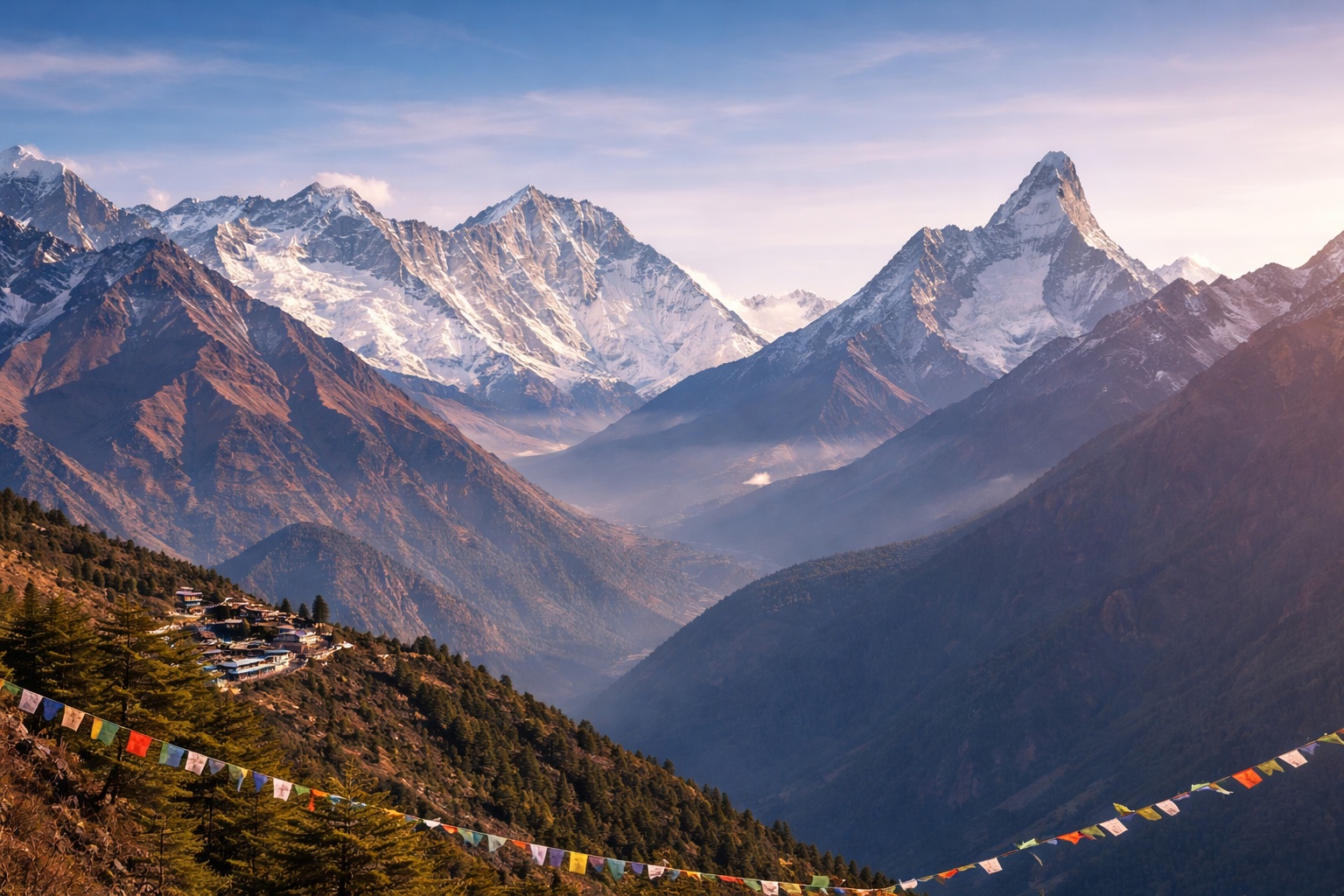
Lobuche Peak summit view: Close-range views of Everest, Nuptse, Ama Dablam, and the Khumbu Icefall.
Everything about this trip was handled professionally. Our guide went above and beyond to make sure everyone in the group was comfortable. A particular highlight for us was all technical gear provided (crampons, ice axe, harness, helmet, jumar, fixed ropes). Thank you to the whole View Himalaya team for making this happen.
Truly one of the highlights of our travels in Asia. Our guide was incredibly knowledgeable and made sure we were safe every step of the way. A particular highlight for us was view Himalaya summit success rate: approximately 78%. Would recommend this to friends and family without any reservation.
Everything about this trip was handled professionally. The guide's local knowledge added so much depth to the trip. A particular highlight for us was summit Lobuche East (6,119 m) - 360° panorama of Everest, Makalu, Cho Oyu, Nuptse, and the Khumbu Icefall. Thank you to the whole View Himalaya team for making this happen.