
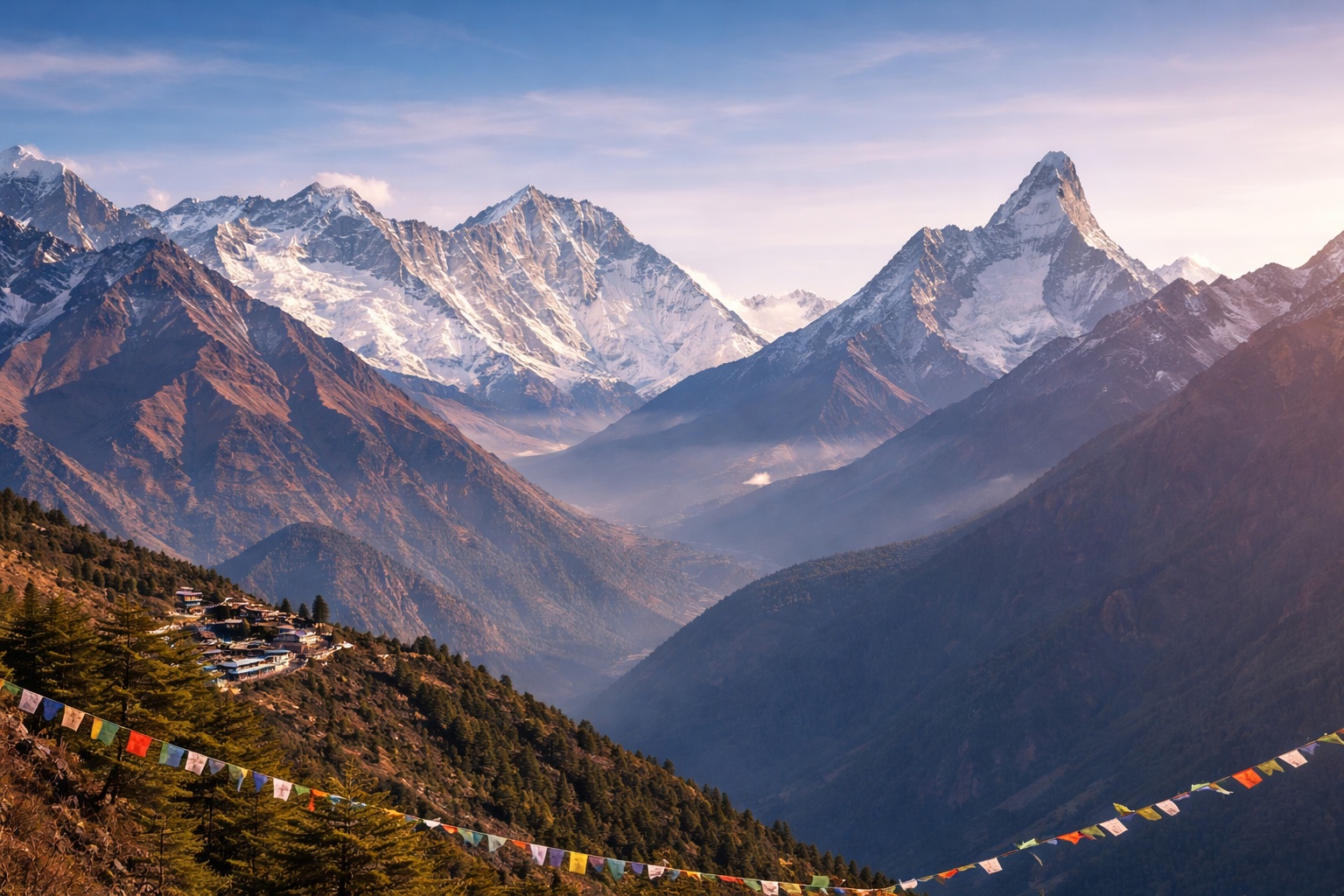
Lobuche Peak Base Camp is the staging point for climbers attempting Lobuche East, a 6,119 metre trekking peak considered more technically demanding than the more popular Island Peak, offering close views of Everest, Nuptse, and the dramatic ice formations of the Khumbu Icefall. Set in stark, high-altitude terrain near the main Everest Base Camp trail, the base camp provides climbers with a genuinely serious mountaineering objective within the broader context of an Everest region trekking itinerary.
Climbers typically spend time at base camp preparing equipment and undertaking final acclimatisation before continuing to a higher camp for the technical summit push, which involves a steep, exposed summit ridge requiring confident use of fixed ropes and crampons. This technical difficulty sets Lobuche Peak apart from more accessible trekking peaks like Island Peak, making it a preferred objective for climbers with some prior high-altitude experience seeking a more genuinely mountaineering-oriented challenge.
The base camp's position offers some of the most dramatic close-range mountain views available on any of Nepal's trekking peaks, with the sheer scale of Everest and Nuptse visible directly across the valley. Most itineraries combine the Lobuche Peak climb with visits to Everest Base Camp and Kala Patthar, since the approach routes overlap for much of the journey, offering climbers both the classic Everest trekking experience and a genuine technical summit within a single extended trip.
Mobile signal in the area is patchy at best, and travellers should not rely on constant connectivity once they are this far into the trail network.
Weather at this elevation can change quickly, and a flexible itinerary with a buffer day or two is generally recommended for anyone travelling through this part of the route.
Local guides with specific knowledge of this stretch of trail add real value, both for navigation and for the cultural context they can offer along the way.
A gradual, well-paced ascent through this section remains the best defence against altitude-related discomfort further along the route.