
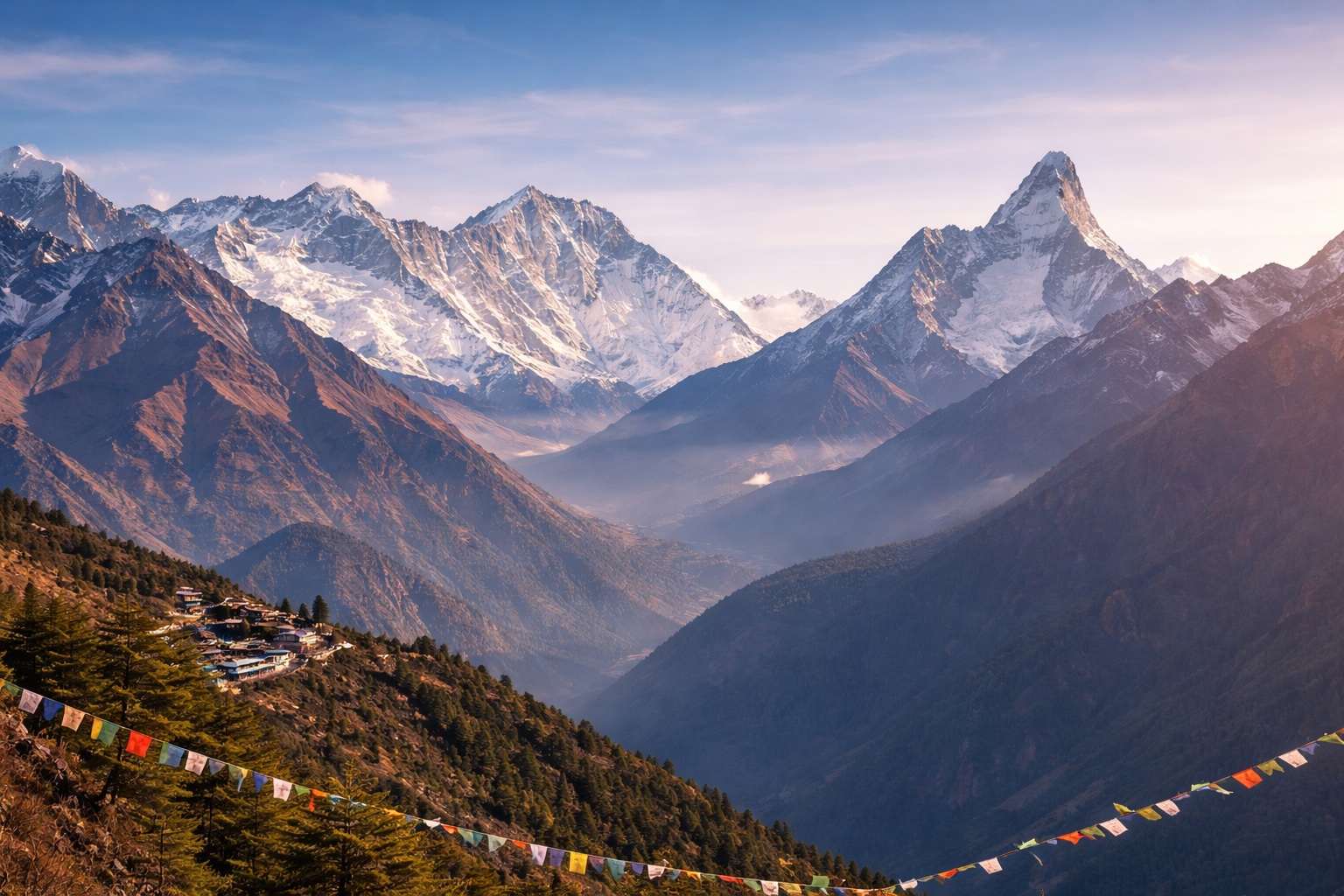
Ama Dablam Base Camp sits at 4,600 metres in a high side valley of the Khumbu, directly beneath one of the most instantly recognisable peaks in the Himalaya. The mountain's distinctive silhouette, a sharp central pyramid flanked by ridges and hung with a suspended hanging glacier that gives the peak its name (Ama Dablam translates roughly to "mother's necklace"), dominates the skyline from the moment the base camp comes into view. Despite being far lower than Everest at 6,812 metres, Ama Dablam is consistently ranked among trekkers and photographers as the single most beautiful mountain in the range, and the base camp beneath it is correspondingly one of the most rewarding short detours available from the main Everest Base Camp trail.
The approach to Ama Dablam Base Camp typically branches off the standard EBC route near Pangboche or Dingboche, climbing through increasingly stark alpine terrain as the trail leaves the treeline behind. During the main spring and autumn climbing seasons, the base camp hosts a genuine expedition community: Ama Dablam is one of Nepal's most popular technical climbing objectives, and trekkers who make the detour here often find themselves sharing the site with mountaineers preparing ropes, checking equipment, and acclimatising before summit attempts on the mountain's South-West Ridge, the standard route to the top.
For trekkers rather than climbers, the reward is purely visual: a close, unobstructed view of the mountain's full face from a vantage point that most Everest Base Camp trekkers never see, since it requires a dedicated side trip rather than sitting directly on the main trail. The surrounding terrain is classic high Khumbu, moraine and scree slopes, thin air, and a silence broken only by wind and the occasional crack of ice shifting on the glacier above. Because of the altitude and the side-trip nature of the visit, proper acclimatisation before attempting the detour is essential, and it is typically built into itineraries that already include a rest day at Namche Bazaar or Dingboche.