
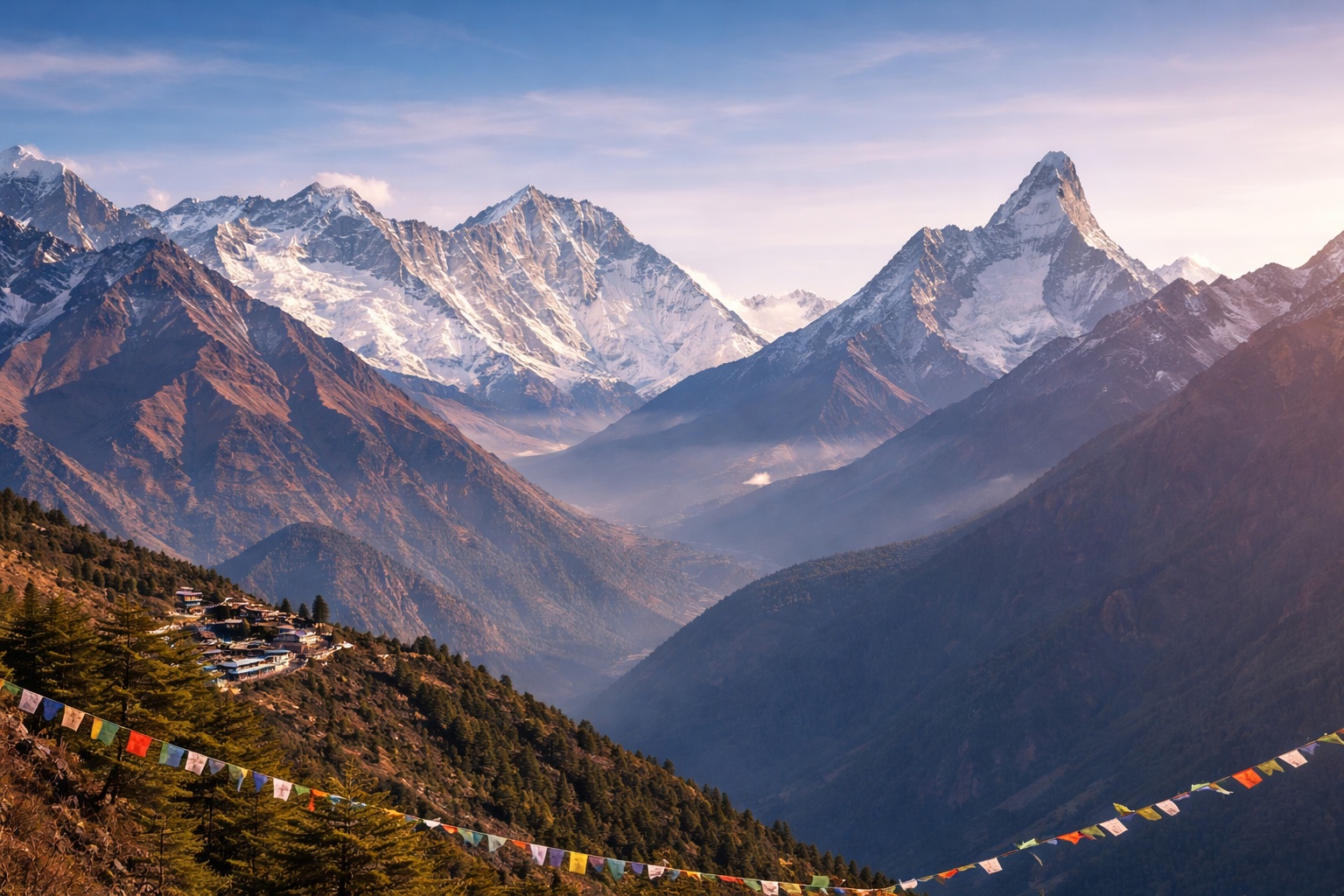
Sekathum is a village on the Kanchenjunga Circuit where the trail from the Tamor valley meets the route heading toward the Ghunsa valley and the northern approach to Kanchenjunga's base camps. Sitting at the confluence of two significant rivers in this remote eastern corner of Nepal, Sekathum serves as an important junction point for trekkers undertaking the full Kanchenjunga Circuit, one of the most demanding and least-visited major trekking routes in the country.
The village reflects the ethnic diversity found throughout the lower Kanchenjunga region, with Limbu and Rai communities maintaining distinct Kirat religious traditions alongside the increasingly Tibetan Buddhist influence found further up the valley toward Ghunsa. Basic teahouses in Sekathum serve the relatively modest number of trekkers making the long journey toward Kanchenjunga each season, a route that requires restricted-area permits and a considerable time commitment given its remoteness.
For trekkers, Sekathum represents an important waypoint on the approach to the more dramatic high-altitude terrain further ahead, and its position at the junction of two significant valleys makes it a natural stopping point for rest and resupply before the trail climbs more steeply toward Ghunsa and beyond. The relative solitude and cultural richness found throughout this stretch of the Kanchenjunga Circuit remain among its most valued qualities for experienced trekkers seeking genuine wilderness and discovery.
Mobile signal in the area is patchy at best, and travellers should not rely on constant connectivity once they are this far into the trail network.
Weather at this elevation can change quickly, and a flexible itinerary with a buffer day or two is generally recommended for anyone travelling through this part of the route.
Local guides with specific knowledge of this stretch of trail add real value, both for navigation and for the cultural context they can offer along the way.
A gradual, well-paced ascent through this section remains the best defence against altitude-related discomfort further along the route.
Basic but adequate teahouse facilities are typically available, offering a hot meal and a simple bed for trekkers passing through.