
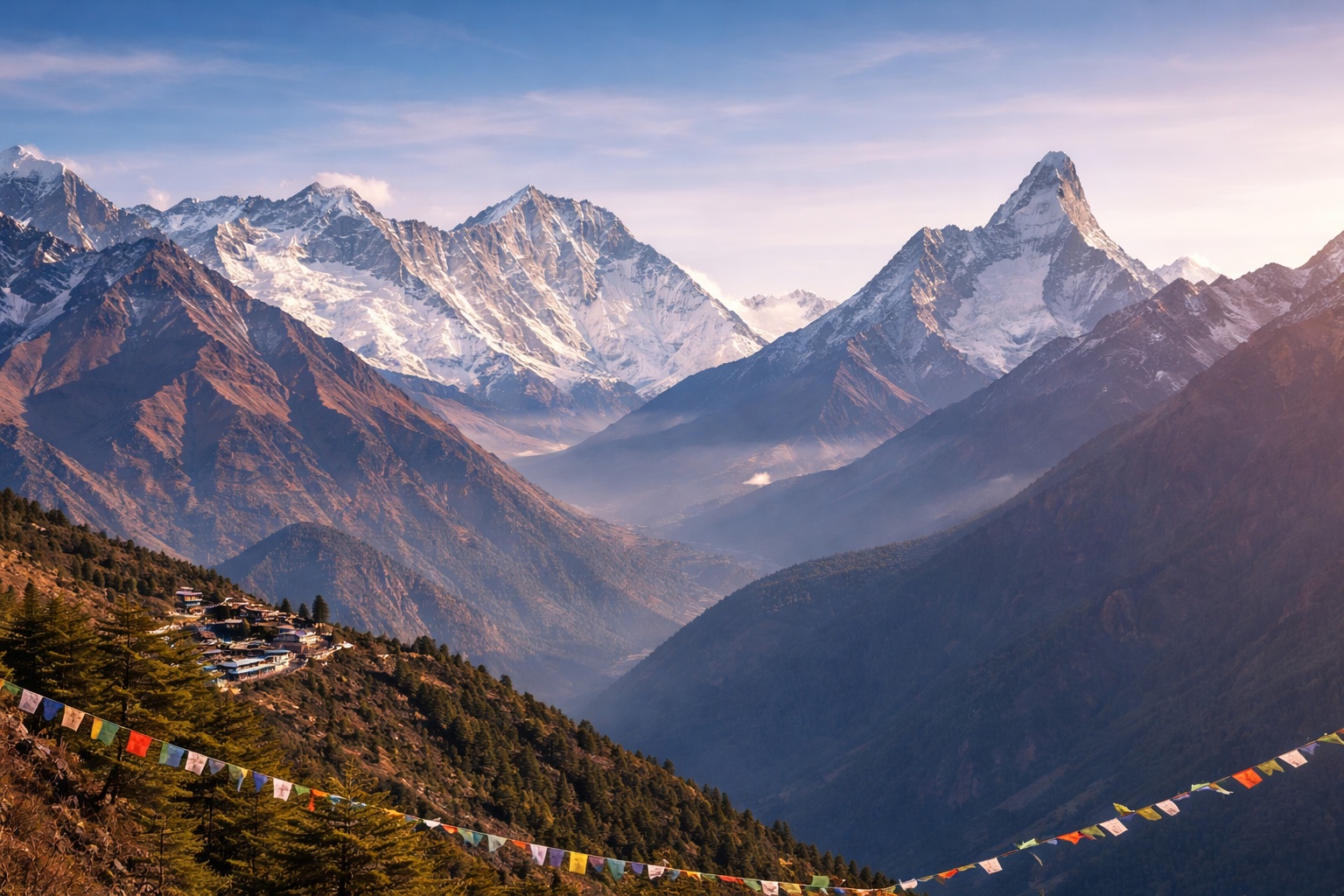
Tseram is a settlement on the Kanchenjunga South Base Camp trekking route, set within the Yalung valley approach to Oktang and the southern flank of the world's third-highest mountain. Sitting at a significant altitude amid dramatic high-mountain terrain, Tseram serves as an important staging point for trekkers making the final approach toward the South Base Camp viewpoint further up the valley.
The village's position within this remote eastern Nepal trekking corridor reflects the generally undeveloped character of the entire Kanchenjunga region, a restricted area that sees only a fraction of the visitors found on Nepal's more famous Everest and Annapurna trekking circuits. Basic teahouse or camping facilities at Tseram serve the relatively modest number of trekkers undertaking this demanding and remote journey each season, most requiring well over two weeks to complete the full circuit or south-side approach.
For trekkers, Tseram represents one of the final stops before reaching Oktang, the culminating viewpoint offering dramatic close-range views of Kanchenjunga's south face and surrounding peaks. The relative solitude and profound remoteness found throughout this stretch of trail, including at stops like Tseram, remain among the primary reasons experienced trekkers continue to seek out the Kanchenjunga region as one of Nepal's last great frontiers for genuine wilderness trekking.
Basic but adequate teahouse facilities are typically available, offering a hot meal and a simple bed for trekkers passing through.
Facilities along this stretch of trail remain simple, and trekkers should carry sufficient cash, since cards are not accepted and ATMs do not exist beyond the larger towns.
Mobile signal in the area is patchy at best, and travellers should not rely on constant connectivity once they are this far into the trail network.
Weather at this elevation can change quickly, and a flexible itinerary with a buffer day or two is generally recommended for anyone travelling through this part of the route.
Local guides with specific knowledge of this stretch of trail add real value, both for navigation and for the cultural context they can offer along the way.