
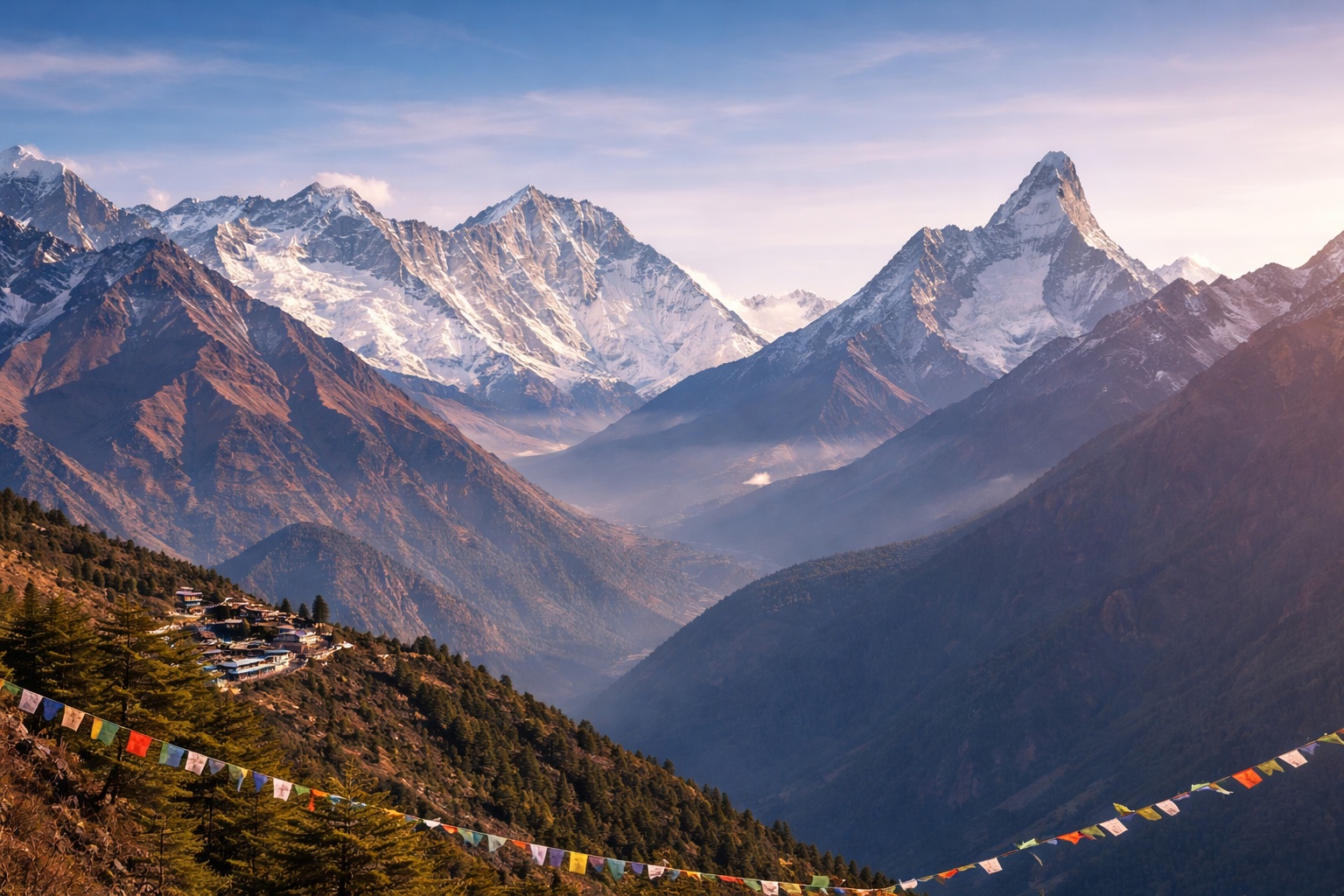
The Mardi Himal Trek is a 7-day trip in Pokhara, rated moderate to challenging difficulty, reaching a maximum elevation of Mardi Himal Base Camp - 4,500m (14,763 ft). The best time to do this trip is Autumn (Sep - Nov) & Spring (Mar - May). The package includes group sizes of 1–12 people, teahouses / small lodges on trail; hotel pokhara accommodation, breakfast, lunch and dinner included daily on trail.
| Country | Pokhara |
|---|---|
| Difficulty | Moderate to Challenging |
| Max Elevation | Mardi Himal Base Camp - 4,500m (14,763 ft) |
| Duration | 7 |
| Best Time | Autumn (Sep - Nov) & Spring (Mar - May) |
| Meals | Breakfast, lunch and dinner included daily on trail |
| Accommodation | Teahouses / small lodges on trail; hotel Pokhara |
| Group Size | 1–12 people |
How long is the Mardi Himal trek?
The Mardi Himal Trek is the Annapurna region's best-kept secret - a high ridge route above the popular trails that delivers extraordinary views of Machhapuchhre (6,993m), Annapurna I (8,091m), Annapurna South (7,219m), and Hiunchuli (6,441m) without the trail traffic of ABC or Poon Hill. In 7 days from Pokhara, you climb through rhododendron forests and alpine meadows to the Mardi Himal Base Camp at 4,500m - a position directly below the unclimbed south face of Machhapuchhre (the sacred Fish Tail Peak) that is as dramatic as any viewpoint in the Annapurna range.
The Mardi Himal route was opened as an official trekking trail only in 2012, which means teahouse infrastructure is still developing and the trail has a genuine off-the-beaten-path quality even in peak season. The high ridge above Low Camp (3,050m) and High Camp (3,580m) offers uninterrupted views along a narrow ridge walk that feels more like an alpine scramble than a standard Nepal trail - an exhilarating experience for trekkers who want something beyond the classic loops.
The route begins with a drive from Pokhara to Kande (1,700m) and climbs through the lush forests of Forest Camp and Low Camp before breaking into open alpine terrain on the high ridge toward High Camp and the Base Camp plateau. The return descends via Siding Village and the Modi Khola valley, different from the ascent route, before returning to Pokhara. The loop format means no repeated terrain and maximum variety in a 7-day window.
At View Himalaya, the Mardi Himal Trek is an ideal choice for trekkers who want a shorter, less crowded Annapurna experience - or those combining it with Pokhara sightseeing and a lakeside rest.
| Group Size | Price Per Person |
|---|---|
| Solo (1 person) | USD 649 |
| Small Group (2 - 4 people) | USD 599 |
| Group (5 - 12 people) | USD 549 |
| 12+ people | Contact us for group rates |
All prices include ground transport Pokhara - Kande and return, ACAP permit, TIMS Card, licensed guide, porter, all teahouse accommodation, 3-star hotel in Pokhara (1 night), all meals on trail, sleeping bag rental if required, first-aid kit, and full on-ground support. A 20% deposit confirms your booking.
The Mardi Himal trail is steeper and more direct than most Annapurna routes - it climbs quickly through dense forest, gaining altitude rapidly before breaking onto the high ridge. The forest sections (Kande to Low Camp) are magnificent: moss-covered oaks, giant rhododendrons (spectacular in March - April bloom), bamboo groves, and primeval cloud forest where mist drifts through the canopy in the mornings. Red pandas, Himalayan monals, and various deer species inhabit these forests.
Above Low Camp, the trail sheds trees and opens into the alpine zone. The narrow ridge between High Camp and Base Camp is the most exposed section - a spectacular knife-edge walk with thousand-metre drops on both sides and the full Annapurna range visible ahead. Machhapuchhre dominates from this position in a way that no other trail in the Annapurna region replicates - the sacred Fish Tail Peak's south face, never permitted to be climbed, rises directly above Base Camp in one of Nepal's most dramatic mountain close-ups.
The descent via Siding Village takes you into an entirely different valley - warmer, more cultivated, through terraced fields and Gurung villages before reaching the Modi Khola and the road back to Pokhara.
Mardi Himal is rated Moderate to Challenging. The quick altitude gain (Pokhara 820m to Base Camp 4,500m in 4 days) requires good cardiovascular fitness. The ridge sections above High Camp are exposed with steep drops on both sides - trekkers with vertigo or balance issues should be aware. The Base Camp approach above High Camp involves some boulder scrambling that requires confidence on uneven terrain. For trekkers comfortable with mountain terrain and day hike experience, this is a highly rewarding short circuit.
| Day | Route | Distance | Altitude | Walking Time |
|---|---|---|---|---|
| 1 | Kande → Forest Camp | 9 km | 2,520m | 4 - 5 hrs |
| 2 | Forest Camp → Low Camp | 9 km | 3,050m | 4 - 5 hrs |
| 3 | Low Camp → High Camp | 8 km | 3,580m | 4 - 5 hrs |
| 4 | High Camp → Mardi BC → Low Camp | 16 km | 4,500m → 3,050m | 7 - 8 hrs |
| 5 | Low Camp → Siding Village | 13 km | 1,700m | 5 - 6 hrs |
| 6 | Siding → Lumre → Pokhara | 10 km + drive | 820m | 3 hrs + 45 min drive |
| 7 | Pokhara / departure | - | 820m | - |
| Add-On | Details | Cost |
|---|---|---|
| Kathmandu - Pokhara Flight | Domestic flight each way (25 min) | USD 80 - 100 per person each way |
| Combine with Poon Hill Trek | Add 3 - 4 days for Ghorepani and Poon Hill sunrise | USD 220 per person |
| Extra Porter | Dedicated personal porter | USD 160 for full trek |
| Extra Night Pokhara | 3-star lakeside hotel, breakfast | USD 40 per night |
| Pokhara Activities | Phewa Tal boat, Sarangkot sunrise, zip-line, paragliding | USD 30 - 120 per activity |
Mardi Himal is rated Moderate to Challenging. The ascent from 820m (Pokhara) to 4,500m (Base Camp) in 3.5 days is rapid compared to longer Annapurna routes - your body must acclimatise quickly. The ridge walk above High Camp to Base Camp involves some boulder scrambling and exposed sections that require sure-footedness. Trekkers with regular hiking experience and good cardiovascular fitness complete this route comfortably. No prior high-altitude experience is required, but fitness training in the 8 weeks before departure is strongly recommended.
Crystal clear skies, stable weather, and comfortable temperatures. Best for photography and mountain views. October is peak season with maximum trail companionship; November is quieter and colder.
The rhododendron forests between Kande and Low Camp are spectacular in late March and April. Warm in lower sections, snow possible above High Camp in March. Views are excellent in April and May. Combines brilliantly with Pokhara lakeside time.
High Camp and Base Camp receive heavy snow from December. Possible for experienced winter trekkers with cold-weather gear and microspikes. The lower forest sections remain beautiful year-round. Not recommended for beginners.
Heavy rain, leeches in forest sections, cloud obscuring mountain views. The Base Camp ridge becomes slippery and dangerous when wet. Avoid for this trek specifically.
Mardi Himal teahouses are small and recently built - the trail opened officially in 2012 and facilities are functional rather than polished. Forest Camp, Low Camp, and High Camp all have basic teahouses with twin-share rooms, dining facilities, and solar electricity. Sleeping bags are essential as blankets at High Camp are inadequate. Dal bhat, noodle soups, eggs, fried rice, and pancakes are available throughout; menus simplify above Low Camp. All included meals are as specified: breakfast and dinner at each lodge plus lunch on trekking days.
Private departures available daily from Pokhara year-round. 20% deposit confirms booking. Balance on arrival or before departure. No minimum group size - solo departures welcome.
Maximum altitude is 4,500m at Base Camp. The ascent profile is faster than longer Annapurna routes - three nights of altitude gain before reaching Base Camp. Monitor closely for AMS above 3,000m. Guide carries pulse oximeter, Diamox, and emergency contacts. Descent from any altitude at the first sign of serious symptoms is mandatory.
Mandatory. Must cover trekking to 4,500m, helicopter evacuation from the Annapurna region (USD 1,500 - 3,000), medical expenses in Nepal, and trip cancellation. Verified before booking confirmation.
NTB-licensed guide with Annapurna region experience. Wilderness First Aid certified. Pulse oximeter carried above 3,000m. Emergency contacts with Pokhara rescue services and View Himalaya Kathmandu operations. Porter welfare standards maintained.
| Trek | Duration | Max Altitude | Highlights |
|---|---|---|---|
| Poon Hill Trek | 5 Days | 3,210m | Best beginner Annapurna trek, Dhaulagiri sunrise panorama |
| Annapurna Base Camp Trek | 11 Days | 4,130m | ABC glacier amphitheatre, Machhapuchhre, Jhinu hot springs |
| Annapurna Circuit Trek | 15 Days | 5,416m | Thorong La, Kali Gandaki gorge, Muktinath, full circuit |
| Langtang Valley Trek | 7 Days | 5,033m | Tserko Ri, Kyanjin Gompa, closest alpine trek to Kathmandu |
Mardi Himal trek in one sentence: A 7-day trek from Pokhara up a quiet Annapurna ridge to Mardi Himal Base Camp at 4,500m, with rare close-up views of Machhapuchhre's eastern face.
Mardi Himal trek altitude: Mardi Himal Base Camp at 4,500 metres (14,763 feet).
Mardi Himal trek difficulty: Moderate to Challenging, with a steep ridge climb to the high viewpoints.
Best time for the Mardi Himal trek: Autumn (September - November) and Spring (March - May).
Mardi Himal trek cost: View Himalaya packages start from USD 549 per person, including teahouse accommodation, meals, guide, and porter.
Why Mardi Himal is special: A quieter alternative to Poon Hill or Annapurna Base Camp, with a rarely-seen close-up view of Machhapuchhre's eastern face.
Exceeded all our expectations in every way. Having such an experienced guide made a huge difference, especially at altitude. A particular highlight for us was views of Dhaulagiri (8,167m) and the Annapurna massif simultaneously. Thank you to the whole View Himalaya team for making this happen.
One of the best trips we've ever taken. Our guide went above and beyond to make sure everyone in the group was comfortable. A particular highlight for us was loop route - ascent and descent on different trails, no repeated terrain. We'd book with View Himalaya again without hesitation.

