
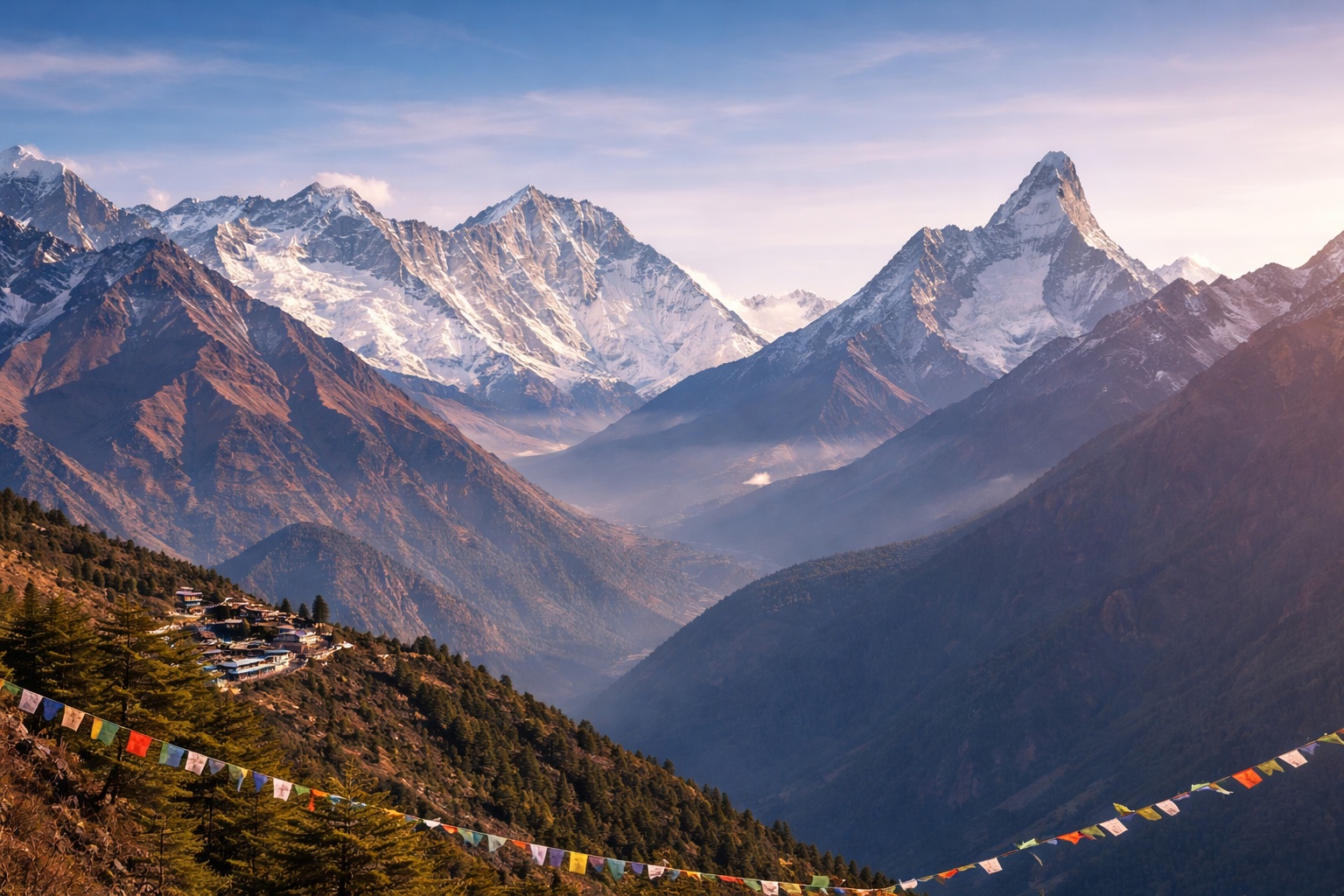
Lumre is a small village on the lower Annapurna Circuit route near Bahundanda, one of the settlements along the Marshyangdi valley approach before the trail climbs toward Chame and the higher Manang valley. Sitting at a comparatively low, warm elevation, Lumre reflects the settled, agricultural character typical of this early stage of the Annapurna Circuit, terraced rice paddies and subtropical vegetation lining the trail well before the terrain becomes more alpine further north.
In the era before road construction extended into this part of the valley, villages like Lumre played a more central role in the traditional circuit itinerary, serving as one of several closely spaced overnight stops for trekkers walking the full route on foot. Today, with vehicle access reaching further up the Marshyangdi valley than in the past, some trekkers bypass this stretch by jeep, though those choosing to walk still pass through or near Lumre on their way north.
The Marshyangdi river remains a constant companion through this section of trail, its glacial waters feeding the terraced fields that define the local economy. For trekkers pacing themselves sensibly through the lower valley, Lumre and the surrounding villages offer a gentle, unhurried introduction to the Annapurna Circuit before the walking becomes more demanding and the scenery shifts decisively toward the high peaks further ahead.
Basic but adequate teahouse facilities are typically available, offering a hot meal and a simple bed for trekkers passing through.
Facilities along this stretch of trail remain simple, and trekkers should carry sufficient cash, since cards are not accepted and ATMs do not exist beyond the larger towns.
Mobile signal in the area is patchy at best, and travellers should not rely on constant connectivity once they are this far into the trail network.
Weather at this elevation can change quickly, and a flexible itinerary with a buffer day or two is generally recommended for anyone travelling through this part of the route.
Local guides with specific knowledge of this stretch of trail add real value, both for navigation and for the cultural context they can offer along the way.