
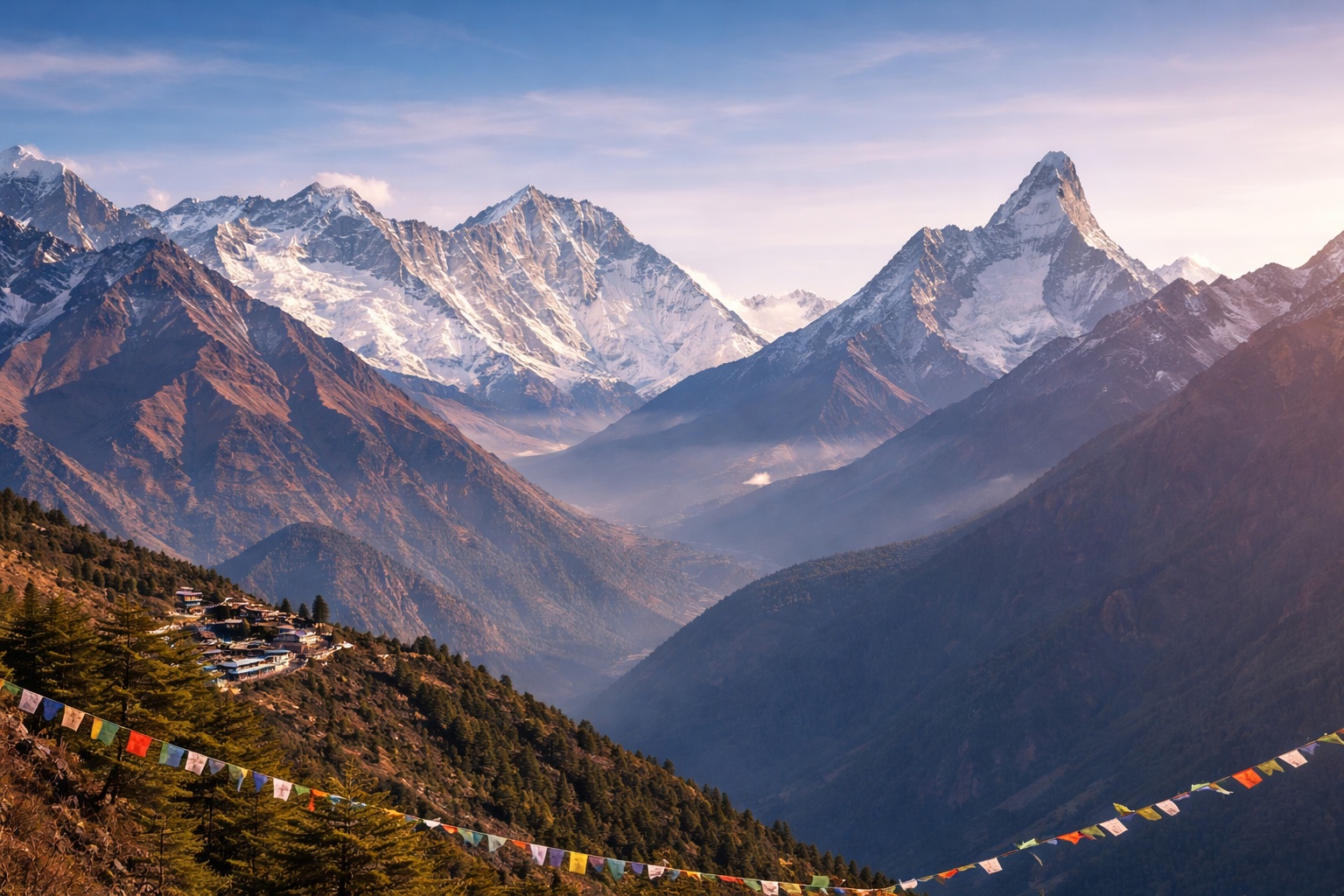
Pokhara is Nepal's second-largest city and the gateway to the Annapurna region, set beside the tranquil Phewa Lake with the Annapurna range, including the striking fishtail peak of Machhapuchhre, rising dramatically just beyond the city's northern edge. For trekkers heading toward Annapurna Base Camp, the Annapurna Circuit, Ghorepani Poon Hill, or Mardi Himal, Pokhara serves as the essential staging point, offering far more relaxed and scenic surroundings than the busier capital.
The lakeside district, centred on Phewa Lake, has developed into a comfortable travellers' hub with a wide range of hotels, restaurants, and trekking outfitters, all set against one of the most photogenic mountain backdrops of any city in the world. Boating on Phewa Lake at sunrise or sunset, with Machhapuchhre reflected in the still water, is one of Pokhara's most celebrated simple pleasures, drawing visitors regardless of whether they plan to trek at all.
Beyond its role as a trekking gateway, Pokhara offers its own attractions, including the Peace Pagoda overlooking the lake, the dramatic Devi's Falls, and increasingly popular paragliding flights that offer an aerial perspective on the same mountain panorama visible from the ground. For most travellers visiting Nepal's Annapurna region, time spent in Pokhara before and after a trek forms an essential and thoroughly enjoyable part of the wider journey.
Basic but adequate teahouse facilities are typically available, offering a hot meal and a simple bed for trekkers passing through.
Facilities along this stretch of trail remain simple, and trekkers should carry sufficient cash, since cards are not accepted and ATMs do not exist beyond the larger towns.
Mobile signal in the area is patchy at best, and travellers should not rely on constant connectivity once they are this far into the trail network.
Weather at this elevation can change quickly, and a flexible itinerary with a buffer day or two is generally recommended for anyone travelling through this part of the route.
Local guides with specific knowledge of this stretch of trail add real value, both for navigation and for the cultural context they can offer along the way.