
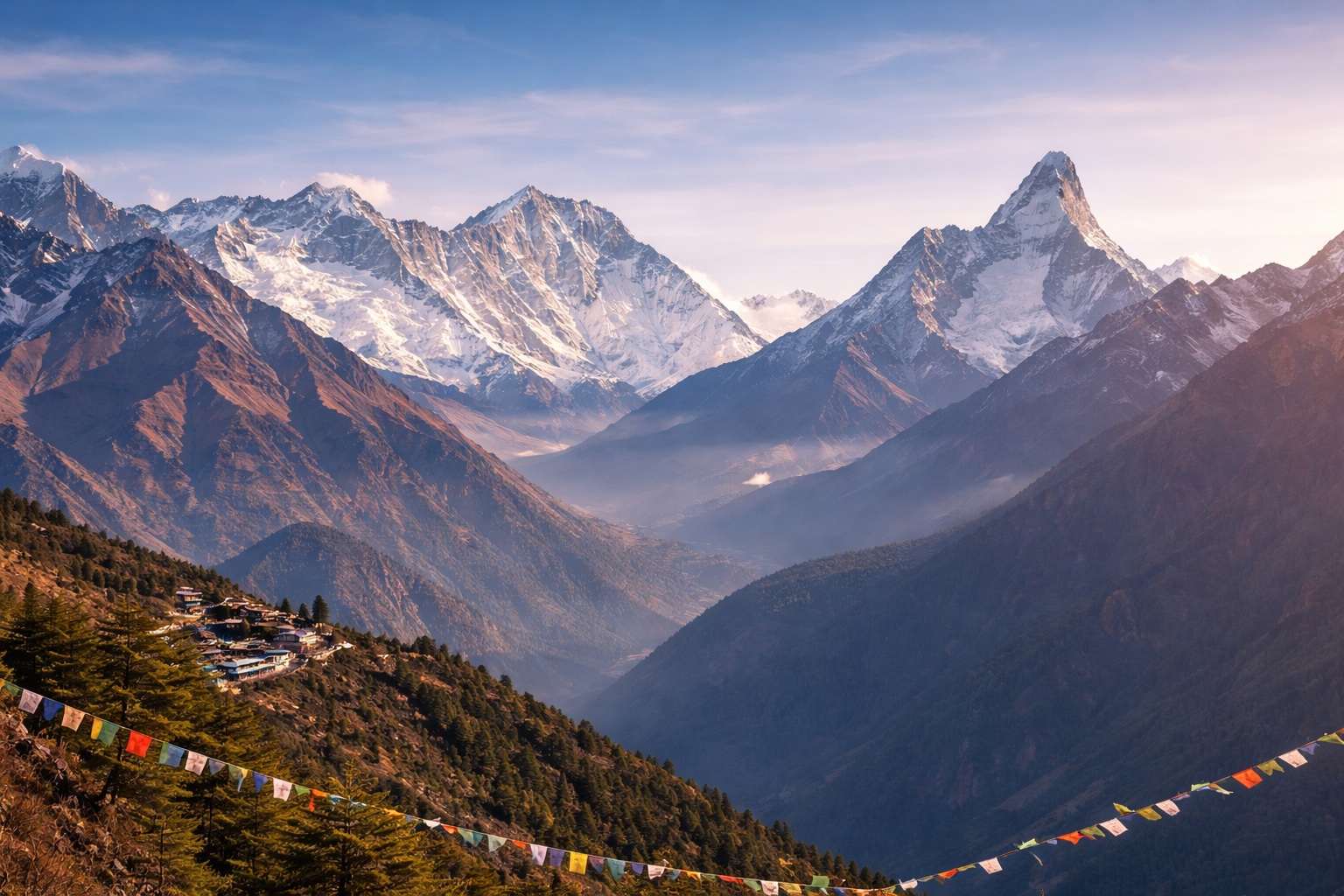
Kande is a small village near Pokhara that serves as a common starting or ending point for short treks in the Annapurna foothills, including routes toward Australian Camp and the broader Annapurna Panorama trek. Sitting at the base of the hills that rise toward the higher Annapurna Sanctuary trail, Kande offers convenient road access from Pokhara, making it a practical launch point for travellers with limited time who still want a genuine taste of Himalayan trekking without committing to a multi-week itinerary.
From Kande, trails climb steadily through forest and terraced farmland toward viewpoints offering views of Machhapuchhre and the wider Annapurna range, a rewarding payoff for a relatively short and accessible walk compared to the longer, more demanding treks further into the Annapurna region. The village itself is modest, primarily functioning as a trailhead rather than a destination in its own right, with basic facilities catering to trekkers passing through at the start or end of their journey.
Because of its proximity to Pokhara and the relatively gentle terrain of the surrounding trails, Kande is popular with first-time trekkers, families, and travellers with only a day or two available, offering a genuine sense of Himalayan scenery and village culture without the altitude or duration demanded by routes like Annapurna Base Camp or the full Annapurna Circuit. This accessibility has made Kande an increasingly popular starting point for short, well-paced introductions to trekking in the Annapurna region.
Mobile signal in the area is patchy at best, and travellers should not rely on constant connectivity once they are this far into the trail network.
Weather at this elevation can change quickly, and a flexible itinerary with a buffer day or two is generally recommended for anyone travelling through this part of the route.
Local guides with specific knowledge of this stretch of trail add real value, both for navigation and for the cultural context they can offer along the way.
A gradual, well-paced ascent through this section remains the best defence against altitude-related discomfort further along the route.