Open Hours: Mon - Fri 6.00 am - 10.00 pm (Nepal Standard Time)
Ruby Valley Trek - Ganesh Himal, Laprak and the Earthquake-Rebuilt Village of Barpak
9 Days Strenuous - remote, high altitude, limited teahouse infrastructure above Laprak Ruby mine viewpoint, approximately 4,500 m October - November; April - May
Country Kathmandu → Arughat (road, 7 hrs) → trek → Barpak → Arughat → Kathmandu
Difficulty Strenuous - remote, high altitude, limited teahouse infrastructure above Laprak
Max Elevation Ruby mine viewpoint, approximately 4,500 m
Duration 9
Best Time October - November; April - May
Trip Highlights
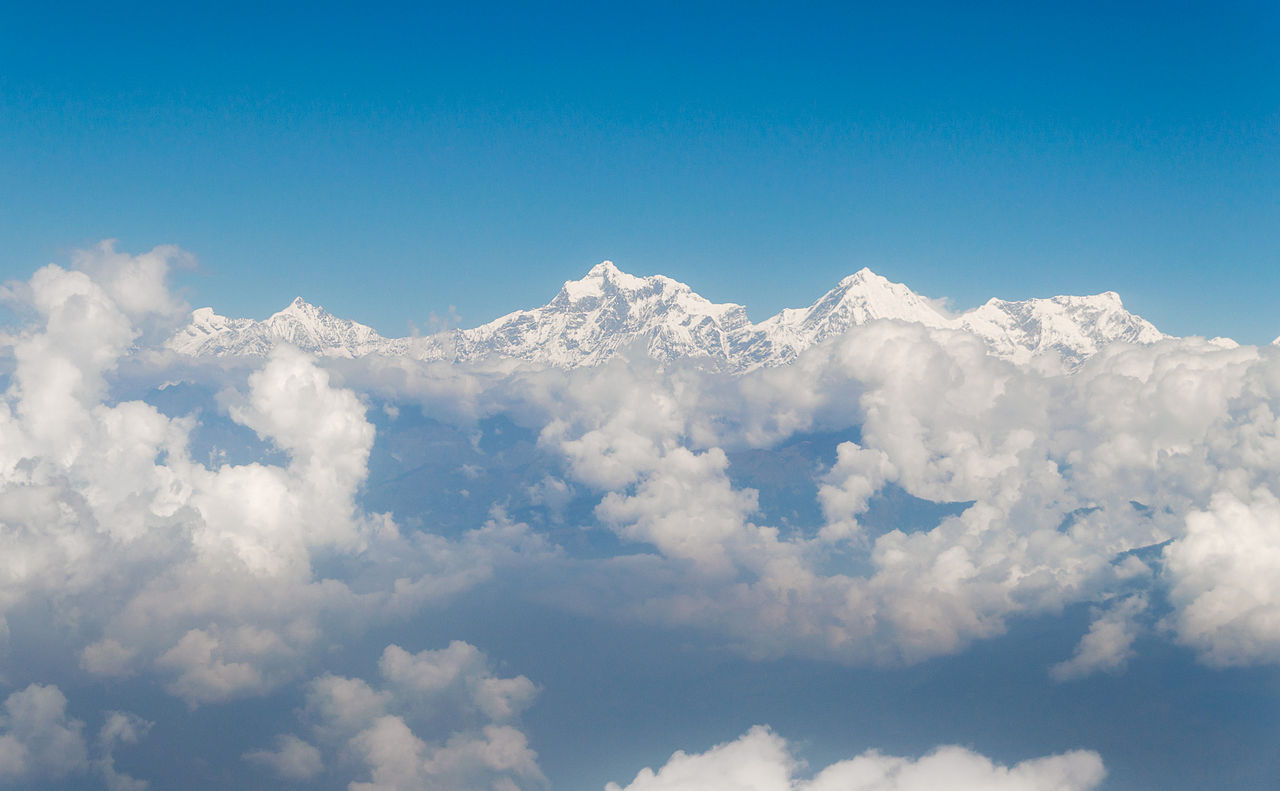
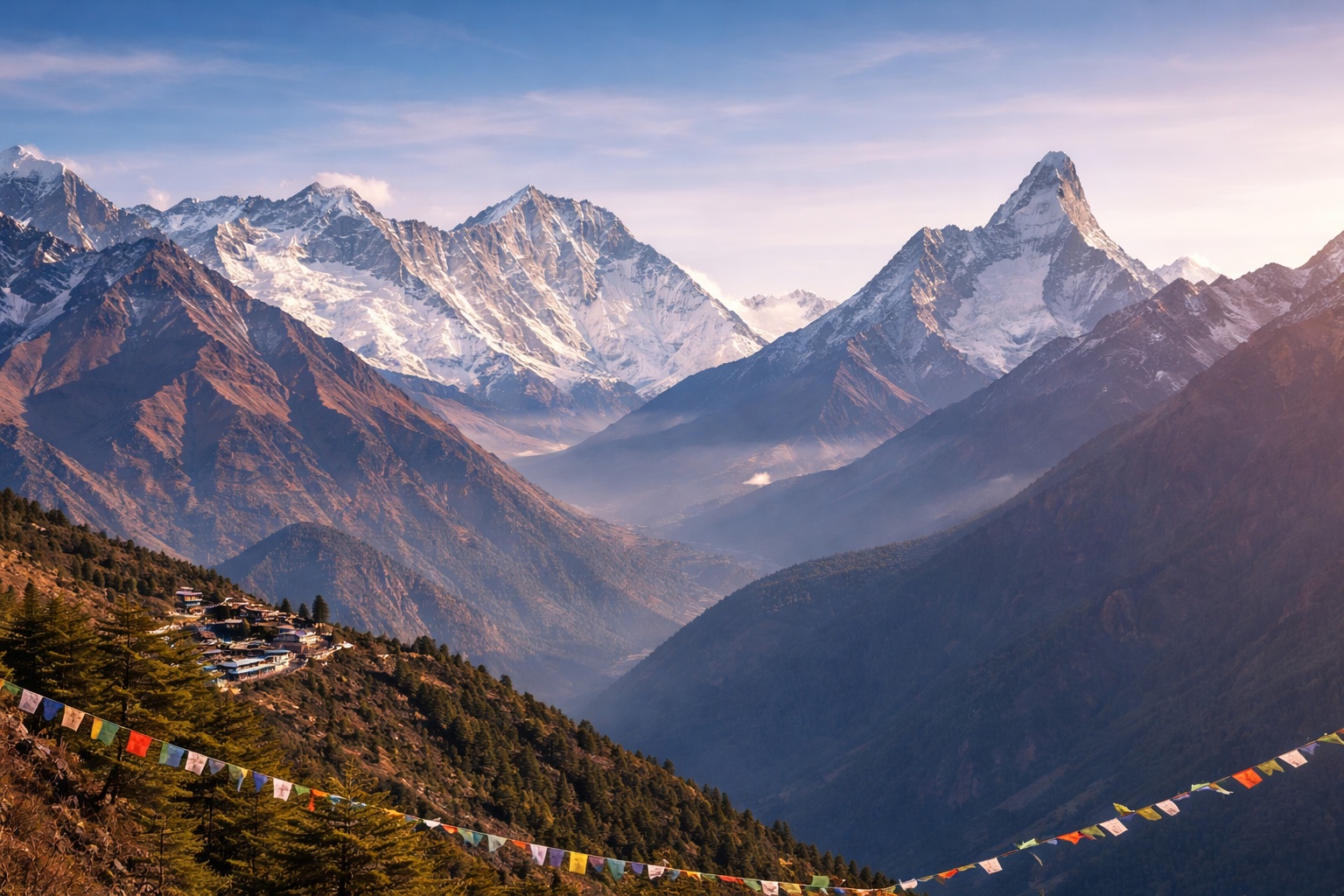
  • Ganesh Himal views - the four summits of the Ganesh group are among the most impressive peak panoramas accessible without a restricted area permit in Nepal; the trek's high points above Laprak and approaching the ruby mine give direct north-facing views of Ganesh I (7,422 m), Ganesh II (7,118 m), and Pabil (7,102 m) at close apparent range
  • Ruby mine site (~4,500 m) - the active marble-seam ruby mining operation in the upper Ganesh Himal valley; miners use traditional methods (small tunnels, hand tools) to extract corundum ruby crystals from the white marble matrix; the site is accessible by a strenuous half-day hike from the high camp; finished rubies from this deposit are the "Himalayan rubies" sold in Kathmandu gem shops - seeing the source is a remarkable experience
  • Laprak village - a large traditional Gurung hill village at approximately 2,200 m, notable as one of the most intact pre-earthquake Gurung settlements in the Gorkha district; the stone-walled houses, the Gurung cultural traditions (shamanic Paju priests, the unique Gurung round house architecture with central pillar), and the village's position as the lower gateway to the Tsum Valley restricted area make it one of the most culturally interesting villages on the entire circuit
  • Barpak village (3,000 m) - the epicentre of the 2015 Gorkha earthquake, a Gurung hilltop village that lost nearly every building but has rebuilt with extraordinary resilience; the new Barpak is a hybrid of traditional Gurung stone construction and earthquake-resistant concrete-reinforced techniques, and the community's story of loss and rebuilding is one of the most moving human narratives in contemporary Nepal
  • Offbeat trail solitude - fewer than 300 trekkers per year complete this circuit; from Laprak upward, the trail is entirely free of other trekking groups; the villages are genuinely surprised and pleased to receive foreign visitors; the authenticity of the cultural encounter is correspondingly deep
  • No restricted area permit required - unlike the Tsum Valley (which is geographically adjacent), the Ruby Valley circuit does not require an RAP; this makes it approximately USD 500 - 1,000 per person cheaper than an equivalent Tsum Valley trip, for a comparable level of cultural remoteness

Ruby Valley Trek - Ganesh Himal, Laprak and the Earthquake-Rebuilt Village of Barpak

The Ruby Valley Trek is a 9-day trip in Kathmandu → Arughat (road, 7 hrs) → trek → Barpak → Arughat → Kathmandu, rated strenuous - remote, high altitude, limited teahouse infrastructure above laprak difficulty, reaching a maximum elevation of Ruby mine viewpoint, approximately 4,500 m. The best time to do this trip is October - November; April - May.

Ruby Valley Trek - Key Facts
Country Kathmandu → Arughat (road, 7 hrs) → trek → Barpak → Arughat → Kathmandu
Difficulty Strenuous - remote, high altitude, limited teahouse infrastructure above Laprak
Max Elevation Ruby mine viewpoint, approximately 4,500 m
Duration 9
Best Time October - November; April - May

How long is the Ruby Valley trek?

The View Himalaya Ruby Valley trek is 9 days from Kathmandu via Arughat, exploring the Ganesh Himal region and the earthquake-rebuilt village of Barpak.

Trek Overview

The Ruby Valley Trek is one of Nepal's most compelling offbeat routes - a 9-day circuit in the Ganesh Himal region northwest of Gorkha that passes through the high Ganesh Himal viewpoints, the traditional Gurung village of Laprak (one of the gateways to the Tsum Valley restricted area), the ruby mining site at approximately 4,500 m (one of the world's highest gem mining operations, producing the pigeon-blood rubies traded in Kathmandu's Thamel since the 1990s), and the rebuilt village of Barpak (3,000 m) - the epicentre of the 2015 Gorkha earthquake (7.8 magnitude) where nearly every building was destroyed and the community has spent the past decade rebuilding in a remarkable exercise in cultural and architectural continuity.

The Ruby Valley - named for the alluvial ruby deposits found in the marble geological formation of the Ganesh Himal - sits in the rain shadow northwest of the Himalayan chain, giving it the characteristic dry, high-altitude landscape of eroded ridges, mani walls, and sparse vegetation above treeline that distinguishes the Tibetan-influenced hill communities from the lush lower forests of the Nepal hills. The Ganesh Himal range (Ganesh I, 7,422 m; Ganesh II, 7,118 m; Ganesh III, 7,043 m; Pabil, 7,102 m) forms the northern wall of the valley and is visible from multiple high points on the circuit.

The Ruby Valley Trek is accessible from Arughat (the roadhead near Gorkha, 7 hours from Kathmandu) without an additional restricted area permit - it is just below the Tsum Valley boundary, making it free to enter compared to the Tsum Valley's restricted area fee. Fewer than 300 trekkers complete the full Ruby Valley circuit each year, which means the trail experience is genuinely solitary and the village communities retain an authenticity and curiosity toward visitors that the more heavily trafficked circuits have lost.

Trip Facts

  • Duration: 9 days (7 trekking days + 2 road transfer days)
  • Maximum Altitude: Ruby mine viewpoint, approximately 4,500 m
  • Trek Style: Teahouse in lower villages; basic camping or homestay in higher sections
  • Start / End: Kathmandu → Arughat (road, 7 hrs) → trek → Barpak → Arughat → Kathmandu
  • Guide: NTB-licensed guide with Ganesh Himal region experience
  • Permits: Restricted Area Permit not required; Gorkha district trekking registration only
  • Best Season: October - November; April - May
  • Difficulty: Strenuous - remote, high altitude, limited teahouse infrastructure above Laprak

Pricing

Group Size Price per Person (USD) Notes
Solo trekker USD 1,199 Private guide; all accommodation, meals, road transfers included
2 - 4 people USD 999 All inclusive: guide, porters, teahouse and camping accommodation, all meals, transport
5 - 8 people USD 849 All inclusive

Includes Kathmandu - Arughat round-trip road transport (7 hours each way), NTB-licensed guide, required porters, all accommodation (teahouse where available; camping or homestay above Laprak), all meals from Day 1 dinner to Day 8 breakfast, and trekking registration fees. A 25% deposit confirms booking; at least 2 weeks advance notice requested for logistics.

Trek Highlights

  • Ganesh Himal views - the four summits of the Ganesh group are among the most impressive peak panoramas accessible without a restricted area permit in Nepal; the trek's high points above Laprak and approaching the ruby mine give direct north-facing views of Ganesh I (7,422 m), Ganesh II (7,118 m), and Pabil (7,102 m) at close apparent range
  • Ruby mine site (~4,500 m) - the active marble-seam ruby mining operation in the upper Ganesh Himal valley; miners use traditional methods (small tunnels, hand tools) to extract corundum ruby crystals from the white marble matrix; the site is accessible by a strenuous half-day hike from the high camp; finished rubies from this deposit are the "Himalayan rubies" sold in Kathmandu gem shops - seeing the source is a remarkable experience
  • Laprak village - a large traditional Gurung hill village at approximately 2,200 m, notable as one of the most intact pre-earthquake Gurung settlements in the Gorkha district; the stone-walled houses, the Gurung cultural traditions (shamanic Paju priests, the unique Gurung round house architecture with central pillar), and the village's position as the lower gateway to the Tsum Valley restricted area make it one of the most culturally interesting villages on the entire circuit
  • Barpak village (3,000 m) - the epicentre of the 2015 Gorkha earthquake, a Gurung hilltop village that lost nearly every building but has rebuilt with extraordinary resilience; the new Barpak is a hybrid of traditional Gurung stone construction and earthquake-resistant concrete-reinforced techniques, and the community's story of loss and rebuilding is one of the most moving human narratives in contemporary Nepal
  • Offbeat trail solitude - fewer than 300 trekkers per year complete this circuit; from Laprak upward, the trail is entirely free of other trekking groups; the villages are genuinely surprised and pleased to receive foreign visitors; the authenticity of the cultural encounter is correspondingly deep
  • No restricted area permit required - unlike the Tsum Valley (which is geographically adjacent), the Ruby Valley circuit does not require an RAP; this makes it approximately USD 500 - 1,000 per person cheaper than an equivalent Tsum Valley trip, for a comparable level of cultural remoteness

Best Seasons

October - November (Autumn) - Recommended

Post-monsoon clarity delivers the finest Ganesh Himal views and the most stable high camp conditions. The ruby mine is accessible (snow-free) throughout October. October combines maximum visibility with manageable temperatures at 4,500 m.

April - May (Spring)

The Laprak approach through the lower Ankhu Khola valley is spectacular in April when the rhododendron belt is at peak bloom. The high camp conditions are generally snow-free by mid-April. May is warm at lower altitudes but can see pre-monsoon snowfall above 4,000 m.

Altitude Safety

The ruby mine visit at approximately 4,500 m is the highest point of the trek and is achieved on Day 5 - rapidly for some acclimatisation profiles. The acclimatisation day at Laprak (Day 3) and the high camp overnight at 4,000 - 4,200 m before the ruby mine excursion are both designed to allow gradual adaptation. Above 4,000 m, altitude sickness risk increases and pulse oximetry monitoring is conducted twice daily from Day 4 onward. Helicopter evacuation from the upper Ganesh Himal valley to Kathmandu is possible but takes 30 - 60 minutes in clear weather and may be unavailable in cloud. Comprehensive trekking insurance with helicopter evacuation is mandatory for this trek.

How to Book

  1. Contact View Himalaya with your travel dates and group size; 2 - 3 weeks advance booking required.
  2. Receive itinerary confirmation with accommodation types at each stage.
  3. Pay 25% deposit; logistics and porter team engaged immediately.
  4. Pay balance 21 days before departure.

Related Treks

Trek Duration Max Altitude Best For
Tsum Valley Trek 18 days 4,040 m Adjacent restricted area; deeper Tibetan Buddhist culture; requires RAP
Manaslu Circuit Trek 16 days 5,106 m Same Arughat approach; full circuit around Manaslu; restricted area
Langtang Valley Trek 10 days 4,984 m Adjacent Himalayan region; Ganesh Himal visible from Kyanjin Gompa
Gosaikunda Trek 10 days 4,381 m Offbeat alternative from Kathmandu; sacred lakes; similar remoteness

Why Is the Ruby Valley Trek Worth It?

The Ruby Valley trek combines genuine Gurung mountain culture with a powerful story of post-earthquake resilience, passing through Barpak and Laprak, two villages devastated by the 2015 earthquake and rebuilt in the years since. Named for the historic ruby and gemstone mining in the surrounding Ganesh Himal foothills, this 9-day route offers dramatic scenery well away from Nepal's busier trekking corridors.

Is the Ruby Valley Trek Right for You?

This trek suits experienced trekkers comfortable with limited teahouse infrastructure above Laprak and genuinely remote, high-altitude terrain. It is a strong fit for those wanting a meaningful cultural experience alongside dramatic Ganesh Himal and Manaslu range views, away from crowded trails.

What to Expect on the Ruby Valley Trek

  • A 7-hour road journey from Kathmandu to Arughat before trekking begins
  • Visits to Barpak and Laprak, both rebuilt following the devastating 2015 earthquake
  • Limited teahouse infrastructure above Laprak, requiring a more self-sufficient approach
  • Views toward the Ganesh Himal and Manaslu ranges from the high ruby mine viewpoint area

Ruby Valley vs Manaslu Circuit: Quick Comparison

TrekDurationMax AltitudeInfrastructure
Ruby Valley9 days~4,500mLimited above Laprak
Manaslu Circuit14 days5,160mTeahouses throughout

Ruby Valley is shorter and reaches a slightly lower altitude than the full Manaslu Circuit, with more limited infrastructure but a stronger focus on earthquake-recovery villages and Gurung culture.

How Much Does the Ruby Valley Trek Cost?

View Himalaya's Ruby Valley packages start from USD 780 per person, including guide, porter, accommodation, and trail meals. Contact View Himalaya for current group rates.

Places You'll Visit

Day-by-Day Itinerary

Depart Kathmandu early morning (06:00) by private vehicle via Prithvi Highway and Gorkha road. Arrive Arughat (near Gorkha, 7 hours) by early afternoon. Arughat is the roadhead and the gateway to the Manaslu Circuit and Tsum Valley. Overnight guesthouse; permit check and guide briefing.
Arughat by road 780m
Begin trekking north from Arughat through the Budhi Gandaki valley on the Tsum Valley/Manaslu approach trail. Turn west into the Ankhu Khola side valley toward the Ganesh Himal. Ascent to Laprak (2,200 m) through rice terraces and then subtropical forest. Approximately 6 - 7 hours. Overnight Laprak homestay or teahouse.
Laprak 2,200m
Explore Laprak village with the guide - Gurung cultural traditions, the round-house architecture, the village shaman (paju) if present. Afternoon acclimatisation hike toward the Ganesh Himal viewpoint above the village (3,000 - 3,200 m); first clear views of Ganesh I, II, and Pabil from the ridge above Laprak. Return to Laprak overnight.
Full-day ascent into the upper Ruby Valley through increasingly open terrain above treeline. The marble belt of the Ganesh Himal becomes visible as white and pink rock outcrops. Establish camp at the high camp below the ruby mining zone. Basic shelter or tents; cooking by the cook team. Overnight high camp.
Ruby Mine High Camp 4,200m
Early morning half-day excursion to the ruby mine site (2 - 3 hours from high camp). Visit active mining operations; see the marble seams from which the rubies are extracted. Descend from high camp toward the upper Barpak trail. Camp or basic overnight shelter en route. Approximately 5 hours total movement.
Barpak approach 4,500m
Descend the western ridge into the earthquake-rebuilt village of Barpak. Village visit - the guide leads a tour of the old (destroyed) quarter and the new reconstruction; meets with community leaders where possible. The hilltop Gurung community of Barpak, with its extraordinary views north to the Ganesh Himal and south to the Gorkha hills, is one of the most rewarding village stays on the entire circuit. Overnight Barpak teahouse or homestay.
Barpak 3,000m
Descend from Barpak via the Tsum Valley trail back to the Budhi Gandaki valley and Arughat road junction. 6 - 7 hours descent. Vehicle pickup at the road; drive south to a comfortable guesthouse near Arughat or Gorkha. Overnight.
Arughat
Early morning departure (06:00); arrive Kathmandu by 13:00 - 14:00.
Kathmandu by road
Free day in Kathmandu for rest, shopping, or UNESCO heritage visits. International departure.

What’s Included

Included

  • Round-trip road transport Kathmandu - Arughat
  • NTB-licensed guide with Ganesh Himal experience
  • Required porters (wages, insurance, equipment)
  • All accommodation: teahouse where available; camping/homestay in remote sections
  • Full camping equipment for high camp sections (tents, sleeping pads, kitchen)
  • Cook team for all camping sections; teahouse meals for lower sections
  • All meals from Day 1 dinner to Day 8 breakfast
  • Trekking registration and guesthouse district fees
  • First aid kit and satellite messenger

Useful Info

Ruby Valley trek in one sentence: A 9-day remote trek through the Ganesh Himal region via Arughat, visiting Laprak and the earthquake-rebuilt village of Barpak.

Ruby Valley trek altitude: The ruby mine viewpoint reaches approximately 4,500 metres.

Ruby Valley trek difficulty: Strenuous, reflecting remoteness and limited teahouse infrastructure above Laprak.

Best time for the Ruby Valley trek: October - November and April - May.

Ruby Valley trek cost: View Himalaya packages start from USD 849 per person, including transport, accommodation, guide, and porter.

Why "Ruby Valley": Named for small-scale ruby mining areas in the Ganesh Himal foothills along the route.

Frequently Asked Questions

A
The View Himalaya Ruby Valley trek is 9 days from Kathmandu via Arughat, exploring the Ganesh Himal region and the earthquake-rebuilt village of Barpak.
A
Barpak was the epicentre of the devastating 2015 Nepal earthquake and has since been rebuilt, offering trekkers a meaningful look at Nepal's recovery and resilience alongside genuine mountain scenery.
A
The ruby mine viewpoint reaches approximately 4,500 metres, the highest point of this relatively remote trek.
A
Rated Strenuous, reflecting the trek's remoteness, altitude, and limited teahouse infrastructure above Laprak rather than technical climbing difficulty.
A
A 7-hour road journey from Kathmandu to Arughat marks the start of the trek toward the Ganesh Himal region.
A
October - November and April - May offer the most stable conditions for this remote trek.
A
View Himalaya packages start from USD 849 per person, including road transport, accommodation, meals, guide, and porter.
A
The route passes near small-scale ruby mining areas in the Ganesh Himal foothills, giving the trek its distinctive name, though visiting an actual mine is a secondary feature rather than the main trekking focus.
A
Yes, significantly - this is one of Nepal's lesser-known trekking routes, offering a genuinely quiet, off-the-beaten-path experience.
A
Basic teahouses and, in some sections, camping is required given the route's limited infrastructure above the Laprak village area.
A
Views of the Ganesh Himal range, along with the Manaslu massif from certain vantage points, set within a landscape that combines genuine wilderness with the poignant story of Barpak's earthquake recovery.
A
No - the trek's remoteness and limited infrastructure above Laprak make it better suited to trekkers with some prior high-altitude trekking experience.
A
Gurung communities in Laprak and Barpak, whose resilience following the 2015 earthquake is a notable and moving aspect of the trekking experience through this region.
A
Yes, strongly recommended given the route's remoteness and limited infrastructure, where a guide is essential for logistics and navigation.
A
The Ganesh Himal is a lesser-visited Himalayan range west of Langtang and east of Manaslu, offering genuine wilderness trekking away from Nepal's more famous routes.
A
The trek returns via Barpak and Arughat, from where a road journey brings trekkers back to Kathmandu.
A
Basic teahouse and, where necessary, camp-cooked meals, reflecting the route's more limited infrastructure compared to Nepal's major trekking regions.
A
Some risk exists given the trek reaches approximately 4,500m at the ruby mine viewpoint, making a measured pace important despite the trek's relatively short overall duration.
A
Yes - View Himalaya can adjust the pace or combine this trek with nearby Ganesh Himal viewpoints depending on your interests and available time.
A
Some experienced trekkers combine sections of the Ruby Valley route with the Manaslu region given their geographic proximity, though this requires careful itinerary planning with your guide.

You Might Also Like

Reviews

Ruby Valley Trek - Ganesh Himal, Laprak and the Earthquake-Rebuilt Village of Barpak

Ruby Valley Trek - Ganesh Himal, Laprak and the Earthquake-Rebuilt Village of Barpak

From USD 849 849 per person
Book Now
  • Secure Booking
  • No Hidden Costs
  • Instant Confirmation