
Open Hours: Mon - Fri 6.00 am - 10.00 pm (Nepal Standard Time)
Ganja La Pass Trek - 12 Days | Langtang Valley to Helambu via Ganja La 5,160 m
12 Days Strenuous / Technical on pass day Ganja La Pass - 5,160 m (16,929 ft) April - May and October - November
Country Kathmandu → Syabrubesi (drive) / Melamchi Pul Bazaar → Kathmandu (drive)
Difficulty Strenuous / Technical on pass day
Max Elevation Ganja La Pass - 5,160 m (16,929 ft)
Duration 12
Best Time April - May and October - November
Accommodation Teahouses (Langtang approach); camping at Ganja La high camp; teahouses (Helambu descent)
Group Size 2–10 trekkers
Trip Highlights
  • Ganja La (5,160 m) - a genuine glacier pass with fixed ropes, dramatic views, and the thrill of a true high-altitude crossing
  • Kyanjin Gompa (3,870 m) - Langtang's highest monastery, with an optional acclimatisation ascent of Kyanjin Ri (4,773 m)
  • Langtang Lirung (7,227 m) - the defining peak of the Langtang range, visible throughout the valley approach
  • Ganja La glacial tarn - a turquoise frozen lake at the foot of the pass on the Helambu side
  • Keldang and Yangri (Helambu side) - seldom-visited Yolmo Sherpa settlements above the treeline
  • Tarkeghyang (2,580 m) - the historic Yolmo Sherpa village with a 17th-century Nyingma monastery
  • Point-to-point traverse combining two distinct trekking regions in one linear journey
  • Technical element makes this a genuine step up from standard Nepal trekking - crampons and rope experience required

Ganja La Pass Trek - 12 Days | Langtang Valley to Helambu via Ganja La 5,160 m

The Ganja La Pass Trek is a 12-day trip in Kathmandu → Syabrubesi (drive) / Melamchi Pul Bazaar → Kathmandu (drive), rated strenuous / technical on pass day difficulty, reaching a maximum elevation of Ganja La Pass - 5,160 m (16,929 ft). The best time to do this trip is April - May and October - November. The package includes group sizes of 2–10 trekkers, teahouses (langtang approach); camping at ganja la high camp; teahouses (helambu descent) accommodation.

Ganja La Pass Trek - Key Facts
Country Kathmandu → Syabrubesi (drive) / Melamchi Pul Bazaar → Kathmandu (drive)
Difficulty Strenuous / Technical on pass day
Max Elevation Ganja La Pass - 5,160 m (16,929 ft)
Duration 12
Best Time April - May and October - November
Accommodation Teahouses (Langtang approach); camping at Ganja La high camp; teahouses (Helambu descent)
Group Size 2–10 trekkers

How long is the Ganja La Pass trek?

The View Himalaya Ganja La Pass trek is 12 days, linking the Langtang Valley to the Helambu region via the technical 5,160m Ganja La pass.

Trek Overview

The Ganja La Pass Trek is one of Nepal's most rewarding point-to-point high-pass traverses - a 12-day journey that begins in the Langtang Valley (3,430 m) at Kyanjin Gompa, crosses the formidable Ganja La (5,160 m) into the Helambu highlands, and descends through the traditional Yolmo Sherpa villages of Keldang, Yangri, and Tarkeghyang before finishing at Melamchi Pul Bazaar for the drive back to Kathmandu. The crossing links Nepal's two closest major trekking regions in a single high-altitude route that requires proper mountaineering gear (crampons, ice axe, rope) on the pass itself, rewarding trekkers with one of the most panoramic mid-altitude summits accessible from Kathmandu.

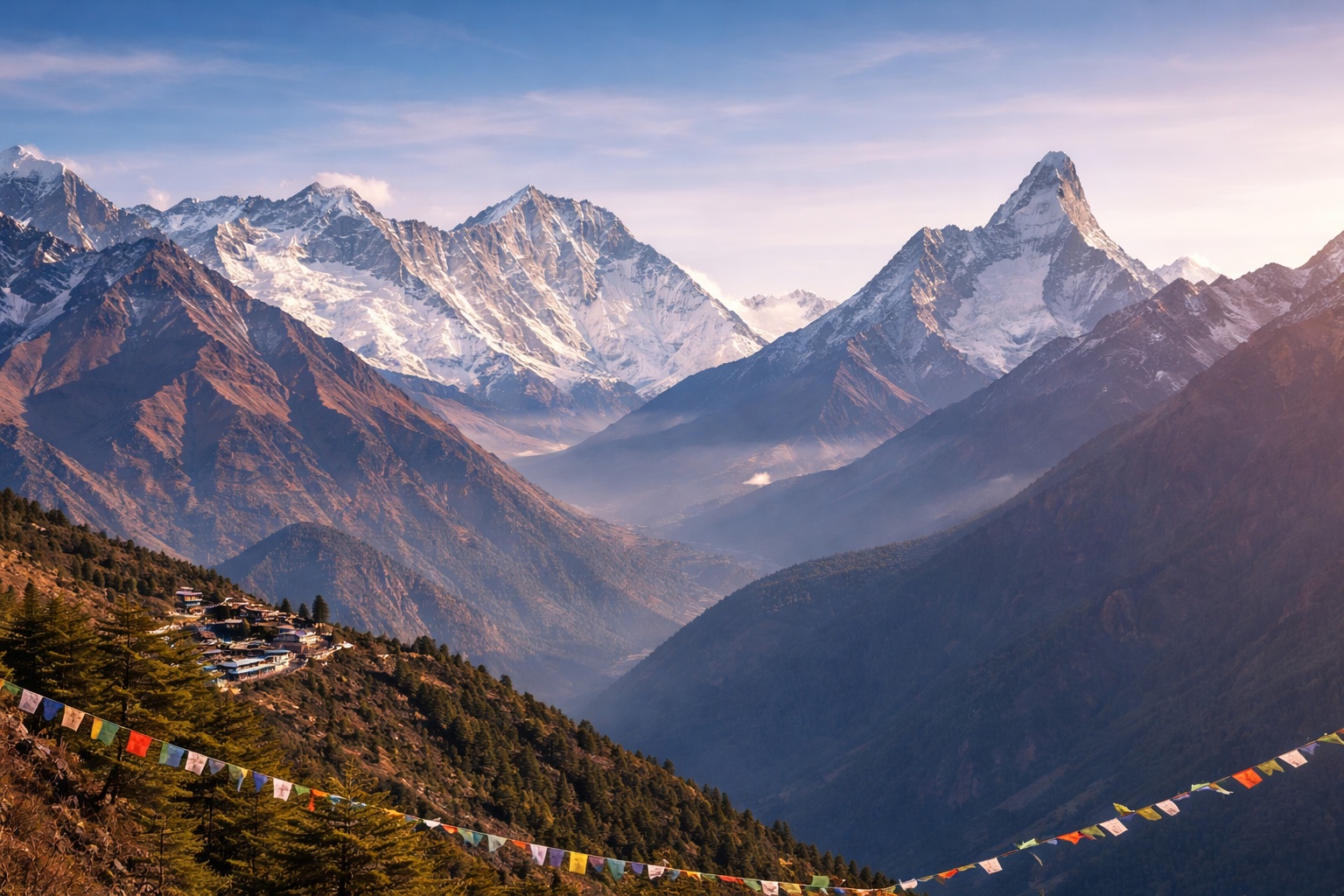
Ganja La (5,160 m) sits in the Langtang range between the Langtang Valley and the Helambu highlands. The pass is a genuine high-altitude glacier crossing - the south-facing Langtang side presents a 400 m steep headwall with fixed ropes in peak season, and the north-facing Helambu side is a long snow slope above a glacial tarn. The view from the top is extraordinary: Langtang Lirung (7,227 m), Ganesh Himal (7,422 m), the Rolwaling range to the east, and - on clear days - the Everest massif's Khumbu peaks visible 100 km to the southeast. The crossing is typically completed in one long summit day from a high camp at approximately 4,800 m.

The surrounding landscape combines the Langtang Valley's alpine grandeur - glaciers, yak pastures, the Kyanjin Ri viewpoint (4,773 m) - with the cultural richness of the Yolmo Sherpa communities on the Helambu side. Walking from the Langtang Valley's snow-dusted monastery to the terraced apple orchards of Tarkeghyang in six days is a complete Himalayan traverse: high to low, alpine to cultural, wild to inhabited.

Trip Facts

  • Duration: 12 days (9 trek days + 2 drive days + 1 acclimatisation day)
  • Maximum Altitude: Ganja La Pass - 5,160 m (16,929 ft)
  • Trek Distance: Approximately 85 km
  • Daily Walking: 5 - 8 hours
  • Difficulty: Strenuous / Technical on pass day
  • Start / End: Kathmandu → Syabrubesi (drive) / Melamchi Pul Bazaar → Kathmandu (drive)
  • Accommodation: Teahouses (Langtang approach); camping at Ganja La high camp; teahouses (Helambu descent)
  • Group Size: 2 - 10 trekkers
  • Best Seasons: April - May and October - November
  • Permits Required: Langtang National Park entry fee + TIMS

Pricing

Group SizePrice per Person (USD)
Solo trekkerUSD 899
2 - 4 peopleUSD 849
5 - 10 peopleUSD 799
11 or moreContact us for a group quote

A deposit of 20 % confirms your booking; the balance is due 14 days before departure. Prices include the Langtang National Park permit, TIMS card, guide, porter, technical rope and crampons for the pass, teahouse accommodation, camping at high camp, and three meals per day throughout. Book at least 2 weeks in advance.

Trek Highlights

  • Ganja La (5,160 m) - a genuine glacier pass with fixed ropes, dramatic views, and the thrill of a true high-altitude crossing
  • Kyanjin Gompa (3,870 m) - Langtang's highest monastery, with an optional acclimatisation ascent of Kyanjin Ri (4,773 m)
  • Langtang Lirung (7,227 m) - the defining peak of the Langtang range, visible throughout the valley approach
  • Ganja La glacial tarn - a turquoise frozen lake at the foot of the pass on the Helambu side
  • Keldang and Yangri (Helambu side) - seldom-visited Yolmo Sherpa settlements above the treeline
  • Tarkeghyang (2,580 m) - the historic Yolmo Sherpa village with a 17th-century Nyingma monastery
  • Point-to-point traverse combining two distinct trekking regions in one linear journey
  • Technical element makes this a genuine step up from standard Nepal trekking - crampons and rope experience required

What to Expect

The Ganja La Pass Trek is a hybrid between high-altitude trekking and light mountaineering. The Langtang Valley approach (Days 2 - 5) follows a well-established teahouse trail - the same route used by the Langtang Valley Trek - with good infrastructure, clear trails, and reliable mobile signal to Kyanjin Gompa. From Kyanjin, the route turns north toward the pass and immediately enters wilderness terrain: the trail fades, the glacier moraines take over, and the campsite at 4,800 m is a tent on frozen ground below the headwall.

The pass day is the commitment point. A 3:00 am departure from high camp covers the steep headwall in darkness - fixed ropes are in place in peak season (October and April) but the approach requires confidence with crampons and ice axe. Weather on the pass moves fast; a guide who knows the conditions is essential. The descent on the Helambu side is long (to below 4,000 m) and the trail is indistinct in the upper section - navigation experience is critical. By afternoon, the landscape softens from alpine rock into scrub rhododendron, and the first Yolmo Sherpa village appears in the valley below. The cultural contrast between the high pass and Tarkeghyang's carved wooden monastery is one of the Ganja La Trek's defining experiences.

Suitability

The Ganja La Pass Trek requires trekkers who are comfortable with crampons and ice axe use in steep terrain and have prior experience above 4,500 m. It is not suitable for complete beginners to either altitude or technical snow terrain.

  • Minimum recommended age: 18 years
  • Prior high-altitude trekking experience above 4,500 m required
  • Prior crampon and ice axe experience required - or complete a skills day in Kathmandu before departure
  • Excellent cardiovascular fitness - pass day is 10 - 12 hours with technical equipment
  • Minimum group size of 2 trekkers recommended for safety on the technical sections
  • Not suitable for those with heart, respiratory, or joint conditions

Distance and Elevation by Day

DayRouteDistanceMax AltitudeGain / Loss
1Kathmandu → Syabrubesi (jeep) - 1,460 mDrive
2Syabrubesi → Lama Hotel12 km2,470 m+1,010 m
3Lama Hotel → Langtang Village14 km3,430 m+960 m
4Langtang → Kyanjin Gompa (Kyanjin Ri option 4,773 m)10 km4,773 m+440 / +903 optional
5Kyanjin - acclimatisation (Tserko Ri option 5,033 m)12 km5,033 m±1,163 m optional
6Kyanjin → Ganja La High Camp10 km4,800 m+930 m
7High Camp → Ganja La → Keldang14 km5,160 m+360 / - 810 m
8Keldang → Yangri → Melamchi Gaon16 km4,350 m - 1,790 m
9Melamchi Gaon → Tarkeghyang8 km2,620 m±100 m
10Tarkeghyang → Sermathang → Melamchi Pul → drive KTM12 km2,620 m - 1,740 m
11 - 12Kathmandu buffer + departure - 1,400 m -

Optional Add-Ons

Add-OnDurationApprox. Cost
Tserko Ri (5,033 m) acclimatisation summit from Kyanjin (Day 5)+6 hrsIncluded if requested
Gosaikunda extension from Helambu via Tharepati (4,609 m)+3 daysUSD 220 pp
Kathmandu heritage sightseeing (Pashupatinath, Boudhanath)1 dayUSD 55 pp
Pre-departure crampon and ice axe skills day in Kathmandu1 dayUSD 120 pp

Difficulty and Fitness Requirements

The Ganja La Pass Trek is rated strenuous with a technical element. The pass day (Day 7) is a 10 - 12 hour commitment from 3:00 am - technically demanding on the headwall (fixed ropes, crampons, ice axe) and physically exhausting with a long descent following the summit. Prior experience with crampons and ice axe in steep terrain is essential; this is not a trek for those who have only walked on flat or grassy snow. Prepare with 10 weeks of sustained uphill hiking and, if possible, an alpine scrambling or winter skills course before departure.

Below the pass, the trek's daily demands are comparable to the Langtang Valley or Helambu circuit - manageable for fit trekkers with prior multi-day experience. It is the single pass day that elevates this trek to the strenuous/technical category.

Best Seasons

Spring (April - May) - Best for Fixed Ropes

April is optimal - fixed ropes on the Ganja La headwall are maintained by local guides for the spring trekking season, snow is consolidated, and rhododendron on the approach blooms spectacularly. May has more afternoon cloud but remains viable. Late April summit windows are typically the most reliable.

Autumn (October - November) - Good Season

October provides clear skies and excellent views from the pass but the headwall snow can be less consolidated (soft powder over ice) making fixed-rope technique more demanding. By November, the pass carries significant snowpack and conditions require more careful assessment. Mid-October is generally ideal.

Monsoon and Winter - Closed

Ganja La is inaccessible in monsoon (heavy snow on the pass, landslide risk on approaches) and in winter (buried pass, extremely cold high camp). June through September and December through March are not suitable.

Accommodation and Meals

The standard Langtang Valley teahouses serve the approach (Days 2 - 5) with clean twin rooms, heated dining rooms, and a standard menu. At Ganja La High Camp (Day 6), the team uses expedition tents; the guide team carries a small kitchen tent and stove for hot food and drinks. On the Helambu descent (Days 8 - 10), Yolmo Sherpa teahouses are simple but welcoming - standard twin rooms with blankets and a good dal bhat menu. A sleeping bag rated to - 15 °C is essential for the high camp night at 4,800 m.

Departure Dates

Ganja La Pass Trek departures run April through May and mid-September through October. The technical nature of the pass means exact dates are weather-dependent - a 1-day delay reserve is built into the itinerary.

  • April 6, 13, 20, 27
  • May 4, 11
  • September 21, 28
  • October 5, 12, 19

Altitude Safety

The Ganja La Pass Trek reaches 5,160 m on the pass with a sleeping altitude of 4,800 m the night before - the highest sleeping altitude of any trek in the Langtang - Helambu region. The two acclimatisation days at Kyanjin (Days 4 - 5) are essential and must not be shortened. The guide carries a pulse oximeter for daily checks and an emergency oxygen cylinder from Kyanjin onward.

  • Drink 4 litres of water per day above 3,500 m
  • Diamox (acetazolamide) strongly recommended - consult your doctor
  • Do not proceed to high camp if altitude illness symptoms are present at Kyanjin - wait for full recovery
  • Descend immediately from the pass if weather deteriorates or a team member shows HACE/HAPE signs
  • Emergency helicopter evacuation possible from Kyanjin Gompa meadow

Travel Insurance

Mountaineering-grade travel insurance covering rescue at 5,500 m is mandatory for the Ganja La Pass Trek. Standard trekking policies excluding altitudes above 5,000 m are insufficient.

  • Minimum altitude coverage: 5,500 m
  • Policy must cover "mountaineering" or "high-altitude glacier crossing" - not just "trekking"
  • Helicopter rescue cost in Nepal: USD 3,000 - 8,000
  • Recommended providers: Battleface, Dogtag, World Nomads (check the altitude exclusion carefully)

Guide and Safety

  • Your guide holds a valid NTB trekking licence with documented Ganja La crossings in both spring and autumn seasons
  • Guide carries technical rope, crampons for all group members, and ice axes - provided and included
  • Fixed ropes on the headwall are inspected and supplemented by the guide before the summit day
  • Satellite messenger carried from Kyanjin onward; mobile signal absent above Langtang Village
  • Emergency oxygen at high camp; evacuation landing zone at Kyanjin Gompa meadow

Recommended Packing List

Clothing

  • Expedition-weight down jacket and insulated trousers (for high camp)
  • Moisture-wicking base layers (3 sets)
  • Waterproof hardshell jacket and trousers (Gore-Tex)
  • Heavy gloves or mittens and liner gloves
  • Balaclava and warm hat
  • Trekking trousers (2 pairs) and thermal leggings
  • Wool or synthetic trekking socks (5 pairs)

Footwear

  • High-altitude waterproof trekking boots compatible with crampon attachment
  • Camp sandals for teahouse evenings
  • Gaiters (for pass approach snowfields)

Technical Gear (provided)

  • Crampons (12-point compatible with your boots - try before the trek day)
  • Ice axe (60 - 70 cm technical)
  • Climbing harness and locking carabiner (for fixed rope use)
  • Rope (carried by guide)

Personal Gear

  • Trekking poles (essential)
  • Sleeping bag rated - 15 °C (available for hire)
  • Headlamp with extra batteries (3:00 am summit start)
  • Daypack 25 - 30 L
  • UV400 glacier sunglasses
  • Water bottles 2 × 1 L plus purification tablets

Medical

  • Diamox - consult your doctor
  • Ibuprofen, antidiarrheal, blister care kit
  • Sunscreen SPF 50+ and lip balm

Documents

  • Passport, two passport-size photos, visa
  • Travel insurance certificate with emergency number
  • Trip confirmation and permit copies

How to Book

  1. Complete the enquiry form or email us with your dates, group size, and prior mountaineering experience.
  2. Receive a personalised itinerary and cost breakdown within 24 hours.
  3. Confirm with a 20 % deposit.
  4. Submit passport details for permits.
  5. Pay the balance 14 days before departure.
  6. Receive final briefing pack, including technical gear check instructions, by email.
  7. Meet your guide in Kathmandu for pre-departure gear verification.

Related Treks

TrekDurationMax AltitudeFrom (USD)
Langtang Valley Trek7 days5,033 m (Tserko Ri)599
Helambu Trek6 days3,640 m (Tharepati)249
Gosaikunda Trek5 days4,380 m (Gosaikunda)399
Rolwaling Trek18 days5,755 m (Tashi Lapcha)1,649

Places You'll Visit

Day-by-Day Itinerary

Private jeep north from Kathmandu through Nuwakot and the Trishuli river gorge to Syabrubesi - the gateway to both the Langtang Valley and the Tamang Heritage Trail. Permit check at Langtang National Park gate. Overnight in Syabrubesi guesthouse.
Syabrubesi Drive 1,460m
Trek northeast into Langtang National Park along the Langtang Khola river. The trail climbs through subtropical forest at lower elevations, gradually transitioning to temperate oak and rhododendron. Lama Hotel (2,470 m) is a cluster of teahouses in a forest clearing - the standard first night stop on all Langtang Valley treks.
Lama Hotel 2,470m
The valley widens and the vegetation opens as you climb. Langtang Village (3,430 m) was largely destroyed in the 2015 earthquake and has been rebuilt with new teahouses; the rebuilt village reflects the Tamang architectural tradition but on a new plan. The surrounding landscape - open yak pastures, mani stone lines, and the emerging Langtang Lirung summit - is stunning.
Langtang Village 3,430m
A short but scenic morning's walk through high alpine meadow to Kyanjin Gompa (3,870 m) - the Langtang Valley's cultural and logistical hub. The monastery complex, yak cheese factory, and high-altitude bakeries at Kyanjin make this the most comfortable stopping point above the treeline. Afternoon acclimatisation hike: Kyanjin Ri (4,773 m, 3 hrs round trip) delivers a panorama of Langtang Lirung, Dorje Lakpa, and Gangchenpo essential for preparing the body and eyes for the Ganja La crossing.
Kyanjin Gompa 3,870m
Full rest day at Kyanjin. Optional: continue the Tserko Ri hike (5,033 m, 5 - 6 hrs round trip) for maximum acclimatisation and a closer view of the Langtang Glacier. The climbing guide assesses everyone's fitness, reviews crampon technique, and brief the group on the pass day protocol.
Kyanjin Gompa 3,870m
Leave the teahouses and follow the Ganja La route northeast through moraine and boulder fields. The trail fades above 4,200 m; the guide navigates by landmark and GPS. High Camp (4,800 m) is on a flat moraine ledge below the pass headwall - pitch tents, distribute technical gear (crampons, ice axe, harness, rope), and sleep by 7:00 pm for the 3:00 am start.
Ganja La High Camp 4,800m
3:00 am departure in full gear. The headwall above high camp is 60° in steepness for the first 200 m - fixed ropes are in place in peak season; the guide leads on the rope. Above the headwall, the angle eases and the final 200 m to the pass is on a snow ridge. At Ganja La (5,160 m), the view is panoramic: Langtang Lirung, Ganesh Himal, the Helambu highlands, and far to the east the Khumbu peaks of the Everest massif. The descent on the Helambu side is a long snow slope above the glacial tarn (4,600 m), then rocky moraine to Keldang (4,350 m) - a seasonal shepherd settlement. Camp or basic teahouse at Keldang.
Keldang 5,160m
A long descent through the Yangri valley - above the treeline for the first two hours, then into rhododendron and oak forest as the Helambu valley system opens. Melamchi Gaon (2,560 m) is the first Yolmo Sherpa village with proper teahouses on the Helambu side. The altitude relief from 4,350 m to 2,560 m in one day is dramatic and immediately felt in breathing comfort and temperature.
Melamchi Gaon 4,350m
A gentle traverse through the Helambu highlands to Tarkeghyang (2,580 m) - the most historically significant Yolmo Sherpa village, with its 17th-century Nyingma monastery, ancient thangka paintings, and mani stone corridors. Afternoon rest and monastery visit.
Tarkeghyang 2,580m
Final trek through Sermathang - a hilltop apple-orchard village - and a long descent to the Melamchi river valley at Melamchi Pul Bazaar (880 m). The 1,740 m descent is sustained; trekking poles are essential. Afternoon drive from Melamchi Pul to Kathmandu (2 hours).
Melamchi Pul Bazaar 2,620m

What’s Included

Included

  • Private vehicle Kathmandu - Syabrubesi and Melamchi Pul - Kathmandu
  • Langtang National Park entry fee
  • TIMS card
  • NTB-licensed senior trekking guide with Ganja La technical experience
  • 1 porter per 2 trekkers (max 25 kg per porter)
  • Technical rope, crampons, and ice axes for the pass crossing (provided)
  • 4-season tent and sleeping mat for Ganja La high camp night
  • Teahouse accommodation (twin-sharing) on all other nights
  • Three meals per day throughout
  • Emergency first-aid kit and supplemental oxygen cylinder
  • Guide and porter insurance, wages, meals, and equipment
  • View Himalaya duffel bag and Langtang - Helambu trek map

Excluded

  • Private vehicle Kathmandu - Syabrubesi and Melamchi Pul - Kathmandu
  • Langtang National Park entry fee
  • TIMS card
  • NTB-licensed senior trekking guide with Ganja La technical experience
  • 1 porter per 2 trekkers (max 25 kg per porter)
  • Technical rope, crampons, and ice axes for the pass crossing (provided)
  • 4-season tent and sleeping mat for Ganja La high camp night
  • Teahouse accommodation (twin-sharing) on all other nights
  • Three meals per day throughout
  • Emergency first-aid kit and supplemental oxygen cylinder
  • Guide and porter insurance, wages, meals, and equipment
  • View Himalaya duffel bag and Langtang - Helambu trek map

Useful Info

Ganja La Pass trek in one sentence: A 12-day trek linking the Langtang Valley to the Helambu region via the technical 5,160m Ganja La pass, combining teahouse trekking with a high camp crossing.

Ganja La Pass altitude: 5,160 metres (16,929 feet).

Ganja La Pass trek difficulty: Strenuous and technical on the pass day, best suited to trekkers with prior Himalayan trekking experience.

Best time for the Ganja La Pass trek: April - May and October - November for the most stable pass-crossing conditions.

Ganja La Pass trek cost: View Himalaya packages start from USD 799 per person, including camping support, teahouse accommodation, guide, and porter.

Route: Approaches via the standard Langtang Valley trail, crosses Ganja La, and descends into the Helambu region for a distinct return route.

Frequently Asked Questions

A
The View Himalaya Ganja La Pass trek is 12 days, linking the Langtang Valley to the Helambu region via the technical 5,160m Ganja La pass.
A
Strenuous and technical on the pass day itself - this is one of the more demanding standard trekking routes in the Langtang-Helambu area, requiring genuine fitness and, in some seasons, basic snow travel comfort.
A
Ganja La Pass at 5,160 metres (16,929 ft), a technical high-altitude crossing linking the Langtang and Helambu regions.
A
Yes - a high camp near the pass itself requires camping, since no teahouse infrastructure exists at that altitude, while the Langtang approach and Helambu descent use standard teahouse accommodation.
A
April - May and October - November offer the most stable conditions for the technical pass crossing, since snow and ice can make Ganja La significantly more difficult or unsafe outside these windows.
A
View Himalaya packages start from USD 799 per person, including camping support for the high pass section, teahouse accommodation elsewhere, guide, and porter.
A
Yes, recommended - the technical nature of the pass crossing makes this a better fit for trekkers who have already completed at least one major Himalayan trek.
A
View Himalaya typically organises this trek for groups of 2 - 10 trekkers, given the additional camping logistics required for the pass crossing.
A
The route approaches via the standard Langtang Valley trail, then branches up toward Ganja La instead of returning the same way, descending into the Helambu region on the far side for a genuinely different return route.
A
The Langtang National Park permit and TIMS card are required, covering both the Langtang and Helambu sections of this route.
A
It requires genuine care - the pass can involve snow and icy sections depending on conditions, and route-finding on the descent side is more challenging than standard teahouse trekking trails, making an experienced guide essential.
A
Teahouses on the Langtang approach, camping at Ganja La high camp, and teahouses again on the Helambu descent side.
A
Panoramic views of the Langtang range, including Langtang Lirung, alongside the Helambu hills stretching toward the Kathmandu Valley on the descent side.
A
Essential rather than strictly mandatory by regulation - the technical pass crossing and camping logistics make an experienced guide critical for safety on this route.
A
Helambu is home to Sherpa and Tamang communities with strong Buddhist traditions, offering a gentler, greener landscape than the high alpine terrain of Langtang on the trek's descent side.
A
Some extended itineraries link Ganja La with the Gosaikunda lakes for trekkers with additional days, though this requires careful route planning given the technical nature of both sections.
A
Yes, given the 5,160m pass crossing - proper acclimatization through the Langtang approach section is essential before attempting the pass itself.
A
Teahouse meals on the Langtang and Helambu sections, with camp-cooked meals provided by the trekking crew during the high pass camping section.
A
The trek concludes at Melamchi Pul Bazaar in the Helambu region, from where a vehicle transfer returns trekkers to Kathmandu.
A
Yes - View Himalaya can adjust the pace or combine this trek with additional Helambu villages depending on your fitness and available time.

You Might Also Like

Reviews

Ganja La Pass Trek - 12 Days | Langtang Valley to Helambu via Ganja La 5,160 m

Ganja La Pass Trek - 12 Days | Langtang Valley to Helambu via Ganja La 5,160 m

From USD 799 799 per person
Book Now
  • Secure Booking
  • No Hidden Costs
  • Instant Confirmation