
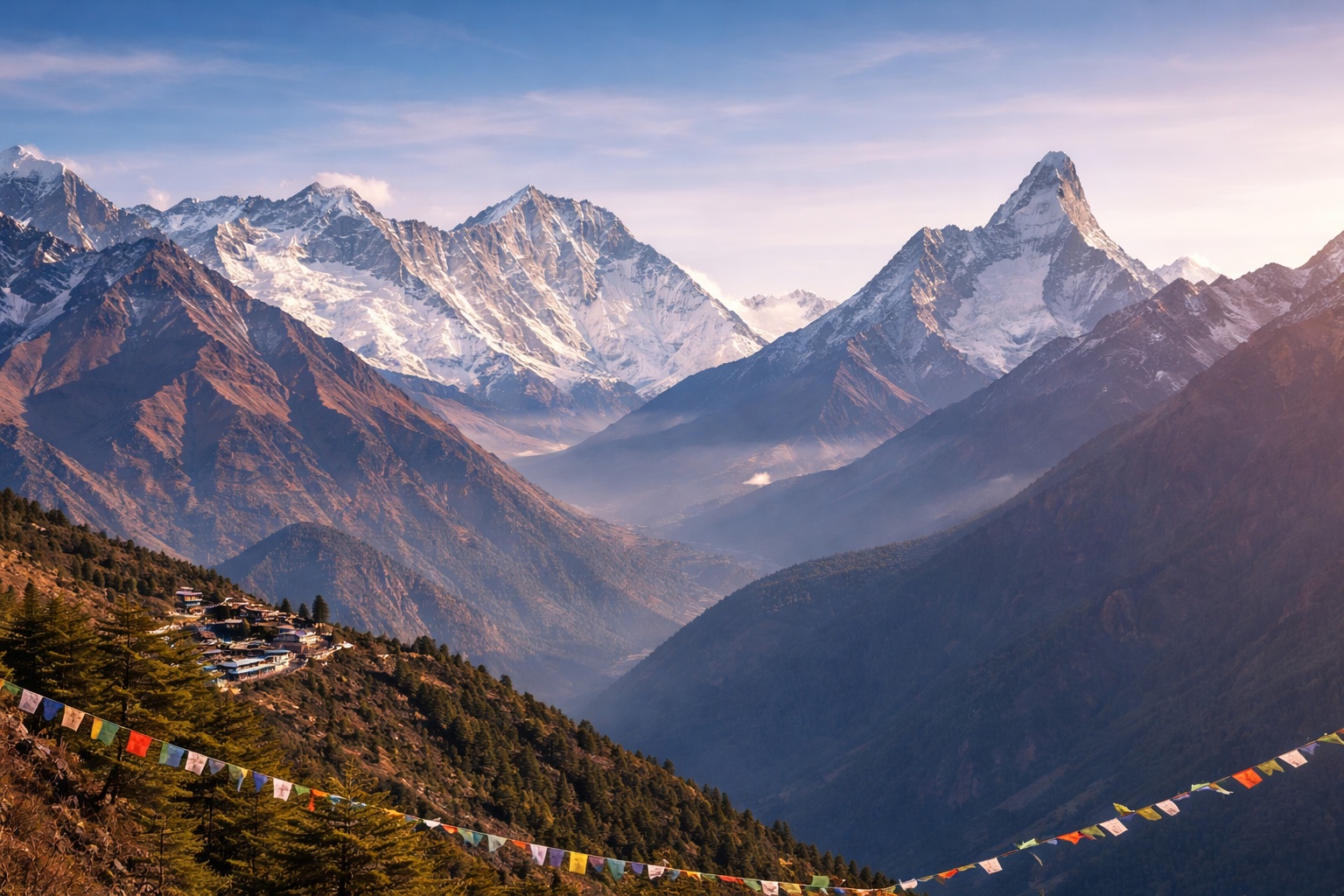
Langtang Village was devastated by a massive earthquake-triggered avalanche in April 2015 that killed most of its residents and destroyed the settlement entirely; it has since been rebuilt slightly uphill from the original site. Trekking through Langtang today directly supports the Tamang community's continued recovery, and the village remains a key overnight stop on the way to Kyanjin Gompa, a fact that gives a visit here a weight and significance beyond its scenic value alone.
The rebuilt village incorporates lessons learned from the disaster, alongside efforts to preserve elements of the traditional Tamang architecture and Buddhist culture that defined the original settlement. Prayer flags, mani walls, and a small monastery mark the community's continued religious life, and residents are often willing to share their own experiences of the earthquake and the years of rebuilding that followed, adding a profound layer of lived history to what is already one of Nepal's most scenic trekking valleys.
Set beneath the dramatic peaks of Langtang Lirung and the wider Langtang range, the village occupies a stunning natural setting that continues to draw trekkers from around the world, both for the mountain scenery and, increasingly, out of a desire to directly support the community's recovery through responsible tourism. From Langtang Village, the trail continues to Kyanjin Gompa, the main base for exploring the upper valley and its glaciers, lakes, and high-altitude viewpoints.
Facilities along this stretch of trail remain simple, and trekkers should carry sufficient cash, since cards are not accepted and ATMs do not exist beyond the larger towns.
Mobile signal in the area is patchy at best, and travellers should not rely on constant connectivity once they are this far into the trail network.
Weather at this elevation can change quickly, and a flexible itinerary with a buffer day or two is generally recommended for anyone travelling through this part of the route.
Local guides with specific knowledge of this stretch of trail add real value, both for navigation and for the cultural context they can offer along the way.