
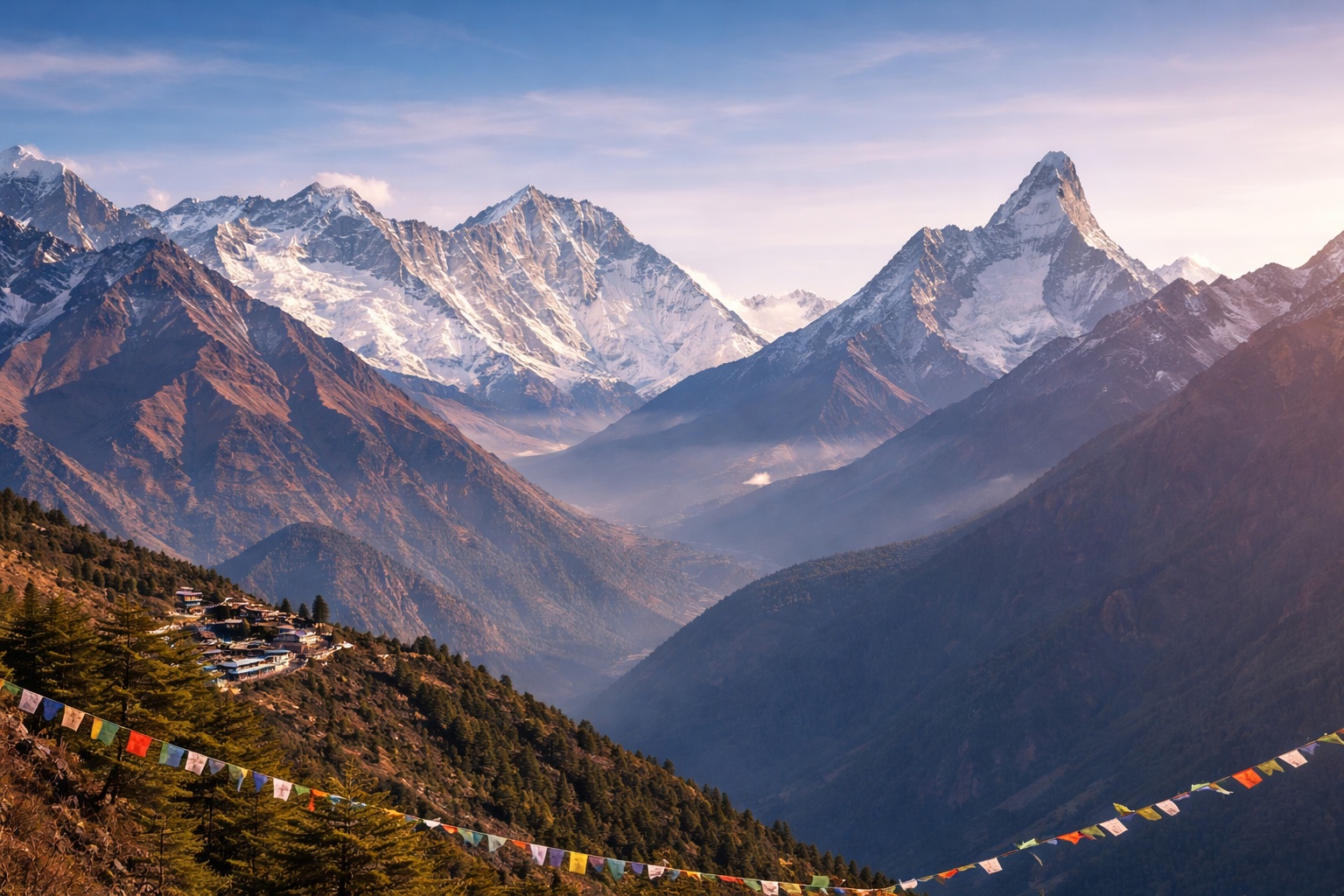
The Yala Peak Climbing is a 10-day trip in Kathmandu (7-hour drive to Syabrubesi trailhead), rated moderate - challenging (trekking); non-technical but physically demanding summit route difficulty. The best time to do this trip is October - November; April - May. The package includes group sizes of 1–6 people.
| Country | Kathmandu (7-hour drive to Syabrubesi trailhead) |
|---|---|
| Difficulty | Moderate - Challenging (trekking); non-technical but physically demanding summit route |
| Duration | 10 |
| Best Time | October - November; April - May |
| Group Size | 1–6 people |
How high is Yala Peak?
Yala Peak (5,520 m) is widely considered Nepal's most approachable technical peak - a mountain that demands genuine effort and altitude tolerance while remaining within reach of fit trekkers with no prior technical climbing experience. Situated in the upper Langtang Valley above the famous monastery village of Kyanjin Gompa (3,870 m), Yala Peak rises as a rounded dome above the Langtang glacier, its non-technical upper slopes reached via a straightforward high camp at approximately 5,100 m and a four-hour summit push on rocky moraine and firm snow. On a clear October or November morning, the summit view encompasses Langtang Lirung (7,227 m), Dorje Lakpa (6,966 m), Shishapangma (8,027 m) across the Tibetan border, the entire Langtang glacier basin, and - on exceptional days - a sliver of Everest in the far southeast.
The 10-day itinerary combines the classic Langtang Valley Trek - one of Nepal's finest mountain valley walks, reaching Kyanjin Gompa through rhododendron forest, Tamang village settlements, and glacier-carved upper valley - with a two-day summit attempt structured around a high camp above the permanent snow line. The Langtang Valley is Nepal's closest major trekking region to Kathmandu (just 7 hours by road to the trailhead at Syabrubesi), making Yala Peak the most logistically efficient technical peak climb in Nepal.
View Himalaya's Yala Peak programme includes an NTB-licensed trekking guide throughout, a summit guide certified for technical peak work, all standard technical equipment (crampons, ice axe, harness, helmet, rope), and a structured acclimatisation day at Kyanjin Gompa before the summit push. The NMA peak climbing permit for Yala Peak is included in the package price.
| Group Size | Price per Person (USD) | Includes |
|---|---|---|
| Solo climber | USD 1,349 | All inclusive: guide, summit guide, technical gear, permits, meals, accommodation |
| 2 - 4 people | USD 1,149 | All inclusive |
| 5 - 6 people | USD 999 | All inclusive |
A 25% deposit confirms your booking. Balance due 30 days before departure. Kathmandu hotel accommodation (2 nights) and Kathmandu - Syabrubesi road transport are included. Technical equipment (crampons, ice axe, harness, helmet, rope) is provided by View Himalaya; you may bring your own if preferred. Mountaineering insurance covering 6,000 m minimum is required.
The Yala Peak climb has two distinct phases. The first phase (Days 3 - 6) is a standard Langtang Valley trek: a well-established teahouse route with a warm, culturally rich Tamang and Sherpa community, excellent food, and progressive views of the Langtang peaks as the valley narrows and the glacier approaches. The second phase (Days 7 - 8) is the peak section: an ascent from Kyanjin Gompa to the high camp at 5,100 m, a night on the mountain, and the pre-dawn summit push on Day 8.
The Yala summit route is described as non-technical on the normal route - meaning there are no sections requiring fixed ropes or front-pointing on ice. Crampons are worn from approximately 5,000 m where snow and ice patches require traction. The ice axe is carried as self-arrest protection on the upper snow slopes and as a walking support on steeper sections. The summit dome itself involves a moderate-angle snow or rocky slope (depending on seasonal conditions) with no exposed ridgeline or technical crux. Most fit trekkers in good acclimatisation can reach the summit with the guide's support.
A genuinely important factor on Yala is acclimatisation. The 10-day itinerary includes an acclimatisation night at Langtang Village (3,430 m), two nights at Kyanjin Gompa (3,870 m), and an acclimatisation day hike to Kyanjin Ri (4,773 m) before the summit attempt. This progression, while compressed, is considered the minimum for a Yala summit attempt. Trekkers who have recently been at altitude (previous trek in Nepal within 4 - 6 weeks) will acclimatise more easily. Listen to your guide - if acclimatisation is not complete, the summit attempt is postponed.
Yala Peak is specifically appropriate for fit trekkers who want their first Himalayan technical peak experience without requiring prior climbing experience. The non-technical summit route makes it accessible, while the altitude (5,520 m) and physical demands of the high camp and summit push make it a genuine mountaineering achievement rather than a walk-up.
| Day | From | To | Distance | Max Altitude |
|---|---|---|---|---|
| 2 | Syabrubesi (1,450 m) | Lama Hotel (2,470 m) | ~10 km | 2,470 m |
| 3 | Lama Hotel (2,470 m) | Langtang Village (3,430 m) | ~13 km | 3,430 m |
| 4 | Langtang Village (3,430 m) | Kyanjin Gompa (3,870 m) | ~7 km | 3,870 m |
| 5 | Kyanjin Gompa (3,870 m) | Kyanjin Ri (4,773 m) and return | ~8 km | 4,773 m |
| 6 | Kyanjin Gompa (3,870 m) | High Camp (5,100 m) | ~5 km | 5,100 m |
| 7 | High Camp (5,100 m) | Yala Summit (5,520 m) → Kyanjin (3,870 m) | ~11 km | 5,520 m |
| 9 | Kyanjin Gompa (3,870 m) | Syabrubesi (1,450 m) | ~30 km | 3,870 m |
October and November are the prime months for Yala Peak. Post-monsoon clear skies, firm snow conditions on the summit slopes, stable weather windows, and outstanding visibility from the summit. Temperatures at high camp drop to -10°C to -15°C on October nights - a good down sleeping bag is essential. The Langtang valley rhododendrons are deep green and the golden larch trees at altitude add autumn colour to the landscape. This is the recommended season for first-time summiteers.
April is the second-best month - rhododendrons bloom spectacularly throughout the lower valley, spring migrants are active, and summit conditions are good. May is warmer but the monsoon approaches from mid-May. The snow on the summit may be softer in spring, requiring more careful crampon technique. Excellent summit view visibility in April on most mornings.
Winter ascents are possible for experienced cold-weather mountaineers. High camp temperatures drop to -20°C or below in January. Deep snow on the upper slopes may increase the technical difficulty marginally. Not recommended for first-time technical climbers.
The summit altitude of 5,520 m places Yala Peak firmly in the zone where altitude illness can become serious if acclimatisation is inadequate. The two nights at Kyanjin Gompa (3,870 m) and the acclimatisation hike to Kyanjin Ri (4,773 m) are the minimum preparation for a safe Yala attempt.
Mountaineering insurance covering 6,000 m is mandatory for the Yala Peak Climbing programme. Standard trekking insurance with altitude limits of 4,000 - 4,500 m is inadequate. The policy must explicitly state mountaineering or technical climbing coverage. Provide your insurance provider, policy number, and 24-hour emergency contact to View Himalaya before departure.
| Package | Duration | Summit | Best For |
|---|---|---|---|
| Langtang Valley Trek | 9 days | Kyanjin Gompa 3,870 m + Kyanjin Ri 4,773 m | Trek-only Langtang experience without the summit attempt |
| Island Peak Climbing | 18 days | Island Peak 6,189 m | Step up from Yala - technical peak requiring rope skills; Khumbu approach |
| Mera Peak Climbing | 18 days | Mera Peak 6,476 m | Nepal's highest trekking peak; more remote Hinku Valley approach |
| Ganja La Pass Trek | 12 days | Ganja La 5,160 m | Technical pass crossing combining Langtang and Helambu - same start valley |
Yala Peak in one sentence: A 10-day introductory high-altitude climb in the Langtang region, widely regarded as one of the best first summits for climbers new to mountaineering.
Yala Peak climbing difficulty: Moderate to Challenging trekking approach, with a non-technical but physically demanding summit day.
Best time to climb Yala Peak: October - November and April - May.
Yala Peak climbing cost: View Himalaya packages start from USD 999 per person, including the Langtang approach trek and technical equipment support.
Why Yala Peak is a good first climb: A non-technical glacier route with basic crampon and ice axe training provided, shorter and gentler than Island Peak or Mera Peak.
Yala Peak summit view: Panoramic views of the Langtang range, including Langtang Lirung.
Truly one of the highlights of our travels in Asia. Having such an experienced guide made a huge difference, especially at altitude. A particular highlight for us was summit panorama: Langtang Lirung (7,227 m) at close range, Dorje Lakpa (6,966 m), Shishapangma (8,027 m) across the Tibetan border, the Langtang glacier basin below, and the Kathmandu Valley rim visible to the south. Thank you to the whole View Himalaya team for making this happen.
An unforgettable experience from start to finish. Having such an experienced guide made a huge difference, especially at altitude. A particular highlight for us was kyanjin Ri (4,773 m) optional acclimatisation hike from Kyanjin Gompa - a classic Langtang viewpoint summit accessible in a morning from the village. Highly recommend View Himalaya to anyone considering this trip.

