
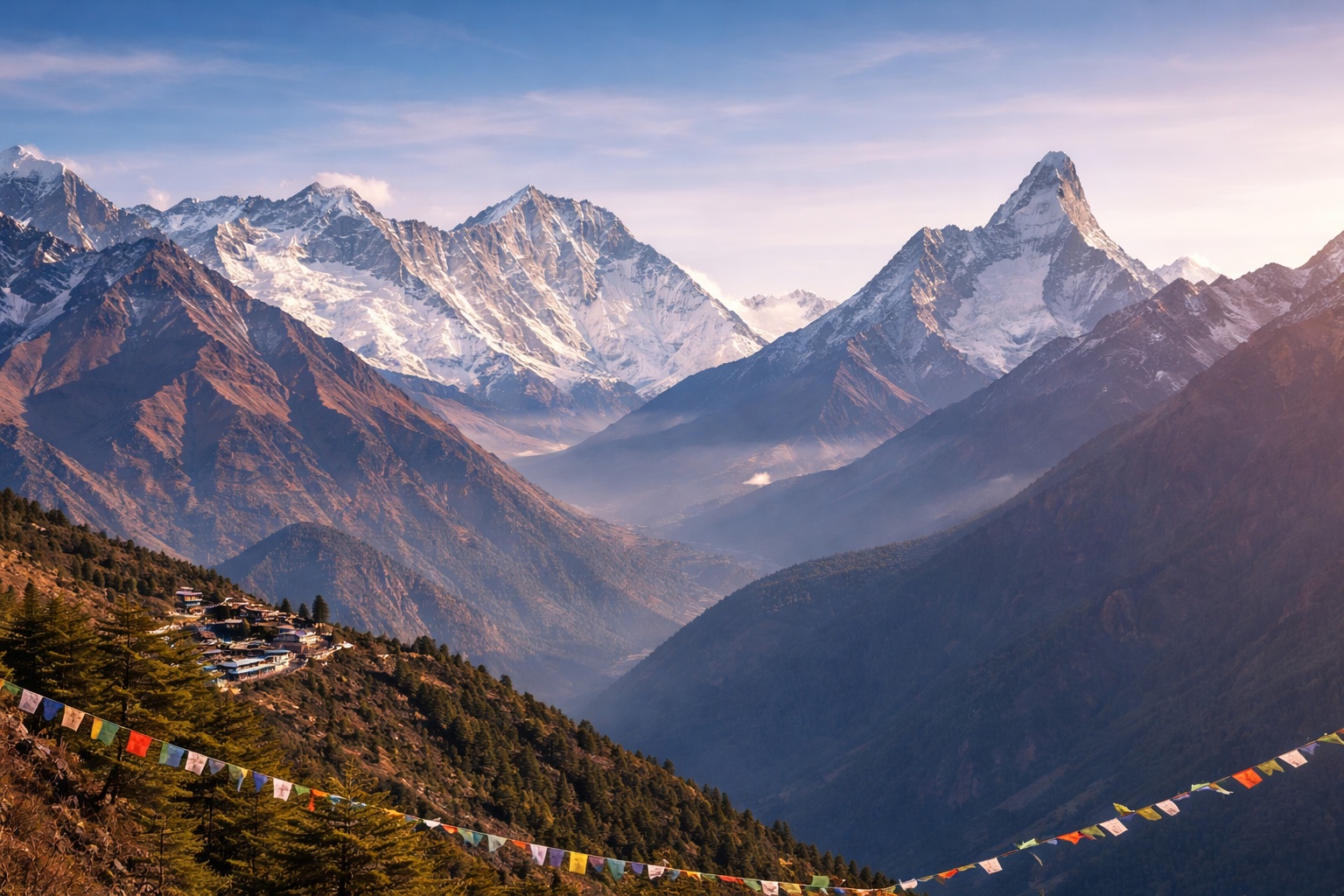
Tarkeghyang is a significant Sherpa village on the Helambu trekking circuit, notable for its large historic monastery and traditional architecture, offering a genuine cultural highlight within this comparatively accessible trekking region north of Kathmandu. Sitting amid terraced hillsides typical of Helambu, Tarkeghyang reflects a strong continuity of Sherpa Buddhist heritage distinct from, though related to, the more famous Sherpa communities of the Everest region further east.
The village's monastery, one of the largest and most significant in the wider Helambu region, serves as an important religious centre for the local community and a point of genuine cultural interest for trekkers passing through. Traditional stone houses and prayer wheels line the approach into Tarkeghyang, and the village's relatively substantial size compared to smaller Helambu settlements reflects its historic importance within the region.
For trekkers on a standard Helambu circuit itinerary, Tarkeghyang typically represents one of the most rewarding overnight stops, combining comfortable teahouse accommodation with genuine religious and architectural interest rarely matched elsewhere on this route. The relative accessibility of Tarkeghyang and the wider Helambu circuit, achievable without a domestic flight and within a shorter overall itinerary than Everest or Annapurna, continues to make this an appealing choice for trekkers seeking a genuine cultural and scenic experience within a more limited timeframe.
A gradual, well-paced ascent through this section remains the best defence against altitude-related discomfort further along the route.
Basic but adequate teahouse facilities are typically available, offering a hot meal and a simple bed for trekkers passing through.
Facilities along this stretch of trail remain simple, and trekkers should carry sufficient cash, since cards are not accepted and ATMs do not exist beyond the larger towns.
Mobile signal in the area is patchy at best, and travellers should not rely on constant connectivity once they are this far into the trail network.
Weather at this elevation can change quickly, and a flexible itinerary with a buffer day or two is generally recommended for anyone travelling through this part of the route.