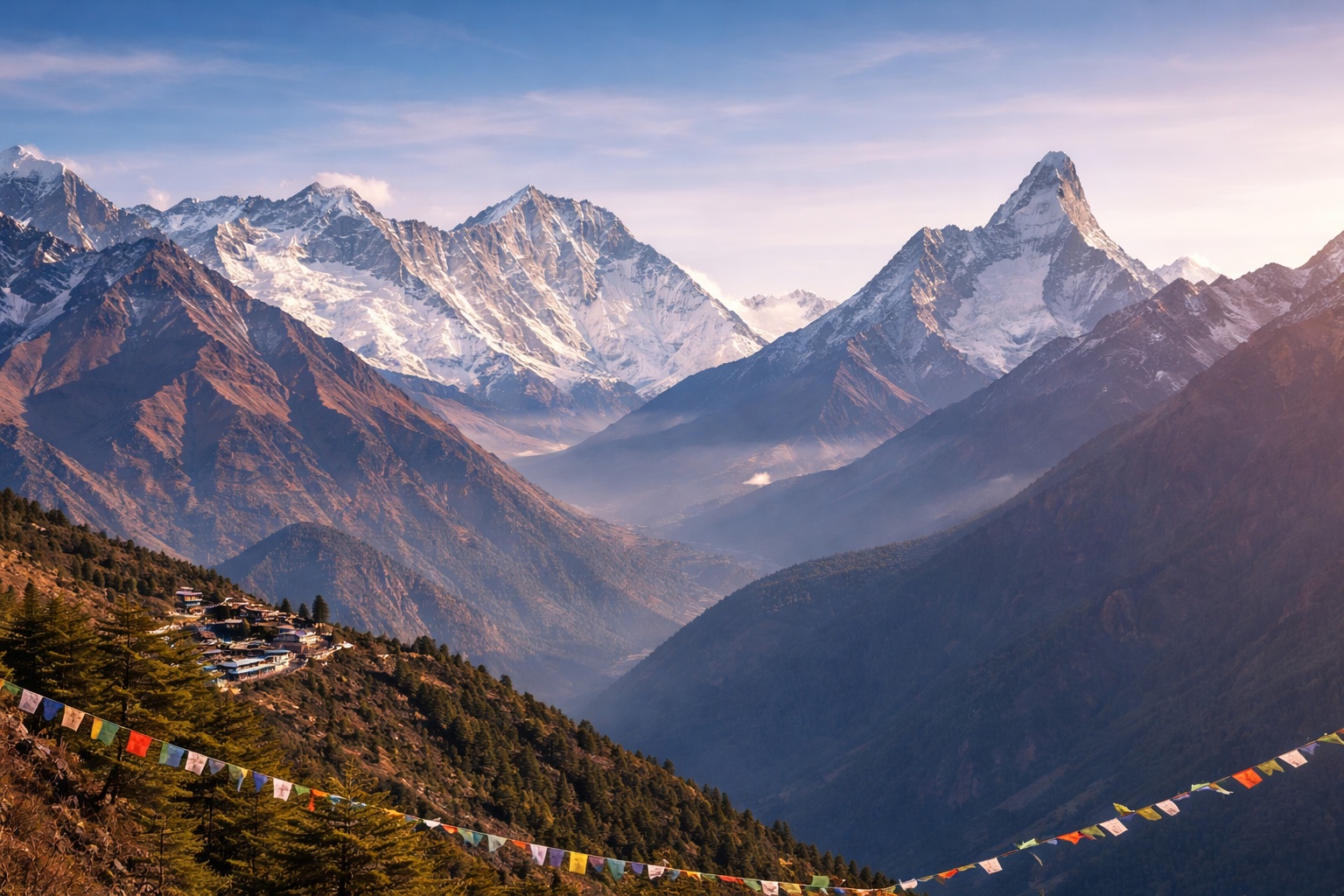
Overview of Thorong La Pass
Thorong La Pass (5,416 m) is the highest point on the Annapurna Circuit - the mountain pass that separates the Manang District to the east from the Mustang District to the west, and the crossing that defines the Annapurna Circuit's character as a high-altitude mountain journey rather than a valley trek. At 5,416 m, Thorong La stands higher than Mont Blanc (4,808 m) by over 600 m and requires weeks of acclimatisation trekking from Besisahar (760 m) for the crossing to be physiologically safe.
The crossing is not technically difficult - no glacier, no fixed ropes, no crampon requirement in normal conditions - but the altitude, the length of the crossing day (6 - 8 hours from High Camp to Muktinath), and the exposure to weather make it one of the most demanding walking passages in Nepal's major trekking circuits. Approximately 50,000 trekkers attempt Thorong La each year; the majority succeed with adequate preparation and acclimatisation time.
The Ascent from Thorong Phedi and High Camp
The crossing day begins from either Thorong Phedi (4,450 m) or Thorong La High Camp (4,925 m):
From Thorong Phedi (4,450 m): Total ascent of 966 m over 4 - 5 hours to the pass, then 1,600 m descent to Muktinath. This is the full crossing day - 8 - 10 hours total walking.
From High Camp (4,925 m): Total ascent of 491 m over 2 - 3 hours to the pass, then descent to Muktinath. Total: 5 - 7 hours. Starting from High Camp is strongly recommended as it reduces the crossing day's length and keeps the most difficult high-altitude section after a night of rest at 4,925 m.
The ascent from High Camp to the pass: 3 hours of steady climbing on a well-marked trail across the north-facing slope of the Thorong valley. The terrain is open scree and loose rock - no technical sections, but the gradient is persistent at 20 - 25° throughout and the altitude demands a measured pace. The prayer-flag-marked notch of the pass is visible from 1 km below; trekkers tend to pace off the flag visibility rather than trail markers.
Start time: 04:00 - 05:00 from High Camp. The Thorong La crossing must be completed before afternoon - afternoon winds on the pass reach 40 - 80 km/h and can be dangerous in winter conditions. The rule is universal: cross Thorong La in the morning, every time, without exception.
Descent to Muktinath
The descent from Thorong La to Muktinath (3,710 m) drops 1,706 m over 2 - 3 hours of sustained downhill walking on a well-worn trail. The descent is steep in the upper section (loose scree requiring care with footing) and moderates as the trail enters the Mustang rain shadow landscape - the dramatic transition from the green Manang valley to the arid, ochre Mustang plateau happens within an hour of descending from the pass, one of the most visually striking landscape changes on any Nepal trekking route.
Muktinath (3,710 m) - the sacred pilgrimage site of 108 water spouts and eternal flame - is the destination that centuries of Hindu and Buddhist pilgrims have crossed Thorong La to reach. Arriving at Muktinath after crossing the pass is the Annapurna Circuit's emotional peak - a profound sense of achievement combined with immediate entrance into one of Nepal's most sacred and visually extraordinary landscapes.
Difficulty and Preparation
- Altitude: 5,416 m is above the altitude where AMS risk is significant for inadequately acclimatised trekkers. The Annapurna Circuit's standard 16 - 18 day itinerary from Besisahar provides adequate acclimatisation if the mandatory rest day at Manang (3,519 m) and possible rest at Yak Kharka (4,050 m) are observed.
- Physical fitness: The crossing day is 6 - 10 hours of walking with 500 - 1,000 m of ascent and 1,700 m of descent. Cardiovascular fitness appropriate for sustained mountain walking at altitude is required - not technical climbing ability, but genuine endurance.
- Cold: The pass is exposed; temperatures at the summit in October are -5°C to -15°C with wind. Full down jacket, warm gloves, hat, and wind-proof layer are mandatory at the summit regardless of lower-altitude temperature.
- Crampons: Not required in standard conditions (October - November; April - May). In heavy snowfall conditions or early spring, the north-facing slope above High Camp can carry ice. Check with Manang teahouses for current conditions.
Best Season and Pass Closures
| Month | Conditions | Status |
|---|---|---|
| October | Excellent; firm trail; clear skies | Best conditions |
| November | Good; increasingly cold; possible early snow | Good; check forecasts |
| December - February | Deep snow; dangerous; officially closed | Closed / expert only |
| March | Heavy snow; avalanche risk | Check current conditions |
| April | Good spring conditions; softening snow | Good |
| May | Good; pre-monsoon instability afternoon | Good early morning |
| June - September | Monsoon; pass often snowbound | Generally avoid |
Essential Crossing Tips
- The acclimatisation rest day at Manang is mandatory: Trekkers who skip the rest day at Manang (3,519 m) and proceed directly to High Camp have a significantly higher AMS rate at the pass. The extra day at Manang is the most important single factor in a successful Thorong La crossing.
- High Camp is worth the extra night: Staying at High Camp (4,925 m) rather than Thorong Phedi the night before the crossing reduces the crossing day by 2 - 3 hours and puts you closer to acclimatisation at the pass altitude. The High Camp teahouses are basic but functional.
- Never turn back from the summit toward Thorong Phedi: If weather deteriorates at the pass, descend to Muktinath - the western descent is shorter and safer than retracing to Thorong Phedi. The eastern face of Thorong La is avalanche-prone in heavy snow conditions.
Practical Information
- Altitude: 5,416 m (17,769 ft)
- Coordinates: 28.7953°N, 83.9278°E
- District: Manang, Gandaki Province
- Part of: Annapurna Circuit Trek
- Time from High Camp (4,925 m): 2.5 - 3.5 hours ascent; 2 - 3 hours descent to Muktinath
- Departure time recommendation: 04:00 - 05:00 from High Camp
- Best season: October - November; April - May
- ACAP permit required: NPR 3,000
Recent Posts