What Is Teahouse Trekking?
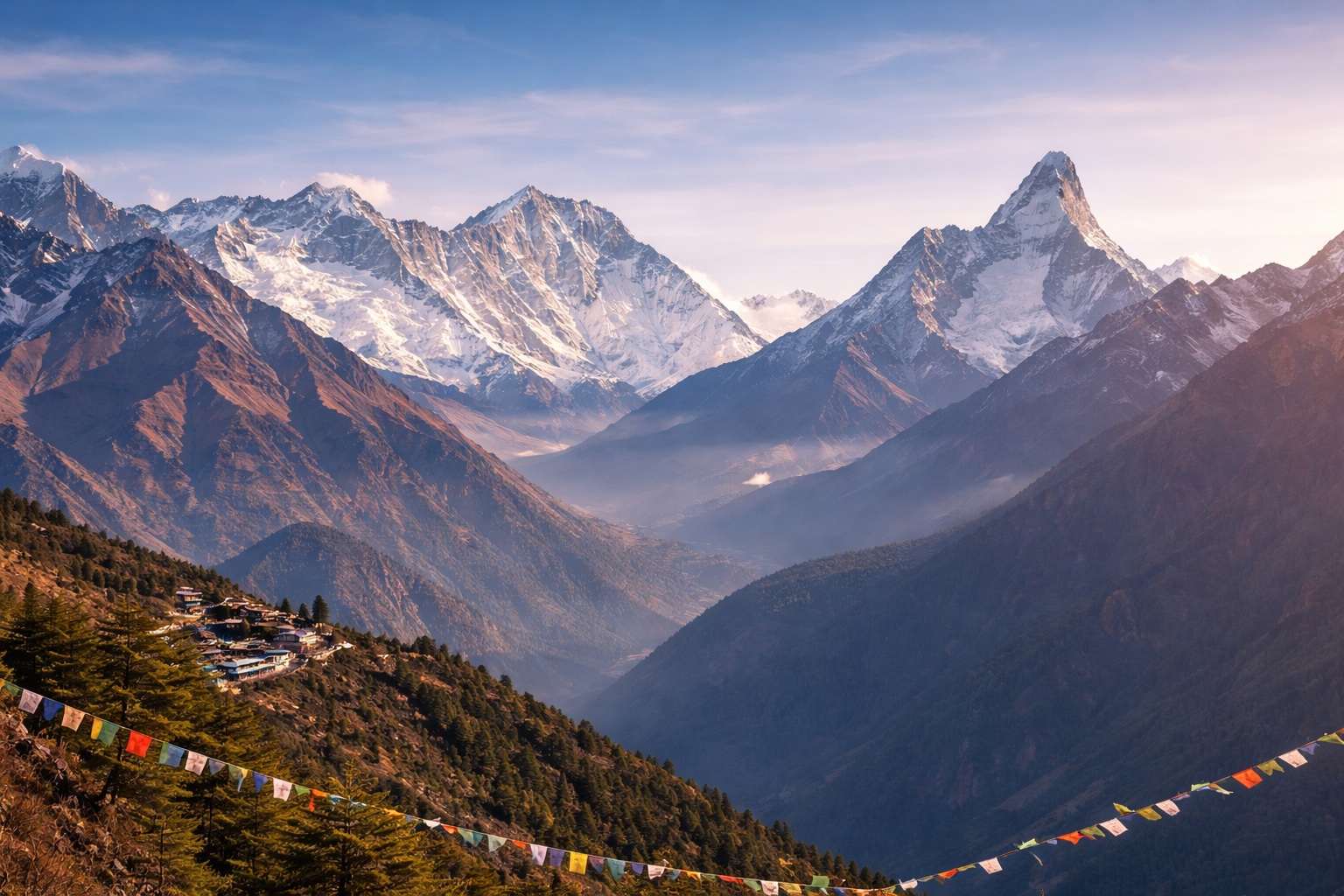
Teahouse trekking is Nepal's dominant trekking style - and the infrastructure that has made the country's mountain trails accessible to hundreds of thousands of trekkers each year. A teahouse is a combined guest house and restaurant, operated by a local family, positioned along the trekking route to provide accommodation (typically NPR 200 - 1,500 per night), meals (breakfast, lunch, and dinner from a menu), hot drinks, and sometimes Wi-Fi and charging points. The teahouse network on major routes like the Everest Base Camp corridor and Annapurna Circuit is so well established that trekkers can complete multi-week treks carrying nothing but a daypack - all food and shelter is provided at regular intervals along the trail.
Teahouse trekking requires minimal gear (no tent, sleeping mat, cooking stove, or camp kitchen), is accessible to trekkers of all experience levels, and creates direct economic benefit for mountain communities through the accommodation and food economy. The teahouse system is one of Nepal's most successful examples of community-based tourism.
What Is Camping Trekking?
Camping trekking involves a full expedition support system - a licensed guide, a cook, kitchen staff, and porters who carry tents, sleeping equipment, cooking gear, and food supplies. The party camps at designated sites along the route rather than staying in teahouses. In Nepal, camping treks are almost exclusively organised through trekking agencies who provide the full support infrastructure.
Camping treks are required on routes where the teahouse network does not exist - remote areas like Upper Dolpo, Humla, Kangchenjunga, and remote Upper Mustang sections beyond the main lodges. They are also chosen by trekkers who prefer wilderness camping over teahouse accommodation, or by large groups whose logistics are better managed with a full camp kitchen rather than teahouse ordering for 15+ people.
Comfort and Daily Life
Teahouse Life
Teahouse accommodation ranges from basic (a wooden board bed with a thin mattress and shared squat toilet) to surprisingly comfortable (private en-suite rooms with hot showers, Wi-Fi, and charging at lodges in Namche Bazaar or Manang). The further from the main teahouse trail, the more basic conditions become. Above 4,000 m, even the best teahouses are cold at night - a good sleeping bag is essential.
The teahouse dining room is the social centre of the trekking day: trekkers from multiple nationalities gather around kerosene or yak dung stoves in the evening, sharing route information, altitude experiences, and trail stories. This organic community is one of teahouse trekking's most valued qualities.
Camping Life
A well-run camping trek is more comfortable in certain respects than teahouse accommodation - you have a private tent, a dedicated camp kitchen producing meals specifically for your party, and a toilet tent. The camp cook's ability to produce fresh, hot meals tailored to your preferences (including fresh vegetables, soups, and cake at high altitude) consistently surprises trekkers who expected camp food to be inferior to teahouse fare.
The trade-off is setup and breakdown time. Every day involves waking to the camp team striking tents, repacking porter loads, and departing by 07:30 - 08:00. There is less of the relaxed teahouse morning atmosphere. On remote routes where no teahouses exist, camping is simply the only option - and the wilderness experience it provides is unmatched.
Cost Comparison
| Cost Factor | Teahouse Trek | Camping Trek |
|---|---|---|
| Daily food and accommodation | USD 25 - 60/person | Included in package |
| Guide | USD 30 - 40/day (optional on some routes) | USD 35 - 45/day (mandatory) |
| Porter | USD 20 - 25/day (optional) | USD 18 - 22/day per porter (multiple required) |
| Camp kitchen staff | Not required | USD 20 - 30/day (cook + assistant) |
| Equipment | Sleeping bag + daypack (personal) | Full camp kit provided by agency |
| Per day total (1 person) | USD 55 - 100 | USD 120 - 200 |
| Per day total (group of 4) | USD 55 - 80/person | USD 90 - 130/person |
Camping treks are significantly more expensive than teahouse treks on equivalent routes due to the full support team required. On remote routes where teahouses don't exist, there is no comparison - camping is the only option and the cost is what it is. On routes where both options exist (Annapurna Circuit, Langtang), the teahouse option is considerably better value per dollar of experience.
Flexibility and Itinerary
Teahouse trekking offers greater day-to-day flexibility. A teahouse trekker can adjust pace, take an extra acclimatisation day, leave early, or stop at a different teahouse than originally planned without logistical consequence. The only advance planning required is guide and porter booking in peak season.
Camping treks involve more rigid logistics - the camp team needs advance notice to adjust the route, food supplies are calculated for a specific number of days, and porter loads are calculated to a defined itinerary. This is not a significant practical problem on most treks (itinerary changes are accommodated by experienced guides) but it is less flexible than the spontaneous adjustments possible in teahouse trekking.
Which Routes Are Teahouse, Which Are Camping?
| Route | Style | Notes |
|---|---|---|
| EBC / Gokyo | Teahouse | Full teahouse network; camping unusual and unnecessary |
| Annapurna Circuit / ABC | Teahouse | Full teahouse network; camping available but rarely chosen |
| Langtang Valley | Teahouse | Good teahouse network; camping possible in upper valley |
| Manaslu Circuit | Teahouse | Teahouses available throughout; some basic above Samdo |
| Upper Mustang | Teahouse + some camping | Lodges in main villages; camping for side routes |
| Upper Dolpo | Camping required | No teahouse network; full expedition camping |
| Kangchenjunga | Mix | Basic teahouses below; camping required at high camps |
| Humla / Limi Valley | Camping required | Extremely remote; full camping expedition |
| Makalu Base Camp | Mix | Basic teahouses to 3,500 m; camping required above |
Environmental Considerations
The environmental comparison between teahouse and camping trekking is more nuanced than it first appears. Teahouses burn significant amounts of firewood and fuel for cooking and heating - historically, deforestation around popular trekking routes was driven largely by teahouse fuel demand. This has improved with solar cooking, gas-powered stoves, and improved insulation in modern teahouses, but firewood remains in use at higher altitudes.
Camping treks use gas stoves (kerosene or propane) for camp cooking, which are cleaner-burning than wood. However, the waste produced by a camping party - food packaging, gas canisters, human waste disposal - requires rigorous management on remote routes. Reputable camping trekking agencies practice "carry in, carry out" waste management and use cat holes or portable toilet systems in wilderness areas.
The Sagarmatha Pollution Control Committee (SPCC) in the Khumbu and the Annapurna Conservation Area Project (ACAP) both manage waste and fuel use on the major routes. Trekkers on these routes pay conservation fees that directly fund environmental management.
Social Experience
Teahouse trekking is inherently social. The shared dining room, the evening fire, the trail conversations - these are built into the structure of teahouse life. Solo trekkers on major routes consistently find themselves trekking informally with others. The Sherpa and Gurung families who run teahouses add a cultural dimension that no camping experience can replicate - eating in a Sherpa kitchen above 4,000 m is a genuinely intimate cultural encounter.
Camping trekking is more private - you are a self-contained unit with your guide, cook, and porter team. On remote routes this is appropriate; the camping party becomes its own small community. On routes where teahouses exist, the social isolation of camping means missing one of Nepal trekking's most valued experiences.
Which Style Should You Choose?
Choose teahouse trekking if: You are on a major established route (EBC, Annapurna, Langtang, Manaslu), you value social interaction and cultural immersion, or you are on a budget. Teahouse trekking is appropriate for first-time Nepal trekkers and experienced trekkers alike on routes with a developed network.
Choose camping trekking if: Your route requires it (Upper Dolpo, Humla, remote valleys), you have specific preferences for wilderness privacy and camp comfort, or you are trekking with a large group whose logistics are better served by a camp kitchen than multiple teahouse meals. If the route has no teahouse option, the camping experience Nepal's professional camp teams provide is genuinely excellent - and in remote Nepal, it is incomparably beautiful.
Recent Posts