What is Teahouse Trekking?
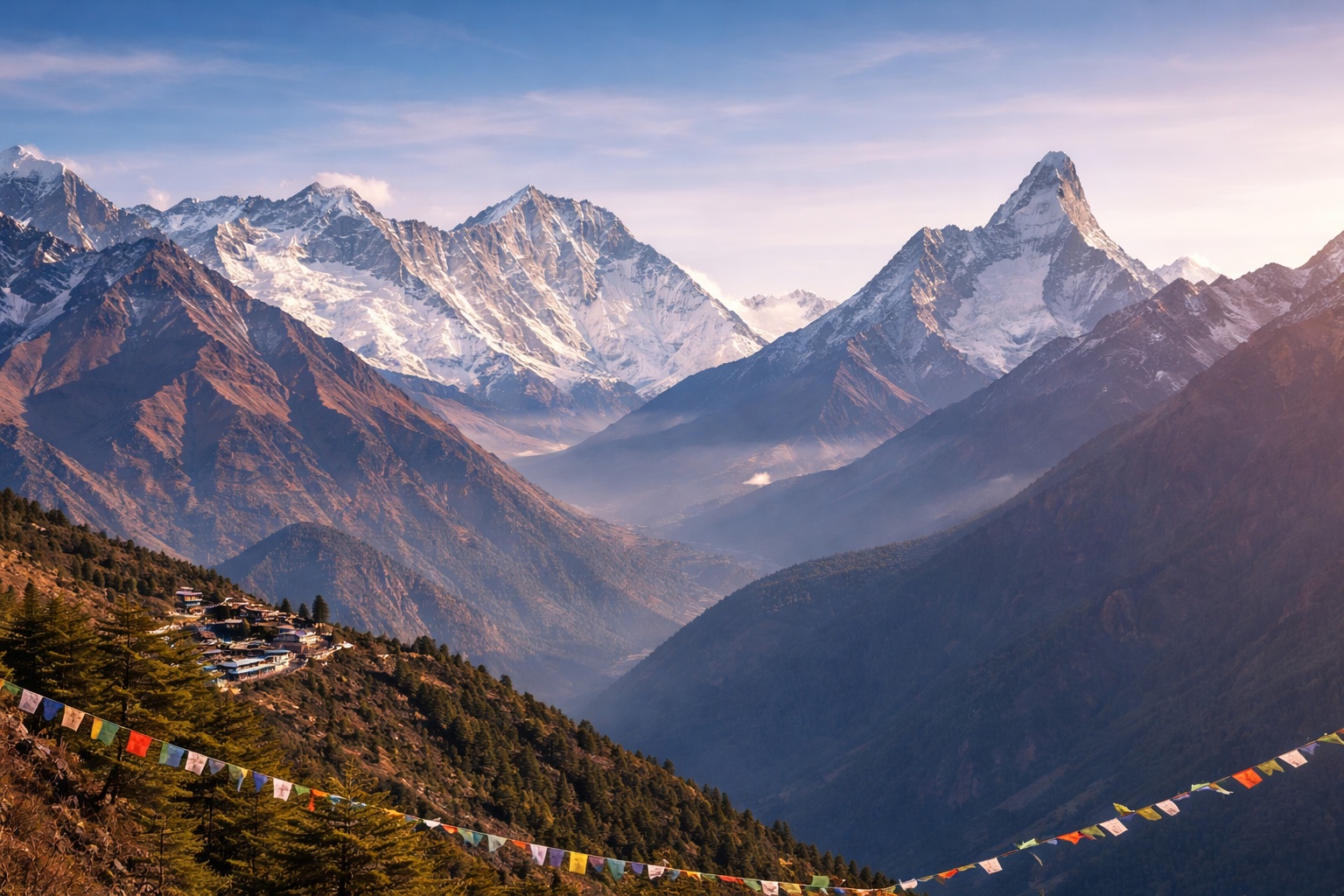
Teahouse trekking is Nepal's defining form of independent Himalayan trekking - a system of small guesthouses (called "teahouses") positioned at regular intervals along all major trekking routes, providing accommodation and meals to passing trekkers without the need for tents, camping equipment, or food carries. The teahouse system makes Nepal's most famous routes (EBC, Annapurna Circuit, Poon Hill, Langtang) accessible to trekkers without mountaineering experience or camping logistics - a walker with a daypack and a sleeping bag can travel the entire EBC route sleeping in teahouses every night.
The term "teahouse" derives from the original tea-and-basic-food stalls that catered to local traders and pilgrims on the high trade routes before trekking tourism developed. Modern teahouses range from basic stone-walled rooms with a communal kerosene lantern to comfortable lodges with attached bathrooms, solar hot water, and Wi-Fi - the diversity of quality within the Nepal teahouse system spans a range that challenges the single category name.
What unites all teahouses, from the most basic Manaslu Circuit lodge to the luxury lodges of the EBC high route, is the communal dining room (dhorka) where meals are cooked on a wood or gas stove, trekkers from different countries share tables, and the teahouse owner or family members serve food and tea in the specific cultural context of Nepal's high mountain communities.
Accommodation Standards
Teahouse room quality varies significantly by region, altitude, and age of the teahouse. The general pattern is that popular, lower-altitude teahouses on high-traffic routes offer better facilities than remote, high-altitude lodges on less-frequented circuits:
- Basic teahouse (typical of remote routes above 4,000 m): Twin wooden beds with foam mattresses; communal blankets (bring your own sleeping bag); shared unheated bathroom with squat toilet; cold water only; no charging; kerosene or solar lantern for evening light. Cost: NPR 400 - 700/night.
- Standard teahouse (typical of main EBC/Annapurna routes): Twin beds with mattresses; own pillow; shared bathroom with squat or western toilet; bucket hot shower for NPR 200 - 400 extra; limited charging (solar) in common areas; gas cooking in the kitchen. Cost: NPR 700 - 1,500/night.
- Good quality lodge (Namche, Ghorepani, Pokhara environs): En-suite rooms; western toilet; hot shower; Wi-Fi; menu restaurant; charging in rooms; sometimes heating in common room. Cost: NPR 1,500 - 3,000/night.
- Luxury mountain lodges (Yeti Mountain Home, Summit Lodges, EBC route): Private bathroom; hot shower; heating; library; quality food; satellite phone; oxygen on premises. Cost: USD 150 - 400/night per person including meals.
A sleeping bag rated to -15°C is essential for all teahouse trekking above 3,500 m - communal blankets alone are insufficient for cold October - November nights, and the teahouse rooms are rarely heated (the communal dining room has a wood stove, but the bedrooms are unheated).
Food and Menus
The teahouse menu is a standardised document shared across virtually all teahouses on all major Nepal trekking routes - the same laminated card appears at teahouses from Lukla (2,860 m) to Gorak Shep (5,164 m), from Nayapul to Muktinath. The standard menu includes:
- Dal bhat: The national dish - lentil soup (dal), steamed rice (bhat), vegetable curry (tarkari), pickle (achar), and sometimes a small side of spinach or potato. Dal bhat is the best-value, most nutritionally complete, and most filling meal on the trek. Most teahouses offer unlimited refills of the curry and dal. Cost: NPR 500 - 900 (increases with altitude).
- Breakfast options: Porridge (oats), chapati, Tibetan bread (fried dough), French toast, eggs (fried/boiled/scrambled), pancakes, muesli with milk. Accompanied by tea (milk or black) or coffee (instant - Nescafé is universal).
- Noodle dishes: Thukpa (Tibetan noodle soup), chow mein (fried noodles), instant noodles (Wai Wai brand - a genuine trekking staple)
- Rice dishes: Fried rice (vegetable, egg, or mixed); rice with vegetables
- Western items (at lower altitude, tourist-oriented teahouses): Pizza (baked in a wood or clay oven), pasta, sandwiches, hash browns, apple pie. Quality of Western items diminishes with altitude.
- Tibetan/Sherpa specialties: Momos (steamed or fried dumplings, vegetable or meat); sherpa stew (potato, vegetables, stock); tsampa porridge at high altitude
- Drinks: Butter tea (po cha), milk tea (chai), lemon honey ginger tea (the trekkers' cold remedy), hot chocolate, coffee, local apple juice
Food quality and freshness decreases with altitude - supply logistics to teahouses above 4,500 m rely on yak and porter carries, meaning the higher the altitude, the more limited the fresh ingredients. Eggs, dal, and instant noodles are reliably available at all altitudes; fresh vegetables, meat, and dairy are more reliable below 4,000 m.
Costs and Pricing
Teahouse costs increase significantly with altitude - the further a teahouse is from the road head, the more the supply logistics cost, and these costs are passed directly to trekkers. The pricing pattern on the EBC route illustrates this well:
| Location | Altitude | Room (per night) | Dal Bhat | Egg dish | Bottled Water (1L) |
|---|---|---|---|---|---|
| Phakding | 2,652 m | NPR 500 - 800 | NPR 550 - 700 | NPR 350 - 500 | NPR 100 - 150 |
| Namche | 3,440 m | NPR 800 - 1,500 | NPR 650 - 800 | NPR 400 - 600 | NPR 150 - 200 |
| Dingboche | 4,410 m | NPR 700 - 1,200 | NPR 750 - 900 | NPR 500 - 700 | NPR 250 - 300 |
| Lobuche | 4,910 m | NPR 700 - 1,000 | NPR 800 - 1,000 | NPR 550 - 750 | NPR 300 - 400 |
| Gorak Shep | 5,164 m | NPR 700 - 1,200 | NPR 900 - 1,200 | NPR 600 - 800 | NPR 400 - 600 |
The informal teahouse economics: room prices at basic teahouses are kept low (NPR 400 - 800) to attract guests, with the profit made on food - a trekker staying one night and eating two meals contributes NPR 1,500 - 2,500+ in food revenue. This is why teahouse owners appreciate and sometimes expect guests to eat at their teahouse rather than moving to another establishment for meals.
Teahouse Etiquette
Understanding teahouse culture makes the experience significantly more rewarding. Key etiquette points:
- Order meals in advance: Teahouse kitchens are family-run with limited preparation capacity. Tell the owner what you want for dinner when you arrive and confirm breakfast needs the evening before. Last-minute mass orders frustrate kitchen capacity and delay everyone.
- Eat and drink in the teahouse where you sleep: The room rate is subsidised by meal revenue. Using a different teahouse's dining room while sleeping at another is acceptable but not the preferred arrangement - at minimum, purchase tea or a snack from the teahouse where you have a room.
- Remove shoes: In traditional teahouses (particularly in Tibetan-culture areas - Kyanjin Gompa, Samdo, Lo Manthang), removing shoes at the door is expected. Look for the shoe rack or pile at the entrance.
- Respect the gompa/temple area: Many teahouses are adjacent to or part of a monastery complex. Keep noise levels low in the evening, observe any "no photography" signs in the gompa, and dress modestly in temple areas.
- Tipping: Not mandatory but appreciated - tipping teahouse staff and kitchen workers (separate from guide and porter tips) at NPR 200 - 500 for excellent service is customary on the main routes. On remote routes where tipping is less expected, any gratuity is warmly received.
- Water: Buy boiled water (NPR 50 - 150 per litre) or use a Steripen/tablets rather than buying plastic-bottled water above 3,000 m. The Khumbu has made significant efforts to reduce single-use plastic bottle waste on the trail; most teahouses can provide boiling water for reusable bottles.
Facilities: Toilets, Showers, Charging
Toilet facilities range from basic squat toilet outhouses to attached western flush bathrooms. Above 4,000 m, expect squat toilets (often an external stone structure). At Namche, Ghorepani, and lower-altitude lodges, western flush toilets are common. The bio-degradation challenge at high altitude (slow decomposition in cold, dry conditions) means a no-paper-in-the-toilet rule applies at most Khumbu high-altitude teahouses - use the small bins provided.
Hot showers: Basic teahouses offer bucket hot showers - a metal bucket of hot water is delivered to a small shower cubicle for NPR 200 - 500. Solar-powered hot water showers are available at better teahouses in Namche, Dingboche, and lower-altitude stops. At Gorak Shep and above 5,000 m, hot shower facilities are minimal - expect cold bucket shower or no shower option.
Charging: Solar charging panels are present at most teahouses on the main routes, providing limited electricity for phone and camera charging. Charging at teahouses costs NPR 200 - 500 per device. Bring a power bank (at least 20,000 mAh for a 14-day trek) as a primary charging solution - teahouse charging is unreliable and slow. Note that cold temperatures (-10°C and below) dramatically reduce lithium battery capacity - keep power banks in inner pockets close to body warmth at night.
Teahouse Quality by Region
- EBC route (Lukla to Gorak Shep): The most commercialised teahouse network in Nepal. Namche has boutique lodges with Wi-Fi and excellent food. Dingboche and Lobuche are basic but adequate. Gorak Shep is the most basic of all - thin walls, communal blankets, and the highest altitude accommodation in the trekking world.
- Annapurna Circuit (Marsyangdi valley): Good quality at Chame, Pisang, and Manang. Above Manang toward the Thorong La, basic but functional. Post-Thorong La at Muktinath and Marpha, comfortable mid-range options with attached bathrooms.
- Poon Hill / Ghorepani: The most developed short-trek teahouse infrastructure - Ghorepani has comfortable lodges with good food, solar power, and some of the best cooking on the Nepal trail system.
- Langtang Valley: Adequate teahouses rebuilt post-2015 earthquake. Kyanjin Gompa has comfortable lodges. Less polished than the EBC or Ghorepani teahouse circuit.
- Manaslu Circuit: Basic - the least developed infrastructure of any major Nepal circuit. Rooms are simple stone structures with limited facilities. The remoteness is part of the appeal; manage expectations accordingly.
- Upper Mustang: Lo Manthang and the main route villages have functional guesthouses; basic but charming in their mud-walled, traditional Tibetan architecture context.
Booking and Availability
Advance booking of teahouses is not generally required or available for most Nepal routes - the system operates on a first-come-first-served walk-in basis. Exceptions:
- October peak season on EBC route: Gorak Shep, Lobuche, and Dingboche can fill up during the October peak. Arriving before 14:00 secures a room; arriving after 16:00 during October can result in overflow to floor mattresses. Some popular teahouses (Panorama Lodge Namche, Summit Hotel Dingboche) accept reservations via phone or message during peak season.
- Lo Manthang (Upper Mustang) during Tiji Festival: Every guesthouse in Lo Manthang fills months in advance for the 3-day Tiji Festival in late April - early May. Book through an agency 3 - 6 months in advance.
- Kyanjin Gompa (Langtang) in October: The few teahouses fill during peak season. Arrive by midday to secure a room.
Frequently Asked Questions
- Do I need a tent for trekking in Nepal?
- No - the entire EBC, Annapurna Circuit, Poon Hill, Langtang, and most other major Nepal trekking routes can be completed sleeping exclusively in teahouses. Tents are used only for technical Himalayan expeditions (above base camps), camping treks in non-teahouse areas (some remote routes), or by trekkers who prefer camping for personal reasons. The teahouse system eliminates the need for camping equipment on all standard Nepal trekking routes.
- How much money should I budget per day for teahouse trekking?
- Budget trekkers spend USD 20 - 35 per day on the main routes (Poon Hill, Langtang, lower EBC) and USD 35 - 60 per day on high-altitude routes (upper EBC, Annapurna Circuit above Manang). This covers: accommodation (NPR 600 - 1,000), breakfast (NPR 400 - 600), lunch (NPR 500 - 800), and dinner (NPR 600 - 1,000) plus water and incidental costs. Add guide fees (USD 30 - 50/day) and porter fees (USD 20 - 30/day) if hiring local assistance.
- Is the teahouse food safe to eat?
- Teahouse food prepared from fresh ingredients and cooked to order (dhal bhat, noodle dishes, egg dishes, porridge) is generally safe. The key risks are: meat dishes (meat is difficult to keep fresh at high altitude and teahouse refrigeration is minimal - avoid meat above 4,000 m); raw vegetables and salads (bacteria on unwashed produce); and unboiled water. Stick to cooked, hot food; drink boiled or purified water; and avoid salads and raw vegetables. GI illness is the most common trekker ailment in Nepal and dietary caution significantly reduces risk.
- What is dal bhat and why do trekkers eat it so much?
- Dal bhat (lentil soup and rice, served with vegetable curry and pickle) is Nepal's national dish and the primary fuel of Himalayan trekking. It is nutritionally complete (protein from lentils, carbohydrate from rice, micronutrients from the curried vegetables), always freshly cooked, available at every teahouse at every altitude, reliably safe (cooked thoroughly), and comes with unlimited curry and dal refills. At NPR 500 - 900 it is the best value meal on the trail. "Dal bhat power, 24 hour" is an authentic trekkers' saying.
- Can I get vegetarian or vegan food at Nepal teahouses?
- Yes - Nepal teahouses naturally skew vegetarian at high altitude where fresh meat is unavailable or risky. The standard menu (dal bhat, noodle soups, fried rice, vegetable curries, eggs, porridge, bread) is mostly vegetarian. Vegan options exist but are more limited - eggs and dairy (milk, butter, cheese) are in many dishes. Declare dietary requirements to teahouse owners when you arrive and they will usually accommodate. Above 4,000 m, veganism becomes difficult; vegetarianism is straightforward on any Nepal trek.
- Are teahouses heated?
- The dining room (communal room) typically has a wood-burning yak-dung stove that is lit in the evening - the dining room warms up after dinner and is the social gathering place before trekkers retire. Bedrooms are almost universally unheated. Sleeping in an unheated room at 4,500 m in October means temperatures of -10°C to -15°C inside the room - a sleeping bag rated to -15°C is essential, not optional.
- Do I need to book teahouses in advance?
- For most routes and most of the year, no advance booking is needed - walk-in availability is the norm. Exceptions: Gorak Shep in October (arrive before 14:00 or risk floor sleeping), Lo Manthang during Tiji Festival (book 3 - 6 months ahead through an agency), and Kyanjin Gompa in October (arrive early). For first-time trekkers with anxiety about availability, a guide will manage teahouse stops and call ahead when needed.
- Can I negotiate room prices at teahouses?
- Room prices are relatively fixed during peak season (October) on the main routes - teahouse owners know the market and have full occupancy. Negotiation is more possible in shoulder season (November, March), off-peak months, and on remote routes where competition is limited and the owner would rather take NPR 400 than have an empty room. The most effective "negotiation" is agreeing to eat all meals at the teahouse in exchange for a lower room rate - a common and mutually acceptable arrangement.
- What is the difference between a teahouse and a lodge in Nepal?
- In Nepal trekking usage, "teahouse" and "lodge" are essentially interchangeable - both refer to the guesthouse-restaurant establishments on the trekking routes. The term "teahouse" is more commonly used for basic stops; "lodge" is preferred by operators offering better facilities. "Mountain lodge" or "boutique lodge" indicates the higher-quality establishments (Namche's Hotel Himalayan Culture Heritage, Summit Lodges on the EBC route). In practice, any establishment offering rooms and meals on a Nepal trekking route is called a teahouse by trekkers regardless of its own name.
- Is Wi-Fi available at teahouses in Nepal?
- Yes - Wi-Fi is available at most teahouses on the major routes from Lukla to Gorak Shep and throughout the Annapurna circuit's main villages. Speed and reliability are variable - expect basic connectivity sufficient for messaging and email, but not video calls or streaming above 4,000 m. Wi-Fi typically costs NPR 200 - 500 for a code or included in room rate at better teahouses. Namche Bazaar has the most reliable connectivity on the EBC route. Above Dingboche, Wi-Fi becomes slower and less reliable. Consider a Nepali SIM with data as a backup - Ncell and NTC have coverage on most of the EBC route to Namche.
Recent Posts