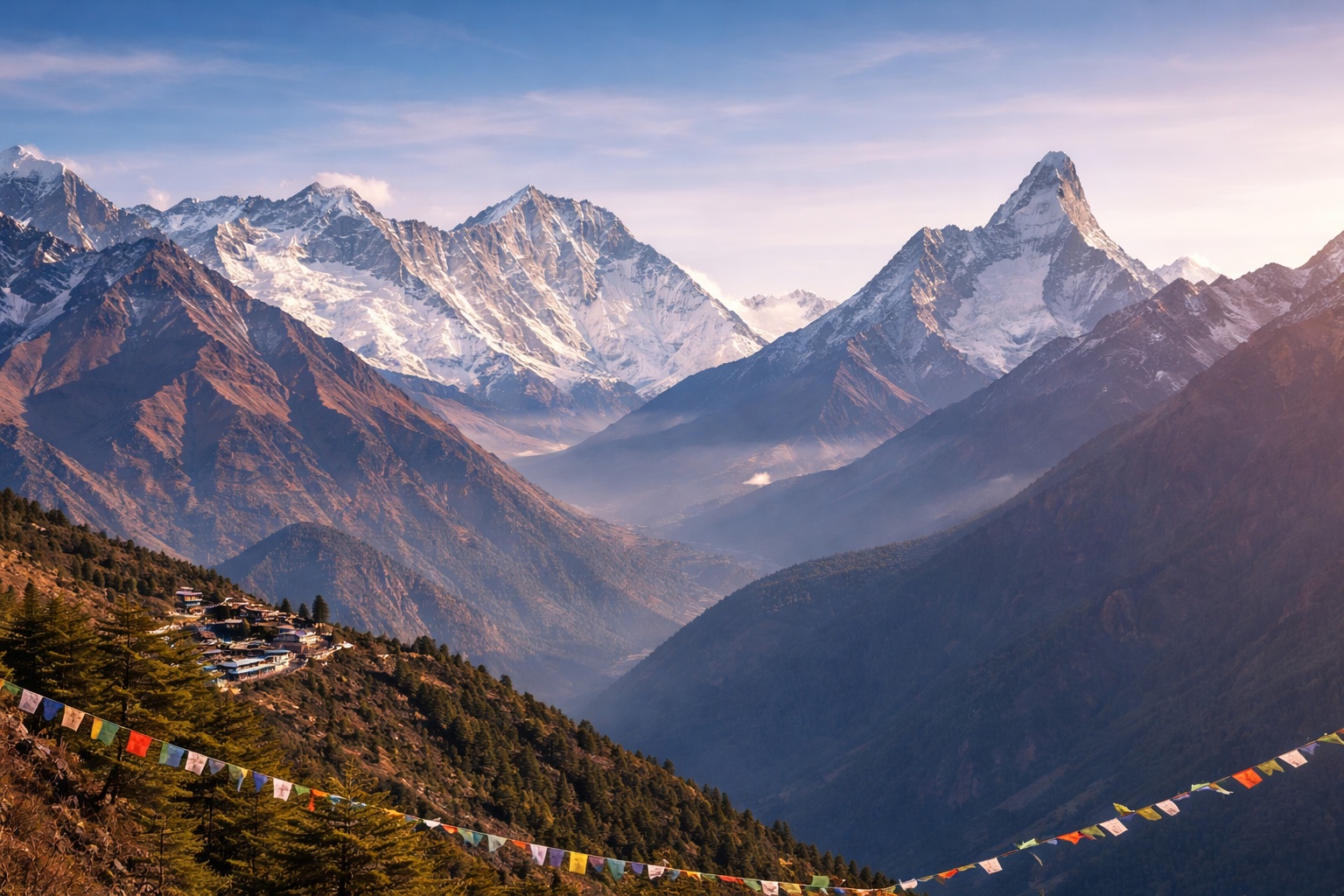
Overview: Can I Trek Alone in Nepal?
Solo trekking in Nepal is possible, widely practiced, and for the right person on the right route, one of the most rewarding forms of independent travel available anywhere in the world. The Himalayas' combination of accessible teahouse infrastructure, well-marked trails, and the genuine hospitality of Nepali mountain communities makes solo trekking here more comfortable and less isolated than solo trekking in comparable remote mountain regions elsewhere.
That said, solo trekking in Nepal is not without genuine risk - altitude sickness, weather, trail accidents, and navigation errors in poor conditions are real hazards that a solo trekker must manage without on-the-ground support. The decision to trek alone versus with a guide or group involves honest assessment of experience, risk tolerance, budget, and the specific route planned. This guide covers the practical realities without either discouraging solo trekking or minimising its genuine challenges.
The 2023 Guide Mandate
In April 2023, the Nepal government announced a mandatory guide regulation for all trekking in Nepal - requiring all foreign trekkers to hire a licensed guide. The regulation was announced as a safety measure following several trekker disappearances and deaths on unsupported solo treks in the preceding years.
The practical implementation of this regulation has been inconsistent. As of 2024 - 2025:
- The regulation is technically in effect and may be referenced by permit offices and checkpoints
- Enforcement on the main routes (EBC, Poon Hill, Annapurna Circuit, Langtang) has been minimal - many independent trekkers continue to complete these routes without guides without issue
- Restricted area routes (Upper Mustang, Manaslu, Kangchenjunga, Dolpo) already required mandatory guides before 2023 and these requirements are strictly enforced
- The regulation is more consistently applied at permit checkpoints and national park entries where rangers have discretion to require documented guide employment
The most current and authoritative guidance: check directly with your Nepal trekking agency or the Nepal Tourism Board before departure, as enforcement may change. The safest approach for avoiding regulatory complications: hire a guide, even if only for the permit documentation purposes.
The regulation's practical effect on the ground has been to create a new service category: "permit guide" - local guides hired specifically to fulfill the documentary requirement at checkpoints rather than as full-service mountain guides. These permit guides cost USD 15 - 25 per day and accompany the trekker nominally while experienced independent trekkers continue to navigate their own route.
Best Routes for Solo Trekking
The following routes are historically the most practical for solo independent trekking in Nepal - well-marked, frequently walked, with reliable teahouse infrastructure and good emergency access:
- Poon Hill Trek (4 - 5 days): Nepal's most beginner-friendly route - the trail is impossible to lose, teahouses are every 1 - 2 hours of walking, and the Birethanti - Ghorepani corridor is Nepal's highest-traffic trekking route by volume. Solo trekkers have the most contact with other trekkers here of any Nepal route.
- Langtang Valley (7 - 9 days): Clear trail from Syabrubesi to Kyanjin Gompa with villages at regular intervals and frequent fellow trekkers. The Langtang valley is especially appropriate for experienced solo trekkers who want more remoteness than Poon Hill but less altitude commitment than EBC.
- EBC route (12 - 14 days): The world's most-walked high-altitude trail - hundreds of trekkers daily during October. Solo trekking the EBC is structurally safer than it sounds because the density of other trekkers, teahouse owners, and guides on the route means a solo trekker in distress is rarely more than 30 minutes from assistance.
- Helambu Circuit (5 - 7 days): Nepal's closest circuit to Kathmandu - suitable for first-time solo trekkers who want a short, low-altitude introduction to the teahouse system without committing to a high-altitude route.
Routes not recommended for solo trekking: Manaslu Circuit (mandatory guide anyway), Upper Mustang (mandatory guide), Dolpo (mandatory guide), Kangchenjunga (mandatory guide), and any high-altitude technical passes (Cho La glacier, Larkya La in winter) where navigation error has serious consequences.
Safety Considerations for Solo Trekkers
The genuine risks that solo trekkers must manage independently:
- Altitude sickness without a spotter: A guide monitors a trekker's symptoms and behaviour and can identify early AMS signs that the trekker themselves may not notice (personality changes, unsteady gait, slow responses). A solo trekker must be scrupulously self-aware and more conservative about ascent rates to compensate for the absence of an external observer. The Himalayan Rescue Association clinics at Pheriche (EBC) and Manang (Annapurna Circuit) are the substitute for this assessment function.
- Navigation in poor visibility: The main EBC and Annapurna Circuit trails are impossible to lose in good weather. In cloud, snow, or fog - all possible above 4,000 m even in October - the trail can disappear or become confusing at junctions. Carry offline GPS maps (Maps.me or Gaia) as a navigation backup.
- Medical emergency without assistance: A guide can carry a trekker, organise emergency evacuation, and communicate with local authorities in Nepali. A solo trekker who rolls an ankle at 5,000 m is in a significantly more precarious position than a trekker with a guide. Travel insurance with satellite communication (Garmin inReach or SPOT messenger) and helicopter evacuation coverage mitigates but does not eliminate this risk.
- Trail crime: Extremely rare on the main trekking routes but not non-existent. Petty theft from teahouse rooms (opportunistic, not violent) is the most common issue. Violent crime against trekkers is statistically very rare in Nepal's trekking areas. However, off-trail or very remote sections carry higher risk - stay on the main trail and inform your teahouse where you are going each day.
Cost: Solo vs Guided Trekking
| Cost Category | Independent Solo Trekker | With Guide + Porter |
|---|---|---|
| Accommodation (14 nights) | NPR 10,000 - 18,000 | NPR 10,000 - 18,000 (same) |
| Meals (14 days) | NPR 20,000 - 30,000 | NPR 20,000 - 30,000 (same) |
| Permits | NPR 5,000 - 7,000 | NPR 5,000 - 7,000 (same) |
| Guide fee (14 days) | - | USD 400 - 700 (NPR 55,000 - 95,000) |
| Porter fee (14 days) | - | USD 280 - 420 (NPR 38,000 - 58,000) |
| Total (14-day EBC) | USD 350 - 500 | USD 1,000 - 1,600 |
The cost difference is significant - a guide and porter approximately doubles the daily cost of a Nepal trek. For budget-conscious trekkers, the cost saving of solo independent trekking is the primary motivation. The economic trade-off: solo trekkers carry their own pack (physically harder), navigate independently (mentally more demanding), and manage all logistics themselves (practically more complex) in exchange for saving USD 600 - 1,000 on a 14-day trek.
Women Trekking Solo in Nepal
Solo trekking for women in Nepal is significantly more common and safer than the general perception suggests. The main trekking routes (EBC, Poon Hill, Langtang, Annapurna Circuit) have been walked solo by women for decades and continue to be walked by hundreds of solo female trekkers every season. Nepal is consistently rated among the safer countries in Asia for female solo travelers.
Practical observations from women who have solo trekked Nepal:
- Harassment is significantly less common than in other South Asian trekking destinations - the mountain communities (Sherpa, Gurung, Tamang) have relatively more equitable gender traditions than some lowland Nepal communities
- Teahouse owners are generally protective of solo female trekkers - informally checking on them and offering advice on trail conditions
- Hiring a local female guide (available through Empowering Women of Nepal and similar organisations) provides both safety and a culturally enriching perspective unavailable to male-only guided groups
- The most consistently reported challenge is unwanted attention from other male trekkers rather than from local Nepali men - the same as in most international trekking environments
For women solo trekking: carry a satellite communicator, share daily plans with your teahouse owner and a home contact, and trust your instincts about specific people or situations. The Khumbu and Annapurna main routes have the highest density of other trekkers and the most developed infrastructure - the best choices for a first Nepal solo experience.
Preparation for Solo Trekking
A solo trekker should be more prepared than a guided trekker - there is no guide to manage the gaps in knowledge or equipment:
- Navigation: Download offline maps (Maps.me Nepal; Gaia GPS) before departure. Practice using GPS navigation on local hikes before relying on it at altitude. Know the route stages and elevation profiles before starting.
- Altitude knowledge: Complete the HRA altitude education programme (online and at the Pheriche/Manang clinics). Understand AMS, HACE, and HAPE symptoms - your own and others'. Carry a pulse oximeter and know how to interpret readings.
- Communication: Purchase a Nepali SIM card on arrival (Ncell or NTC - available at Tribhuvan Airport) for cellular areas. Carry a Garmin inReach Mini or SPOT satellite communicator for non-cellular areas - the EBC route above Namche has inconsistent cellular coverage. Register with your home country's embassy in Kathmandu and share your itinerary with a reliable home contact.
- Medical kit: Carry a more comprehensive first aid kit as a solo trekker - including wound closure strips, splint material, and more thorough medication than a guided trekker needs.
- Emergency plan: Know the HRA clinic locations, the helicopter evacuation contact numbers (H2O, Fishtail Air), and the process for emergency evacuation before you need it.
The Social Dimension of Solo Trekking
One of solo trekking's unexpected gifts in Nepal is the social richness it provides - the paradox of solo travel in the teahouse system is that trekkers are rarely alone for long. The communal dining rooms of Nepal's teahouses are naturally social spaces where trekkers from different countries, ages, and backgrounds share tables, exchange route information, and form the temporary communities that many trekkers cite as among the most memorable parts of their Nepal experience.
Solo trekkers often find they cover ground faster than groups, have more spontaneous conversations with local Sherpa and Gurung families (without a guide acting as intermediary), and develop a more intimate connection with the landscape when their attention is not shared with a group's logistics. The introversion or independence that might drive the choice to trek solo is often expressed differently in Nepal - the environment naturally creates conversation and connection even for the most self-contained trekker.
Frequently Asked Questions
- Is solo trekking in Nepal legal?
- The 2023 Nepal government guide mandate technically requires all foreign trekkers to hire a licensed guide. Enforcement has been inconsistent on the main routes (EBC, Annapurna Circuit, Poon Hill, Langtang) through 2024. Restricted area routes (Upper Mustang, Manaslu, Kangchenjunga) already required mandatory guides and enforce this strictly. Check current enforcement status with a Nepal travel specialist before departure - the regulation's implementation may change.
- Is Nepal safe for solo trekkers?
- Nepal is one of the world's safer destinations for solo trekking on the main routes. The primary risks are natural hazards (altitude, weather, trail conditions) rather than personal security threats. Violent crime against trekkers is extremely rare; petty theft from teahouse rooms is the most common issue. The high trekker density on main routes (EBC, Poon Hill) means assistance is rarely far away. Remote routes and off-trail areas carry higher risk - solo trekking genuinely remote routes is not recommended for inexperienced independent travelers.
- What is the best solo trekking route for beginners?
- The Poon Hill Trek (4 - 5 days from Nayapul) is the best route for first-time solo trekkers in Nepal - the trail is clearly marked, teahouses are every 1 - 2 hours of walking, the maximum altitude is 3,210 m (mild altitude risk), and the route is the most heavily trafficked trail in Nepal. The Langtang Valley (7 - 9 days) is the best intermediate option for solo trekkers wanting more immersion with slightly less traffic.
- Can I hire a porter without a guide?
- Yes - hiring a porter without a guide is possible and common. Porters carry the main pack (up to 25 - 30 kg) at daily rates of NPR 1,200 - 2,000 and typically walk faster than trekkers. They do not provide guiding, interpretation, or altitude monitoring - but they significantly reduce the physical burden of solo trekking while keeping costs lower than a full guide hire. Hire porters through local agencies in Kathmandu or at the trailhead village to ensure fair wages and insurance coverage.
- What technology should solo trekkers carry?
- The most important solo trekker technology stack: (1) Garmin inReach Mini or SPOT satellite communicator - for emergencies above cellular coverage; (2) Offline maps on phone (Maps.me Nepal, Gaia GPS); (3) Pulse oximeter for altitude monitoring; (4) 20,000 mAh power bank; (5) Nepali SIM card for areas with cellular coverage. The satellite communicator is the single most important solo safety item - if you fall or have a medical emergency in a remote area, it is the difference between a successful rescue and a tragedy.
- How do I find trekking partners in Nepal if I want to solo but want company sometimes?
- The teahouse system naturally creates trekking communities - solo trekkers frequently meet in teahouse dining rooms and join forces for a few days before splitting again. Kathmandu's Thamel has several dedicated trekker message boards and hostel common areas where solo trekkers find partners before starting routes. Online platforms (Lonely Planet Thorn Tree, r/Nepal on Reddit, Facebook Nepal trekking groups) have active communities of solo trekkers seeking companions. The EBC route is the easiest route to find impromptu trekking companions - the trail density is high enough that a solo trekker rarely walks a full day without company.
- Is the EBC trek safe to do solo?
- The EBC route is one of the world's most heavily walked high-altitude trails - hundreds of trekkers, guides, porters, and teahouse staff are present at all major stopping points daily during October. The trail is clearly marked and impossible to lose in good weather. The primary risk for solo EBC trekkers is altitude illness without a guide's symptom monitoring - this risk is managed by following the acclimatisation schedule conservatively, using a pulse oximeter, attending the HRA clinic talk at Pheriche, and being willing to descend proactively if symptoms develop without a guide to prompt the decision.
- Do solo trekkers pay more for teahouses?
- The standard teahouse pricing is per room, not per person - a solo trekker pays the same room rate as a couple using the same room. Meals are priced per dish regardless of group size. The economics are neutral for accommodation; the only per-person cost premium for solo trekkers is on tours and vehicle hires where group members share costs. The overall budget for a solo trekker is lower than for a group with guide and porter, not higher.
- How do I communicate in emergency situations without a guide's Nepali?
- English is widely understood in the tourism industry throughout the Nepal trekking routes - teahouse owners, most police officers at checkpoints, and HRA clinic staff all speak functional English. Google Translate's Nepali offline translation works for basic communication. The key emergency phrase in Nepali: "Malai doctor chahincha" (I need a doctor), "Helicopter chahincha" (I need a helicopter), "Arko manchhe bimar cha" (Another person is sick). The satellite communicator (Garmin inReach) supports two-way text messaging with your home contact who can coordinate rescue from outside Nepal.
- What is the main difference in experience between solo and guided trekking?
- A guide provides: (1) Altitude health monitoring by an experienced observer; (2) Cultural interpretation and language mediation; (3) Local knowledge of trail conditions, teahouse quality, and weather patterns; (4) Emergency management capability; (5) Logistical management freeing mental energy for the experience. Solo trekking provides: (1) Complete control of pace and daily schedule; (2) More direct interaction with local communities (no intermediary); (3) Significantly lower cost; (4) The psychological rewards of self-reliance in a challenging environment. Neither is objectively better - the choice depends on the individual trekker's experience level, risk tolerance, budget, and what kind of experience they seek.
Recent Posts