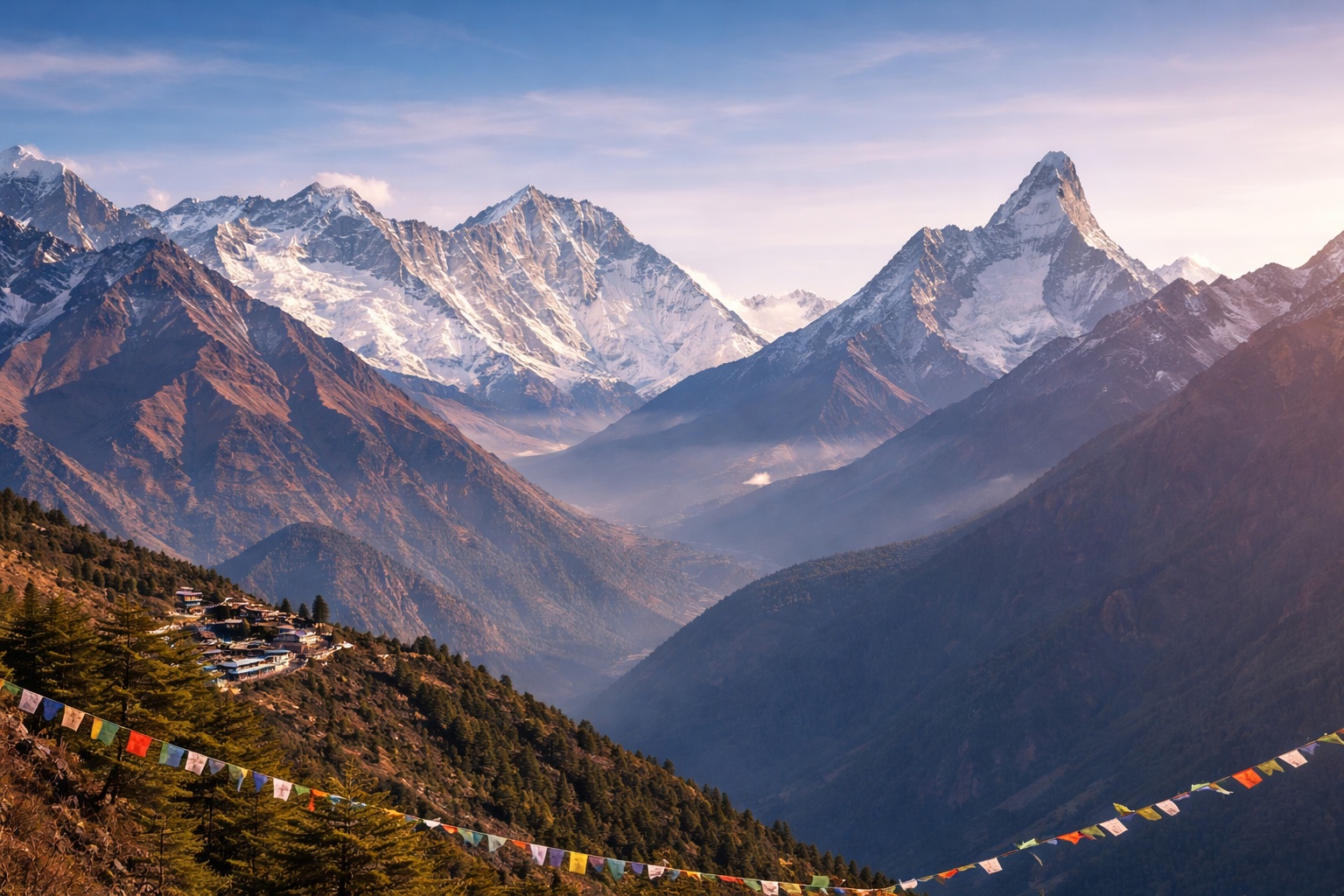
Overview of Samdo
Samdo (3,875 m) is a small Tibetan-culture village in the upper Budhi Gandaki valley on the Manaslu Circuit trek - a herder and trader community that has historically maintained ties with Tibet through the nearby border crossing. The village sits in the wide upper valley above Lho and Shyala, where the Budhi Gandaki narrows as it descends from the glaciers near the Nepal-Tibet border. Samdo is the designated acclimatisation stop before the Larkya La pass crossing (5,160 m) - the high point of the Manaslu Circuit and one of Nepal's most dramatic mountain passes.
Samdo has expanded from a small seasonal herding camp to a functioning trekker village with teahouses over the past two decades, driven entirely by the growth of the Manaslu Circuit as a popular high-altitude circuit alternative to the Annapurna Circuit. The resident population is small - 40 - 60 people - but the teahouse infrastructure for trekkers is adequate for the volume passing through during the October - November and March - May seasons.
Position on the Manaslu Circuit
On the standard Manaslu Circuit itinerary (clockwise from Soti Khola), Samdo is reached on Day 9 or 10 - arriving from Lho (3,180 m) or Shyala (3,500 m) through the upper Nubri valley. The day after Samdo, trekkers typically move to Dharamsala (Larkya Phedi, 4,460 m) - the final teahouse before the pass. Samdo itself is 2 days before the Larkya La summit (from Dharamsala, the pass crossing to Bimthang on the far side is a single very long day of 8 - 10 hours).
The Manaslu Circuit itinerary positioning of Samdo:
- Day before Samdo: Shyala (3,500 m) or Lho (3,180 m)
- Samdo (Day ~10, 3,875 m): Rest/acclimatisation day recommended here
- Day after Samdo: Dharamsala / Larkya Phedi (4,460 m) - 3 - 4 hours, short day deliberately
- Pass crossing day: Dharamsala → Larkya La (5,160 m) → Bimthang (3,720 m): 8 - 10 hours
The rest day in Samdo is specifically used for altitude acclimatisation before the rapid ascent to Dharamsala (4,460 m) and the pass (5,160 m). Skipping the Samdo rest day increases the risk of AMS on the Larkya La crossing - the pass day involves gaining 700 m from Dharamsala at 4,460 m to the summit at 5,160 m before descending to 3,720 m, all in a single very strenuous day.
Near the Tibet Border
Samdo's location in the upper Nubri valley puts it within 10 - 15 km of the Nepal-Tibet border. Historically, Samdo and the nearby village of Nubri were active trading communities with Tibet - salt, wool, and grain moving across the high passes (the Larkya La and secondary passes) between the two sides. This trade diminished significantly after the 1959 Tibetan uprising and Chinese border restrictions, but the cultural imprint remains: the Tibetan Buddhist character of Samdo's gompa, the Tibetan dialect spoken by older residents, and the distinctive architecture (flat-roofed stone houses, carved prayer stones) all reflect this cross-border heritage.
A short day hike from Samdo toward the border valley (northeast) reaches the high grazing meadows above the village and provides views toward the Manaslu massif and the high ridges on the Tibet border. This walk is the standard acclimatisation hike during the Samdo rest day - ascending to 4,200 - 4,400 m and returning.
Acclimatisation Rest Day at Samdo
The recommended acclimatisation activity at Samdo is the hike to the valley above the village toward the ridge at 4,200 - 4,500 m. This acclimatisation hike:
- Gains 325 - 625 m above Samdo in open terrain
- Provides views of Manaslu (8,163 m) to the south and the high Nubri-Tibet border peaks
- Takes 3 - 4 hours round trip at altitude
- Does not require a guide (the valley is straightforward to navigate)
The "climb high, sleep low" principle applies: ascending to 4,400 m during the day, returning to sleep at 3,875 m prepares the body for the Dharamsala (4,460 m) and Larkya La (5,160 m) altitudes over the following two days.
Tibetan Culture in Samdo
Samdo is one of the most culturally Tibetan communities in Nepal - the Nubri sub-region of Gorkha District has maintained Tibetan Buddhist practice, language, and material culture more completely than many more accessible Himalayan communities. The village gompa (monastery) is the social and spiritual centre; prayer flags on the surrounding ridges, mani stone walls on the approach paths, and the sound of butter tea being prepared in the teahouse kitchens are the ambient texture of the place.
The teahouse food at Samdo reflects both the Tibetan character and the high-altitude limitations: tsampa (roasted barley flour), butter tea, thukpa (noodle soup), and momos are the staples alongside the standard trekker menu of dhal bhat, noodles, and fried rice.
Practical Information
- Altitude: 3,875 m (12,713 ft)
- Coordinates: 28.6833°N, 84.6167°E
- District: Gorkha, Gandaki Province
- Manaslu Conservation Area permit: NPR 3,000
- Restricted Area Permit (Manaslu): USD 100/week (Sept - Nov); USD 75/week (Dec - Aug)
- Licensed guide: Mandatory for Manaslu Circuit (Restricted Area requirement)
- Days from Soti Khola (circuit start): 9 - 10 days
- Walking time to Dharamsala (next stop): 3 - 4 hours
- Accommodation: 4 - 6 teahouses; NPR 500 - 900/night
- Best season: October - November; March - May
- Temperature (October): -2°C to 10°C day; -10°C night
Recent Posts