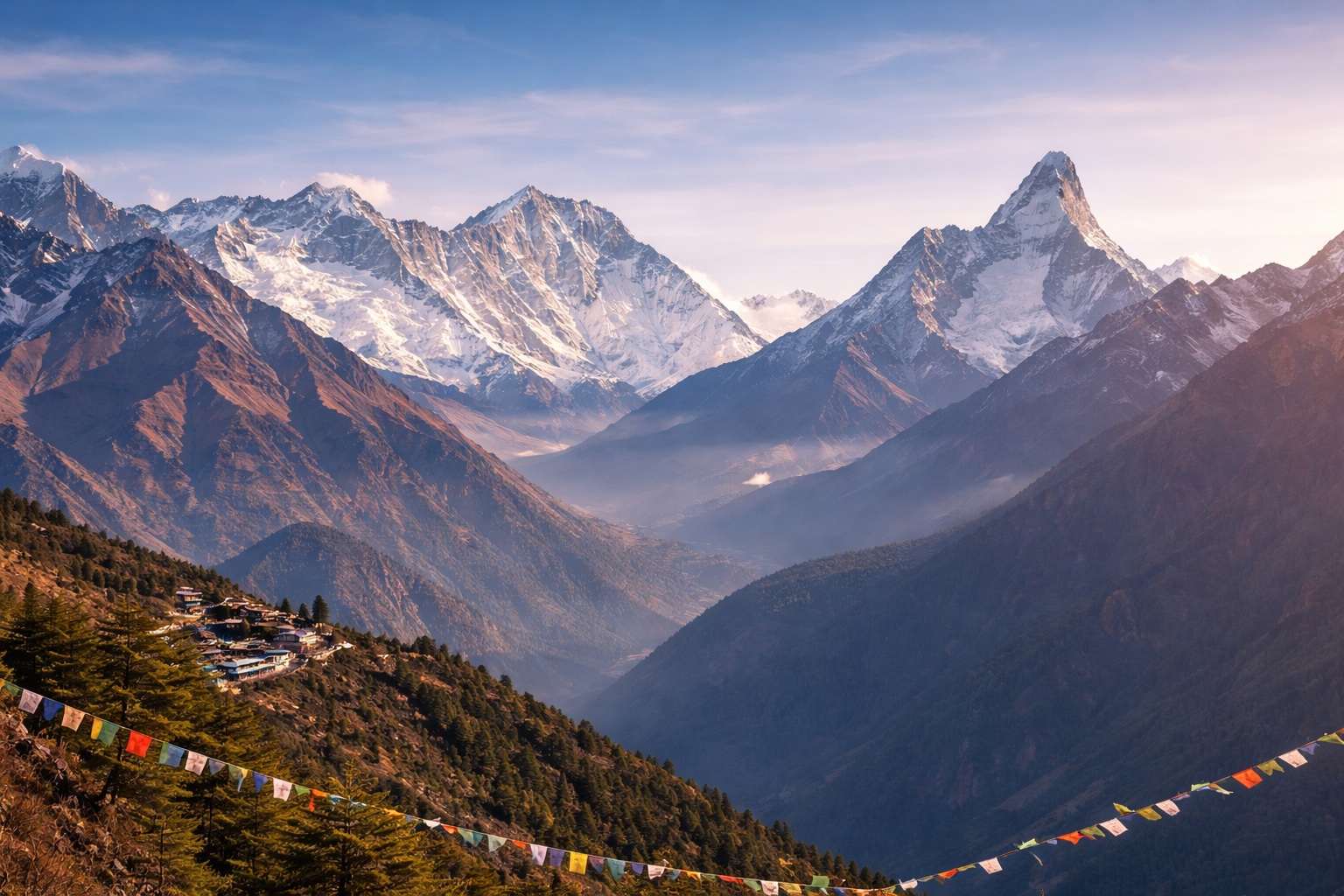
Why Responsible Trekking Matters
Nepal receives approximately 300,000 - 500,000 trekkers per year on its mountain trails. The cumulative impact of this number of visitors - each one generating waste, consuming resources, and interacting with local communities and ecosystems - is significant and measurable. The Khumbu region, which receives the largest share of trekkers, has documented problems with trail erosion, firewood depletion, plastic waste, and social change driven by the disproportionate economic influence of tourism.
Responsible trekking is not about guilt - it is about making choices that mean the mountain landscapes and communities you came to experience remain intact for future trekkers. The practices are straightforward; the commitment is the difference between a trekker who contributes to sustainable mountain tourism and one who doesn't.
Waste and Plastic on the Trail
Plastic waste on Nepal's mountain trails is one of the most visible environmental problems in the trekking industry. At lower altitudes, waste collection infrastructure exists in villages. Above 4,000 m, waste removal requires helicopter or porter carry-out - expensive and logistically complex. The result: plastic bottles, food wrappers, and packaging accumulate at high altitude teahouses and in the valleys below popular campsites.
Practical Waste Rules
- Carry a reusable water bottle and purification method: Refusing single-use plastic water bottles at altitude is the single most impactful waste reduction choice you can make. Carry a 1L stainless or BPA-free bottle and purify stream or teahouse water with a SteriPen, tablets, or boiled water.
- Pack out all non-biodegradable waste: Every food wrapper, packaging item, and used battery should come back down with you. Your pack weight decreases as you eat food; use this space for waste.
- Use teahouse bins where they exist: Below 4,000 m, most teahouses have waste systems. Above 4,000 m, assume the teahouse cannot manage your waste and carry it out.
- Do not burn non-biodegradable waste: Burning plastic, foil, and composite packaging at altitude releases toxic compounds. Do not encourage teahouse owners to burn your waste, even if offered.
- Limit snack packaging: Choose snacks in simple recyclable packaging over heavily wrapped single-serving items. Buy bulk nuts and dried fruit in Kathmandu before the trek rather than individually wrapped bars from altitude teahouses.
Water and the Plastic Bottle Problem
Single-use plastic water bottles are the biggest per-trekker waste contribution on Nepal's mountain trails. A trekker on a 16-day EBC trek consuming 3 litres of bottled water per day produces 48+ plastic bottles - bottles that at altitude above Namche have no economical disposal route.
Safe water alternatives are widely available on Nepal's major trails:
- Boiled water at teahouses - typically free or NPR 30 - 50 per litre
- Filtered water stations at Namche Bazaar (3,440 m) and several other points on the main routes - NPR 50 - 100 per litre from certified filtration systems
- UV purification (SteriPen) of stream or tap water - effective in 45 - 90 seconds for clear water
- Chemical purification tablets (chlorine dioxide) - lightweight, inexpensive, effective
The Sagarmatha Pollution Control Committee (SPCC) has banned the sale of single-use plastic water bottles above Namche Bazaar since 2019. The rule is not universally enforced but represents the direction of travel. Support it by not purchasing plastic bottles above this point regardless of availability.
Porter Welfare: The Foundation of Responsible Trekking
Nepal's trekking porter workforce - approximately 50,000 - 80,000 individuals working seasonally on the mountain trails - are the least visible and most economically vulnerable participants in the trekking industry. They carry loads of 25 - 35 kg over high mountain passes in all weathers, often without appropriate equipment, insurance, or the ability to refuse work in unsafe conditions.
Your Responsibility as a Trekker
- Pay the correct wage: The minimum wage for a trekking porter is set by the Nepal government. Daily wage rates (as of 2024 - 2025): NPR 1,200 - 1,800 for low-altitude porters; NPR 1,800 - 2,500 for high-altitude porters above 4,000 m. Book through agencies that pay and demonstrate these rates.
- Provide adequate equipment: If you are hiring porters directly (without agency support), ensure they have adequate clothing, footwear, and shelter for the altitude you are asking them to work at. A porter in flip-flops carrying your bag over a 5,000 m pass is not an acceptable situation.
- Do not overload: The standard maximum porter load is 30 kg. Do not ask porters to carry more. Pack light.
- Tip generously: A tip of USD 5 - 10 per day for your porter is meaningful income. On a 16-day trek, USD 80 - 160 in tip represents a significant supplement to their seasonal wage. Tip in cash at the end of the trek.
- Insist on porter insurance: Reputable agencies carry porter insurance covering medical evacuation and accidents. Ask specifically whether your porter is insured when booking through an agency.
The International Porter Protection Group (IPPG) has established a set of standard guidelines for porter welfare - agencies that display IPPG membership or affiliation are committed to these standards. Ask your agency about their IPPG status.
Hiring Local Guides
Using a licensed local guide is one of the highest-impact responsible trekking choices you can make. A local guide means:
- Direct economic benefit to the mountain community - a Tamang guide from Langtang, a Sherpa guide from the Khumbu, a Gurung guide from the Annapurna area
- Cultural knowledge transfer - local guides provide insights into the communities, traditions, and landscape that foreign guides or self-guided trekking cannot deliver
- Support for the professional guiding industry - licensed guides have invested in training and certification; hiring them sustains the industry standard
Choose guides through registered Nepali trekking agencies rather than booking through foreign booking platforms that take high commissions. The agency fee goes directly to the local economy; a foreign platform's commission does not.
Environmental Practices on the Trail
- Stay on the trail: Leaving the marked trail damages fragile alpine vegetation and increases erosion. In the Khumbu's high terrain above 4,500 m, revegetation after disturbance takes decades.
- Do not pick flowers or plants: Mountain wildflowers - including Nepal's 30+ rhododendron species - are under collection pressure from trekker traffic. Leave them in place.
- Use toilet facilities at teahouses: Do not defecate near streams, rivers, or on the trail. When no facilities are available, use a cat hole at least 60 m from water and 100 m from the trail. Pack out toilet paper - it does not biodegrade at altitude.
- Do not disturb wildlife: Maintain distance from wildlife (musk deer, Himalayan tahr, birds). Do not feed animals - human food changes wild animal behaviour and creates dependency that is ultimately harmful.
- Limit campfire use: In camping areas, use camp stoves rather than firewood where possible. The high-altitude forests of Nepal are slow-growing; firewood consumption by trekking parties has historically driven significant deforestation.
Cultural Responsibility
- Give gifts thoughtfully: The tradition of giving sweets, pens, or small gifts to village children creates begging behaviour and disrupts local social dynamics. If you want to contribute to children's education or wellbeing, donate through a registered NGO or directly to a school - not through sweets given on the trail.
- Do not photograph without permission: People in religious activity, festivals, or daily private life are not tourist attractions. Ask before photographing.
- Support local businesses: Buy your souvenirs, food, and services from local producers rather than tour operator shops or foreign-owned businesses. The economic multiplier of money spent in a local teahouse is higher than money spent in a Kathmandu chain.
- Dress and behave respectfully at religious sites: See the cultural etiquette guide for specifics - the principle is to observe the local religious standards of the community you are a guest in.
Where Your Money Goes
The structure of your trekking spend determines how much of the economic benefit of tourism reaches mountain communities. A trekker who books through a Kathmandu-based Nepali agency, hires a local guide and porter, eats at family-run teahouses, and buys souvenirs at village markets generates economic activity that stays largely in the mountain economy. A trekker who books through a foreign operator using foreign guides and staying in foreign-owned lodges generates a fraction of the same local economic benefit.
The most directly beneficial trekking economy model: book a licensed Nepali trekking agency; hire a certified local guide; hire a local porter; eat at family teahouses; and tip both guide and porter at the fair rate. This maximises the economic benefit to mountain communities relative to your total spending.
Choosing Responsible Agencies
Look for trekking agencies with the following characteristics:
- Registered with the Nepal Tourism Board (NTB) and Trekking Agencies' Association of Nepal (TAAN)
- Membership in or compliance with the International Porter Protection Group (IPPG) guidelines
- Transparent documentation of guide and porter wages and insurance
- Commitment to waste management practices (no single-use plastics, waste carry-out policy)
- Local employment: guides and support staff from the communities the routes pass through
View Himalaya operates as a Nepali-owned and locally-operated agency with licensed guides, appropriate porter welfare standards, and community-connected operations on all major trekking routes. Supporting locally-owned operations is the most direct expression of responsible tourism in Nepal.
Recent Posts