Why Poon Hill?
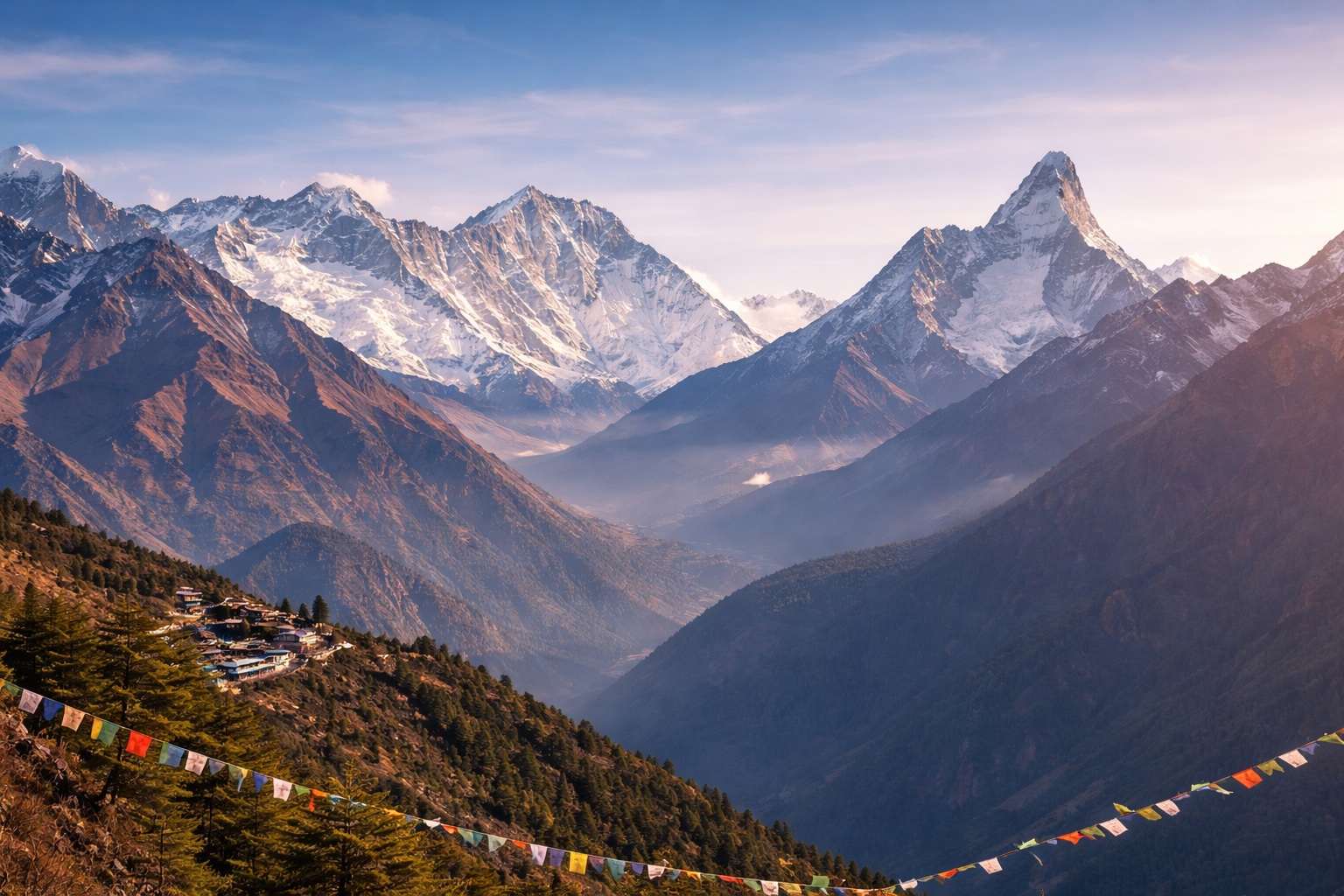
Poon Hill (3,210 m) is Nepal's most iconic short trek - the 4-5 day route through the Ghorepani village on the southern flanks of the Annapurna range that delivers one of the finest mountain panoramas in the Himalayas to trekkers with relatively modest physical preparation. The viewpoint at the top of Poon Hill at sunrise commands a 180° sweep from Dhaulagiri (8,167 m) in the west through the full Annapurna range (Annapurna I at 8,091 m, Annapurna South, Annapurna II, Annapurna III, Annapurna IV, Annapurna Fang) to Machhapuchhre (6,993 m) and Lamjung Himal in the east. Prayer flags frame the summit, the morning sky is turning from indigo to orange, and below the viewpoint the Pokhara valley and Phewa Lake are still in pre-dawn darkness. It is one of Nepal's defining experiences.
The Poon Hill trek is accessible to fit beginners - the maximum altitude of 3,210 m carries low AMS risk for otherwise healthy people, the trail is well-marked and well-served by teahouses, and the daily walking stages are manageable (5 - 9 km / 4 - 6 hours). It is Nepal's entry-level Himalayan experience and it over-delivers.
Route Overview
The standard Poon Hill route starts and ends in Nayapul (1,070 m), approximately 42 km from Pokhara by road (1 hour by vehicle). The circuit moves clockwise: up the Modi Khola valley to Tikhedhunga, then the famous "3,000 stone steps" ascent to Ulleri (1,960 m), continuing through rhododendron forest to Ghorepani (2,850 m), up to Poon Hill for sunrise, then down through Tadapani (2,590 m) and Ghandruk (1,940 m) to Nayapul.
The route passes through a rhododendron forest that is spectacular in March - April when the red, pink, and white flowers are in full bloom - the trail between Nayapul and Ghorepani passes through some of the densest rhododendron forest accessible in Nepal at this altitude.
Day-by-Day Itinerary
| Day | Route | Duration | Altitude |
|---|---|---|---|
| Day 1 | Pokhara → Nayapul (road) → Tikhedhunga | 3 - 4 hrs walk | 1,495 m |
| Day 2 | Tikhedhunga → Ulleri → Ghorepani | 5 - 6 hrs | 2,850 m |
| Day 3 | Poon Hill sunrise (04:30 departure) → Tadapani | 3 hrs to hill; 4 hrs to Tadapani | 3,210 m then 2,590 m |
| Day 4 | Tadapani → Ghandruk → Nayapul → Pokhara | 5 - 6 hrs walk + 1 hr drive | 1,940 m then 1,070 m |
Extended 5-day variation: Add a night in Ghandruk on Day 4 (rather than completing the full descent to Nayapul) for a more relaxed pace and time to explore Ghandruk's traditional Gurung village. This is particularly recommended for families or less experienced trekkers.
The Poon Hill Sunrise Experience
The Poon Hill sunrise is one of the most visited viewpoints in Nepal, and the pre-dawn procession of trekkers ascending by headlamp from Ghorepani has become its own spectacle. This does not diminish the experience - the sunrise itself is genuinely extraordinary regardless of how many other people are watching it.
The protocol: wake at 04:00, depart by 04:30 (the hill is a 45 - 60 minute steep ascent from Ghorepani). Arrive at the viewpoint by 05:15 - 05:30, positioned before the other trekkers crowd the main platform. Sunrise typically occurs at 05:45 - 06:15 depending on season. The sunrise in October (Nepal's prime season) produces the sharpest air and the most vibrant alpenglow - the mountains turn from silhouette to gold to white in a sequence of light changes that compress 20 minutes of dawn into an unforgettable panorama.
After sunrise, explore the smaller secondary viewpoints on the Poon Hill ridge away from the main platform - these are less crowded and provide slightly different angles on the panorama. Return to Ghorepani for a full breakfast before the day's onward trek.
Difficulty and Fitness
The Poon Hill trek is classified as moderate. The specific demands:
- The Ulleri stone steps (Day 2): Approximately 3,000 stone steps over 1,500 vertical metres from Tikhedhunga to the ridge above Ulleri. This is the hardest single section of the route - steep, sustained, and done with a loaded daypack. It takes 2 - 3 hours. Trekkers without prior hill fitness find this challenging; with pole support and a slow steady pace, it is manageable for most reasonably fit adults.
- Daily elevation gain: 500 - 800 m per day on the ascent stages. Daily walking time 4 - 6 hours.
- Altitude: Maximum 3,210 m. AMS risk is low at this altitude; mild headache is possible on the night at Ghorepani (2,850 m) for some individuals. Drink plenty of water and descend if symptoms worsen.
Suitable for: Fit adults with no prior trekking experience; children aged 8 and above; people in their 60s and 70s with regular fitness; first-time Himalayan trekkers. The teahouse infrastructure means no camping equipment or cooking skills are needed.
Permits and Costs
- Annapurna Conservation Area Permit (ACAP): NPR 3,000 per person (approximately USD 23). Purchase in Pokhara at the ACAP office in Lakeside or at the Bhulbhule checkpoint on the trail.
- TIMS card: USD 10 (through a trekking agency) or USD 20 (independent). Purchase in Kathmandu or Pokhara.
- Teahouse accommodation: NPR 200 - 600 per night (teahouses typically provide free or cheap rooms if you eat meals there)
- Meals: NPR 800 - 1,500 per day (all meals at teahouses)
- Guide (optional): USD 30 - 35/day; a guide is not legally required on this route but is recommended for first-time trekkers
- Porter (optional): USD 20 - 25/day
- Nayapul transport (Pokhara ↔ Nayapul): NPR 600 - 800 by shared taxi or NPR 2,000 - 2,500 for private vehicle
Best Season for Poon Hill
- October - November (Autumn): Best overall. Crystal clear skies, maximum visibility, good temperatures (5 - 20°C at Ghorepani), rhododendron foliage turning. The busiest season but the clearest mountain views. October is peak.
- March - April (Spring): Rhododendron in full bloom - the trail from Ghorepani through the forest is extraordinary. Some afternoon cloud possible. Good temperatures. Second busiest season.
- December - February (Winter): Cold at Ghorepani (can reach -10°C at night); possible snow on the hill; smaller crowds; clear mountain air. The snow-covered Poon Hill summit makes for beautiful photographs. Bring adequate warm clothing.
- May - September (Monsoon): Heavy rain and leeches on the lower trail; mountain views obscured. Not recommended for first visits.
Teahouses on the Poon Hill Route
The Poon Hill route has one of the most developed teahouse networks in Nepal. Every major stop has multiple teahouses with private rooms, hot showers (solar or gas), Wi-Fi (inconsistent but available at most), and charging facilities. The teahouses at Ghorepani are the most established - several have been operating for 30+ years and maintain genuine quality. Accommodation costs at Ghorepani are slightly higher than lower on the trail (NPR 400 - 800 per room) due to the altitude and the peak season demand.
Recommended teahouses: Snowland Lodge and Restaurant (Ghorepani), Dhaulagiri Lodge (Ghorepani), and Sanctuary Lodge (Tadapani) are consistently well-reviewed. Book in advance through your trekking agency in October when rooms fill within weeks of the Dashain/Tihar holiday period.
Essential Poon Hill Trek Tips
- Start early from Pokhara (Day 1): Depart Pokhara by 08:00 for Nayapul. This gives you a full afternoon to complete the Nayapul - Tikhedhunga stage without rush.
- The Ulleri steps (Day 2): Take it slow. The stone steps climb 1,500 m in approximately 5 km. There is no shortcut; rest every 200 steps if needed. Many trekkers find this the hardest day of their Nepal trip.
- Dress warmly for the sunrise: 05:00 at 3,210 m in October is -2°C to -8°C. Down jacket, hat, and gloves are essential. You'll sweat on the ascent and freeze standing still at the top.
- Bring cash: No ATMs on the route after Nayapul. Withdraw NPR in Pokhara. Budget NPR 3,000 - 4,000 per day for all on-trail expenses including accommodation, meals, and drinks.
- Anti-leech socks (monsoon/early autumn): If trekking in September - early October, leeches are active on the lower trail. Apply salt solution to shoes or use purpose-made leech socks in the lower forest sections.
Recent Posts