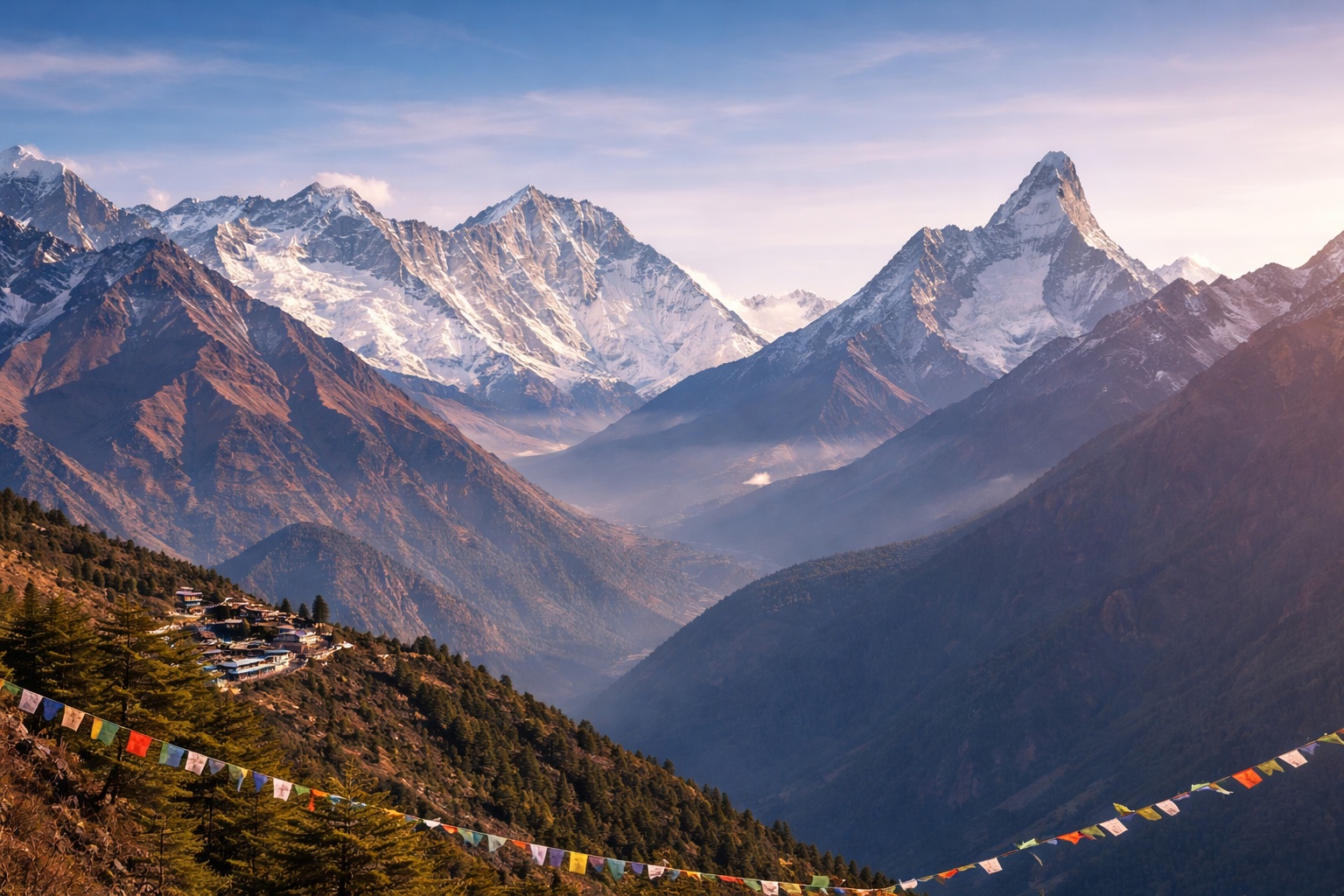
Why Pokhara
Pokhara is Nepal's second city and, for most travellers, the most beautiful - a lakeside town at 820 m set against a backdrop of eight peaks above 7,000 m, with the iconic triple summit of Machhapuchhre (Fishtail Mountain, 6,993 m) reflected in the stillness of Phewa Lake. Where Kathmandu is Nepal's ancient and political heart, Pokhara is its recreation and adventure centre: the launch point for Annapurna Circuit and Annapurna Base Camp treks, the site of the world's best paragliding conditions, and a place where the standard pace of Himalayan travel is replaced by lakeside restaurants and mountain panoramas at every turn.
The city has grown significantly since the 1970s when it was one of the first hippie trail destinations in Asia, but the essential character - calm lake, epic mountain backdrop, relaxed atmosphere - remains intact. Pokhara's new international airport (opened 2023) now receives direct international flights from several cities, making it easier to fly directly in rather than routing through Kathmandu.
Getting to Pokhara
By Air
Pokhara International Airport (PKR) - officially Gandaki Province Airport - opened its main runway in 2023 and receives both domestic and some international connections. From Kathmandu, Buddha Air, Yeti Airlines, and Nepal Airlines fly the 25-minute route frequently (multiple daily departures, USD 80 - 140 one way). The mountain views from the left-hand window seat on this flight - Ganesh Himal, Manaslu, the Annapurna range - are spectacular on a clear morning. Book the earliest flight to maximise the chance of clear mountain visibility before afternoon cloud builds.
By Tourist Bus
Tourist buses run from Kathmandu's Kantipath and Thamel area to Pokhara in 6 - 8 hours (USD 15 - 25). The Prithvi Highway crosses mid-hills scenery for most of the route. Departures are typically at 07:00 and 08:00; book the day before from any tourist agency in Thamel. The road journey is scenic but the highway has accident risk - private vehicle (hire car with driver) is safer and takes similar time.
Lakeside: The Heart of Pokhara
Pokhara's Lakeside district (Baidam) is the tourist hub - a 2 km stretch of restaurants, guesthouses, trekking agencies, equipment shops, and cafes along the eastern shore of Phewa Lake. The lake itself is 4.4 km long and up to 1.5 km wide - large enough to feel genuinely open, small enough to paddle across in 20 minutes. Rowing boats and kayaks are available for hire at NPR 300 - 600 per hour from the main ghat (boat dock).
The Tal Barahi Temple - a two-tiered pagoda on a small island in the lake - is reached by boat (NPR 100 each way) and is an active Hindu pilgrimage site. Morning visits when the island temple is freshly decorated with marigold offerings are particularly atmospheric. The World Peace Stupa (Shanti Stupa) on the ridge above the lake's southern shore is a 45-minute hike from the Damside waterfront or accessible by boat + 20-minute walk - the panoramic view of the lake and Annapurna range from the stupa is one of the finest viewpoints in the Pokhara valley.
Sarangkot Sunrise: The Annapurna Panorama
Sarangkot (1,592 m) is the ridge above the northern edge of Pokhara from which the most famous mountain panorama in Nepal is visible: the entire Annapurna range (Annapurna I at 8,091 m, Annapurna South 7,219 m, Annapurna II 7,937 m, Annapurna III 7,555 m, Annapurna IV 7,525 m), Dhaulagiri (8,167 m), Manaslu (8,163 m), and in the foreground the near-perfect pyramid of Machhapuchhre (6,993 m) - unclimbed and sacred.
Sunrise at Sarangkot transforms this view with alpenglow. The peaks turn from black silhouette to orange, pink, and gold in the 20 minutes from first light to full sun - one of the most photographed natural spectacles in Nepal. To reach Sarangkot for sunrise: take a taxi from Lakeside at 05:00 (NPR 800 - 1,200 one way), hike the 45-minute trail from the road end to the viewpoint, and arrive by 05:45 in autumn and winter. The viewpoint has chai vendors from 05:30.
Adventure Activities in Pokhara
Paragliding
Pokhara is one of the top paragliding destinations in the world - the combination of consistent thermal conditions rising off the Pokhara valley, the 1,592 m ridge at Sarangkot, and the 8,000 m backdrop make this a paragliding experience with no peer. Tandem flights (passenger + licensed pilot) launch from Sarangkot and land at the Phewa Lake waterfront - duration 30 - 60 minutes depending on conditions. Cost: USD 80 - 100 for a standard tandem flight. Flights run October through May; the best thermals develop between 09:00 and 14:00.
ZipFlyer Nepal
The ZipFlyer at Sarangkot is one of the world's longest and steepest zip-lines - 1.8 km in length with a 600 m vertical drop, reaching speeds of up to 120 km/h. The 90-second flight ends above the Phewa Lake shoreline. Cost: USD 65 - 75. Minimum weight 30 kg, maximum 120 kg. Book in advance during peak season as the 4-person simultaneous launch structure means a 1 - 2 hour wait during morning rush.
White Water Rafting
The Seti River north of Pokhara offers Class III - IV white water rafting accessible as a half-day excursion from Lakeside. The Kali Gandaki and Marsyangdi rivers to the north offer longer multi-day rafting expeditions for more serious white water experiences. Half-day Seti River rafting runs USD 35 - 50 per person from Pokhara, including transport and equipment.
Ultralight Flights and Microlights
Ultralight aircraft fly from Pokhara airport offering low-altitude mountain panorama circuits from 30 minutes (Annapurna overview, USD 100 - 140) to 90-minute extended flights toward the Annapurna Base Camp approach. A unique perspective on the mountains that even most trekkers never get.
Trekking from Pokhara
Pokhara is the gateway to the Annapurna Conservation Area - the most visited trekking region in Nepal. Major treks accessible from Pokhara:
- Annapurna Base Camp (ABC): 12 - 14 days return to 4,130 m. The Annapurna Sanctuary amphitheatre surrounded by six 7,000+ m peaks is one of the most dramatic trekking destinations in Asia.
- Annapurna Circuit: 14 - 21 days circumnavigation of the Annapurna massif; crosses the Thorong La pass (5,416 m); culturally rich Mustang-edge territory.
- Poon Hill (Ghorepani-Poon Hill): 4 - 5 days; maximum altitude 3,210 m; the most accessible high-altitude mountain panorama trek in Nepal. Suitable for fit beginners.
- Australian Camp / Annapurna Panorama: 1 - 4 days; up to 1,980 m. Half-day to multi-day options accessible directly from Pokhara by road + short hike. No altitude risk.
- Mardi Himal: 7 - 10 days to Mardi Himal High Camp (4,500 m) with close-range Machhapuchhre views; less crowded than ABC and Poon Hill.
Temples, Caves, and Culture
- Bindhyabasini Temple: The oldest and most important Hindu temple in Pokhara, on a hilltop above the old bazaar area. The festival of Dashain (October) is particularly active here.
- Gupteshwar Mahadev Cave: A sacred cave temple below the Davis Falls waterfall, with an underground tunnel leading to a Shiva shrine. Entrance NPR 100.
- Davis Falls (Patale Chhango): A waterfall that drops directly into an underground tunnel - the waterfall disappears underground through a rock gap. Most dramatic after the monsoon (August - September).
- International Mountain Museum: The most comprehensive mountain museum in Asia - exhibits on the first ascents of all 14 eight-thousanders, Nepal's trekking and mountaineering history, ethnic mountain cultures. Admission NPR 500. Worth 2 hours.
Food and Restaurants in Pokhara
Pokhara's Lakeside restaurant scene is diverse and good by any standard. Notable categories:
- Nepali cuisine: Dal bhat set meals are exceptional value (NPR 400 - 600 for unlimited refill). Momo restaurants along the Lakeside strip serve steamed and fried dumplings from NPR 200 a plate.
- Tibetan cuisine: Thukpa (Tibetan noodle soup), thenthuk (flat noodle soup), and shaptak (stir-fried yak meat) at several Tibetan-run restaurants in the northern Lakeside area.
- International cuisine: Every cuisine style is represented on the Lakeside strip - Mexican, Italian, Indian, Korean, Japanese, and full Western breakfast menus. Quality varies; stick to busy restaurants with high turnover.
- Organic and health cafes: Several specialised cafes have emerged catering to the yoga and wellness community - freshly ground coffee, smoothie bowls, and organic breakfast options are all available.
Where to Stay in Pokhara
- Budget (USD 10 - 25/night): Guesthouses and small hotels along the Lakeside strip. Basic clean rooms, shared or private bathroom, free Wi-Fi. Fan rooms in warm months, blankets provided.
- Mid-range (USD 40 - 100/night): Hotels with mountain views, swimming pools, and rooftop terraces. Many of Pokhara's best-value mid-range hotels are in the Lakeside or Baidam area with direct lake frontage.
- Luxury (USD 150 - 400/night): The Pavilions Himalayas, Temple Tree Resort, and Fishtail Lodge (on its own island accessed by rope-pulled raft) offer the finest accommodation in the Pokhara valley. The Fishtail Lodge's island position gives it arguably the best morning Machhapuchhre view available from any hotel room in the world.
Best Time to Visit Pokhara
| Season | Months | Weather | Activities |
|---|---|---|---|
| Peak season | Oct - Nov | Clear, cool (15 - 25°C); best mountain views | All activities; paragliding excellent; treks ideal |
| Spring | Mar - May | Warming; rhododendron blooms; some afternoon cloud | Trekking; paragliding; quieter than autumn |
| Winter | Dec - Feb | Cool days (10 - 18°C); cold nights; crystal clear mornings | Excellent for sunrise viewing; fewer crowds; cold evenings |
| Monsoon | Jun - Sep | Heavy rain; poor mountain visibility; lush green valley | Paragliding suspended; lakes full; budget travel |
Pokhara receives more rainfall than Kathmandu during the monsoon - it is in the path of monsoon airflows that hit the Annapurna range and drop heavy precipitation. The advantage is that Pokhara's valley and lakes are spectacularly lush in September as the monsoon ends, just before the October clarity arrives.
Recent Posts