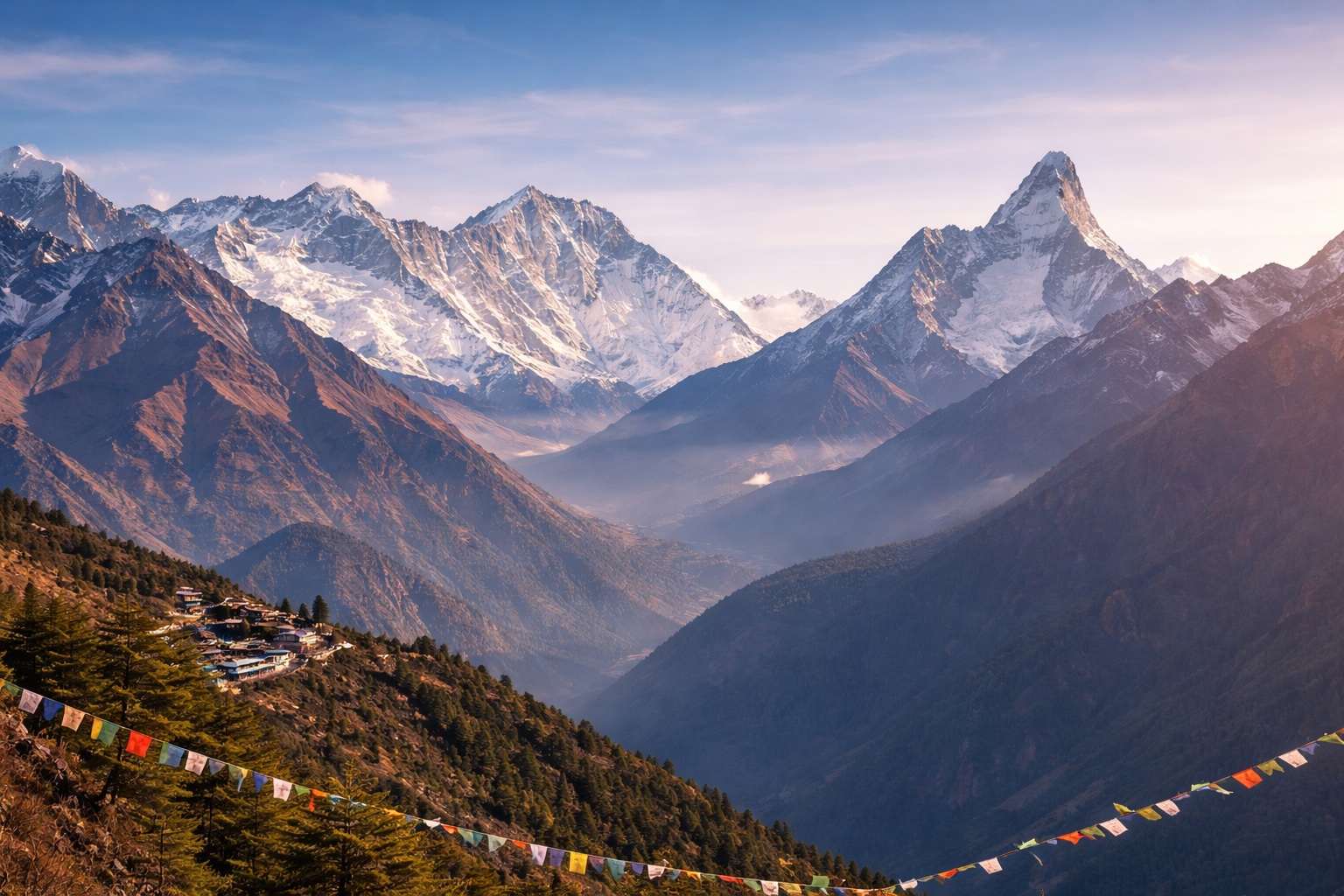
Why Pokhara Is Nepal's Adventure Capital
Pokhara occupies a geographic position that makes it uniquely suited to a concentration of adventure activities within a small radius. Phewa Lake (altitude 742 m) sits at the base of the Annapurna massif - the distance from the lakeside to Annapurna I's summit (8,091 m) is just 40 km horizontal, creating one of the most dramatic vertical rises from valley to summit anywhere on Earth. This topography powers Pokhara's adventure economy: the thermal gradients that make paragliding exceptional, the elevation drop of the Seti and Kali Gandaki rivers that makes rafting viable, the ridge systems that provide summit viewpoints for sunrise - all flow from the same geological fortune.
The activity infrastructure in Pokhara is mature and professional by Nepal standards. Competition between operators has driven safety standards up and prices down on most activities; reputable operators with proper insurance and certified guides are readily identified. The combination of lake, mountain backdrop, and activity concentration makes Pokhara the logical base for adventure travellers who want maximum variety in minimum time.
Paragliding Over Pokhara
Pokhara is consistently ranked among the top ten paragliding destinations in the world - a consequence of the reliable thermal conditions generated by the Phewa Lake/Annapurna altitude differential and the Sarangkot ridge thermal that lifts pilots to altitude within minutes of launch. On a clear day, the paragliding view over Phewa Lake with Machapuchare (6,993 m), Annapurna South, and Dhaulagiri (8,167 m) in the background is among the most spectacular in adventure travel anywhere on Earth.
- Launch site: Sarangkot ridge (1,592 m) - 30 minutes by taxi from Pokhara lakeside (NPR 600 - 800). Pilots launch from the ridgeline and fly in the thermal column above the lake.
- Duration: Standard tandem flight: 25 - 40 minutes. Sunrise flight (departing 05:30): 30 - 45 minutes with optimal low-angle light for photography. Longer "acrobatic" flights of 1 - 2 hours are available for experienced pilots seeking a more dynamic experience.
- Cost: NPR 8,000 - 12,000 (USD 60 - 90) for a standard tandem flight. Sunrise flights premium: NPR 12,000 - 15,000. Photography service (GoPro/SD card) typically included or available for NPR 1,500 additional.
- Best season: October - November (perfect thermals, crystal clear views); February - May (reliable thermals; spring light). The monsoon (June - September) grounds most flights - cloud, rain, and unstable thermals make conditions unsafe for commercial operations.
- Operator selection: Book with a member of the Pokhara Paragliding Association - established operators including Frontiers Paragliding, Blue Sky Paragliding, and Temple Paragliding have the longest track records. Avoid last-minute bookings with unlicensed operators on the lakeside strip.
- Weight limits: Maximum passenger weight for tandem flights: 100 - 110 kg (operator-dependent). Minimum age: typically 5 years. No piloting experience required for tandem flights.
ZipFlyer Nepal: The World's Steepest Zip Line
ZipFlyer Nepal, operated by Zip Flyer Nepal Pvt Ltd, is listed by Guinness World Records as one of the world's steepest and fastest zip lines - 1,800 m in length with a 600 m vertical drop from Sarangkot ridge (1,592 m) to the rice paddies of Hemja village, reaching speeds of 120 - 140 km/h. The descent takes approximately 1.5 - 2 minutes and provides a direct experience of the altitude differential that makes Pokhara's geography so dramatic.
- Cost: USD 75 - 90 per person (NPR 10,000 - 12,000). Includes transport to the launch platform and ground transfer from the landing zone.
- Duration of ride: Approximately 90 - 120 seconds from release to landing. Total excursion time (transport, briefing, harnessing) 1.5 - 2 hours.
- Best combined with: Paragliding - the Sarangkot ridge launch point for paragliding is adjacent to the ZipFlyer platform. Many operators offer a combined paragliding + ZipFlyer package (USD 120 - 150) that maximises the Sarangkot excursion.
- Physical requirements: Minimum weight 25 kg; maximum 120 kg. Height minimum 120 cm. No specific fitness requirement - participants are fully harnessed and passive during the descent.
Sarangkot Sunrise Viewing
Sarangkot hill (1,592 m) is Pokhara's most important viewpoint and the standard venue for watching the pre-dawn alpenglow move across the Annapurna and Dhaulagiri ranges as the sun rises from the eastern horizon. The spectacle - first light on Machhapuchhre's double summit, then the progressive illumination of Annapurna South, Annapurna I, and Dhaulagiri's massive west face - is one of Nepal's finest mountain photography opportunities and requires no trekking ability beyond the ascent to the viewpoint.
- Getting there: Taxi from Pokhara lakeside: NPR 600 - 800 one way; many operators arrange return transport as part of a sunrise package. The jeep road to Sarangkot is fully driveable (25 - 30 min from lakeside). Walking from Pokhara via the village path: 2 - 3 hours, requiring a 03:30 - 04:00 start for sunrise arrival.
- Sunrise time: Varies by season - November sunrise approximately 06:30; April sunrise approximately 05:45. Plan for arrival 45 minutes before official sunrise for the best pre-dawn glow.
- Viewpoint facilities: Several small cafés and breakfast stalls open before dawn at the summit; expect NPR 200 - 400 for tea/coffee and basic breakfast while watching the sunrise. Bring warm layers - at 1,592 m before sunrise, temperatures are significantly colder than the lakeside.
- Photography: A 70 - 200 mm zoom captures the full Annapurna panorama in one frame; longer focal lengths isolate individual peaks. Tripod essential for the pre-dawn slow shutter work. The light quality is best in the 15 - 20 minutes before and after sunrise itself.
Boating on Phewa Lake
Phewa Lake (Fewa Tal) - 4.4 km long, 1.5 km wide at its widest - is Pokhara's central amenity and the setting for its most peaceful activity. Rowing boats (wooden dories), paddleboats, and kayaks are available from the lakeside ghats for self-piloted exploration of the lake, the Tal Barahi island temple, and the quiet northern and western shores away from the lakeside development.
- Boat rental cost: NPR 400 - 600/hour for a rowing boat (fits 2 - 3 people); NPR 500 - 700/hour for pedal boat; NPR 300 - 400/hour for single kayak. Negotiate for half-day rates.
- Tal Barahi Temple: The island temple of the goddess Barahi, reached by a 10-minute row from the main ghat. Remove shoes at the island's stone steps; the morning puja (08:00 - 09:00) with incense and marigold offerings is worth timing the row to coincide with.
- Sunrise on the lake: Rowing onto the lake in the pre-dawn dark (hire a local rower rather than self-piloting in darkness) and being on the water as the Annapurna range turns pink above the lake's mirrored surface is one of Pokhara's finest experiences and costs NPR 1,000 - 1,500 for the guided sunrise row.
- Safety note: Phewa Lake has submerged obstacles on the western and northern shores; stick to the main lake body and avoid the inlet streams. Life jackets are available; wear them, particularly for children.
White Water Rafting Near Pokhara
Pokhara sits at the confluence of several river systems that provide white water rafting from Grade II training runs to Grade IV technical rapids within 1 - 4 hours of the city. The most commonly rafted rivers for Pokhara-based day trips:
| River | Grade | Duration | Distance from Pokhara | Cost |
|---|---|---|---|---|
| Seti Gorge | II - III | Half day | 20 min | USD 30 - 50 |
| Kali Gandaki (Beni - Nayapul) | III - IV | Full day | 2.5 hrs | USD 60 - 90 |
| Upper Kali Gandaki | IV - V | 2 - 3 days | 4 hrs | USD 150 - 250 |
| Marsyangdi | IV - V | 2 - 3 days | 3.5 hrs | USD 150 - 250 |
The Seti Gorge half-day trip is the most popular for trekkers and visitors who want to add a rafting experience to their Pokhara stay without a full-day commitment. The Kali Gandaki day trip (grade III - IV) is appropriate for experienced beginners; the multi-day Marsyangdi and Upper Kali Gandaki trips are for experienced white-water rafters seeking serious technical challenges.
Season: October - November and March - May are optimal. The monsoon (June - September) raises water levels to dangerous grades on most rivers. December - February: possible on the Seti but cold water temperatures make the experience significantly less pleasant without a drysuit.
Kayaking and Stand-Up Paddleboarding
Phewa Lake is navigable by kayak and SUP from the main lakeside ghat, with rental available from several operators near the boat station. For flat-water paddling, the western arm of Phewa Lake is calm, less frequented by motorboats, and offers direct reflection views of Machhapuchhre. Beginners and children find Phewa's sheltered western bays ideal for initial paddle sport experience.
White-water kayaking instruction is available through Paddle Nepal and other specialist operators - multi-day kayak courses on the Seti Gorge or Kali Gandaki are offered for paddlers who want to develop skills beyond flat-water touring. A beginner 2-day course (Phewa Lake technique + Seti introduction) costs approximately USD 120 - 180.
Canyoning near Pokhara
The river gorges descending from the Annapurna foothills toward Pokhara contain several canyons suitable for technical canyoning - abseiling down waterfalls, swimming through narrow slot canyons, and jumping from defined safe points. The Rangdi River canyon (1.5 hrs from Pokhara) is the most established canyoning site, offering a 4 - 6 hour full day of technical descent with multiple rappels of 15 - 40 m and several pool jumps.
- Cost: USD 70 - 100 per person including transport, equipment, guide, and lunch
- Season: March - May and October - November (water levels optimal)
- Difficulty: No prior experience required; reasonable fitness needed. Not appropriate for those with fear of heights or water.
- Operator: Xtreme Nepal and Paddle Nepal are the established canyoning operators with the best safety records. Verify guide certification and insurance before booking.
Day Hikes and Short Treks from Pokhara
Pokhara is the gateway to the Annapurna region and several excellent day hikes and short treks begin directly from the city or within an hour's drive:
- Sarangkot to Naudanda ridge walk: 4 - 5 hours along the Sarangkot ridgeline west toward Naudanda village - panoramic Annapurna views throughout; ends at the start of the Poon Hill approach. Moderate; no altitude challenge.
- Australian Camp / Kande day hike: 3 - 4 hours from Kande village (1 hr taxi from Pokhara) to Australian Camp (2,060 m) - exceptional Annapurna view from a viewpoint directly above the valley. The most accessible proper mountain viewpoint from Pokhara.
- Poon Hill 4-day trek: The classic short Annapurna trek from Nayapul - Ghorepani (2,850 m) - Poon Hill (3,210 m) - Tadapani - Nayapul. The finest introductory Himalayan trek for Pokhara-based travellers. Full guide at Poon Hill Trek Guide.
- Begnas Lake hike: 1.5 hrs from Pokhara to Begnas Lake (822 m) - a quieter alternative to Phewa with fishing communities and wetland birdlife. A pleasant half-day walk for non-trekkers wanting light exercise.
- Peace Pagoda (Shanti Stupa): 45-minute walk from the lakeside via the boat crossing and hill path (or 30-minute drive) to the Japanese Peace Pagoda at 1,100 m above the lake - excellent views over Phewa Lake and the Annapurna skyline. Best at sunset for the light quality.
Culture and Sightseeing in Pokhara
- International Mountain Museum: Nepal's most comprehensive mountaineering museum - artifacts, photographs, and exhibits covering Himalayan exploration from the 1950 Annapurna first ascent (Herzog/Lachenal) through contemporary Everest expeditions. Essential for any trekker or climber visiting Pokhara. Entry NPR 500; allow 2 - 3 hours. Located in Pokhara Prithvi Chowk, 3 km from the lakeside.
- Old Bazaar (Bagar): The historic Pokhara market area predating the tourist development - Newari merchant houses, traditional metalwork shops, fresh produce markets, and a genuinely local atmosphere that the lakeside strip cannot replicate. A 1 - 2 hour walk through the old bazaar and Mahendra Pul area gives context to what Pokhara was before trekking.
- Bindyabasini Temple: The hill temple of the goddess Bindyabasini above the old bazaar - a working Hindu temple with resident monkeys and good views over Pokhara town. Busy on Saturday mornings (Nepali day of worship).
- Gupteshwor Cave: A limestone cave system near the Devi's Fall waterfall, with a Shiva temple and natural formations deep inside the cave system. Combined with Devi's Fall (the underground river that disappears into a natural sinkhole) as a 1 - 2 hour excursion. Entry NPR 100.
Day Trips from Pokhara
- Begnas Lake (22 km east): The quieter of Pokhara's two major lakes - fishing communities, wetland birds, and no tourist development. 30 minutes by taxi; NPR 1,200 return.
- Bandipur (70 km east): Preserved Newari hilltop village with one of Nepal's finest traditional architecture concentrations - car-free main square, 18th-century merchant houses, panoramic Himalayan views. 2-hour drive from Pokhara; ideal as a Kathmandu-Pokhara stopover rather than a day trip if possible. One night in Bandipur's guesthouses reveals the village's character far better than a day trip.
- Muktinath by helicopter: The sacred site at 3,710 m in the Mustang foothills - 108 water spouts, flame and water springs sacred to both Hindus and Buddhists, Jwalamai Temple. A 25-minute helicopter flight from Pokhara replaces the 3-day trek from Jomsom. Cost: USD 200 - 300 per person round trip in a shared group flight. Full guide at Nepal Helicopter Tours Guide.
Planning Your Pokhara Activities
| Activity | Best Time of Day | Advance Booking Needed? | Duration | Cost (USD) |
|---|---|---|---|---|
| Paragliding | 09:00 - 14:00 (thermals) | Yes (1 - 2 days) | 2 - 3 hrs total | 60 - 90 |
| ZipFlyer | Any time (opens 08:00) | Yes (1 day) | 1.5 hrs total | 75 - 90 |
| Sarangkot sunrise | Pre-dawn (depart 05:00) | No | 3 - 4 hrs | 5 - 10 |
| Phewa Lake boating | Morning (calm water) | No | 1 - 4 hrs | 5 - 20 |
| Seti Gorge rafting | Morning departure | Yes (1 day) | 4 - 5 hrs | 30 - 50 |
| Canyoning | Full day (morning start) | Yes (2 - 3 days) | 8 hrs | 70 - 100 |
| Australian Camp hike | Early morning | No | 4 - 5 hrs | 10 - 20 (taxi) |
| Mountain Museum | Any time (opens 09:00) | No | 2 - 3 hrs | 5 |
The most efficient two-day Pokhara activity itinerary: Day 1 - sunrise at Sarangkot (05:30 departure), paragliding on the return (09:30), afternoon Phewa Lake boating and Peace Pagoda sunset. Day 2 - ZipFlyer morning, Seti Gorge rafting afternoon, Mountain Museum or old bazaar evening. This covers the primary activities without requiring additional nights.
Recent Posts