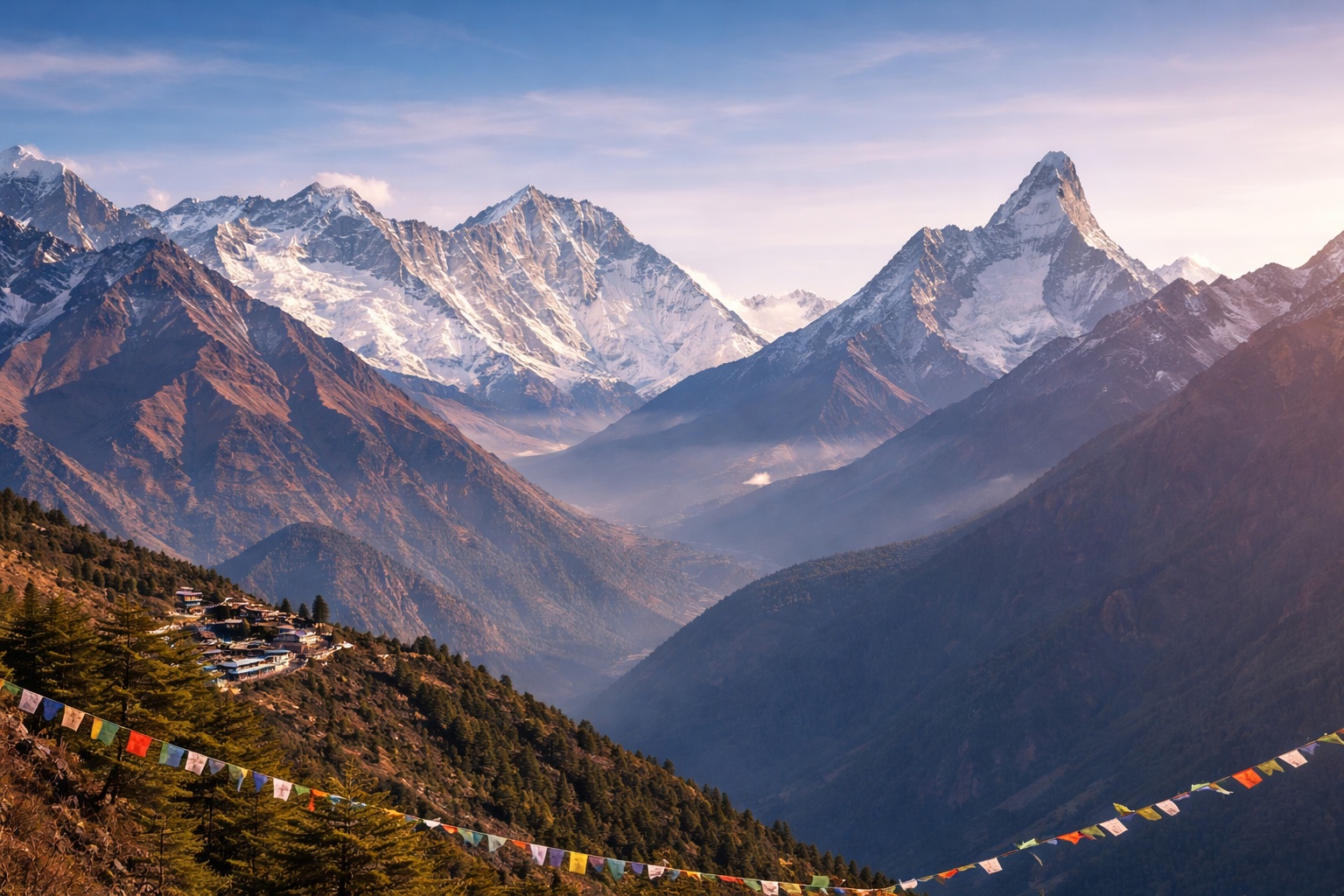
Overview of Pikey Peak
Pikey Peak (4,065 m) is a viewpoint summit in the Solu region of Solukhumbu District - below and south of the main Khumbu range, but positioned at an angle that provides a panoramic view of the Himalayan chain from Dhaulagiri in the west to Kangchenjunga in the east that rivals, and in breadth surpasses, the views from Poon Hill (3,210 m) or Sarangkot (1,592 m). The peak is named for the Pikey Danda ridge on which it sits and is known locally as Pikey Danda.
Pikey Peak is the Himalayan viewpoint that experienced Nepal trekkers most frequently recommend as an alternative to the overcrowded Poon Hill - same panoramic principle (sunrise over 8,000 m peaks from a relatively accessible viewpoint), but at a higher altitude, in a less-visited region, with almost no other foreign trekkers in residence during most seasons. The Solu region's character - traditional Sherpa villages, rhododendron and fir forest, Buddhist monasteries, and the smell of juniper incense - is more culturally intact than the Annapurna foothills' heavily touristed routes.
The 360° Panorama from Pikey Peak
The Pikey Peak summit view encompasses the widest continuous Himalayan panorama of any viewpoint reachable without technical climbing in Nepal - an arc from west-northwest to east spanning approximately 300°:
- West: Dhaulagiri (8,167 m) and Annapurna I (8,091 m) visible at extreme range (180 - 200 km)
- North-northwest: Manaslu (8,163 m) and Himalchuli (7,893 m)
- North: Ganesh Himal (7,422 m), Langtang Lirung (7,227 m), Rolwaling peaks
- Northeast: Everest (8,849 m) - the full south face, with Nuptse and Lhotse flanking it. At 60 km distance, the view is closer than from Nagarkot or Pokhara, less close than from Kala Patthar, but in a unique angular perspective from the south that emphasises the pyramid quality of the summit above the Khumbu valley.
- East: Makalu (8,485 m), Kanchenjunga (8,586 m) at extreme range (120 km)
Trek Route to Pikey Peak
The standard Pikey Peak Trek is a 5 - 6 day circuit accessible from several directions:
- From Salleri (Solu regional centre) or Phaplu (airport): 2 - 3 days walk to Jase Bhanjyang (3,100 m) base and then Pikey Peak summit day
- Standard route: Drive from Kathmandu to Dhap village (2,250 m; 6 - 7 hours) → trek to Pikey Peak camp (3,600 m; 1 day) → summit day Pikey Peak (4,065 m) → return or continue to Junbesi
- Extended circuit: Pikey Peak → Junbesi → Ringmo → Solu Khumbu valley villages - a 7 - 10 day cultural-and-viewpoint trek that introduces the pre-main-trail Solu region culture
Accommodation: basic teahouses at the villages along the approach; camping at higher elevations near the summit area.
Why Pikey Peak Over Poon Hill
Pikey Peak's advantages over Poon Hill as a Himalayan viewpoint experience:
- Higher altitude (4,065 m vs 3,210 m) - better ratio of mountain height to viewer's altitude
- Broader panorama - includes both Dhaulagiri-Annapurna range in the west AND Everest-Makalu in the east; Poon Hill cannot show Everest
- Fewer trekkers - perhaps 1 - 5% of Poon Hill's visitor numbers
- More authentic cultural experience in the Solu villages
- No permit required (unlike ACAP for Poon Hill)
Poon Hill's advantages: fully teahouse-supported route; 4 days from Pokhara; no long drive approach; better infrastructure; more suitable for first-timers.
Getting There
- Road from Kathmandu: 6 - 7 hours by private car or bus to Dhap (2,250 m) on the Solukhumbu highway
- Flight to Phaplu: Kathmandu → Phaplu (2,413 m; 45 min flight; USD 80 - 120) then 2 days' walk
- Flight to Salleri: Kathmandu → Salleri (2,400 m; similar to Phaplu); then road or walk
Practical Information
- Altitude: 4,065 m (13,336 ft)
- Coordinates: 27.4669°N, 86.6192°E
- District: Solukhumbu, Koshi Province
- No permit required
- Walking time from Dhap: 2 days
- Best season: October - November; March - April (rhododendron)
- Annual visitors: Approximately 500 - 1,500 per year (significantly less than Poon Hill's 70,000+)
- Guide recommended: Yes - trails are unmarked above Jase Bhanjyang
Recent Posts