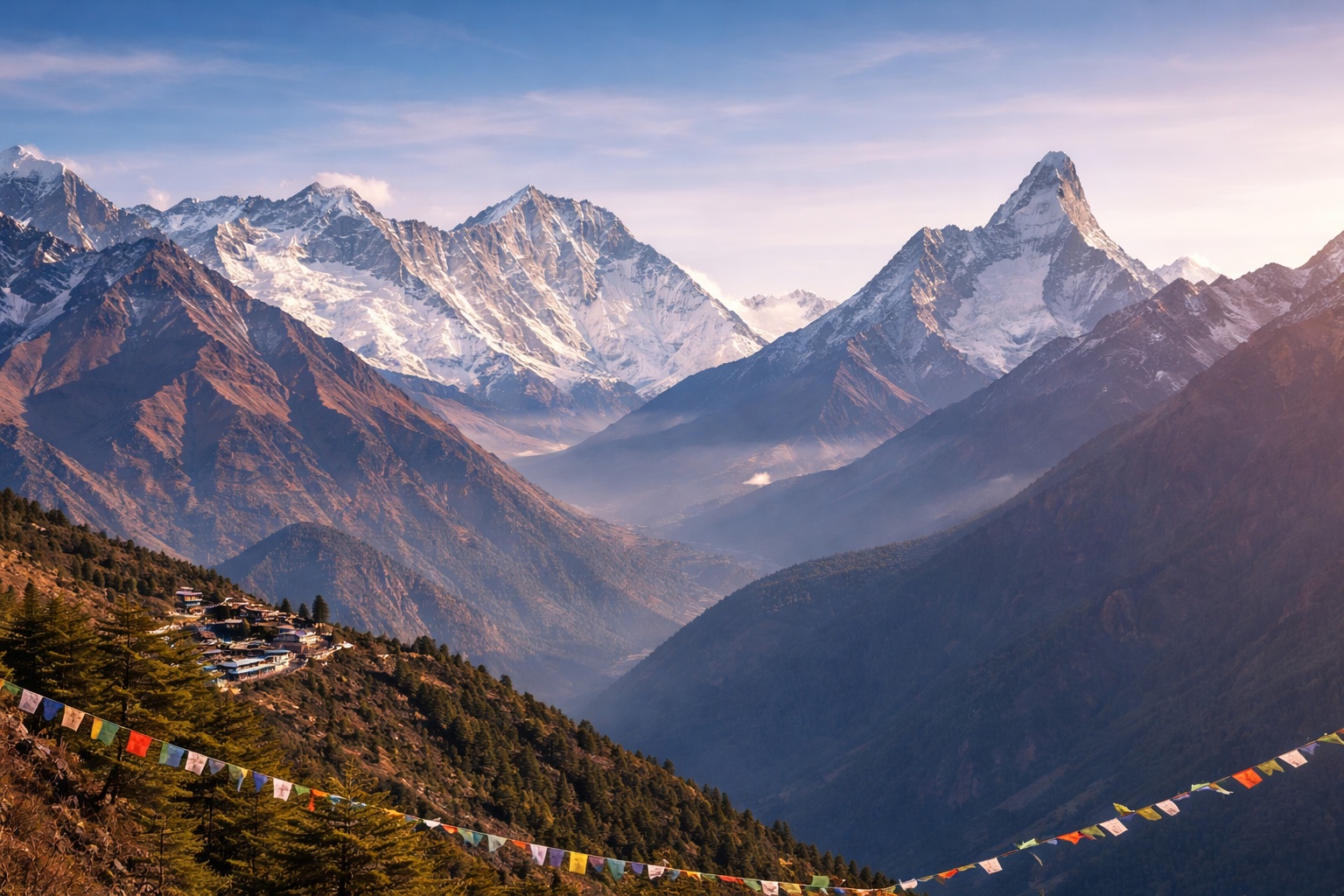
The Four Trekking Seasons in Nepal
Nepal's Himalayan climate is governed by two dominant atmospheric systems: the South Asian monsoon (June - September, bringing moisture from the Bay of Bengal northwest across India into Nepal) and the dry continental airflow from Central Asia and Tibet (October - May, producing the clear, cold, stable conditions ideal for high-altitude trekking). Between these two dominant patterns, Nepal's trekking year divides into four distinct seasons, each with characteristic conditions, crowd levels, and optimal route choices.
The simplest rule for Nepal trekking: the best visibility and most stable conditions are in October - November (post-monsoon autumn) and March - May (pre-monsoon spring). These two windows account for roughly 80% of all Nepal trekking, with October being the single most popular month. The remaining 20% is split between winter trekkers (December - February) who accept cold and some route closures for quiet trails, and adventurous monsoon trekkers (June - September) who seek rain-shadow routes or the unusual experience of lush green Nepal without other trekkers.
Autumn: October - November (Peak Season)
October and November constitute Nepal's best overall trekking window - the post-monsoon clearing produces the clearest mountain views of the year, trail conditions are excellent (dust settled, paths firm, no snow on the major passes), and temperatures at high altitude are cold but manageable. October is universally considered Nepal's finest month for trekking.
October conditions by altitude:
- Below 2,000 m: 20 - 28°C daytime; warm, clear, occasionally hazy in the valley. Ideal conditions for lower-altitude treks and approach walks.
- 2,000 - 4,000 m: 10 - 20°C daytime; cool nights (0 - 8°C); layers required in the evening. The classic teahouse trekking zone in perfect weather.
- 4,000 - 5,500 m: 0 - 10°C daytime; -10°C to -20°C at night by late October. Down jacket and sleeping bag rated to -15°C essential. Dry, clear, cold.
November: Similar to October but significantly colder, especially at altitude. The Thorong La (Annapurna Circuit) and the Three Passes (Khumbu) are at risk of closure from November mid-month onward after significant snowfall. The advantage: fewer trekkers (the peak October crowd has cleared), the same mountain views, and a more contemplative trail atmosphere.
Recommendation: Everest Base Camp, Annapurna Circuit, Three Passes, Manaslu Circuit, Langtang, and all major routes - all are excellent in October. Book accommodation 2 - 3 months in advance at popular spots (Ghorepani, Kyanjin Gompa, Gokyo) during October peak.
Spring: March - May
Spring is Nepal's second trekking season - warm enough to be comfortable at altitude from mid-March, with good visibility and the bonus of rhododendron bloom (February - April) in the 1,500 - 3,500 m altitude band. March - April is considered the best season for many trekkers who prefer slightly warmer conditions than October.
Spring conditions by month:
- February - early March: Still winter cold at altitude; rhododendron beginning at lower altitudes in Annapurna foothills. Good for lower routes; EBC is possible but Thorong La may have snow.
- Late March - April: The optimal spring window - rhododendron in full bloom, manageable temperatures, passes opening. The EBC route in April coincides with Everest expedition season (April - May), making Base Camp a colourful city of expedition teams.
- May: Temperatures warm rapidly at lower altitudes (25 - 32°C below 2,000 m). Haze begins building as pre-monsoon humidity increases. Good at high altitude, hot and hazy at lower altitudes. The Annapurna Circuit in May is warm in the Kali Gandaki but the Thorong La and upper valley are pleasant.
Recommendation: Poon Hill / Annapurna region treks are arguably better in spring (rhododendron bloom). EBC and Khumbu treks are excellent in April. Upper Mustang (rain shadow) starts its most colourful season in April - May.
Winter: December - February
Winter trekking in Nepal is possible on most routes below 4,500 m but requires accepting cold temperatures, shorter daylight hours, and the possibility of high passes closing after snowfall. The upside: dramatically fewer trekkers (many routes are 80 - 90% quieter than October), lower teahouse prices, and the crystal-clear mountain views possible on cold winter days.
Winter conditions:
- Below 3,000 m: Pleasantly cool (10 - 18°C daytime); cold nights. Excellent for lower-altitude treks and the Terai (Chitwan, Bardia wildlife parks).
- 3,000 - 4,500 m: Cold but typically snowless except after major storms. Namche Bazaar in December is -5°C at night but manageable in proper gear.
- Above 4,500 m: Seriously cold (-20°C to -30°C at night above 5,000 m). The Thorong La (5,416 m) and Three Passes are frequently closed December - February after snowfall. EBC is reached by determined winter trekkers but requires careful preparation.
Recommendation: Annapurna region below 4,000 m, Langtang valley to Kyanjin Gompa, and Helambu are excellent winter treks. The high passes (Thorong La, Larkya La, Three Passes) are unreliable. Upper Mustang is drier and warmer than the EBC or Annapurna high routes in winter.
Monsoon: June - September
The monsoon brings persistent rain, cloud, and high humidity to the Himalayan foothills of Nepal from June through early September. Most popular trekking routes become muddy, slippery, and populated with leeches below 3,000 m. Mountain views are obscured by cloud for most of the day. The Thorong La and other high passes receive summer snowfall and can be dangerous.
Despite these challenges, monsoon Nepal has genuine appeal for the right type of trekker:
- Green landscape: The rhododendron forests are lush and vivid, waterfalls are dramatic, and the rice terraces below 2,000 m are at their most beautiful in the monsoon light
- Empty trails: Trekkers who want solitude find the monsoon Himalaya devoid of crowds - teahouses are nearly empty and the experience is genuinely different
- Rain-shadow routes: The Upper Mustang, Upper Dolpo, and Manaslu (upper valley) receive significantly less monsoon rain than the main Himalayan zone - see below
- Cost: Low season prices - teahouses discount heavily during monsoon
Rain Shadow Treks in Monsoon
The Himalayan range creates a dramatic rain shadow on its northern slopes - the monsoon moisture is largely blocked by the main ridge, leaving the high trans-Himalayan plateaus of Upper Mustang, Upper Dolpo, and Manaslu's upper Nubri valley significantly drier than the southern slopes. These rain-shadow treks are the best option for Nepal trekking during the June - September monsoon window:
- Upper Mustang (June - September): The plateau receives only 200 - 300 mm of annual rainfall - mostly in brief afternoon showers. June - September is actually a good time: the landscape is green from snowmelt irrigation, the apple orchards are in leaf, and trekker numbers are the lowest of the year.
- Upper Dolpo (July - August): The high Phoksundo Lake area and Shey Gompa circuit are in the rain shadow and viable in July - August for experienced trekkers with the required permits.
- Manaslu upper valley (July): The Nubri valley above Lho is partially in rain shadow; possible for experienced trekkers in July, though the lower gorge is wet.
Best Season by Trek
| Trek | Best Season | Good Season | Avoid |
|---|---|---|---|
| Everest Base Camp | October | November, April - May | June - September, December - February |
| Annapurna Circuit | October | March - April, November | June - September (monsoon) |
| Poon Hill / ABC | October; March - April | November | June - September |
| Langtang Valley | October - November; March - April | January - February (cold) | June - September |
| Manaslu Circuit | October | March - May, November | December - February (pass risk) |
| Upper Mustang | June - September (rain shadow) | October; March - May | December - February |
| Kangchenjunga | October - November | April - May | June - September |
| Three Passes (Khumbu) | October | April - May | November (pass risk), June - September |
Festival Season Calendar
Timing a trek with Nepal's major festivals adds a cultural dimension beyond mountain scenery:
- Indra Jatra (Kathmandu, September): The Kumari (living goddess) chariot procession - a spectacular pre-departure cultural experience in Kathmandu
- Dashain (October, 15 days): Nepal's biggest festival - a family homecoming that empties Kathmandu of workers but keeps villages full. The festive atmosphere in trekking villages during Dashain is authentic and engaging.
- Tihar (October/November, 5 days): The Festival of Lights - Diwali equivalent with oil lamps, flower garlands, and the extraordinary spectacle of illuminated Kathmandu
- Mani Rimdu (Tengboche, November full moon): The Khumbu's most important monastery festival - masked dances at Tengboche Monastery, coinciding with late November trekking
- Tiji Festival (Lo Manthang, late April - early May): Upper Mustang's 3-day masked dance festival in the walled city
- Losar (Tibetan New Year, February): New Year celebrations in Tibetan-culture areas - Kyanjin Gompa, Lo Manthang, Samdo
Frequently Asked Questions
- What is the best month for the Everest Base Camp trek?
- October is universally considered the best month for the EBC trek - post-monsoon skies are the clearest of the year, temperatures at high altitude are cold but manageable, and trail conditions are optimal. October is also the busiest month; book teahouses in Gorak Shep and Dingboche 2 - 3 months in advance. November is excellent but colder and the passes in the upper circuit can receive snow after mid-month.
- Can I trek in Nepal during the monsoon?
- Yes - with the right route selection. The rain-shadow treks (Upper Mustang, Upper Dolpo) are excellent in June - September with significantly lower rainfall than the monsoon-affected southern slopes. The Langtang and Khumbu routes are possible in July - September but mountain views are obscured most of the day and leech-infested below 3,000 m. If you must trek in monsoon, go to Upper Mustang.
- Is spring or autumn better for Nepal trekking?
- Both are excellent. Autumn (October - November) has the clearest views, the best trail conditions, and the most accommodating weather for high altitude. Spring (March - May) has warmer lower-altitude conditions, spectacular rhododendron bloom (March - April), and the Everest expedition season atmosphere at EBC in April - May. The choice depends on personal preference and route: for pure mountain viewing, October wins; for rhododendron bloom and slightly warmer trekking, March - April wins.
- How cold does Nepal get in trekking season?
- In October at altitude: Namche Bazaar (3,440 m) reaches 5°C at night; Dingboche (4,410 m) drops to -5°C; Gorak Shep (5,164 m) reaches -15°C to -20°C. By November, add 5 - 10°C colder to all these figures. In the Annapurna region in October, Ghorepani (2,850 m) drops to 2 - 5°C at night; High Camp (4,925 m) reaches -15°C. A sleeping bag rated to -15°C and a heavyweight down jacket are essential above 4,000 m from October onward.
- When is the rhododendron bloom in Nepal?
- The rhododendron bloom in Nepal occurs from February at lower altitudes (1,500 - 2,000 m) through April at higher altitudes (2,500 - 3,500 m). Peak bloom is typically in late March to mid-April at the prime rhododendron altitudes. The Annapurna foothills (Ghorepani - Poon Hill belt, 2,000 - 3,000 m) and the Langtang valley forest (below Kyanjin Gompa) offer the most spectacular rhododendron bloom accessible to trekkers.
- Is December a good time to trek in Nepal?
- December is good for lower-altitude treks (Poon Hill below 3,200 m, Langtang to Kyanjin Gompa at 3,870 m, Helambu below 3,500 m) where nights are cold but conditions are clear and crowds minimal. The high passes (Thorong La, Larkya La, Three Passes) become unreliable after snowfall in December, making the Annapurna Circuit, Manaslu Circuit, and Three Passes risky after mid-December. Kala Patthar (5,545 m) is reachable in December for properly equipped trekkers - the winter EBC route requires full cold-weather gear and flexibility.
- How do I check current trail conditions before a trek?
- The best current sources: the TAAN (Trekking Agencies Association of Nepal) office in Kathmandu and Pokhara has updates from returning trekkers; specific teahouse owners in Namche Bazaar, Manang, and Jomsom communicate conditions via phone to Kathmandu agencies; online forums (Himalayan trekking forums, Nepal Trek Facebook groups) have real-time trekker reports; and the HRA clinic social media provides medical and weather conditions at Pheriche and Manang during the season.
- What is the shoulder season in Nepal trekking?
- The Nepal trekking shoulder seasons are: early October (before the peak crowd builds), November, and late March - early April (before the spring crowd peaks in April). During these shoulder windows, conditions are good but slightly less certain than peak season, crowds are manageable, and teahouse availability is better. Late October and early November are particularly good shoulder-season windows - the main October crowd has cleared and views remain excellent.
- Does altitude affect the best trekking season?
- Yes significantly. The higher the altitude, the shorter the ideal trekking window. Below 3,000 m, trekking is comfortable March through November. Above 5,000 m, the optimal window narrows to mid-September through October and late March through May. The passes above 5,000 m (Thorong La, Larkya La, Three Passes) require the tightest windows: late September to mid-November for autumn and late March to mid-May for spring.
- Is the weather in Nepal predictable enough to plan around?
- Within seasons, yes - the post-monsoon clearing (mid-September to late November) and the pre-monsoon stable period (March - May) are remarkably consistent year-to-year in terms of general character. Individual weather events (snowfall, cloud, storms) are unpredictable at a day-level. The most reliable planning approach: choose a season (October for maximum reliability), allow 2 - 3 extra days in the itinerary for weather delays, and build buffer days into the Lukla flight schedule. The mountain weather in Nepal is famously variable at a local level, but the seasonal patterns are well-established.
Recent Posts