Nepal's Four Trekking Seasons
Nepal's mountain climate divides the year into four distinct trekking windows, each with its own character, advantages, and trade-offs. The conventional wisdom - trek in October or March - is correct as a starting point but understates both the attractiveness of winter trekking and the monsoon exception (Upper Mustang and Dolpo are viable during the monsoon due to their rain shadow position). Understanding what each season offers allows you to match your specific priorities - mountain clarity, trail solitude, cultural festivals, rhododendron bloom, or budget travel - to the right window.
Autumn: October - November
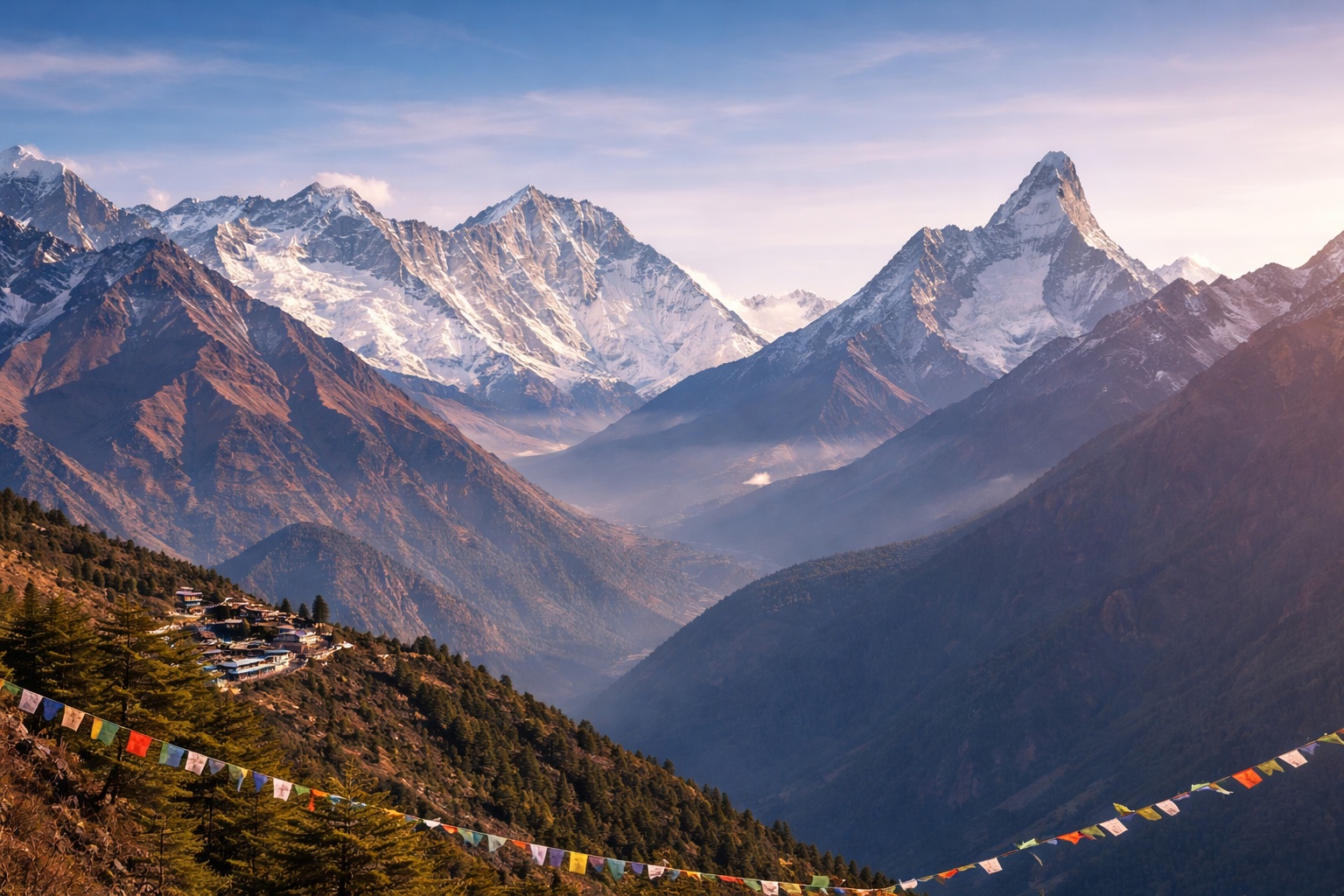
Autumn is Nepal's peak trekking season for good reasons. The monsoon ends in late September, washing the atmosphere clean and leaving the Himalayan ranges in their clearest and most photographically spectacular state. Temperatures are comfortable at all altitudes - not so cold as winter, not so warm as spring. The landscape is post-monsoon lush at lower altitudes and dry-season crisp above treeline.
October
The finest single month for trekking in Nepal. The air is the clearest of the year; mountain views are guaranteed on most days; temperatures range from 15 - 25°C at Namche and 5 - 15°C at Dingboche. Dasahain (Nepal's biggest festival) and Tihar festivals fall in October - a bonus cultural experience in Kathmandu and on the trails. The Mani Rimdu festival at Tengboche Monastery falls in November of most years but occasionally in late October. The main drawback: October is the busiest month on all major trails; teahouses fill and trails are crowded from Namche to Poon Hill.
November
Quieter than October; increasingly cold. The grass on the high passes is cut and dried by November in the Khumbu, revealing the full dramatic moraine landscape. Mountain views remain excellent. The Mani Rimdu festival at Tengboche typically falls in November. Temperatures drop significantly above 4,000 m - Gorak Shep is regularly -10°C to -15°C at night. A sleeping bag rated to -15°C is required above 4,500 m in November. The trail is noticeably quieter by mid-November; a good choice for trekkers who prioritise solitude.
Spring: March - May
Spring is Nepal's second season and increasingly the preferred season for trekkers who prioritise the rhododendron bloom, fewer crowds, and longer daylight. The mountain views are somewhat hazier than autumn due to dust and pre-monsoon moisture accumulation, but the lower trail sections are transformed by the extraordinary colour of Nepal's 32 rhododendron species in full bloom March - May.
March
Early spring. Rhododendrons beginning at lower altitudes (below 2,500 m). Mountains still very clear. Good temperatures. The upper passes (Thorong La, Larkya La) may carry residual winter snow - check with local teahouses before attempting high passes in early March. Quieter than October by a significant margin.
April
Peak rhododendron season at 2,500 - 3,500 m. The trail between Tikhedhunga and Ghorepani on the Poon Hill route, between Chhomrong and Himalaya Hotel on the ABC route, and between Lama Hotel and Langtang village is ablaze with crimson and pink bloom. Good weather. Temperature of 10 - 25°C at mid-altitude. High passes are clear of snow after mid-April in most years. Everest expedition teams begin summit preparations and the Khumbu has an additional energy from the climbing season.
May
Warming significantly at lower altitudes (30°C+ below 1,500 m). The rhododendron bloom has moved to the high alpine zone (4,000 - 4,500 m). Pre-monsoon cloud begins building in the afternoons, reducing afternoon mountain visibility. Still viable for high-altitude routes (EBC, Annapurna) but the window closes as the monsoon approaches. Late May can see the first monsoon rains at lower altitudes.
Winter: December - February
Winter trekking in Nepal is one of the sport's best-kept secrets. The trails are almost empty of foreign trekkers; teahouse prices drop 20 - 40%; the mountain air is its clearest of the entire year on clear days; and the quality of solitude on trails like the EBC corridor and Langtang Valley - which are transformed by absence of crowds - is extraordinary.
The trade-offs are real: temperatures above 4,000 m drop to -20°C to -30°C at night, and the high passes (Thorong La, Larkya La, the Three Passes) may be closed or dangerous after snowfall. The Poon Hill and Langtang routes stay open throughout winter with appropriate cold-weather gear. EBC is trekked in winter by a small number of well-equipped trekkers each year.
December
Cold but surprisingly viable on established routes. Below 3,500 m, temperatures are 5 - 15°C in the day and 0°C to -5°C at night - manageable with good sleeping gear. The trail is essentially empty of other trekkers. Teahouses are open on all major routes but may have limited menu options above 4,000 m. The Khumbu in December is a remarkable wilderness experience.
January - February
The coldest months. Above 4,000 m, expect -15°C to -25°C nights. The Losar (Tibetan New Year) festival falls in January or February - the Boudhanath and Namche celebrations are extraordinary in the clear winter air. By late February, temperatures begin moderating and the first rhododendrons appear below 2,000 m. Winter is the prime season for snow leopard tracking in Upper Mustang and Dolpo.
Monsoon: June - September
The monsoon (June to mid-September) is not suitable for most Nepal trekking routes. The trails below 3,000 m are wet, muddy, and leech-infested; mountain views are obscured for days at a time; and the risk of landslides on approach roads is significant. Most teahouses on the major routes remain open but visitor numbers drop to a fraction of peak season.
Monsoon exceptions - where trekking works:
- Upper Mustang (June - August): The rain shadow behind the Annapurna and Dhaulagiri ranges keeps Upper Mustang dry when the rest of Nepal is wet. Blue skies above Lo Manthang while monsoon rains fall on the rest of the country. This is actually the optimal season for Upper Mustang photography - intense desert light, less tourist traffic, lower permit availability competition.
- Upper Dolpo (June - August): The same rain shadow effect; the Phoksundo Lake area is spectacularly clear during the monsoon months. Very remote; full camping trek required.
- Mustang side valleys: The high valleys accessible from Jomsom (Titi Lake, Yara village) remain largely dry in the monsoon season.
Month-by-Month Summary
| Month | Weather | Mountain Views | Crowds | Overall Rating |
|---|---|---|---|---|
| January | Cold; possible snow passes | Excellent (clear) | Very few | Good for winter trekkers; cold |
| February | Cold; warming late | Excellent | Very few | Good; Losar festival |
| March | Cool; rhododendrons start | Very good | Moderate | Very good |
| April | Warm; peak rhododendron | Good (some haze) | Moderate-high | Excellent for rhododendron |
| May | Warm; pre-monsoon cloud | Moderate | Moderate | Good; closes late May |
| June - August | Monsoon rain | Poor (most areas) | Very few | Avoid except Mustang/Dolpo |
| September | Monsoon ending | Building | Low - moderate | Late September good; leeches |
| October | Perfect | Excellent | Peak | Best overall; busiest |
| November | Cool to cold | Excellent | High → moderate | Excellent; Mani Rimdu |
| December | Cold; snow high passes | Very good | Very few | Good for experienced trekkers |
Best Season by Route
| Route | Best Season | Viable Alternatives | Avoid |
|---|---|---|---|
| EBC / Khumbu | October; April - May | November; March; December | June - Sep |
| Annapurna Circuit | October; April | November; March; May | June - Sep |
| Poon Hill | October; March - April | November - February; May | Jun - Aug monsoon |
| Langtang Valley | October; April - May | November; March; December | June - Sep |
| Upper Mustang | April - May (Tiji festival); June - August | October | Dec - Feb (cold) |
| Manaslu Circuit | October; April | November; March | June - Sep; Dec - Feb |
| Kangchenjunga | April - May | October; November | June - Sep; Dec - Feb |
How to Choose Your Season
- Priority: mountain views and photography → October or November. The air is at its clearest and most photographers consider October the finest light of the year.
- Priority: trail solitude → November (after peak crowds), December - January (winter), or March (early spring). Any of these will give you the trails significantly to yourself.
- Priority: rhododendron bloom → March - April. No other season delivers the forest colour that transforms spring trekking.
- Priority: budget → December - February. Teahouse prices drop 20 - 40%, flight prices are lower, and the solitude is free.
- Priority: cultural festivals → October (Dashain, Tihar), November (Mani Rimdu at Tengboche), February (Losar), April (Tiji at Lo Manthang).
- Priority: avoiding altitude sickness → Any season where proper acclimatisation is possible; altitude sickness is determined more by ascent rate than by season. However, cold winter conditions at high altitude can exacerbate respiratory AMS symptoms - spring and autumn are marginally safer for first-time high-altitude trekkers.
Recent Posts