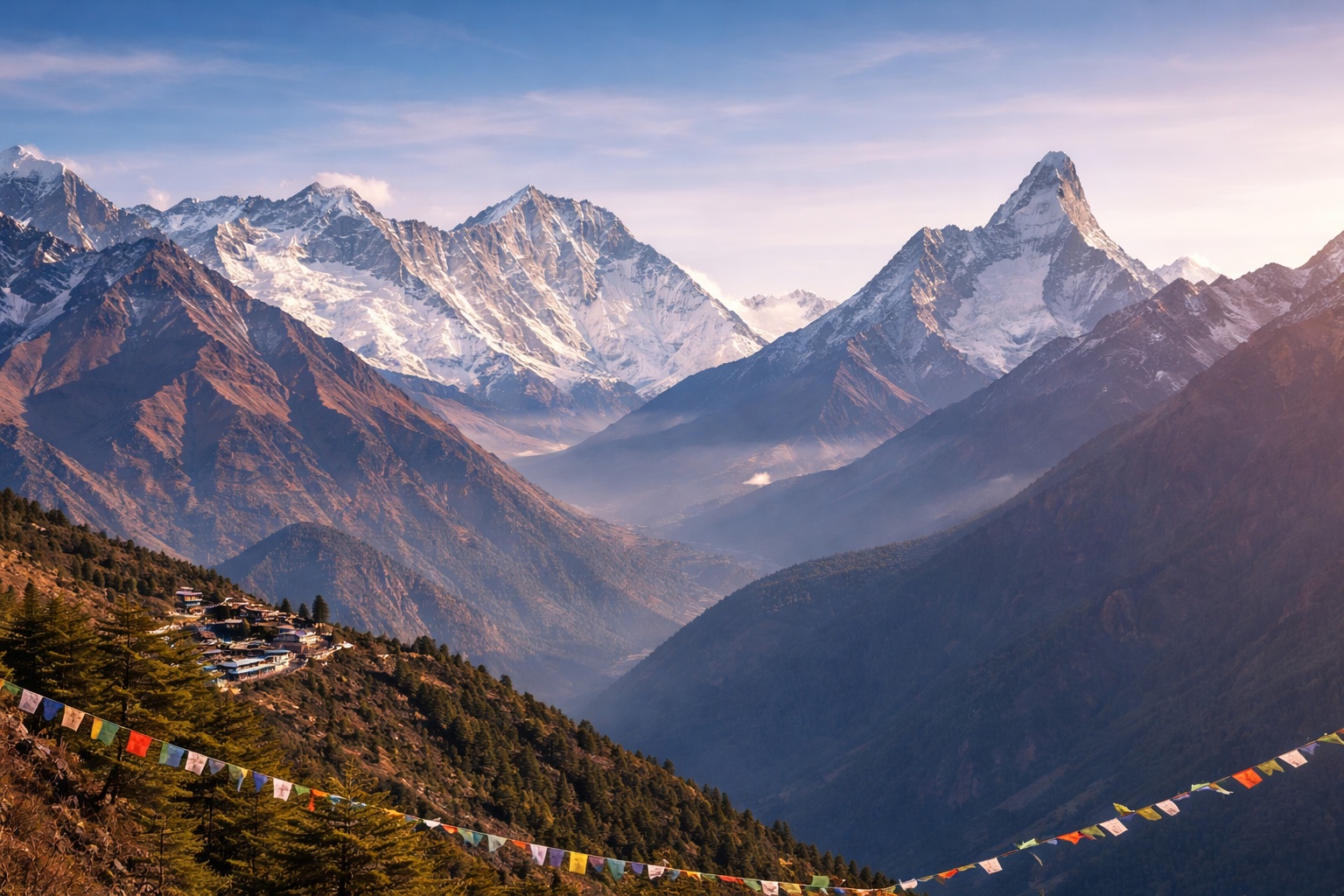
Overview of Nepal Trekking Permits
Nepal requires trekkers to carry specific permits for virtually all trekking activity in the country - a system established to generate conservation revenue, control visitor numbers in sensitive areas, and provide a safety record of registered trekkers in the backcountry. The permit requirements vary by region and trek: some routes require only a single basic permit, while restricted area treks like Upper Mustang require multiple permits, a licensed guide, and a minimum group size.
Understanding the Nepal permit system before departure is essential - many permits cannot be purchased on the trail (notably ACAP permits for the Annapurna region) and the consequences of trekking without required permits range from fines and confiscation of equipment to forced return from the route. The permit system has been simplified over the years but remains multi-layered, and the combination of permits required for a specific trek can be confusing at first.
This guide covers every permit category: the TIMS card (required for virtually all treks), national park and conservation area entry permits, and restricted area permits for the most sensitive zones.
TIMS Card (Trekkers Information Management System)
The TIMS card is required for almost all trekking in Nepal outside of Restricted Area routes. It is a tracking and identification system - the card registers the trekker's identity, contact details, emergency contacts, and planned route in a database maintained by the Nepal Tourism Board. Its primary stated purpose is trekker safety: if a trekker goes missing, the TIMS database provides the last known route and contact information for search and rescue.
Two types of TIMS card exist:
- Green TIMS (Agency Trekkers): NPR 2,000 - for trekkers registered through a Nepal-based trekking agency
- Blue TIMS (Independent Trekkers): NPR 3,000 - for trekkers arranging their own trek without a licensed agency
Where to buy: TAAN (Trekking Agencies Association of Nepal) offices in Kathmandu (Maligaon, Thamel area) and Pokhara (Lakeside). The TIMS card is not available for purchase online or at trailhead checkpoints - it must be obtained in Kathmandu or Pokhara before starting the trek. Most trekking agencies include TIMS arrangement as part of their service.
Note: TIMS is not required for restricted area treks (Upper Mustang, Manaslu Circuit, Dolpo) - the restricted area permit system substitutes for TIMS in those regions.
National Park and Conservation Area Permits
Nepal's major trekking regions are protected as either National Parks or Conservation Areas, each requiring a separate entry permit:
| Protected Area | Treks Covered | Permit Cost | Where to Buy |
|---|---|---|---|
| Sagarmatha National Park | EBC, Gokyo, Three Passes, Island Peak | NPR 3,000 | Monjo checkpoint or Kathmandu |
| Annapurna Conservation Area (ACAP) | Annapurna Circuit, ABC, Poon Hill, Mardi Himal | NPR 3,000 | ACAP offices Pokhara/Kathmandu ONLY - not at Birethanti |
| Langtang National Park | Langtang Valley, Gosaikunda, Helambu | NPR 3,000 | Dhunche checkpoint or Kathmandu |
| Manaslu Conservation Area | Manaslu Circuit | NPR 3,000 | Kathmandu (with guide via agency) |
| Shey-Phoksundo National Park | Phoksundo Lake, Lower/Upper Dolpo | NPR 3,000 | Dunai or Kathmandu |
| Shivapuri Nagarjun National Park | Sundarijal - Chisapani, Shivapuri | NPR 500 | Sundarijal checkpoint |
| Kangchenjunga Conservation Area | Kangchenjunga Circuit (North/South) | NPR 3,000 | Taplejung or Kathmandu |
| Khumbu Pasang Lhamu Rural Municipality | All Khumbu routes | NPR 2,000 | Monjo/Lukla area |
Important: the ACAP permit for the Annapurna region can only be purchased at ACAP offices in Pokhara (Damside area) or at the Nepal Tourism Board in Kathmandu. Trekkers who arrive at the Birethanti checkpoint without a valid ACAP permit are turned back - the permit is not issued at the checkpoint.
Restricted Area Permits
Certain Nepal trekking regions require additional Restricted Area Permits (RAP) - special permits beyond the standard national park permit, available only through registered trekking agencies and requiring a licensed guide and minimum group size:
| Restricted Area | Permit Cost | Guide Required | Min. Group |
|---|---|---|---|
| Upper Mustang | USD 500/10 days; USD 50/extra day | Yes (mandatory) | 2 persons |
| Manaslu Circuit | USD 100/week (Sep - Nov); USD 75/week (Dec - Aug) | Yes (mandatory) | 2 persons |
| Upper Dolpo | USD 500/10 days | Yes (mandatory) | 2 persons |
| Lower Dolpo | USD 10/week | Yes (mandatory) | 2 persons |
| Kangchenjunga | USD 10/week | Yes (mandatory) | 2 persons |
| Tsum Valley | USD 35/week (added to Manaslu permit) | Yes (mandatory) | 2 persons |
| Nar Phu Valley | USD 90/week (Oct - Nov); USD 75/week (Dec - Sep) | Yes (mandatory) | 2 persons |
All restricted area permits must be arranged through a government-registered Nepal trekking agency. The agency submits the permit application with the trekkers' passport details, guide details, and payment to the Department of Immigration in Kathmandu. Processing time is typically 1 - 3 working days.
Permits Required by Trek
- EBC (Everest Base Camp): TIMS (NPR 2,000 - 3,000) + Sagarmatha National Park (NPR 3,000) + Khumbu Pasang Lhamu fee (NPR 2,000)
- Annapurna Circuit: TIMS + ACAP (NPR 3,000)
- Poon Hill / ABC: TIMS + ACAP (NPR 3,000)
- Manaslu Circuit: RAP (USD 100/week) + Manaslu Conservation Area (NPR 3,000) + ACAP for exit section (NPR 3,000)
- Upper Mustang: RAP (USD 500/10 days) + ACAP (NPR 3,000) + TIMS
- Langtang / Gosaikunda: TIMS + Langtang National Park (NPR 3,000)
- Kangchenjunga: RAP (USD 10/week) + Kangchenjunga Conservation Area (NPR 3,000) + TIMS
- Three Passes (Khumbu): Same as EBC - Sagarmatha NP + Khumbu fee + TIMS
Where to Buy Permits
The practical approach for most trekkers arriving in Kathmandu:
- TIMS card: TAAN offices - main office near Maligaon, Kathmandu, or Pokhara Lakeside TAAN office
- ACAP permit: ACAP office in Pokhara Damside or Nepal Tourism Board, Bhrikuti Mandap, Kathmandu
- Sagarmatha National Park permit: Nepal Tourism Board in Kathmandu OR at the Monjo checkpoint on the trail (less reliable - buy in Kathmandu)
- Langtang National Park permit: Nepal Tourism Board in Kathmandu OR at Dhunche checkpoint (acceptable to buy here)
- Restricted area permits (all types): Through a registered Nepal trekking agency only - cannot be obtained by individuals. Processing requires 1 - 3 working days; apply before arrival if possible.
Permit Checkpoints on the Trail
All major trekking routes have permit checkpoints where trekkers must register their permits and show identification. These checkpoints are:
- Entry to all national parks (Sagarmatha NP at Monjo, Langtang NP at Dhunche, Annapurna CA at Birethanti)
- Multiple internal checkpoints on restricted area routes (Upper Mustang has 5+ checkpoints between Kagbeni and Lo Manthang)
- Police checkpoints at major trail junctions on EBC and Annapurna routes
At each checkpoint, trekkers present all permits (TIMS + national park + RAP where applicable), show their passport, and sign a register. Checkpoints are staffed during daylight hours; passing through a checkpoint after hours can result in delay or fine at the next checkpoint.
What Happens Without Permits
Trekking without required permits is treated seriously by Nepal's park and police authorities. Consequences include:
- Turned back at the checkpoint: Most common consequence - trekkers are not permitted past the checkpoint without valid permits. No exception is made for "forgot" or "will buy on the way back."
- Fine: Trekkers caught within a restricted area or national park without valid permits are typically fined 2 - 3× the permit cost.
- Guide license suspension: Guides accompanying trekkers without required permits risk suspension of their license - a significant consequence for their livelihood.
- Detention: In restricted areas (Upper Mustang, Manaslu), trekkers without valid RAP are detained at checkpoints until permits can be arranged or the trekker returns to Kathmandu.
Frequently Asked Questions
- Can I buy Nepal trekking permits online before arriving?
- No - Nepal trekking permits (TIMS, national park permits, restricted area permits) cannot currently be purchased online through any official Nepal government channel. They must be obtained in person in Kathmandu or Pokhara (or at some trail checkpoints). Trekking agencies can arrange permits on behalf of clients, but the physical document is issued in Nepal and must be collected before the trek begins.
- How many days before the trek should I buy permits?
- For TIMS and standard national park permits, purchase 1 day before is sufficient - offices in Kathmandu and Pokhara are open daily (09:00 - 17:00) and permit processing is immediate. For restricted area permits (Upper Mustang, Manaslu), allow 2 - 3 working days for processing at the Department of Immigration. Apply as soon as your trek dates are confirmed.
- Do children need trekking permits in Nepal?
- TIMS cards are required for all trekkers including children (there is no age exemption). National park and conservation area permits are typically free or discounted for children under 10 years old - check the specific park fee schedule. Restricted area permits are required for all entrants regardless of age at full price.
- What documents do I need to get a TIMS card?
- You need your original passport, one passport-sized photo, your emergency contact details, and your planned trekking route and dates. If trekking through an agency, the agency provides a group TIMS or individual TIMS with the agency's stamp. Allow 30 - 45 minutes at the TAAN office for the application process.
- Is the ACAP permit different from other national park permits?
- Yes - the Annapurna Conservation Area Project (ACAP) is managed by the National Trust for Nature Conservation (NTNC) rather than the Department of National Parks. This is why ACAP permits cannot be purchased at trail checkpoints (unlike, for example, Sagarmatha National Park where permits can sometimes be arranged at Monjo). Always buy the ACAP permit at the designated ACAP offices in Pokhara or Kathmandu before reaching the Birethanti checkpoint.
- Can I use the same permits for multiple treks?
- TIMS cards are valid for a single trek in a single region - you cannot use one TIMS card for both the Annapurna and Khumbu regions on separate trips. National park permits are valid for one-time entry into the specified protected area. If you trek into the EBC region, return to Kathmandu, and then trek Annapurna, you need separate permits for each. Some conservation area permits allow multiple re-entries within a specified period - check at purchase.
- What is the Khumbu Pasang Lhamu Rural Municipality fee?
- This is an additional NPR 2,000 fee charged by the local government authority (rural municipality) for all trekkers entering the Khumbu region - payable at checkpoints near Lukla or Phakding. It was introduced in 2019 and is separate from the Sagarmatha National Park permit. It is mandatory and collected alongside the national park permit at the Monjo checkpoint area.
- Do I need permits for a day hike from Pokhara or Kathmandu?
- For most day hikes from Pokhara that do not enter the ACAP (Australian Camp from Kande is borderline - technically inside ACAP boundaries but sometimes not checked for day hikers), no permit is required. For day hikes from Kathmandu into the Shivapuri Nagarjun National Park (Sundarijal - Chisapani), the NPR 500 national park entry fee is required at the Sundarijal checkpoint. No TIMS is required for day hikes.
- What happens if I lose my permit documents on the trail?
- Losing permit documents on the trail is a serious problem at remote checkpoints. Carry photograph copies of all permits on your phone as backup. If original permits are lost, return to the nearest checkpoint (or descent to Namche/Jomsom) and contact the issuing authority for replacement documentation. Trekking agencies can often arrange emergency document replacement via their Kathmandu offices and the relevant authorities faster than individuals can manage independently.
- Are Nepal trekking permit costs included in agency trek packages?
- It depends on the agency and package. Most Nepal trekking agencies include TIMS and national park/conservation area permits in their standard package price. Restricted area permits (Upper Mustang, Manaslu) are sometimes listed separately due to their high cost (USD 100 - 500). Always confirm exactly which permits are included in any agency package price before signing - the permit costs are a significant portion of overall trek expenses and should be transparently itemised.
Recent Posts