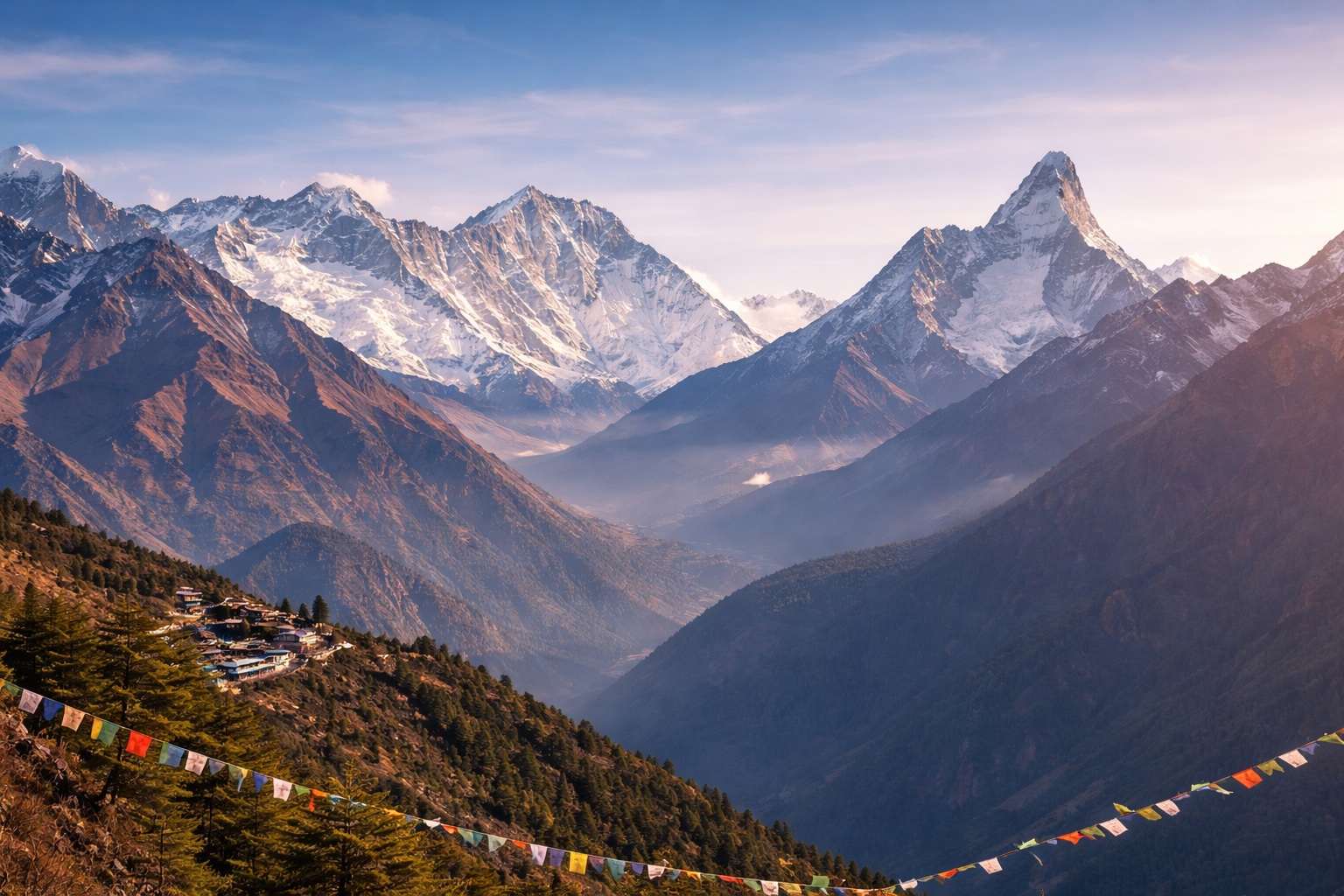
Arriving in Nepal: Tribhuvan International Airport
Tribhuvan International Airport (KTM) in Kathmandu is Nepal's only international airport, handling virtually all international arrivals. The airport has seen significant modernisation in recent years, but the pre-immigration and baggage hall can be crowded and slow during peak arrival periods (late September, early October, late March). Allow 1 - 2 hours from landing to exiting the arrivals hall on a busy day.
On arrival, you will proceed to the Visa on Arrival desk (before immigration control) to purchase your visa, then through immigration, baggage claim, and customs (Nepal customs is generally efficient; random bag checks occur). Authorised taxi services are available in the arrivals forecourt - negotiate the fare before getting in (typically USD 8 - 12 to Thamel depending on your hotel location) or use the pre-paid taxi desk inside the airport. Ride-hailing apps (Pathao, InDrive) work from the airport but drivers may struggle with airport pickup logistics.
Visa on Arrival: Costs, Requirements, and Process
Nepal offers visa on arrival to citizens of most countries (except Indian nationals, who enter visa-free; and citizens of a handful of countries who must apply in advance - check the Nepal Department of Immigration website for the current list). The visa on arrival process takes place at the electronic Visa On Arrival kiosks in the pre-immigration hall.
Tourist Visa Fees (2025)
- 15 days: USD 30
- 30 days: USD 50
- 90 days: USD 125
Payment is accepted in USD, EUR, GBP, and several other major currencies. Credit cards are accepted at the kiosks but cash is more reliable. Bring two passport photos (required) and your completed application form (available at the kiosks or online at the Nepal government e-visa portal). The visa can also be applied for online at least 15 days before arrival - this significantly speeds up airport processing.
Extensions are available at the Department of Immigration office in Kathmandu (Kalikasthan, Dillibazar) - up to 150 days total per visa year.
Currency and Money in Nepal
Nepal's currency is the Nepalese Rupee (NPR). The exchange rate against the USD has been approximately NPR 130 - 135 per USD in recent years (check current rates before travel). Nepal's economy is largely cash-based, particularly outside Kathmandu and Pokhara - bring sufficient cash for trekking or rural travel.
ATMs
ATMs are widely available in Kathmandu and Pokhara. In the Khumbu, Namche Bazaar has functional ATMs but they are unreliable above this point. On the Annapurna Circuit, ATMs are available at Besisahar and Pokhara but not on the trail itself. Withdraw rupees in Kathmandu or Pokhara before starting a trek.
Currency Exchange
The best exchange rates for USD are at authorised money changers in Thamel (Kathmandu) and Lakeside (Pokhara). Hotel exchange rates are typically 3 - 5% worse. Do not exchange at the airport - the rates are significantly poorer. Keep exchange receipts (required for re-converting NPR to USD on departure).
Credit Cards
Visa and Mastercard are accepted at most tourist-oriented restaurants, hotels, and shops in Kathmandu and Pokhara. A 3 - 4% card surcharge is common. Above Namche Bazaar or on rural routes, cash is the only option.
Health and Vaccinations
Nepal does not require any vaccinations for entry. The following are strongly recommended by most travel health authorities:
- Hepatitis A - food and water transmission risk; two-dose vaccine provides 25+ year protection
- Typhoid - bacterial infection from contaminated food/water; particularly relevant for Terai and rural areas
- Tetanus - ensure your booster is current (within 10 years)
- Rabies - recommended for trekkers, especially those who will be in remote areas far from rapid medical care; the pre-exposure vaccine series requires 3 doses over several weeks - plan ahead
- Japanese Encephalitis - relevant for Terai (Chitwan, Bardiya) visitors, particularly during monsoon season
- Malaria prophylaxis - required for Terai lowlands (Chitwan, Bardiya) if visiting during monsoon or early post-monsoon; not required for Kathmandu or the mountains
Water Safety
Do not drink tap water in Nepal. Bottled water is available everywhere but contributes significantly to plastic waste at altitude. Better options: water purification tablets (iodine or chlorine), SteriPen UV purifier, or boiled water (available at all teahouses, usually free or very low cost on the trail). Filtered water stations at Namche Bazaar and other major trekking stops sell treated water by the litre for NPR 50 - 100.
Safety and Travel Advisories
Nepal is one of the safer countries in Asia for international travellers. Violent crime against tourists is rare. The main safety considerations are:
- Road accidents: Nepal's mountain roads are the country's most significant danger for travellers. Bus accidents on the Kathmandu - Pokhara and Kathmandu - Chitwan roads occur regularly. Private vehicle or domestic flight is safer for these routes.
- Petty theft: In Thamel and tourist areas, watch your daypack in crowds. Use hotel safes for passports and significant cash.
- Altitude illness: The most serious health risk for trekkers. See the altitude sickness guide for full information.
- Natural hazards: Nepal is in a highly active seismic zone. The 2015 earthquake killed nearly 9,000 people. Landslides are common during the monsoon on mountain roads.
- Political situation: Nepal is politically stable as of 2025. Check your government's travel advisory (UK FCDO, US State Department, Australian DFAT) before travel for any current alerts.
Getting Around Nepal
Domestic Flights
Nepal's domestic aviation network connects Kathmandu to Pokhara (25 min), Bharatpur (Chitwan, 25 min), Bhairahawa (Lumbini, 50 min), Nepalgunj (gateway to Bardiya and western Nepal, 1 hr), and the Khumbu (Lukla, 35 min). Domestic flights are the safest and most time-efficient way to travel between major destinations. Nepal Airlines, Buddha Air, Yeti Airlines, and Tara Air are the main operators. Book in advance for October and March - April (seats sell out weeks ahead for popular routes).
Tourist Buses and Coaches
Tourist buses (larger, more comfortable, faster than local buses) run between Kathmandu and Pokhara (7 hrs, USD 15 - 25), and Pokhara and Chitwan (4 - 5 hrs, USD 15 - 25). These are viable alternatives to flying for budget travellers or those who want the road experience through the Nepal hills.
Taxis and Ride-Hailing
Taxis are widely available in Kathmandu and Pokhara. Always agree on the fare before getting in (taxi meters are frequently "broken" in Kathmandu) or use Pathao ride-hailing for a metered fare. A cross-Kathmandu trip costs NPR 300 - 500 depending on distance.
Cultural Etiquette: Essential First-Timer Rules
- Remove footwear before entering temples, homes, and monasteries. Look for a pile of shoes at the entrance - that is your signal. Never wear shoes into a Hindu or Buddhist shrine interior.
- Circumambulate stupas and mani walls clockwise. Buddhist sacred objects (stupas, prayer wheels, chortens, mani walls) are always passed on the left - meaning you walk clockwise around them. This is universal practice across the Himalayan Buddhist world.
- Ask before photographing people. Most Nepalis are happy to be photographed but asking first is respectful. Some sadhus (Hindu holy men) and devotees in the middle of worship prefer not to be photographed. Always respect the request.
- Dress modestly at religious sites. Shorts and sleeveless tops are inappropriate at temples, monasteries, and shrines. Carry a light scarf to cover bare shoulders when visiting sacred sites unexpectedly.
- Use your right hand for giving and receiving. The left hand is considered impure in South Asian tradition. Pass money, food, and gifts with the right hand or both hands.
- Do not touch an adult on the head. The head is considered sacred and should not be casually touched.
- The "namaste" greeting (hands pressed together at the chest, slight bow) is always appropriate and universally appreciated from a foreigner attempting local customs.
Communication and Internet
Nepal has good mobile network coverage in Kathmandu, Pokhara, and on most major trekking routes. Buy a local SIM card at the airport or from Ncell or NTC shops in Kathmandu - a tourist SIM with 5 - 10 GB of data costs USD 5 - 15 and works on the major trails up to Namche Bazaar and Manang. Above Namche, coverage is patchy but Wi-Fi is available at most teahouses (NPR 200 - 500 per session). Satellite messaging devices (Garmin inReach) are worth renting for any trek above EBC or in truly remote areas.
Accommodation
Kathmandu and Pokhara offer the full range from budget backpacker hostels (USD 8 - 15/night) to luxury heritage hotels (USD 150 - 400/night). Mid-range hotels in both cities (USD 30 - 80/night) are excellent value and include breakfast. Book in advance for October - hotel availability in Kathmandu during Dashain week can be extremely tight.
On trekking routes, teahouses charge NPR 200 - 500 per person per night above Namche; below Namche accommodation is generally free if you eat at the teahouse (the meal prices subsidise the room). Above 4,000 m, teahouse quality drops significantly - bring a sleeping bag liner and earplugs.
Suggested First-Time Itineraries
- 7 days: Kathmandu (3) + Pokhara (4 with Annapurna Panorama Trek)
- 10 days: Kathmandu (2) + Pokhara (2) + Chitwan (3) + Kathmandu (1) + Poon Hill Trek (4) - ambitious but doable
- 14 days: Kathmandu (3) + Langtang Valley Trek (8) + Pokhara (3)
- 21 days: Kathmandu (3) + EBC Trek (16) + Pokhara (2) - the classic Nepal month
10 Things First-Time Nepal Visitors Often Get Wrong
- Underestimating flight delays. Lukla and Jomsom flights are weather-dependent and regularly delayed 1 - 3 days. Never connect your Nepal trek directly to an international flight without a 2-day buffer.
- Wearing new boots on Day 1. You will have blisters by Day 3. Break boots in at home for months, not weeks.
- Ignoring altitude symptoms. "Pushing through" AMS is how people die in the mountains. If you feel genuinely unwell above 3,000 m, descend.
- Exchanging money at the airport. Always exchange in Thamel. The airport rate is 5 - 7% worse.
- Not booking Lukla flights in advance. October flights sell out by August. Book immediately after confirming your trek dates.
- Overpacking. You will carry everything over 5,500 m passes. Pack light, then lighter.
- Assuming restaurants are all safe. In Kathmandu and Thamel, stick to busy restaurants with visible turnover. "Travelers' diarrhea" sidelines a significant percentage of Nepal visitors; handwashing before meals is the single most effective prevention.
- Expecting the schedule to hold. Nepal operates on a different relationship with time than many Western visitors expect. Build flexibility into every day. The mountains are not on a timetable.
- Tipping only the guide. Porters work harder than almost anyone on the trail and are paid less. Tip your porter, cook, and support staff generously.
- Not buying travel insurance. A helicopter evacuation from the Khumbu costs USD 5,000 - 8,000. Insurance that covers this costs USD 50 - 150 for a month. The math is simple.
Recent Posts