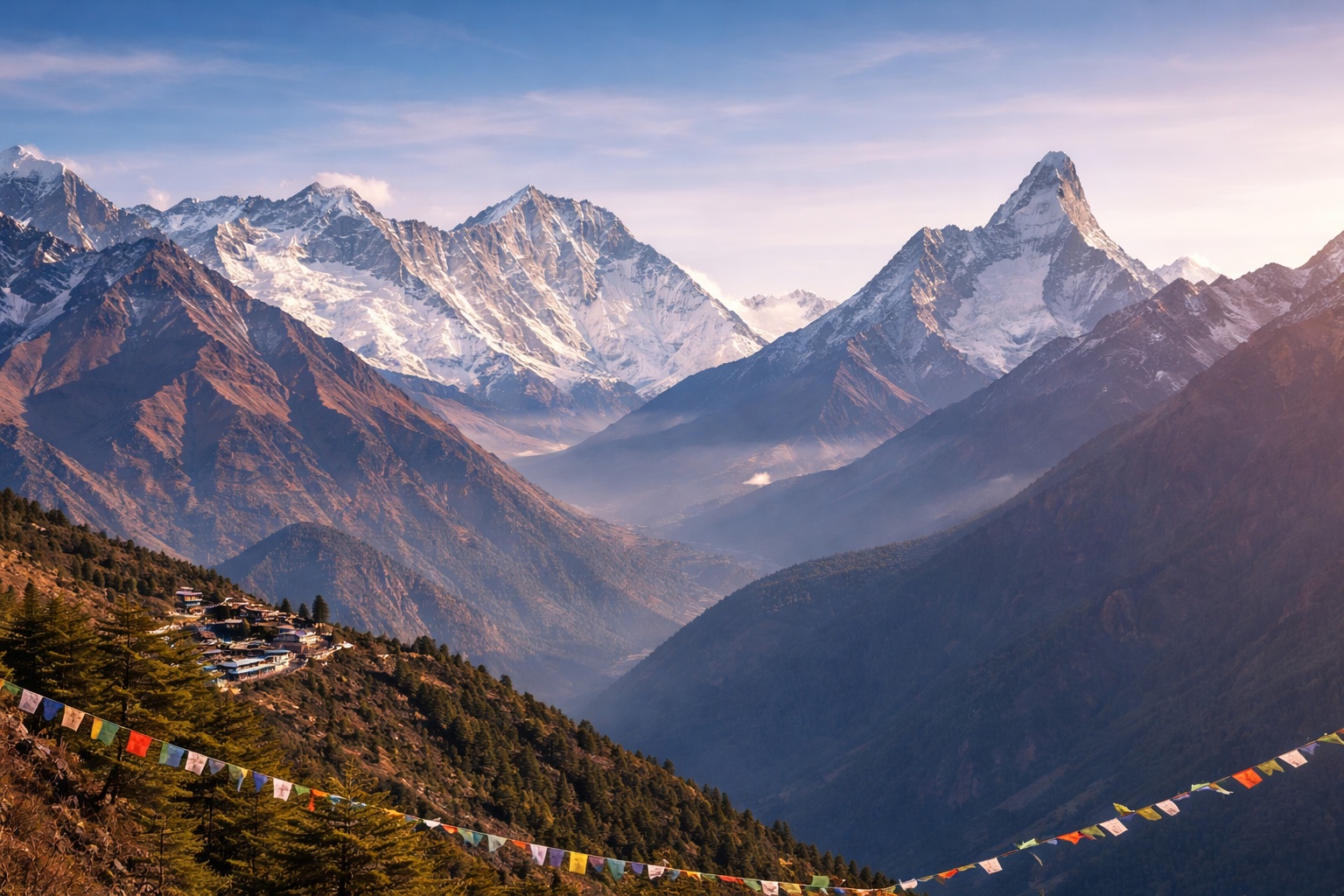
Why Mera Peak?
Mera Peak (6,476 m) is Nepal's highest trekking peak and arguably the finest summit accessible to non-technical mountaineers in the Himalayas. Where Island Peak (6,189 m) is the most climbed Nepal trekking peak by volume, Mera Peak is considered by many experienced Himalayan trekking-mountaineers to be the superior experience - the summit altitude is meaningfully higher (287 m more than Island Peak), the summit panorama includes five of the world's fourteen 8,000 m peaks simultaneously, and the approach through the Hinku valley offers a remote and spectacular wilderness trek that the Khumbu approaches cannot replicate.
Mera Peak's reputation as "non-technical" requires important qualification. The summit at 6,476 m is above the altitude where most people can function without significant acclimatisation, and the climb involves glacier travel with crampon use and fixed rope ascent on the high section. It is appropriate for fit, properly prepared non-technical mountaineers who approach with adequate training, guiding, and acclimatisation time. It is not appropriate for trekkers without prior altitude experience above 4,500 m who underestimate what the extra 300 m of altitude above Island Peak represents physiologically.
The Mountain: Stats and Summit View
Mera Peak's three summit points - Mera Central (6,476 m, the main summit), Mera North (6,476 m, essentially the same height), and Mera South (6,065 m, a sub-peak) - rise above the Hinku valley in the Solukhumbu district south of the main Everest massif. The Mera La (5,415 m) - the pass between the Hinku valley and the Khumbu - is the trekking route connecting Mera to the main EBC corridor.
The summit view from Mera Central encompasses five 8,000 m peaks simultaneously: Everest (8,849 m), Lhotse (8,516 m), Makalu (8,485 m), Cho Oyu (8,188 m), and Kangchenjunga (8,586 m). No other trekking peak in Nepal provides this breadth of 8,000 m visibility from a single summit. Ama Dablam (6,812 m), Baruntse (7,129 m), and Island Peak are also visible. On a clear autumn morning, the summit view is genuinely overwhelming - the scale of the surrounding giants, seen from a position higher than all of them seemed from the valley, produces the most profound sense of mountain context of any trekking peak in Nepal.
Route and Approach
The standard approach to Mera Peak begins with a flight from Kathmandu to Lukla (2,860 m) or alternatively to Phaplu (2,413 m) for a longer approach through the Solu region. The Lukla approach (more common) descends south from Lukla through the Chutanga valley, crosses into the Hinku valley at Zatrwa La (4,610 m), and follows the Hinku Khola north through Thangnak (4,356 m) to Khare (5,050 m) - the advance base camp. The summit day begins from Mera High Camp (5,800 m).
| Day | Stage | Altitude | Duration |
|---|---|---|---|
| 1 | Kathmandu → Lukla (flight) → Chutanga | 3,080 m | 3 hrs walk |
| 2 | Chutanga → Zatrwa La (4,610 m) → Tuli Kharka | 3,600 m | 6 - 7 hrs |
| 3 | Tuli Kharka → Kote | 3,600 m | 4 - 5 hrs |
| 4 | Kote → Thangnak | 4,356 m | 4 - 5 hrs |
| 5 | Thangnak → Khare (acclimatisation) | 5,050 m | 3 - 4 hrs |
| 6 | Khare acclimatisation (glacier orientation day) | 5,050 m | Rest + training |
| 7 | Khare → Mera High Camp | 5,800 m | 3 - 4 hrs on glacier |
| 8 | High Camp → Summit (6,476 m) → Khare | 5,050 m | Summit day: 8 - 12 hrs |
| 9 | Khare → Thangnak → descent | 4,356 m | 4 - 5 hrs |
| 10 - 12 | Descent through Hinku → Lukla → Kathmandu | - | Return |
Summit Day on Mera Peak
Summit day begins at 03:00 - 04:00 from Mera High Camp (5,800 m). The ascent from high camp to summit gains 676 m over 3 - 5 hours on a wide glaciated snowfield - less technically demanding than Island Peak's headwall but significantly longer and at higher altitude. Crampons, ice axe, and rope are used throughout; the angle is moderate (25 - 35°) but sustained.
The summit itself is a broad glaciated plateau - Mera Central summit is marked by fixed ropes and a small cairn at 6,476 m. The panorama opens completely at the summit - on a clear October morning, the scale and number of 8,000 m peaks visible simultaneously has produced tears from experienced mountaineers who have seen many Himalayan summits. Allow 30 - 45 minutes at the summit for photographs and acclimatisation to the view before beginning the descent.
Descent to Khare takes 3 - 4 hours. Total summit day: 8 - 12 hours. The summit success rate for well-guided, properly acclimatised groups is approximately 70 - 80% in optimal conditions.
Mera Peak vs Island Peak: Difficulty Comparison
| Factor | Mera Peak | Island Peak |
|---|---|---|
| Summit altitude | 6,476 m | 6,189 m |
| High camp altitude | 5,800 m | 5,600 m |
| Technical grade | PD (peu difficile) | PD - AD |
| Steep climbing | 25 - 35° moderate snowfield | 60 - 70° headwall (fixed rope) |
| Glacier travel | Extensive (broad glacier ascent) | Limited (approach and crossing) |
| Altitude challenge | Higher (6,476 m) | Lower (6,189 m) |
| Physical demand | Higher (more sustained altitude) | Lower altitude but more technical |
| Summit view | Five 8,000 m peaks | Four 8,000 m peaks + Ama Dablam |
| Crowds | Fewer (~600 climbers/year) | More (~2,000 climbers/year) |
Training and Preparation
The training requirements for Mera Peak are essentially identical to those for EBC with an added emphasis on high-altitude stamina (the summit day is longer and at greater altitude than any EBC day) and basic glacier travel skills. Key additions beyond EBC fitness:
- Experience at 5,000+ m altitude: prior EBC trek, Island Peak, or any other 5,000 m+ experience is highly recommended
- Crampon walking practice on steep snow: arrange a training session in a suitable location before Nepal (Alps, Rockies, Cascades) if possible
- Ice axe self-arrest: basic technique for self-rescue on steep snow; your guide will train you at Khare base camp but prior knowledge is valuable
Climbing Gear List
- Mountaineering boots rated to -30°C (double plastics or equivalent)
- 12-point technical crampons compatible with your boots
- Ice axe (70 cm general mountaineering type)
- Climbing harness + locking carabiners
- Prussik cords or mechanical ascender for glacier rescue
- Down suit or heavy down jacket + insulated trousers (minimum -20°C rating)
- High-altitude sleeping bag (-20°C comfort rating)
- Glacier goggles (high-altitude UV protection) + ski goggles for windstorm conditions
- Headlamp with spare batteries (summit starts at 03:00)
- High-altitude gaiters
- Thermos flask (insulated; hot drinks on the glacier)
All technical equipment is available for rental in Kathmandu and at Namche. Quality varies; inspect before accepting.
Permits and Costs
- Mera Peak NMA climbing permit: USD 250 (spring: March - May); USD 125 (autumn: September - November)
- Sagarmatha National Park permit: NPR 3,000
- TIMS card: USD 10
- Licensed guide (mandatory for summit): USD 35 - 50/day (~USD 600 - 800 for the climbing section)
- Lukla flights (return): USD 320 - 400 per person
- Total estimated cost (12 days): USD 2,000 - 3,500 per person
Best Season for Mera Peak
- October - November (Autumn): The primary climbing season. Clear skies, stable weather, firm snow conditions on the glacier. October is optimal. November is colder but quieter.
- April - May (Spring): Good conditions; longer daylight; softer snow. May brings warming and pre-monsoon cloud builds in the afternoon. Late April is ideal for spring climbing.
- Winter (December - February): The summit is feasible for experienced winter mountaineers but temperatures of -30°C to -40°C at High Camp make it appropriate only for those with cold-weather expedition experience.
Essential Mera Peak Tips
- Do not skip the Khare acclimatisation day: Day 6 at Khare (5,050 m) is the mandatory acclimatisation day before moving to High Camp. Use this day for a 4 - 5 hour glacier orientation hike with your guide - practice crampon use on real glacier terrain and identify the route to High Camp. This day directly determines your summit day performance.
- The Zatrwa La approach is exposed in bad weather: The crossing of Zatrwa La (4,610 m) on Day 2 can be snow-covered in early October and after snowstorms. This pass is the crux of the approach; your guide will assess conditions and advise on timing.
- Carry extra high-altitude nutrition: Summit day requires 8 - 12 hours of sustained effort. Bring energy gels (6 - 8), high-calorie bars, and a thermos of hot sweet tea. Eating at 6,000+ m is difficult; energy gels go down when solid food does not.
- The Hinku valley approach is remote: No ATMs, no mobile coverage, limited rescue infrastructure. Everything you need for the summit attempt must be carried from Lukla. Medical kit must be comprehensive; insurance must cover helicopter access to the Hinku valley (confirm this with your insurer before departure).
Recent Posts