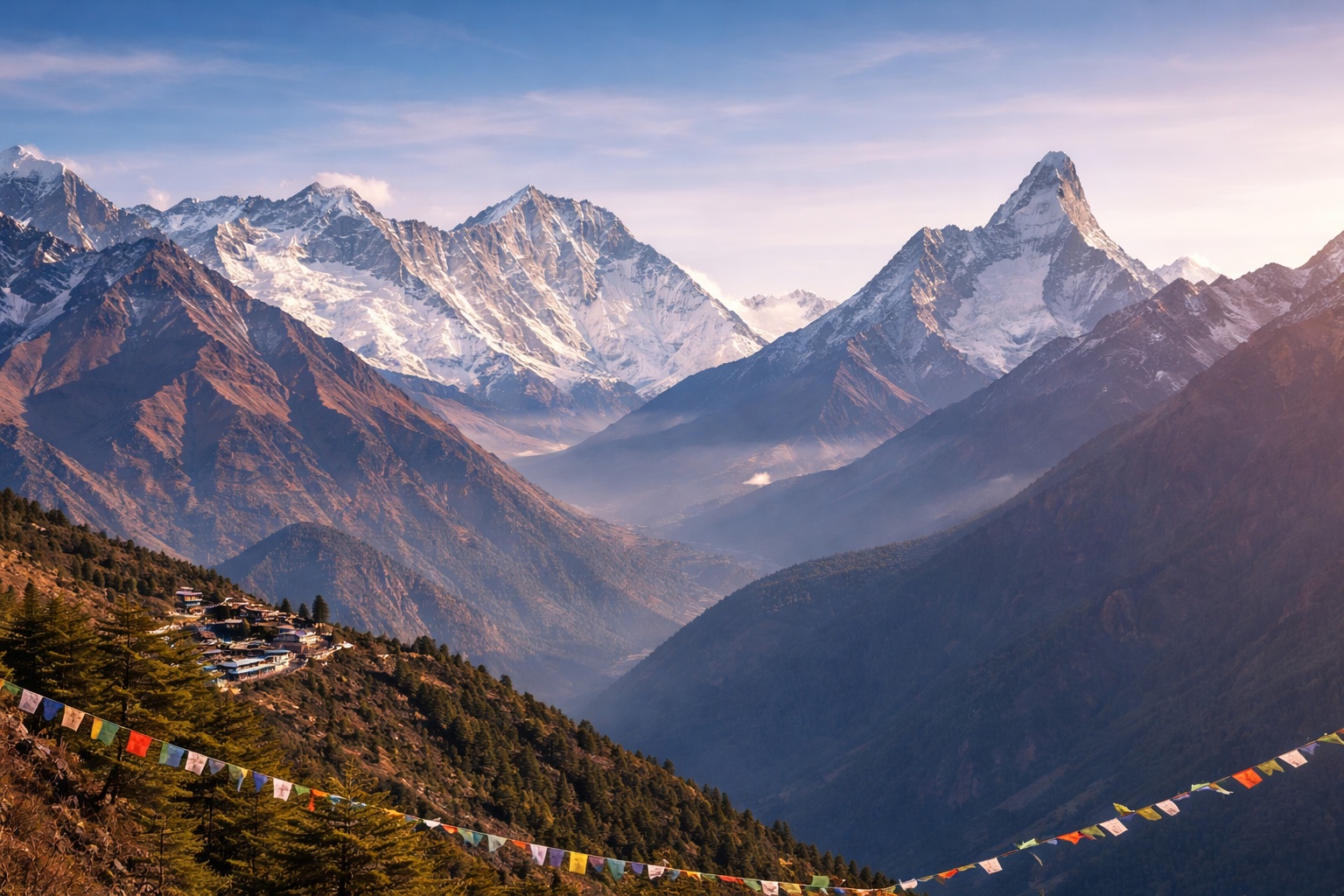
Overview of Marpha
Marpha (2,670 m) is universally cited by Annapurna Circuit trekkers as one of the finest villages on the circuit - a compact Tibetan-style whitewashed settlement of cobbled lanes, covered passageways, and flat-roofed houses built against the Kali Gandaki's western hillside, south of Jomsom in the Mustang District. The village is known principally for its apple orchards - the cold, dry Mustang climate produces apples of exceptional sweetness that have been processed since the 1960s into juices, jams, dried fruit, apple cider, and apple brandy that are sold throughout Nepal and exported to India.
The name Marpha means "flat place" in Tibetan - a reference to the relatively level terrace on which the village is built, protected from the Kali Gandaki's fierce afternoon wind by a natural hill promontory to the north. This wind shelter (unique in the otherwise wind-blasted Mustang valley) is what made Marpha suitable for the apple orchards - the village's agricultural success grows from the same geology that protected its buildings.
Apple Culture and Orchards
Marpha's apple cultivation began in the 1960s with a government agricultural programme that introduced apple varieties suited to the high-altitude, cold-dry climate. The programme succeeded beyond expectations - the Mustang plateau's combination of cold winters (which apples require for dormancy), warm summers, low humidity, and intense sunlight produces fruit with higher sugar content and more concentrated flavour than lower-altitude Nepalese apple growing areas.
The apple products produced and sold in Marpha:
- Fresh apples (September - October): Available directly from orchards and village shops during harvest season - the fresh Marpha apple is considered the finest Nepali variety by most who taste it
- Apple cider: Locally fermented, mildly alcoholic (3 - 5% ABV); served at most Marpha teahouses in 250 ml and 500 ml pours; NPR 150 - 300
- Apple brandy (raksi): Distilled apple spirit produced by several Marpha families; 30 - 50% ABV; quality varies from rough to genuinely smooth; NPR 400 - 800 for a 750 ml bottle. The better Marpha brandies are worth carrying back to Kathmandu or Pokhara.
- Apple jam and dried apple: Available year-round; excellent trekking food for the upper circuit sections where fresh fruit is unavailable
Tibetan Architecture
Marpha's street plan - two parallel covered lanes running the length of the village, with cross-alleys and communal water channels - is classic Tibetan high-altitude settlement design. The covered lanes (tukche style, named for the similar architecture in Tukuche village below Marpha) protect residents and their goods from the wind and winter cold. The buildings' flat roofs (used for drying grain, apples, and yak dung fuel) and white-plastered mud-brick construction are visually identical to villages on the Tibetan plateau 100 km north.
The central water channel that runs through Marpha's main lane - carrying cold spring water from the hillside above - is a traditional Tibetan community water management system that serves both drinking water and waste channel functions. The channel is maintained by community labour every spring, as it has been for at least 400 years of Marpha's recorded history.
Marpha Monastery
The Marpha Gompa (Sakya school Tibetan Buddhist monastery) occupies the highest point of the village - the whitewashed monastery walls are visible from the Kali Gandaki trail approaching from the south. The monastery houses wall paintings, bronze statues, and a monk community that maintains the ritual calendar of the Marpha Tamang Buddhist community. Respectful visitors are welcomed during non-ceremony hours; remove shoes at the monastery entrance.
Position on the Annapurna Circuit
Marpha sits between Tukuche (2,590 m, 30 minutes south) and Jomsom (2,720 m, 45 minutes north) on the standard Annapurna Circuit route. Most trekkers arriving in this section from Thorong La descent via Muktinath pass through Marpha on the way to Jomsom and the Pokhara flight or road exit. Many circuit trekkers who follow the jeep road south of Jomsom bypass Marpha to their considerable loss - the village is the highlight of the lower Mustang valley section and the apple products are unmatched.
Getting There
- On foot (Annapurna Circuit): 45 minutes south of Jomsom on the Kali Gandaki trail
- From Jomsom by jeep: 20 minutes south of Jomsom airport on the road
- From Muktinath direction (Thorong La descent): Marpha is the logical first full-service teahouse stop after the Khantipiti-Tiri-Kagbeni descent from Muktinath - approximately 3 hours from Muktinath by the trail route
Practical Information
- Altitude: 2,670 m (8,760 ft)
- Coordinates: 28.7514°N, 83.6989°E
- District: Mustang, Gandaki Province
- ACAP permit required: NPR 3,000
- Accommodation: 8 - 12 guesthouses; NPR 500 - 1,000/room
- Apple season (fresh fruit): September - October
- Apple products (year-round): Available at village shops and guesthouses
- Best season: April - November (March: cold but manageable)
Recent Posts