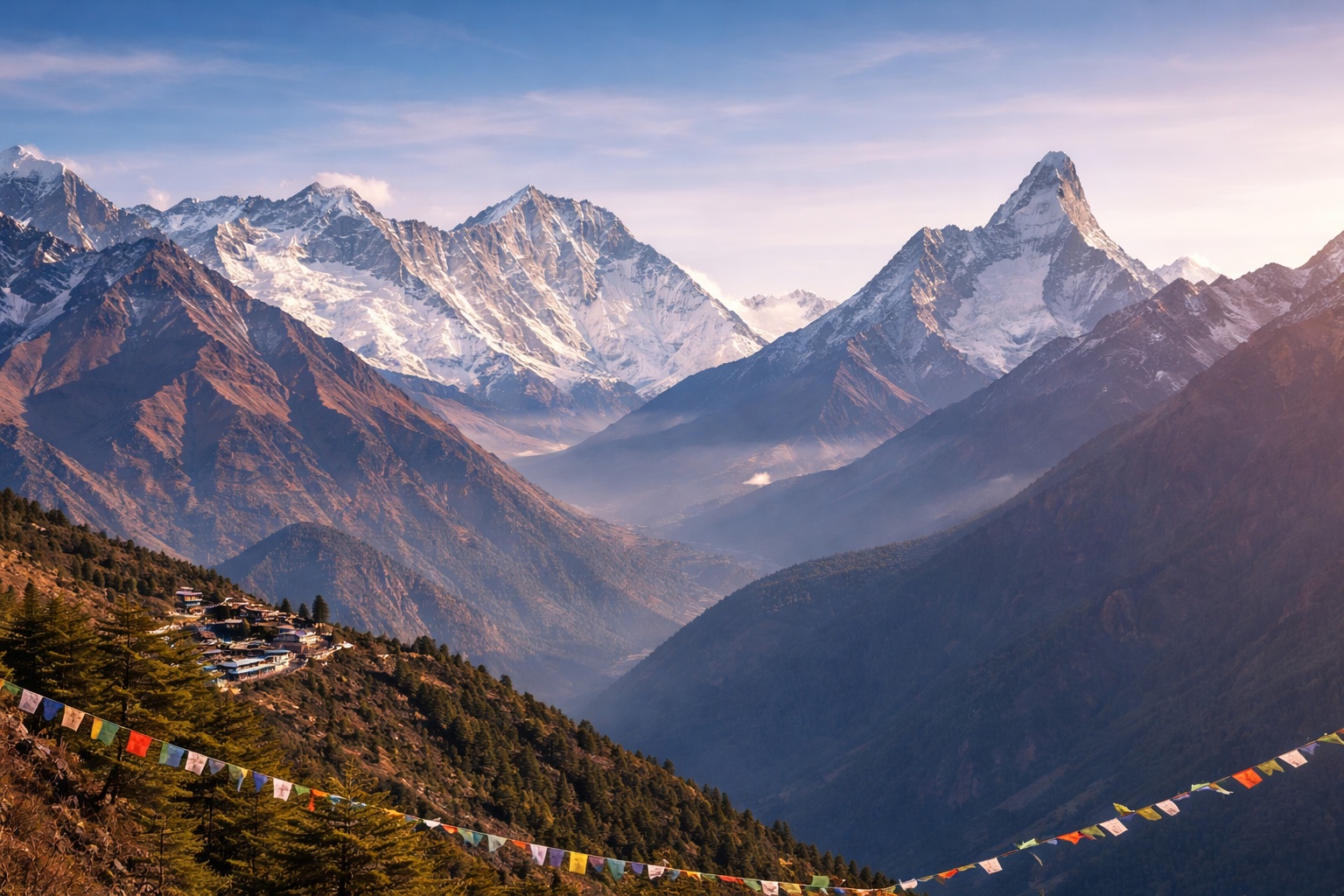
Overview of Kyanjin Gompa
Kyanjin Gompa (3,870 m) is the terminus of the Langtang Valley Trek - a cluster of stone-walled houses, a small monastery, and Nepal's highest yak cheese factory, occupying a broad glacier-carved valley floor in Langtang National Park, 65 km north of Kathmandu. The settlement sits between the Langtang Lirung (7,227 m) north face to the north and the Langshisha Glacier descending from the east - a dramatic high-alpine setting that is less visited than the Khumbu or Annapurna circuits but rewards those who make the 4-day walk from Syabrubesi with a quality of mountain solitude and cultural authenticity that the more popular routes increasingly lack.
Kyanjin was significantly affected by the April 2015 earthquake - the avalanche triggered by the earthquake buried Langtang village (4 km south of Kyanjin) and killed most of its inhabitants; Kyanjin itself sustained building damage. The community has rebuilt with external support, and trekking to Kyanjin has become an important part of the economic recovery. Trekking to Langtang now carries a dimension of solidarity with the community's reconstruction that adds meaning beyond the purely scenic.
The Kyanjin Monastery
Kyanjin Gompa (the monastery from which the settlement takes its name) is a small Tibetan Buddhist gompa of the Nyingma school - maintained by a small monk community and the broader Tamang Buddhist community of the Langtang valley. The monastery is modest by Kathmandu standards but its setting - backed by the Langtang Lirung north face and surrounded by yak pastures - gives it an atmosphere of high-altitude remoteness that the grander monasteries of the Khumbu lack.
Morning puja: 06:00 - 07:30. The monastery is open to respectful visitors during non-ceremony hours. A small butter lamp offering (NPR 100 - 200) is appropriate. The monastery's main festival - Yartung, the horse racing festival of the Langtang Tamang - falls in August and is one of the most authentic local festivals accessible to trekkers in the Nepal Himalayan zone.
Kyanjin Yak Cheese Factory
The Kyanjin Cheese Factory - operated by the Dairy Development Corporation with Swiss technical assistance since 1955 - is one of Nepal's most unusual cultural sites at altitude: a functioning artisan cheese production facility at 3,870 m. Yak milk from the surrounding summer pastures is processed into a hard, aged cheese sold to trekkers and exported to Kathmandu. The factory is open for visits during production hours (08:00 - 12:00); the production process - hand-pressing, salting, and aging in the stone cellar - is observable by visitors.
Kyanjin yak cheese tastes distinctly of yak: higher fat content than cow's milk cheese, slightly gamier, with a hard texture that becomes increasingly sharp with age. Available for purchase at the factory (NPR 600 - 1,000 per block depending on age and size) and at the Kyanjin teahouses. Many trekkers carry a block as their primary protein supplement for the return journey - it keeps well at altitude temperatures.
Tserko Ri Day Hike (4,984 m)
Tserko Ri (4,984 m) is the standard day hike from Kyanjin - a 1,114 m ascent on a steep trail to a high viewpoint above the Langtang valley that provides one of the finest panoramas in the Langtang range: Langtang Lirung (7,227 m) immediately to the north, Ganesh Himal (7,422 m) to the west, and the Tibetan plateau border peaks extending eastward. The ascent takes 3 - 4 hours from Kyanjin; the descent 2 - 2.5 hours. Total excursion: 6 - 7 hours.
At 4,984 m, Tserko Ri is high enough to require good acclimatisation - trekkers who have ascended from Syabrubesi in the standard 4-day schedule should be adequately adapted by the time they reach Kyanjin and add a rest day before the Tserko Ri attempt. The view from the summit includes a direct overhead perspective on the Langtang Glacier system and the full length of the valley.
Kyanjin Ri (4,773 m) is a shorter alternative viewpoint - 2.5 - 3 hours ascent, good views, more appropriate for trekkers who find Tserko Ri's altitude ambitious.
Langshisha Glacier
The Langshisha Glacier descends from the east of Kyanjin Gompa - the snout of the glacier is 2 - 3 km from the settlement and accessible by walking across the moraine flat. The glacier's recession is visible in historical photographs compared to current conditions: the glacier front has retreated approximately 300 - 400 m in the past 30 years based on comparison with 1990s survey photography. The moraine lakes that have formed at the glacier snout are classic signs of glacial retreat under warming conditions.
2015 Earthquake Recovery
The April 25, 2015 Gorkha earthquake (7.8 magnitude) triggered an ice-rock avalanche from Langtang Lirung that completely buried Langtang village (located 4 km south of Kyanjin on the valley floor). Of the village's 500+ permanent residents and visiting trekkers, 243 died and the village was destroyed. The rebuilding of Langtang village (now visibly a rebuilt rather than organic settlement) and the continuation of the trek to Kyanjin are both acts of solidarity with the community's recovery. Trekkers contribute materially to Kyanjin's economy by staying in teahouses, buying cheese from the factory, and hiring local guides.
Getting to Kyanjin Gompa
Kyanjin is reached from Syabrubesi (1,503 m) - the Langtang valley entry point accessible by bus from Kathmandu (7 - 8 hours; NPR 600 - 800 one way) or by taxi (5 - 6 hours; NPR 8,000 - 12,000). The Syabrubesi - Kyanjin trek takes 4 days:
- Day 1: Syabrubesi (1,503 m) → Lama Hotel (2,380 m): 5 - 6 hours
- Day 2: Lama Hotel → Langtang Village (3,430 m): 5 - 6 hours
- Day 3: Langtang Village → Kyanjin Gompa (3,870 m): 3 - 4 hours
- Day 4: Acclimatisation / Tserko Ri or Kyanjin Ri day hike
Practical Information
- Altitude: 3,870 m (12,697 ft)
- Coordinates: 28.2119°N, 85.5714°E
- District: Rasuwa, Bagmati Province
- National Park entry fee: NPR 3,000
- Walking time from Syabrubesi: 4 days
- Accommodation: 8 - 10 teahouses; NPR 400 - 1,000/room
- ATM: None at Kyanjin - bring cash from Kathmandu
- Temperature (October): 0 - 12°C day; -10°C to -15°C night
- Best season: October - November; March - May
Recent Posts